Artwork
Alexis Charles Henry de Tocqueville
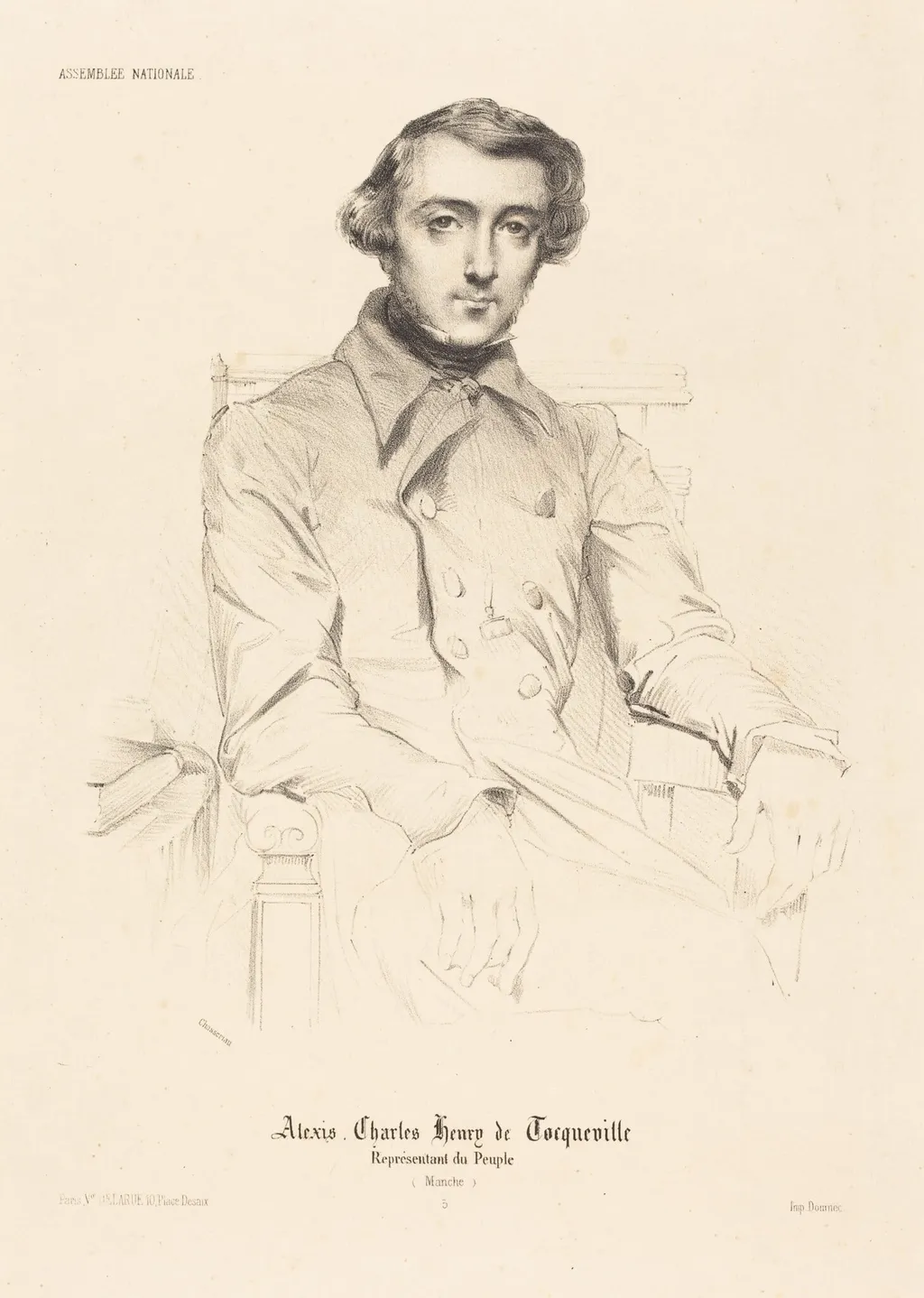
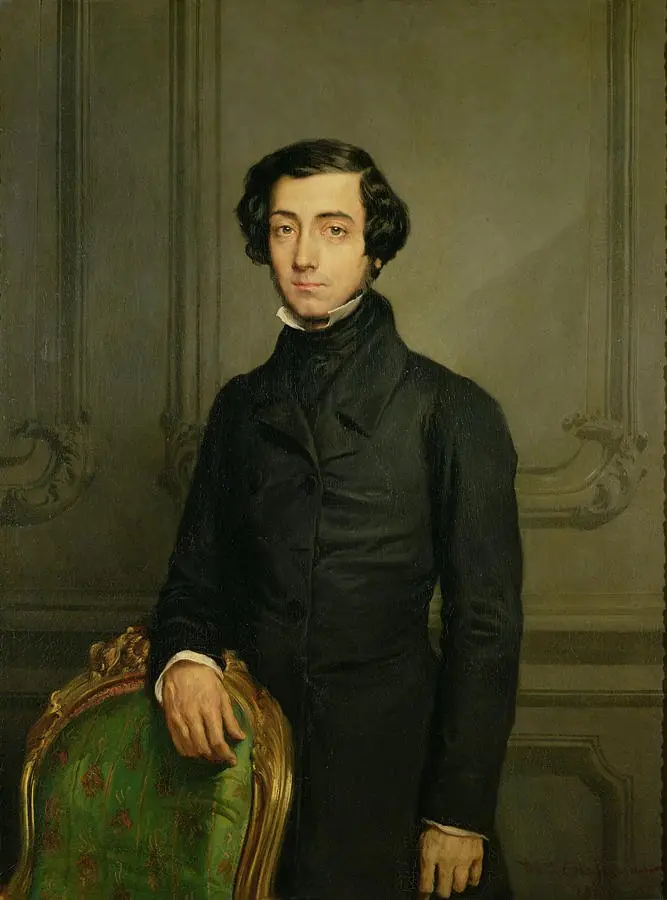
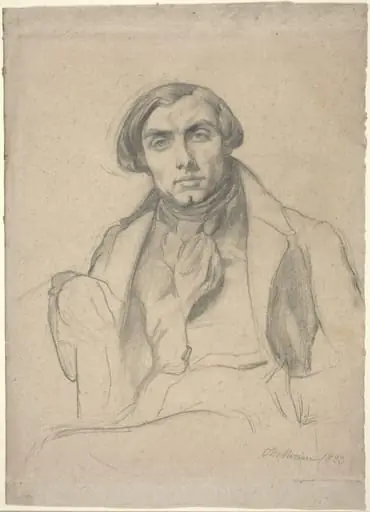
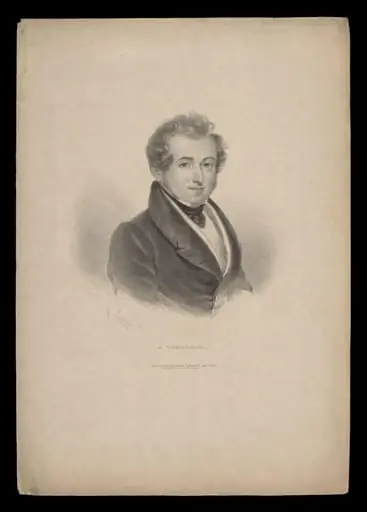
Alexis Charles Henry de Tocqueville is an ink print by the Romanticist artist Théodore Chassériau. It dates from 1848 and is held in the collection of the National Gallery of Art.
About this work
If you're interested in learning more about the artist, you might want to look up Chassériau, Théodore.
The painting is a portrait of a man with short, wavy hair and a serious expression. He is wearing a collared shirt with buttons down the front and a high collar that covers his neck. His arms are crossed, and his hands are clasped together in front of him. The background of the painting is a solid color, with no discernible details or textures.
The man's facial expression is calm and introspective, with a hint of intensity in his eyes. His posture is relaxed, yet confident, conveying a sense of quiet strength and authority.
The painting is a lithograph, created by Théodore Chassériau in 1848. It is held at the National Gallery of Art, Washington, and is an example of Romanticism. If you're interested in learning more about the artist, you might want to look up Chassériau, Théodore.
Overview
This 1848 lithograph presents a portrait of Alexis Charles Henry de Tocqueville, the French political thinker and historian. Executed by Théodore Chassériau, the print is part of the National Gallery of Art’s collection in Washington. The image captures Tocqueville in a composed pose, emphasizing his intellectual presence through a restrained yet assertive demeanor.
Subject & Meaning
Tocqueville is depicted with short, wavy hair, a high‑collared shirt, and crossed arms, his hands clasped in front of him. The calm, introspective expression and steady gaze suggest contemplation and authority, qualities associated with his analytical work on democracy and society.
Technique & Style
Created using lithography, the work demonstrates Chassériau’s precise draftsmanship. The solid, unadorned background focuses attention on the sitter, while the subtle shading and line work convey depth and texture typical of Romantic portraiture, balancing realism with a hint of emotional intensity.
History & Provenance
Théodore Chassériau, a French Romantic painter of mixed Dominican and French heritage, produced the lithograph during a period when he was expanding his practice beyond painting into printmaking. The piece entered the National Gallery of Art’s holdings, where it remains on view as part of the museum’s nineteenth‑century European prints collection.
Context
The portrait was made shortly after Tocqueville’s major works, such as "Democracy in America," and reflects the era’s interest in documenting prominent intellectual figures. Chassériau’s background in Neoclassicism under Ingres and later Romantic influences from Delacroix inform the work’s blend of formal restraint and expressive detail.
Artist & collection
Artist
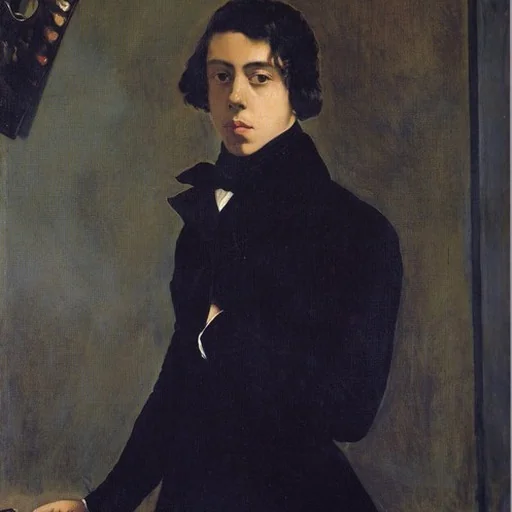
Théodore Chassériau (French pronunciation: ; Spanish: Teodoro Chasseriau; September 20, 1819 – October 8, 1856) was a Dominican-born French Romantic painter noted for his portraits, historical and religious paintings,…

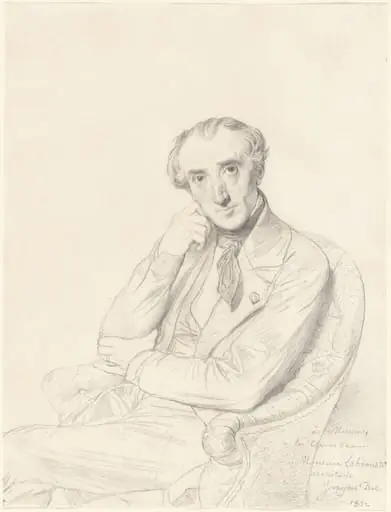 Henri Labrouste
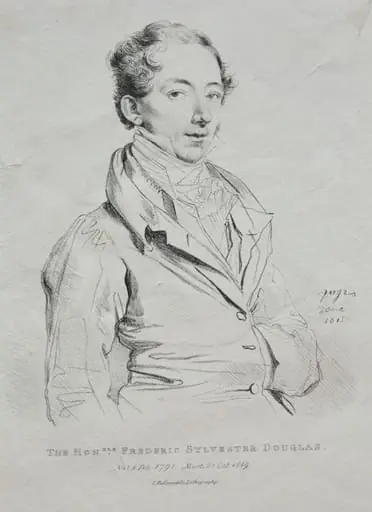 Honorable Frederic Sylvester Douglas
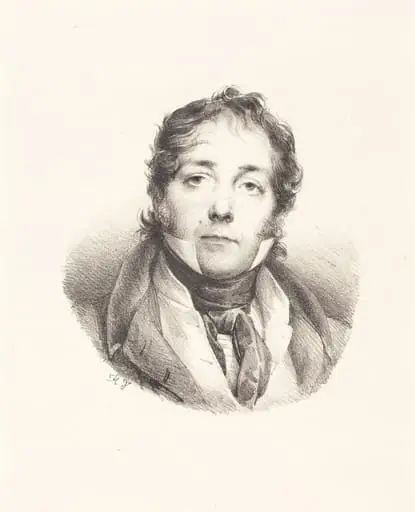 Le General Comte Sebastiani
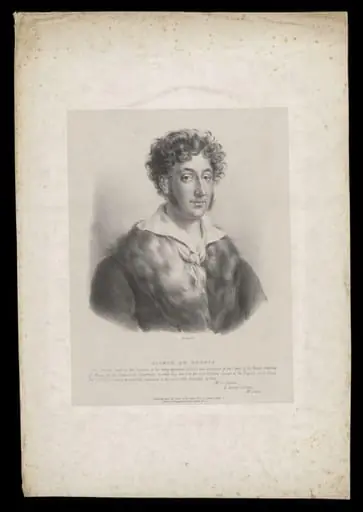 H Beard Print Collection
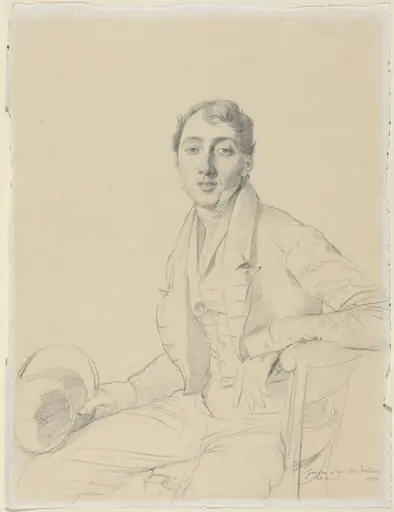 Dr. Louis Martinet
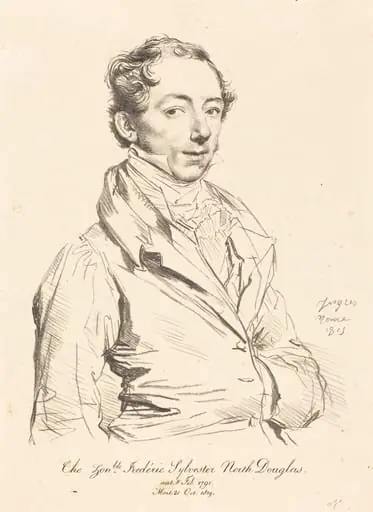 Frederic Sylvester Douglas
 Portrait of a Young Man Standing on the Quirinal with the Turris Comitum in the Background
 H Beard Print Collection
 Portrait of a Man
 Pierre Guerin
 John Constable
 H Beard Print Collection