Artwork
Sf. Nicolae
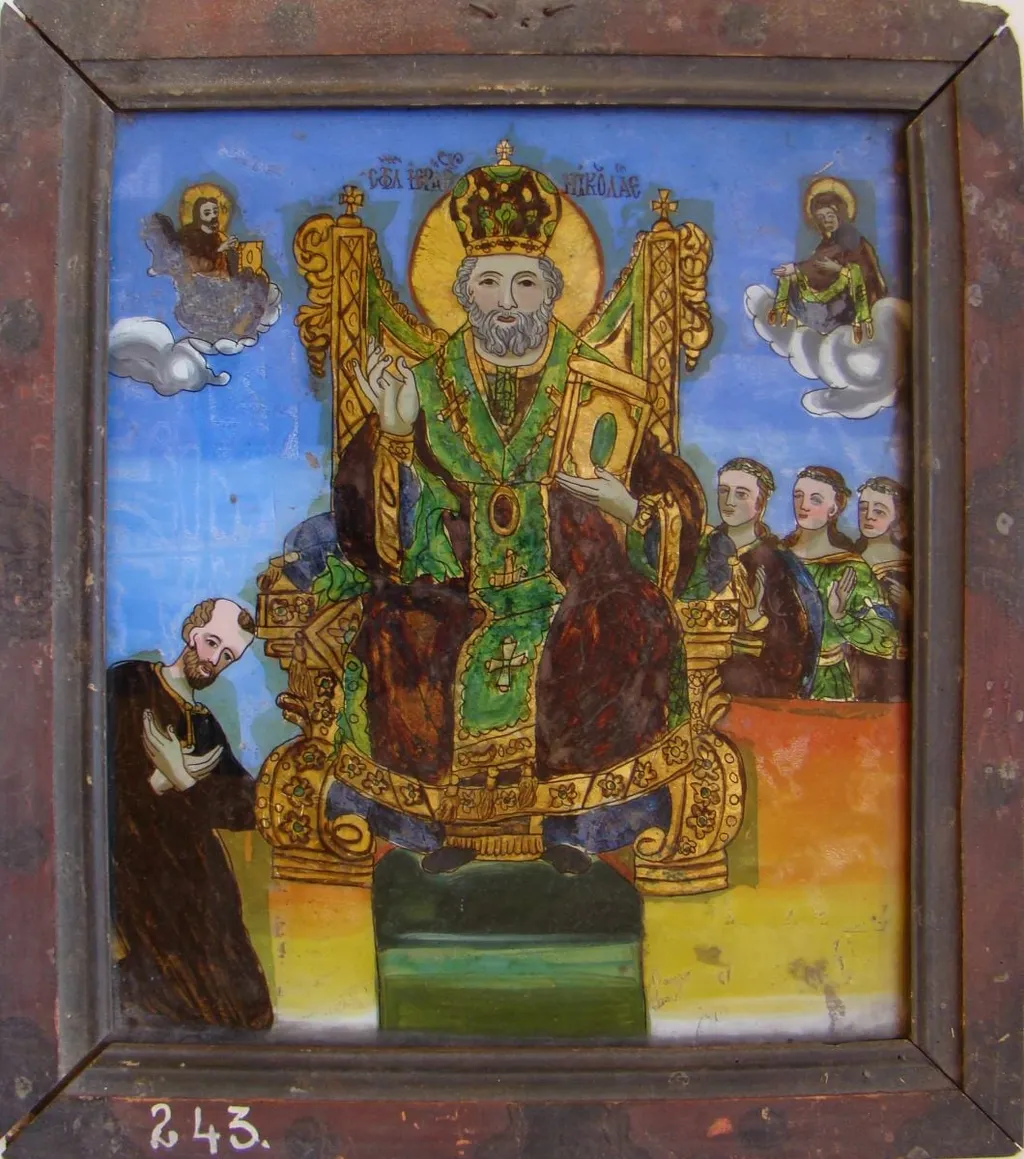
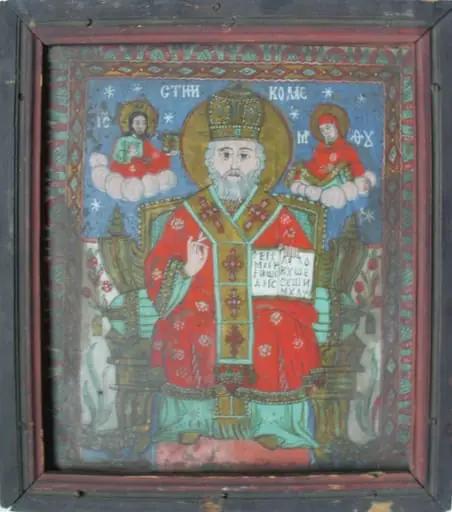
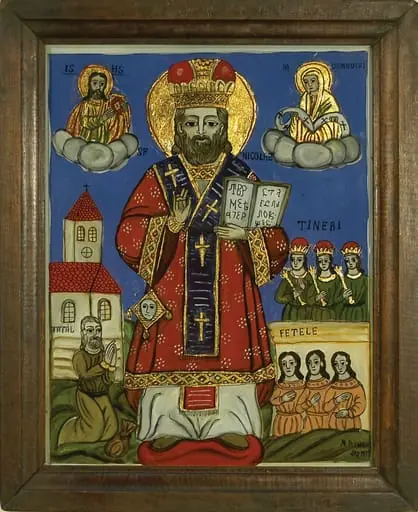
Sf. Nicolae is a drawing by Ioan Morar din Laz. It is held in the collection of the Alba Iulia Orthodox Archdiocese. This image portrays a solemn, crowned figure seated on an ornate throne, surrounded by angels and set against a celestial blue background.
About this work
Overview
This image portrays a solemn, crowned figure seated on an ornate throne, surrounded by angels and set against a celestial blue background.
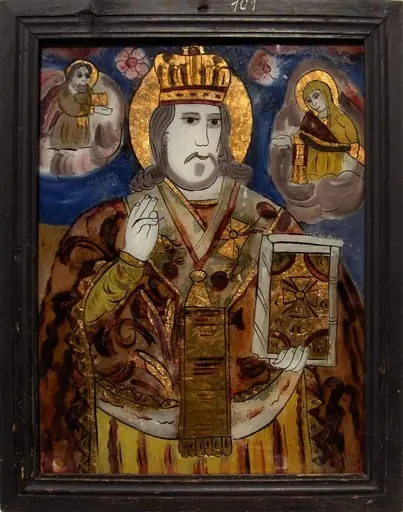
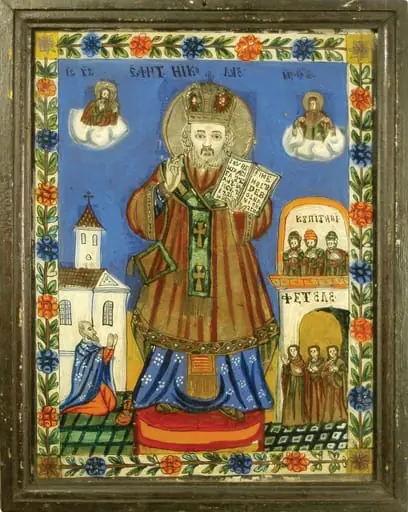
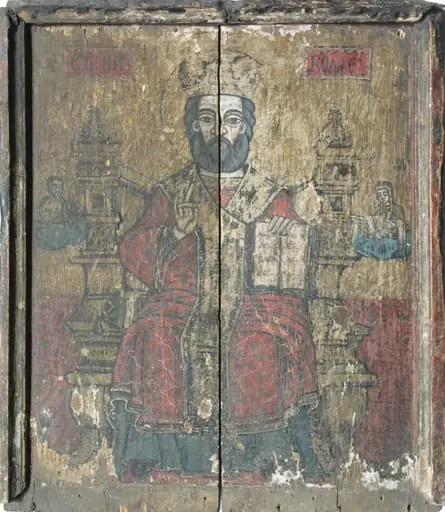
This image portrays a solemn, crowned figure seated on an ornate throne, surrounded by angels and set against a celestial blue background. The figure, identified as Saint Nicholas, is rendered with precise detail in richly patterned garments and gold embellishments. A halo and cross reinforce his sacred status, while his gesture and book suggest authority and divine wisdom. The composition centers the figure with symmetry, emphasizing his spiritual prominence.
Subject & Meaning
The figure is Saint Nicholas, a revered Christian bishop known for his charity and protection of the vulnerable. His regal attire and throne reflect his ecclesiastical authority, while the book symbolizes scripture and teaching. The angels flanking him signify divine presence and intercession. The cross on the throne anchors his role as a servant of Christ, merging earthly dignity with heavenly mandate in a visual affirmation of faith.
Technique & Style
The painting employs fine brushwork to render intricate textures in the robe, crown, and throne carvings. Gold leaf highlights elevate the sacred elements, creating luminous contrast against the deep blue background. The figures are rendered with formal rigidity, typical of Byzantine-influenced iconography, where symbolic clarity outweighs naturalistic movement. The angels’ wings and drapery are delicately detailed, enhancing the ethereal atmosphere without disrupting the composition’s stillness.
History & Provenance
The work originates from a tradition of Eastern Orthodox icon painting, likely produced in the Balkans or Romanian principalities during the late medieval or early modern period. It was probably created for devotional use in a church or private chapel. Though the artist’s identity is unrecorded, stylistic parallels link it to regional workshops that preserved Byzantine conventions while incorporating local decorative elements.
Context
In Orthodox Christian communities, images of Saint Nicholas served both liturgical and educational purposes, reinforcing his role as intercessor and protector. Such icons were venerated during feast days and processions. The use of gold, blue, and symmetrical composition aligned with theological principles that prioritized spiritual truth over earthly realism, making the image a conduit for prayer rather than mere decoration.
Legacy
This image contributes to a broader visual tradition of saintly portraiture that endured for centuries across Eastern Europe. Its formal language influenced later religious art in Moldavia and Wallachia, where iconography remained central to spiritual life. While modern scholarship has not attributed it to a specific hand, its preservation reflects the continuity of devotional practices and the enduring cultural weight of Saint Nicholas in Orthodox identity.
Artist & collection
Artist
A Transylvanian church artist of the mid-1800s, Ioan Morar din Laz filled altarpieces with bold colors and flowing gold in Arhanghelul Mihail (1845) and Iisus Hristos Pantocrator (1860).