Artwork
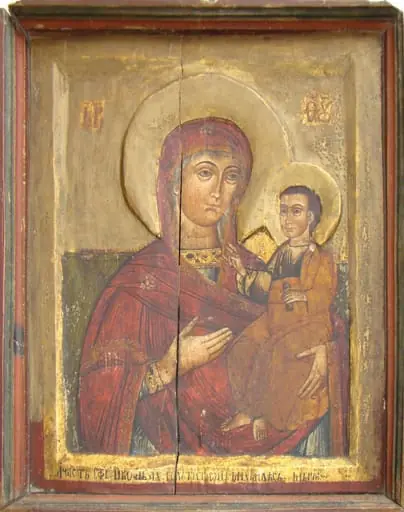
Maica Domnului cu Pruncul, floarea neveștejită
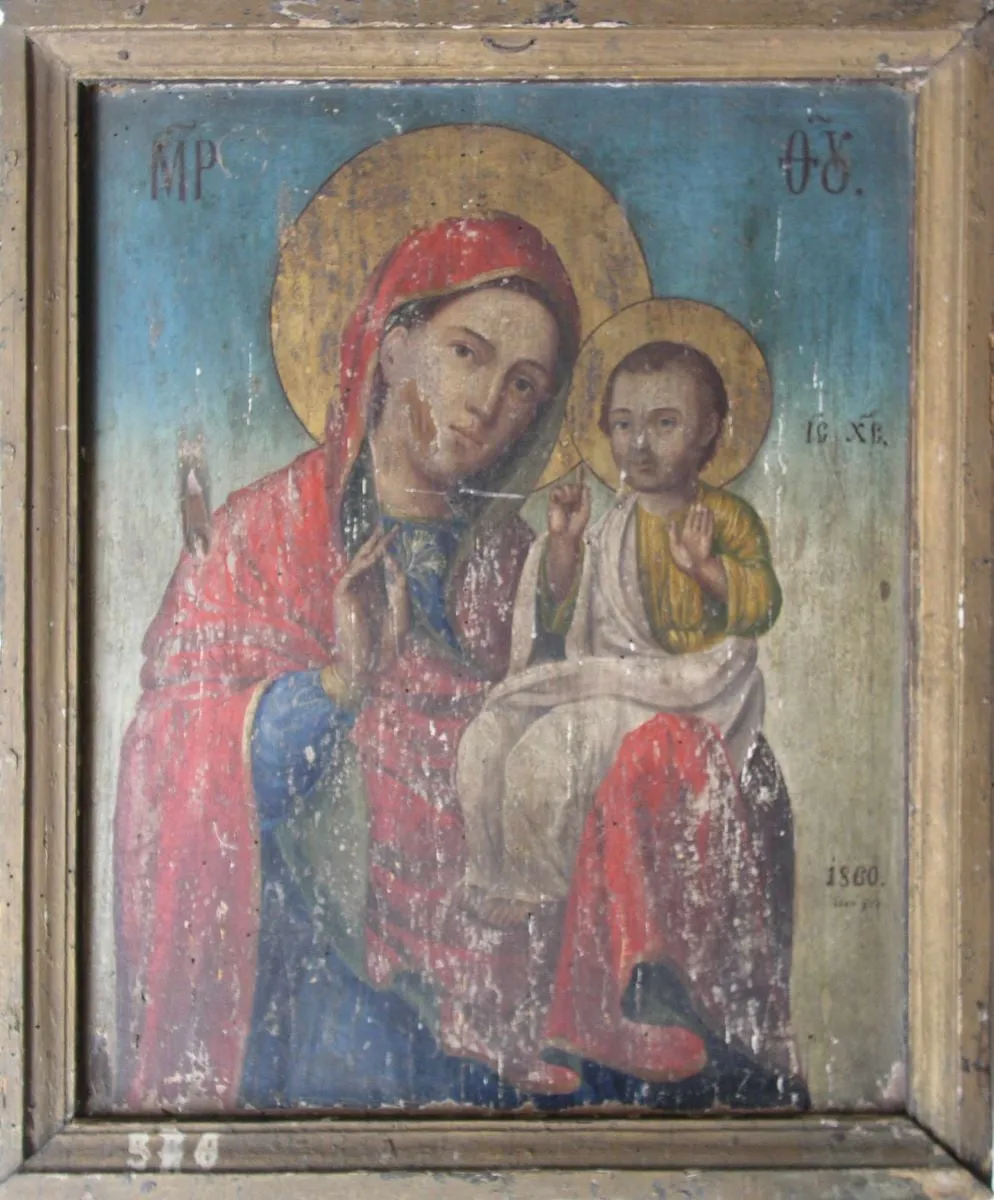
Maica Domnului cu Pruncul, floarea neveștejită is a drawing by the Impressionist artist Ioan Morar din Laz. It dates from 1860 and is held in the collection of the Alba Iulia Orthodox Archdiocese.
About this work
Overview
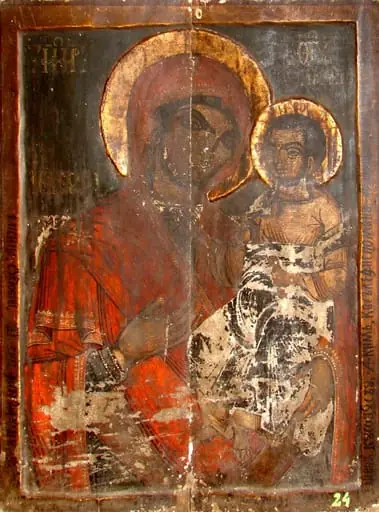
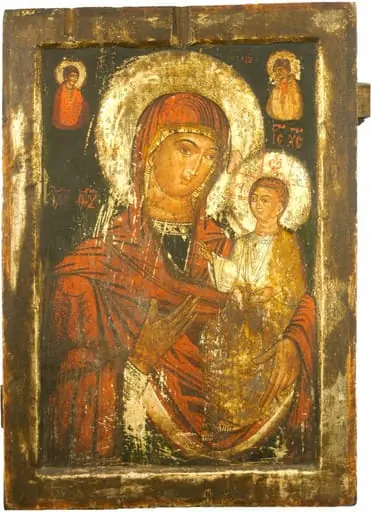
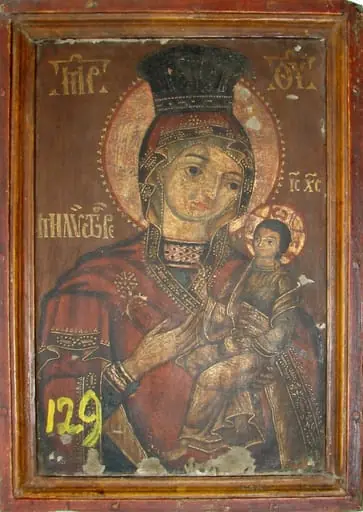
Painted in 1860 by Ioan Morar din Laz, this devotional image depicts the Virgin Mary with the Christ Child.
Painted in 1860 by Ioan Morar din Laz, this devotional image depicts the Virgin Mary with the Christ Child. Executed in tempera or similar medium on wood, it is part of the collection at the Museum of Ethnography. The work bears the artist’s signature and reflects a regional tradition of religious iconography from the Carpathian area, blending local aesthetics with broader Orthodox visual conventions.
Subject & Meaning
The title, 'Mother of God with the Child, the Unseen Flower,' evokes Marian symbolism tied to purity and divine mystery. The figures, marked by golden halos, are presented with solemn stillness. The book held by the Virgin suggests contemplation and divine wisdom, while the child’s raised hand may signify blessing or awakening. The imagery draws from liturgical poetry, framing Mary as a spiritual emblem beyond earthly decay.
Technique & Style
The painting employs flat, stylized forms with minimal modeling, characteristic of folk religious art in 19th-century Romania. Colors are bold and symbolic: red and blue garments, golden halos, and a uniform blue background create a sense of sacred space. The worn edges suggest prolonged ritual use. Brushwork is deliberate but unrefined, prioritizing symbolic clarity over naturalism, aligning with local ecclesiastical painting practices.
History & Provenance
Created in 1860, the work likely originated in a rural household or chapel in the Laz region. It entered the Museum of Ethnography’s collection as part of efforts to preserve vernacular religious artifacts. Its survival, despite visible wear, indicates sustained veneration. The artist’s inscription confirms local authorship, distinguishing it from mass-produced icons and affirming its ties to a specific artisan tradition.
Context
In mid-19th century Romania, religious imagery in rural communities often blended Orthodox theology with folk motifs. Artists like Morar operated outside formal academies, relying on oral transmission and regional templates. This painting reflects a time when devotional objects were both spiritual tools and cultural markers, serving as focal points for prayer and identity in communities with limited access to urban ecclesiastical art.
Legacy
The painting remains a representative example of Romanian folk religious art, studied for its synthesis of sacred symbolism and local craftsmanship. It contributes to understanding how Orthodox iconography adapted in isolated regions, preserving continuity through modest means. While not widely known beyond ethnographic circles, it anchors scholarly interest in the intersection of faith, material culture, and regional identity.
Artist & collection
Artist
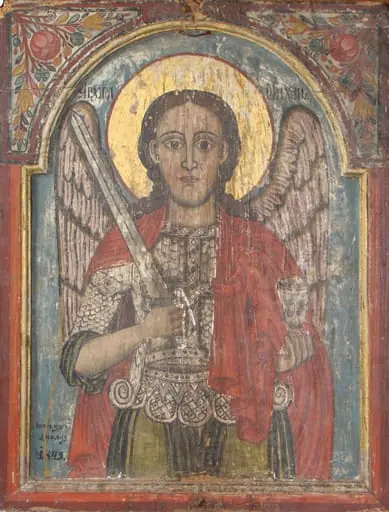
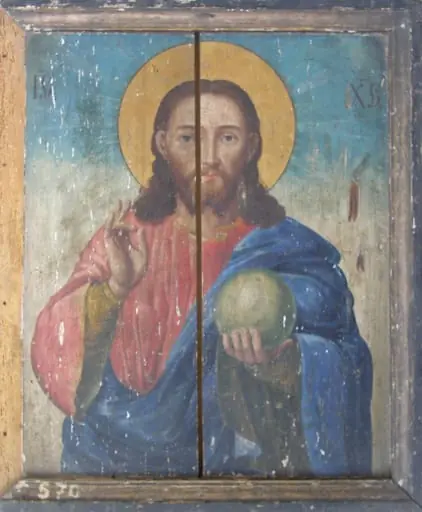
A Transylvanian church artist of the mid-1800s, Ioan Morar din Laz filled altarpieces with bold colors and flowing gold in Arhanghelul Mihail (1845) and Iisus Hristos Pantocrator (1860).
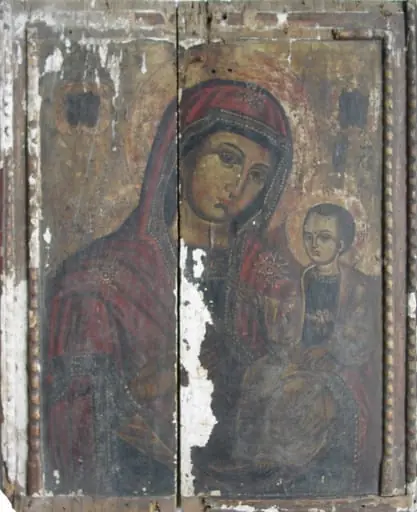 Maica Domnului cu Pruncul
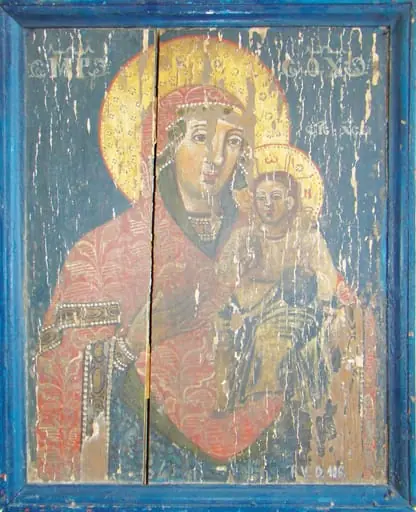 Maica Domnului cu Pruncul
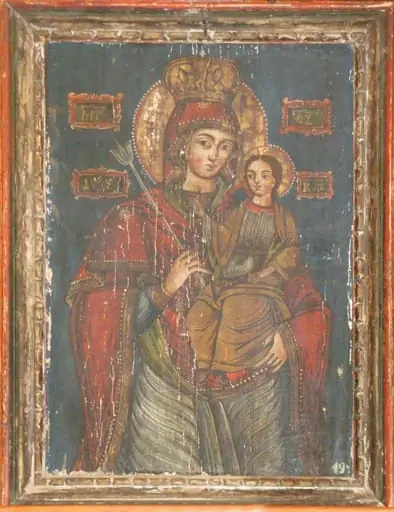 Maica Domnului cu Pruncul
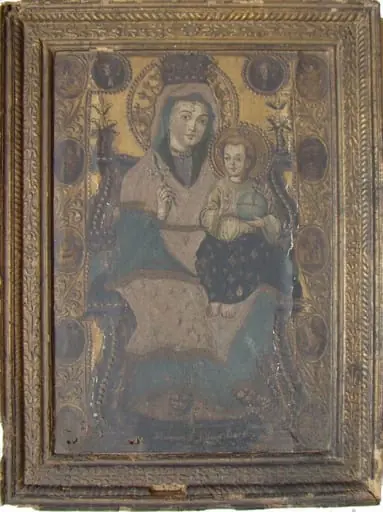 Maica Domnului cu Pruncul, floarea neveștejită
 Maica Domnului cu Pruncul
 Maica Domnului cu Pruncul
 Maica Domnului cu Pruncul
 Maica Domnului cu Pruncul
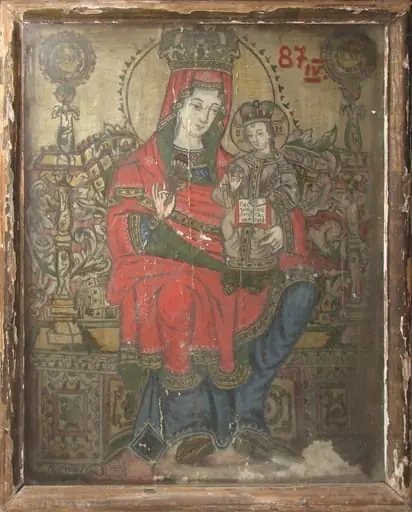 Maica Domnului cu Pruncul, floarea neveștejită
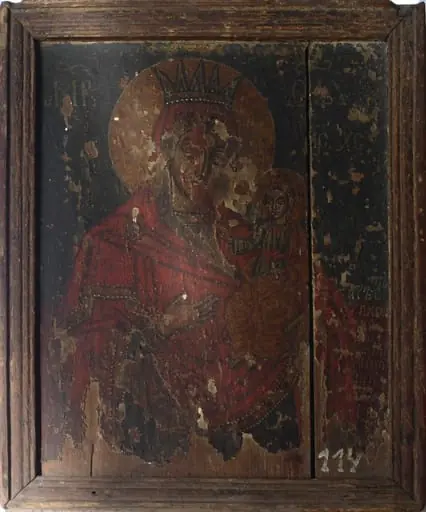 Maica Domnului cu Pruncul
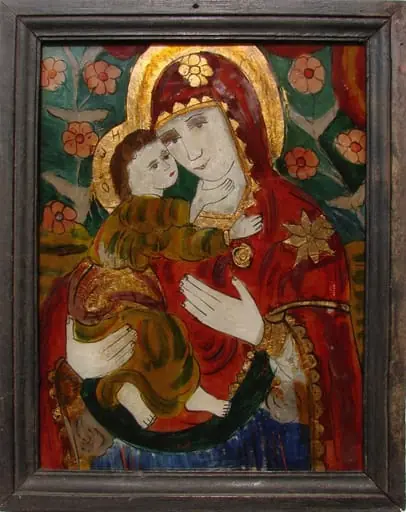 Maica Domnului cu Pruncul
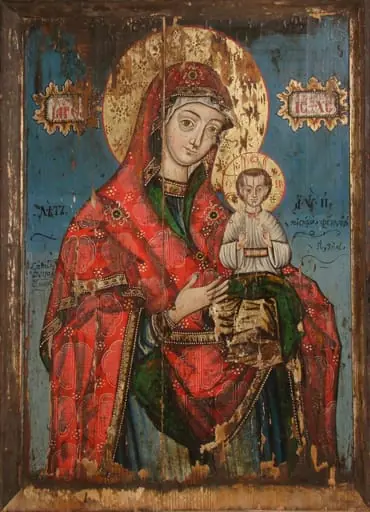 Maica Domnului cu Pruncul