Artwork
Sf. Nicolae
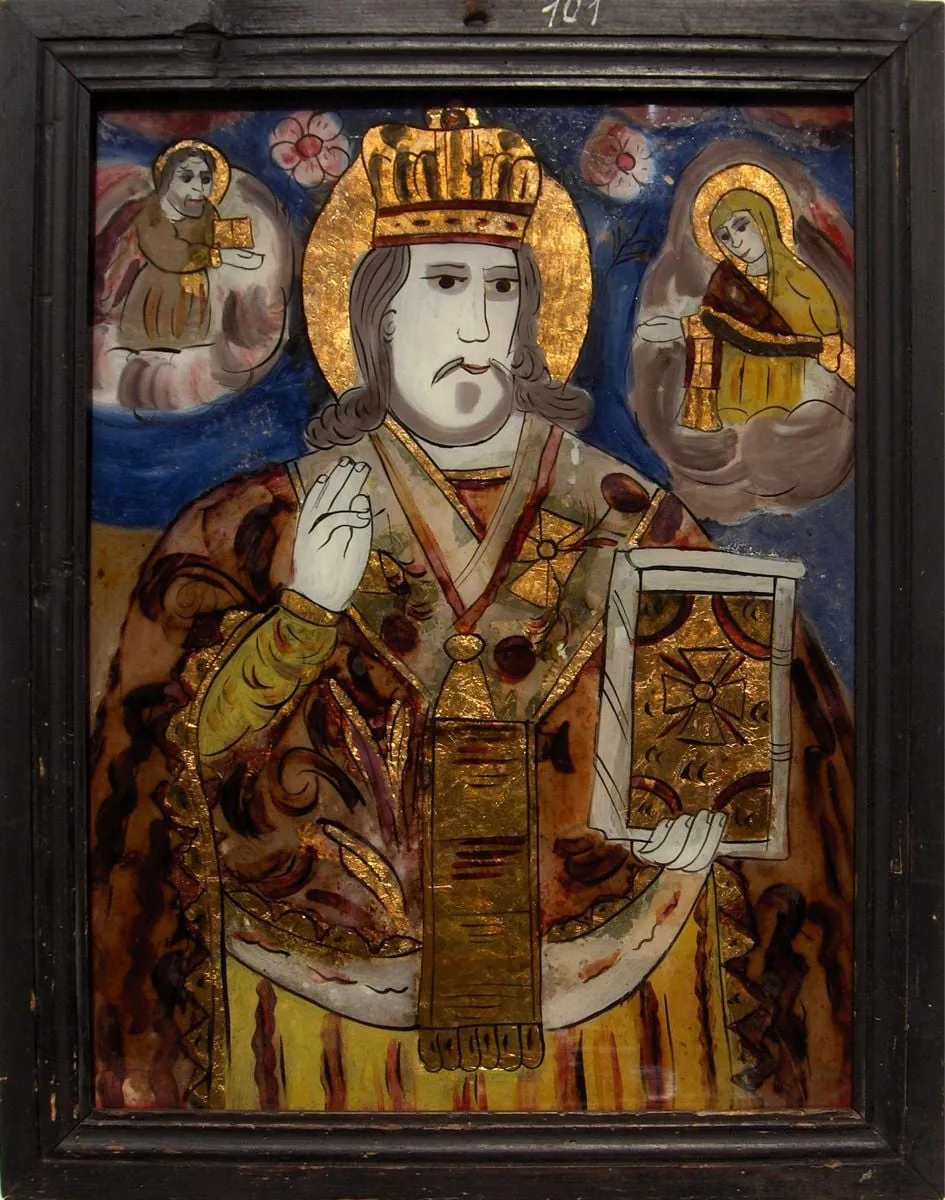
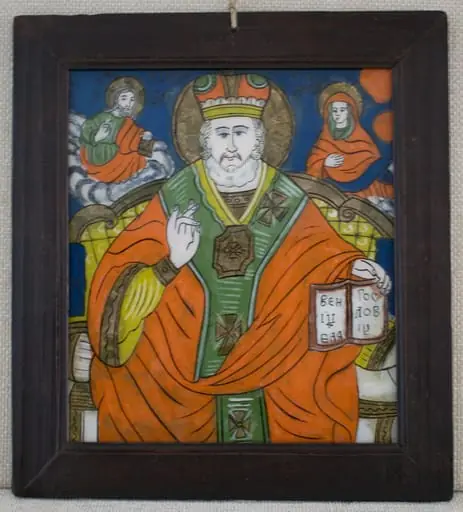
Sf. Nicolae is an unspecified painting by Petru Prodan. It is held in the collection of the Alba Iulia Orthodox Archdiocese. This painted image depicts Saint Nicholas, a revered Christian bishop, rendered in a traditional Byzantine style.
About this work
Overview
The use of flat, bright colors and minimal shading reflects early religious iconography focused on symbolic representation over naturalism.
This painted image depicts Saint Nicholas, a revered Christian bishop, rendered in a traditional Byzantine style. He is shown frontally, with a serene expression and golden robes adorned with gold leaf, emphasizing his spiritual authority. Two smaller celestial figures hover behind him, suggesting divine presence. The use of flat, bright colors and minimal shading reflects early religious iconography focused on symbolic representation over naturalism.
Subject & Meaning
Saint Nicholas is portrayed as a holy intercessor, identified by his bishop’s crown and ornate vestments. The two rectangular objects he holds likely represent the Gospels, symbolizing his role as a teacher and guardian of Christian doctrine. The floating figures above may be angels or saints, one holding a scroll to signify divine revelation, the other gazing downward as a witness to his sanctity.
Technique & Style
The painting employs gold leaf for the saint’s garments and halo, enhancing its sacred character through luminous materiality. Facial features are simplified—large eyes, no shading, and symmetrical proportions—following conventions of Eastern Orthodox icon painting. The background lacks depth, and figures are arranged hierarchically, prioritizing spiritual significance over spatial realism.
History & Provenance
Though exact origins are unrecorded, the style and materials suggest a production date between the 13th and 16th centuries, likely from a Byzantine or Slavic workshop. Such icons were used in private devotion or church altars. The preservation of gold leaf and pigment indicates careful handling, possibly within a monastic or familial religious context over centuries.
Context
In medieval Christian communities, icons like this served as focal points for prayer and veneration. Saint Nicholas, known for miracles and charity, was especially popular across Eastern Europe and the Mediterranean. The icon’s formal style aligns with liturgical needs: clear, timeless, and resistant to individual interpretation, reinforcing doctrinal continuity across generations.
Legacy
This image continues to reflect enduring traditions in Eastern Christian art, where visual form carries theological meaning. Its stylistic choices influenced later Orthodox iconography and remain recognizable in contemporary religious practice. Though no longer central to mainstream worship in many regions, such works retain cultural and spiritual resonance in communities that preserve ancestral devotional customs.
Artist & collection
Artist
Petru Prodan painted religious scenes in the icon tradition. His works include *Sf. Nicolae* and *Prohodul lui Iisus*, showing saints and biblical figures in gold-leaf settings. The figures are stiff and frontal,…
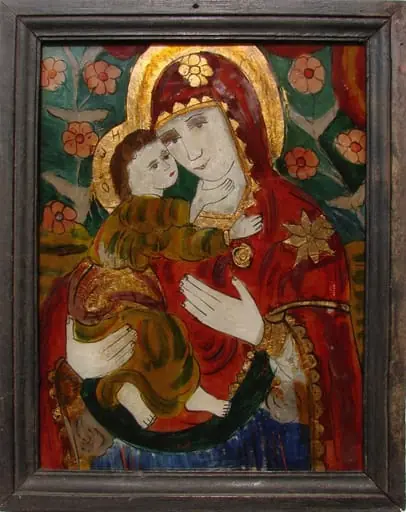
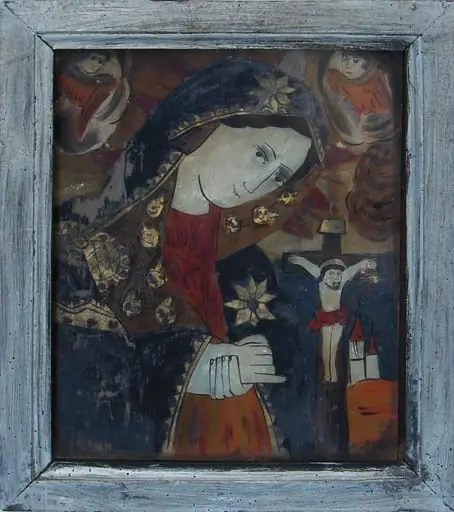
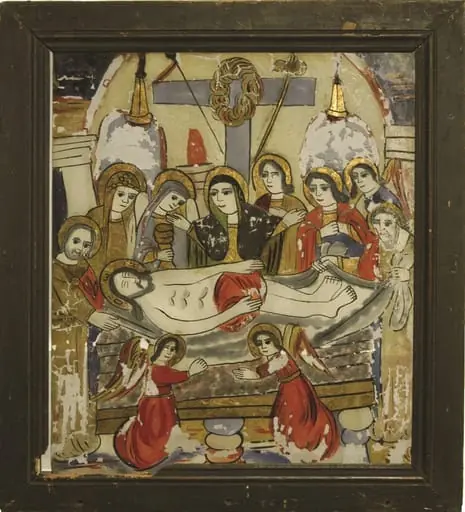
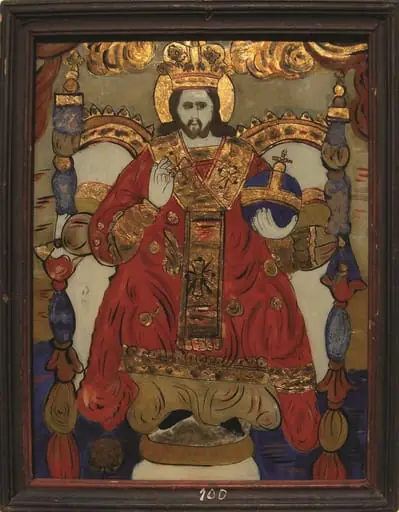
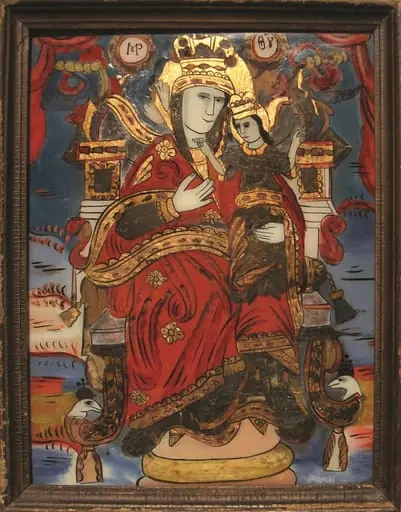
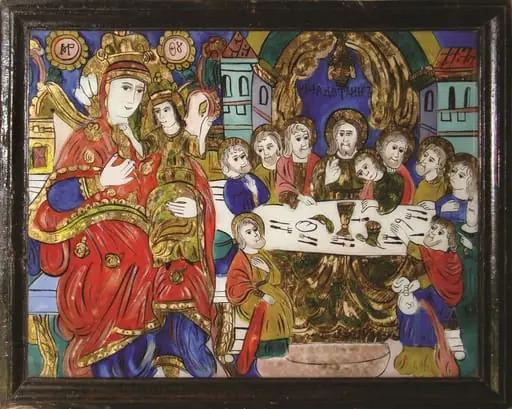
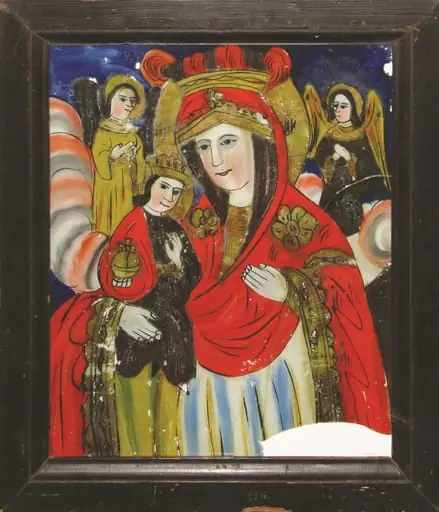
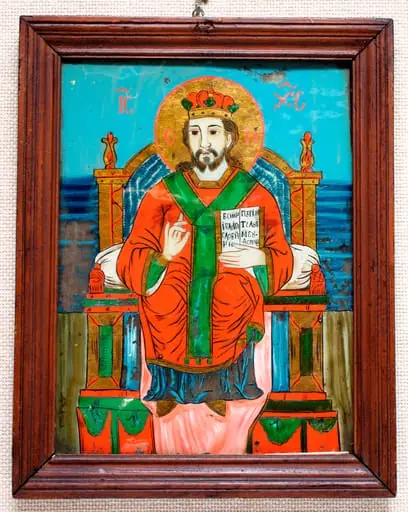
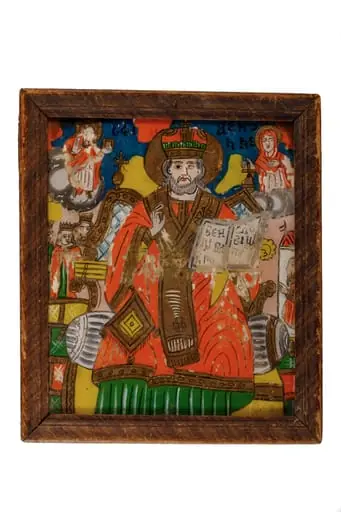 Icoană pictată pe sticlă reprezentând pe Sf. Nicolae. Sfântul este prezentat pe tron, față, bărbat tânăr, plete, barbă scurtă, cu dreapta binecuvântând, iar în stânga ține Evanghelia. Sus este încadrat de Iisus și Maria care îi oferă Evanghelia și omoforul. Stânga, la nivelul brațului, trei personaje în picioare și în dreapta o clădire și o mână (?) întinsă. Omoforul auriu cu cruci se evidențiază pe haina roșie cu linii ce marchează anatomia corpului. Icoana este înrămată.
 Icoae mi
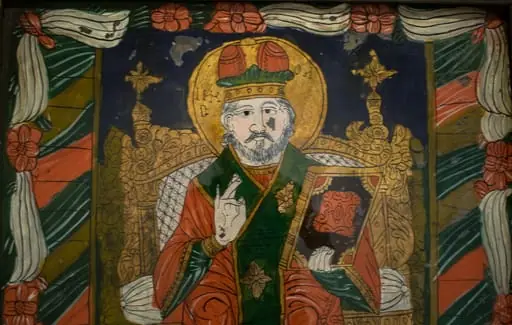 Icoana este pictată în oglindă, pe o foaie de glajă de formă dreptunghiulară în ax vertical. Sfântul Nicolae redat ca arhiereu, așezat pe un tron aurit, ține Evanghelia închisă în mâna stângă în timp ce cu dreapta binecuvintează. Evanghelia este de dimensiuni mari, redată în spațiu, cu margini aurite și decorațiuni roșii pe fond bleumarin. Sfântul ca Mare Arhiereu, poartă mitră înaltă, bipartită, omofor mare, verde intens decorat cu cruci aurite, stihar albastru , mânecuțe aurite, sacos roșu cărămiziu cu galon aurit la gât, mâneci și poale. De ambele mâini are atârnată câte o bederniță care are doar desenul schițat pe fondul sacosului. Chipul este sobru, barba albă, scurtă, părul scurt, ondulat. În jurul capului are un nimb aurit pe care este scrisă dezordonat inscripția. Tronul, de factură vădit barocă, are spătarul înalt, cu lemnul aurit, cu sculpturi abundente,(motive fitomorfe stilizate și motive geometrice) Spătarul este tapițat cu alb, decorat cu o rețea de linii întretăiate. Sfântul stă cu picioarele pe un postament de piatră. Câmp verde intens în partea de jos, albastru ultramarin în registrul superior. Pe laturile verticale este pictată câte o bandă lată, cu vrâste oblice în culori alternante: verde, auriu, roșu. Întreaga compoziție este încadrată de un chenar realizat dintr-o draperie albă stilizată strânsă din loc în loc cu flori roșii,la colțuri cu ghinde roșii. Desenul este caligrafic, fin, foarte minuțios, vădit inspirat din miniatura manuscriselor. Compoziția este echilibrată, paleta cromatică sobră(alb, albastru, roșu, verde, gri), armonioasă, rezultată din combinarea culorilor complementare cu auriul foiței. Rama este alcătuită din patru șipci drepte, îmbinate oblic la colțuri, colțul stâng jos fiind întărit cu un cui metalic. Culoare brun închis. Dosul- lemn subțire de brad, fixat pe spate cu bucăți de piele.
 Icoa
Icoa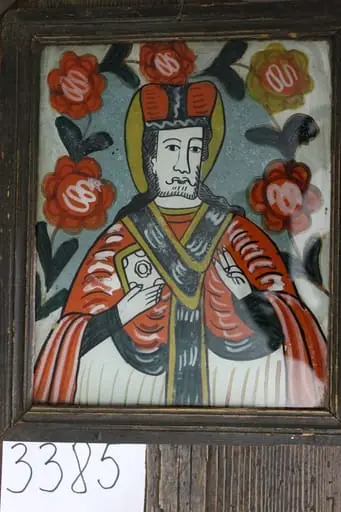 Sfantul Nicolae
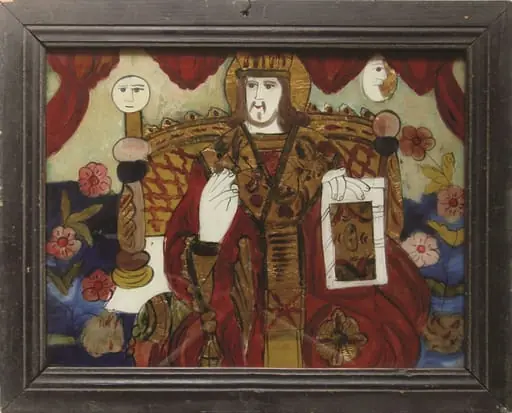 Iisus Hristos arhiereu și învățător, tronând
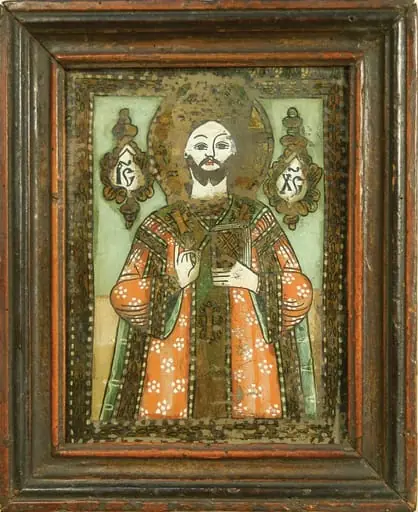 Iisus Hristos Mare Arhiereu și Învățător
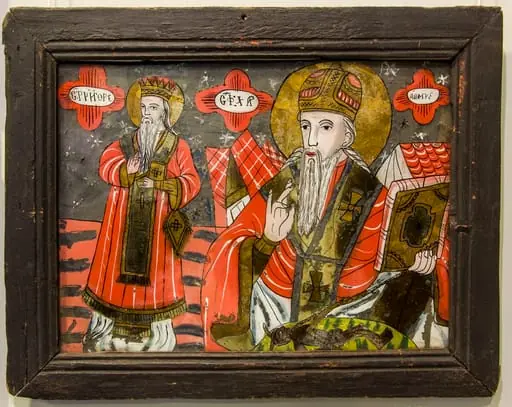 Sf. Grigore și Haralambie