Artwork
Nașterea Maicii Domnului
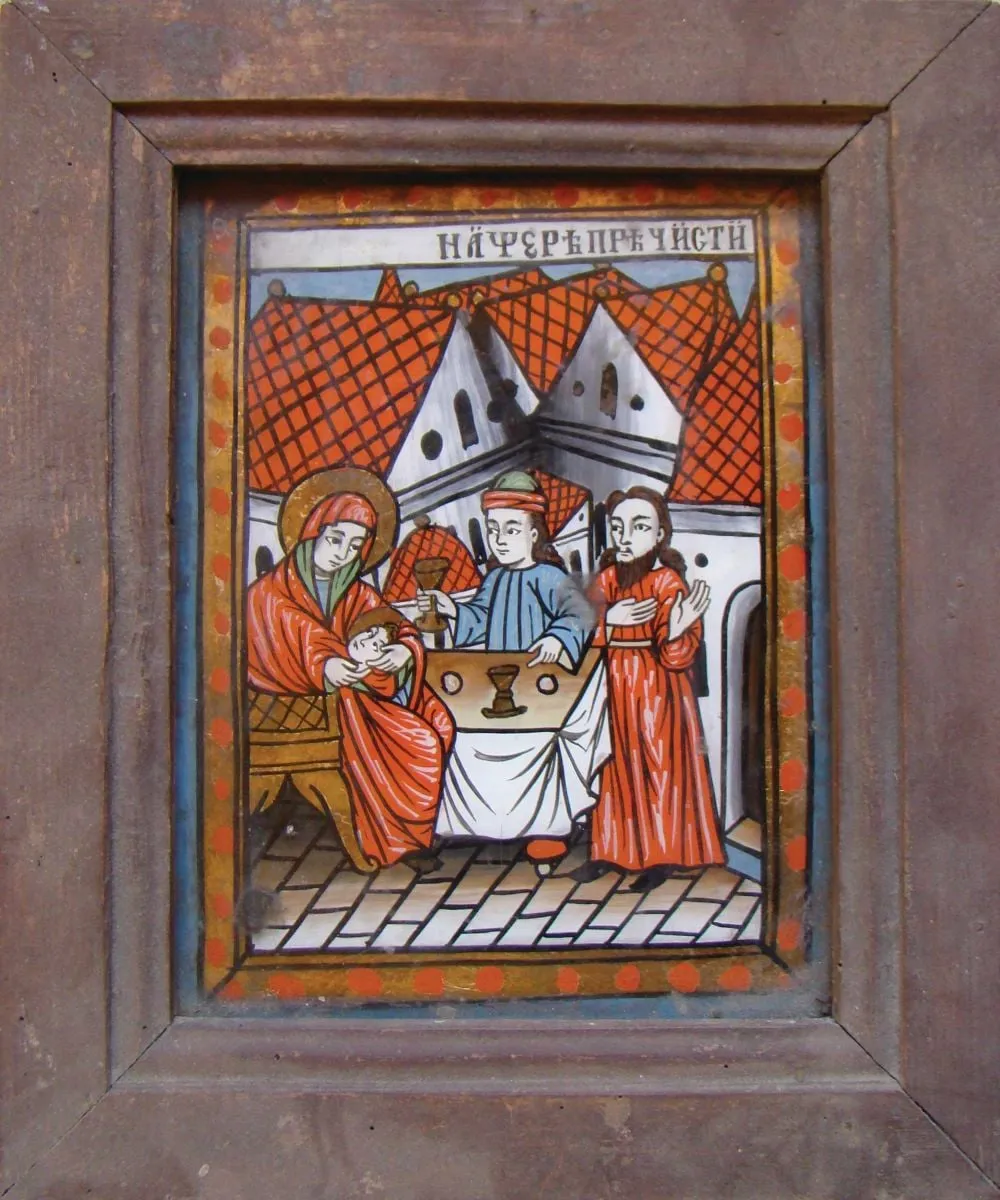
Nașterea Maicii Domnului is an unspecified painting by the Baroque artist Ioan Pop de la Făgăraș. It is held in the collection of the Alba Iulia Orthodox Archdiocese.
About this work
Overview
Rendered in a distinct folk tradition, it uses strong outlines and saturated hues to convey spiritual significance through everyday intimacy.
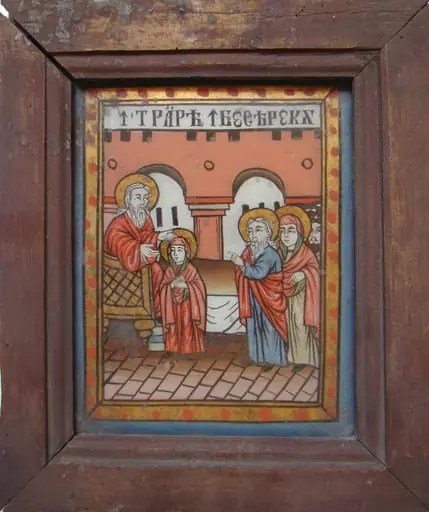
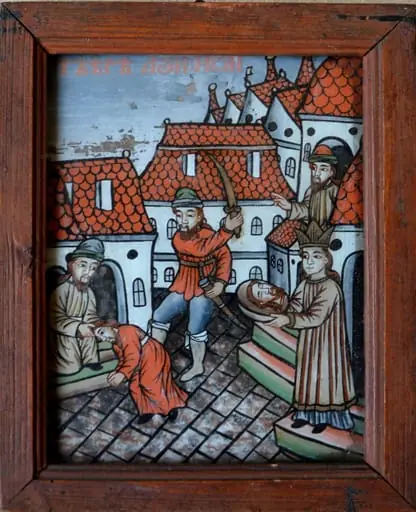
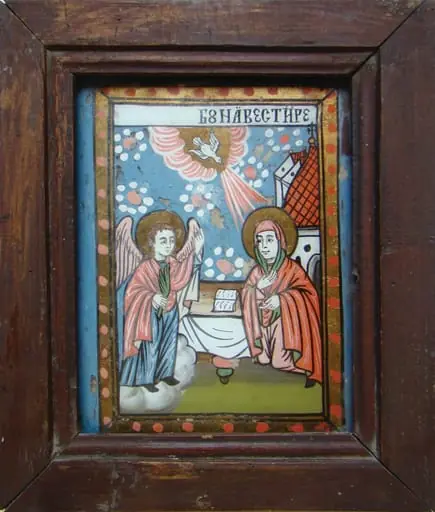
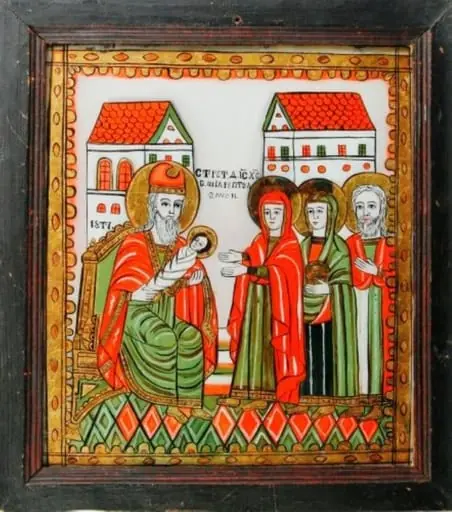
This painting, titled Nașterea Maicii Domnului, portrays a domestic scene centered on three figures gathered around a table. Rendered in a distinct folk tradition, it uses strong outlines and saturated hues to convey spiritual significance through everyday intimacy. The artist, Ioan Pop de la Făgăraș, emphasizes emotional presence over naturalism, grounding a sacred narrative in the rhythms of rural life.
Subject & Meaning
The central figure, clad in blue, holds a chalice, suggesting a ritual or sacramental act. To the left, a child is held tenderly, evoking the birth of the Virgin Mary, while the figure on the right stands in quiet reverence. The composition aligns with Orthodox devotional themes, translating theological concepts into accessible, familial moments without overt symbolism or celestial elements.
Technique & Style
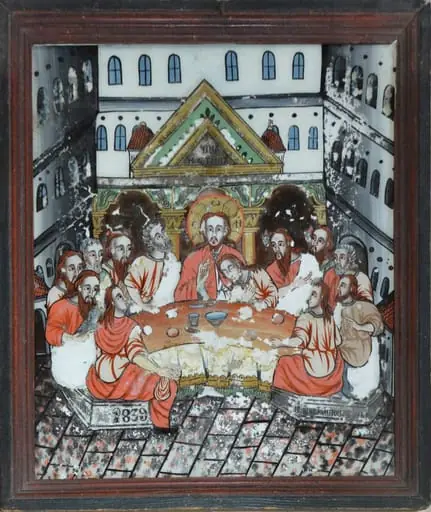
The work employs bold, unmodulated colors and simplified forms typical of Transylvanian folk painting. Brushwork is deliberate and flat, with no attempt at perspective or shading. Red-tiled roofs and white architecture frame the scene, reinforcing a local architectural vocabulary. Lines define form with clarity, enhancing the painting’s tactile, handcrafted quality.
History & Provenance
Created by Ioan Pop de la Făgăraș, a known folk artist from central Romania, the painting likely originated in a church or private home in the Făgăraș region during the late 19th or early 20th century. Its survival suggests local veneration, possibly used in domestic devotion. No documented exhibition or collection history is widely recorded.
Context
In rural Transylvania, religious imagery was often produced by itinerant or local painters who blended Orthodox iconography with regional aesthetics. This piece reflects a tradition where sacred stories were rendered not by trained academicians but by artisans familiar with community life, making theology tangible through familiar settings and gestures.
Legacy
The painting stands as an example of how Orthodox spirituality was localized in Romanian folk art. It contributes to a broader understanding of non-elite visual culture, where faith was expressed through domestic and communal aesthetics rather than institutional grandeur. Its preservation highlights the endurance of vernacular religious expression in modern Romania.
Artist & collection
Artist
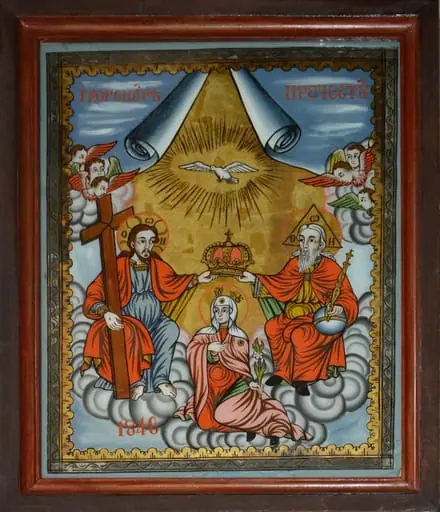
Ioan Pop de la Făgăraș painted religious scenes in the mid-1800s, like *Încoronarea Fecioarei* (1846) and *Duminica Floriilor*.