Artwork
Tăierea capului Sf. Ioan Botezătorul
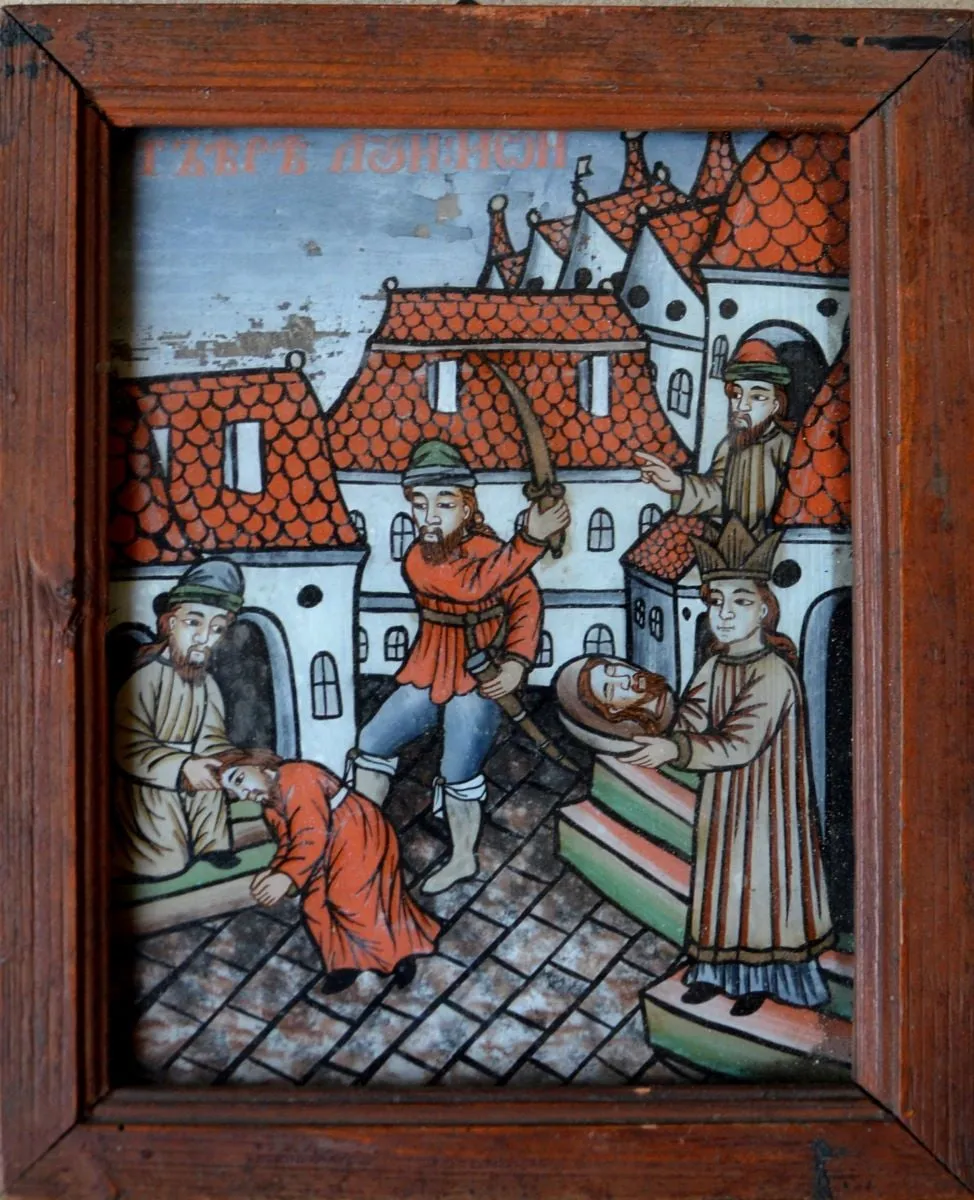
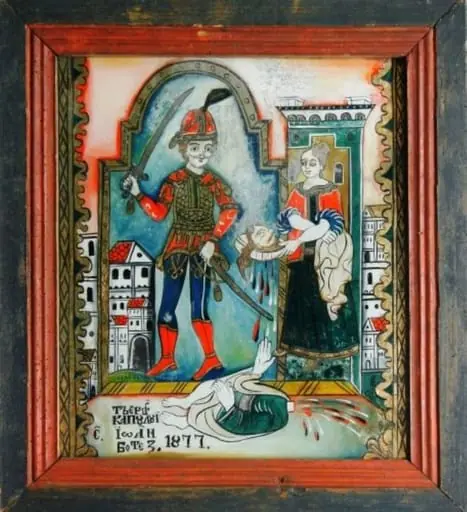
Tăierea capului Sf. Ioan Botezătorul is an unspecified painting by the Baroque artist Ioan Pop de la Făgăraș. It is held in the collection of the Alba Iulia Unification National Museum. The work titled “Tăierea capului Sf.
About this work
Overview
The work titled “Tăierea capului Sf. Ioan Botezătorul” presents a bustling urban scene rendered in a flat, graphic manner. Four figures dominate the composition, dressed in vivid garments; one in orange raises a sword, another kneels, and a third carries a basket containing a severed head. Red‑tiled, steep‑roofed buildings frame the scene, while the ground is depicted as stone‑brick paving.
Subject & Meaning
The painting depicts the beheading of Saint John the Baptist, a biblical episode traditionally associated with martyrdom. The presence of the sword, the kneeling figure, and the basket with a head all reference the narrative of John’s execution at the order of Herod. The bright clothing and crowded street suggest a public spectacle, emphasizing the communal aspect of the event.
Technique & Style
Executed with bold, saturated colors and simplified forms, the image resembles a flat illustration rather than a fully modeled scene.
Executed with bold, saturated colors and simplified forms, the image resembles a flat illustration rather than a fully modeled scene. Strong contrasts of light and dark create a chiaroscuro effect that isolates the figures from the background, enhancing their three‑dimensional impression despite the overall planar treatment. The use of clear outlines and limited shading contributes to a graphic, almost decorative quality.
Context
While specific details about the artist and date are not provided, the work aligns with a tradition of narrative religious painting that condenses complex stories into single, striking images. The stylized representation and vivid palette suggest influences from folk or popular art, where visual clarity and immediacy serve devotional and didactic purposes.
Artist & collection
Artist
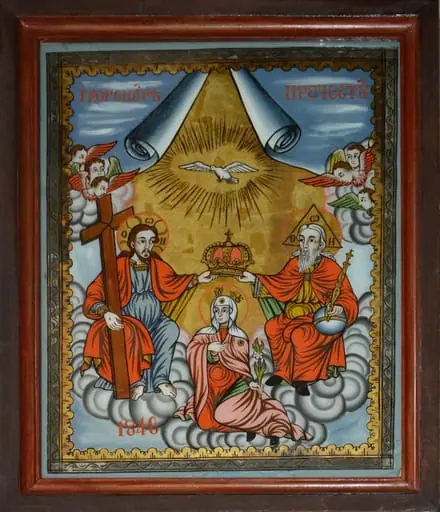
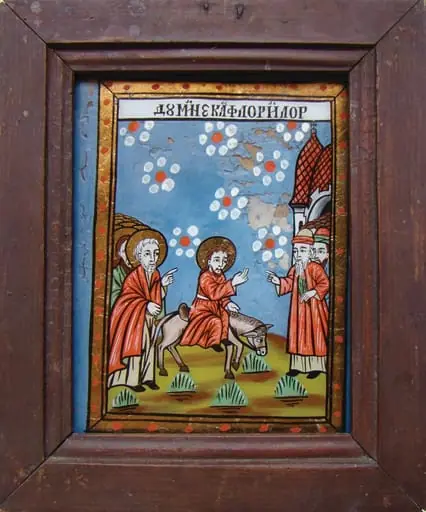
Ioan Pop de la Făgăraș painted religious scenes in the mid-1800s, like *Încoronarea Fecioarei* (1846) and *Duminica Floriilor*.
Museum
Alba Iulia Unification National Museum
Continue through works from the same source collection.