Artwork
Peisaj din Deltă
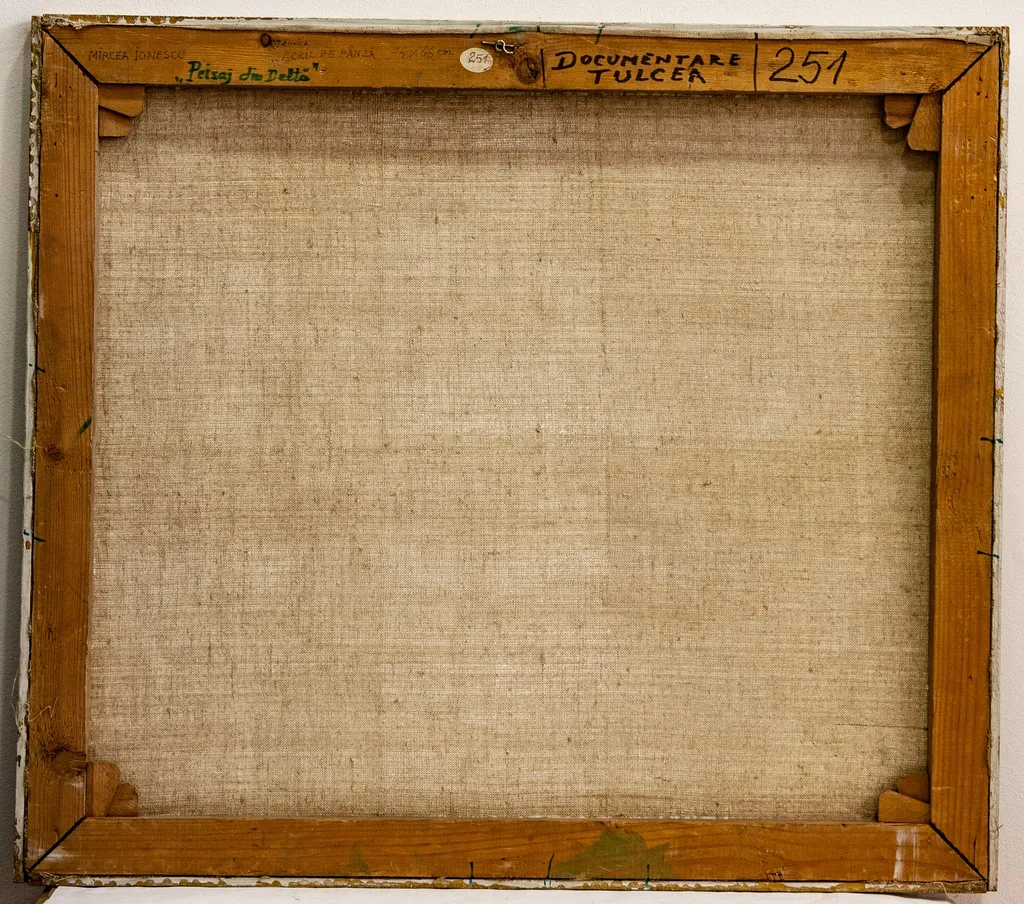
Peisaj din Deltă is a print by Mircea Ionescu. It is held in the collection of the Gavrila Simion Eco-Museum Research Institute Tulcea.
About this work
Overview
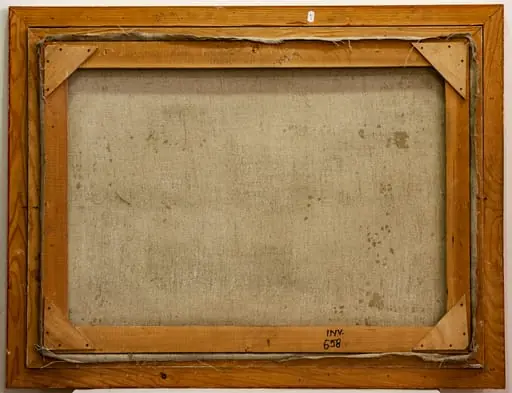
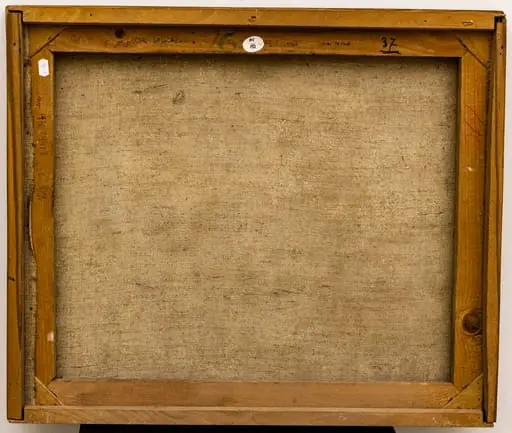
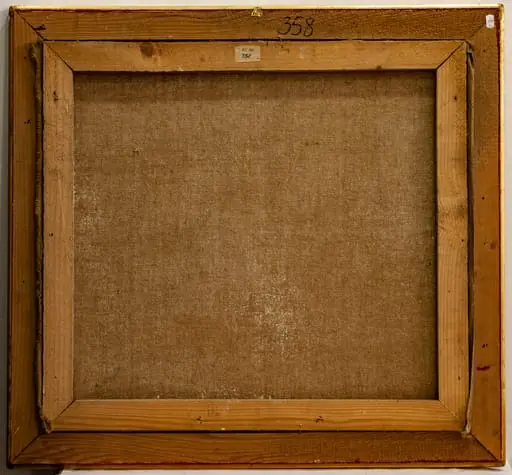
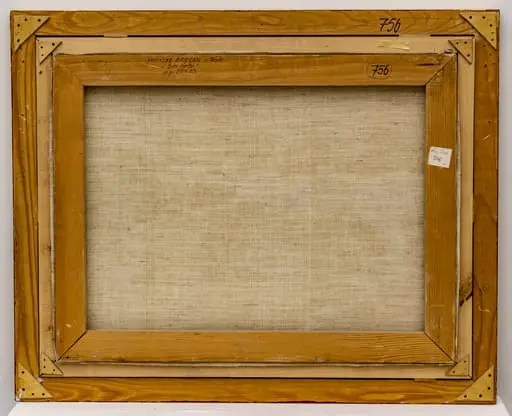
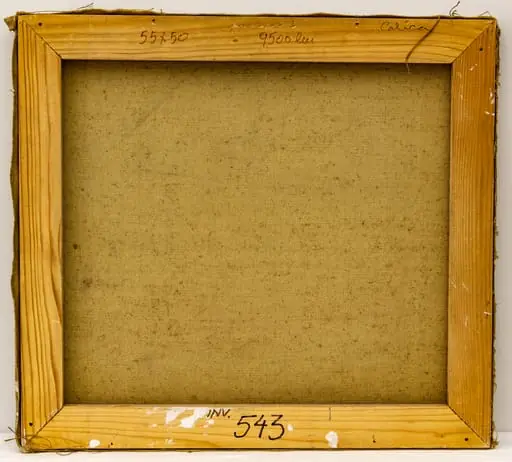
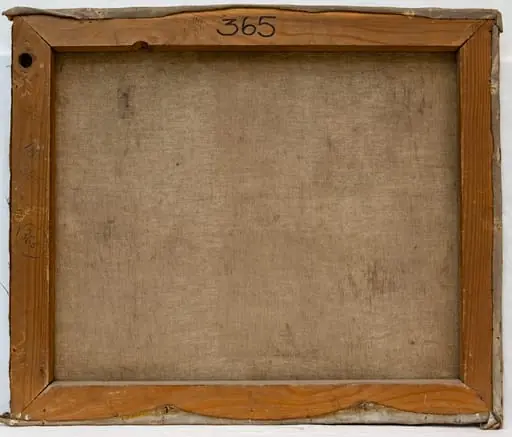
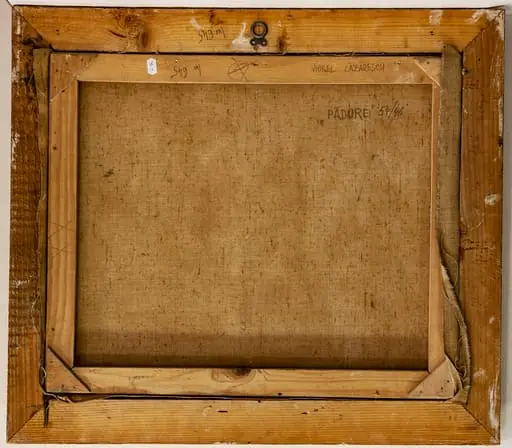
It appears as a preparatory support never completed, preserving only the physical traces of an unfulfilled artistic intention.
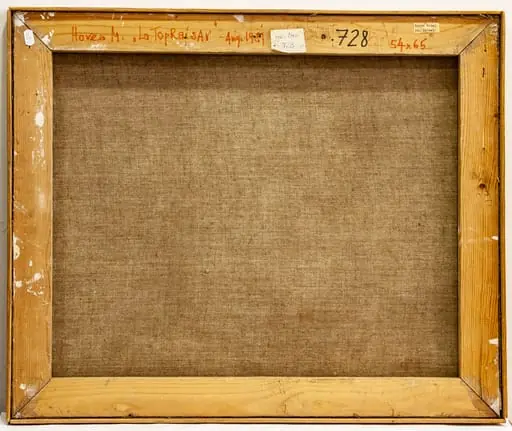
A stretched canvas on a weathered wooden frame, devoid of any painted image, bears the title 'Peisaj din Deltă' and the artist's name, Mircea Ionescu, handwritten directly on the frame. The surface shows signs of age: paint flakes at the corners, the fabric is faded, and no trace of composition remains. It appears as a preparatory support never completed, preserving only the physical traces of an unfulfilled artistic intention.
Subject & Meaning
The title suggests a depiction of the Danube Delta, a region known for its wetlands and shifting landscapes. Yet the absence of imagery transforms the work into a meditation on absence, expectation, or abandonment. The empty canvas may reflect the artist’s interrupted process, a deliberate void, or the impermanence of natural environments themselves — leaving interpretation open to the viewer’s contemplation.
Technique & Style
The canvas was prepared using standard easel techniques, primed and stretched for oil or tempera, but no pigment was applied beyond the frame’s handwritten annotations. The worn wood and frayed edges indicate prolonged handling or storage. The lack of brushwork or color contrasts with traditional landscape conventions, making the work’s form entirely structural rather than pictorial.
History & Provenance
No documented exhibition or sale history accompanies the piece. The handwritten title and artist’s name suggest it was personally labeled by Ionescu, possibly for storage or private reference. Its survival as an uncompleted object implies it was retained not as a failure, but as a relic — perhaps preserved for its material testimony rather than its intended image.
Context
In mid-20th century Romanian art, landscape painting was often tied to national identity and rural realism. Ionescu’s unexecuted canvas stands in quiet contrast to these trends, hinting at personal hesitation, political constraints, or a shift toward conceptual concerns. The work’s silence speaks against the era’s emphasis on visible, socially sanctioned imagery.
Legacy
As an artifact of artistic process rather than product, this object invites reflection on the boundaries of art. It challenges assumptions about completion and value, positioning the preparatory stage as worthy of preservation. Its endurance as an empty frame suggests a quiet legacy: art not as representation, but as the residue of intention.
Artist & collection
Artist
Mircea Ionescu made prints showing everyday scenes from mid-20th century Romania.
Museum
Gavrila Simion Eco-Museum Research Institute Tulcea
Continue through works from the same source collection.