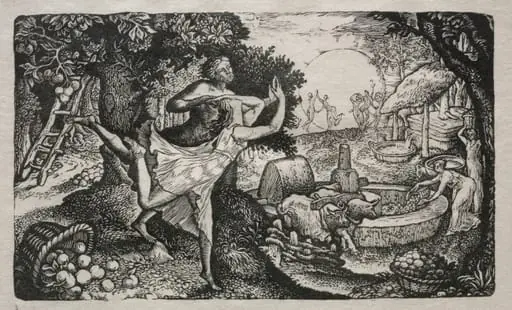
Artwork
drawing from Ionides Album
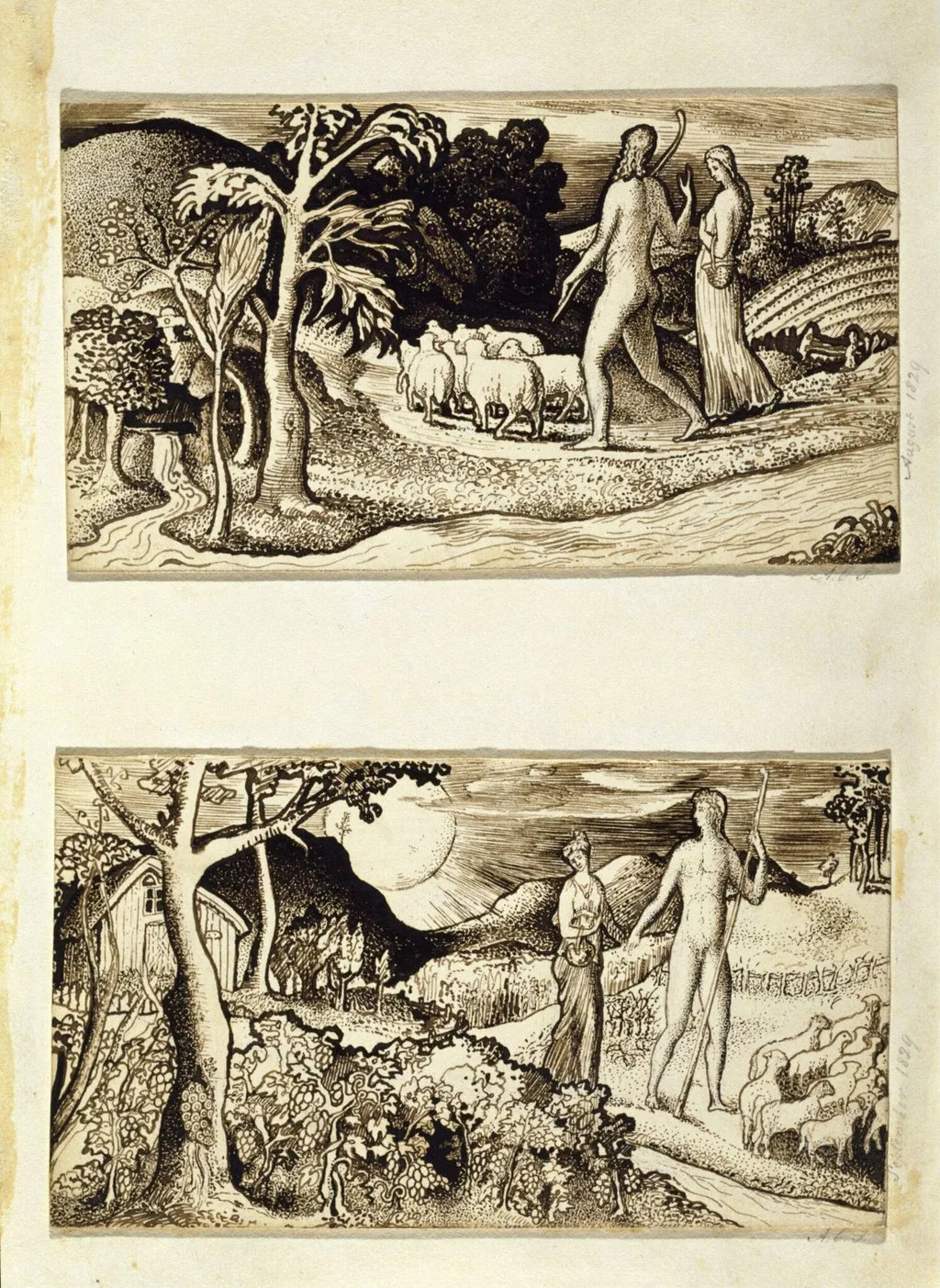
drawing from Ionides Album is a drawing by the Romanticist artist Ionides. It dates from 1829 and is held in the collection of the Victoria and Albert Museum.
About this work
Overview
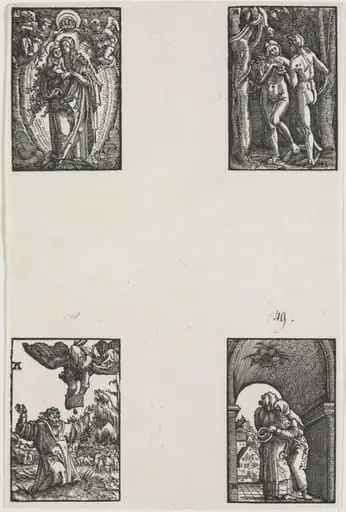
The work is a pencil drawing on paper, catalogued as folio 53v of the Ionides Album, a bound collection dating from the late eighteenth to early nineteenth century. The album comprises 54 folios of assorted coloured papers, bound in maroon leather with gilt tooling, and contains a mixture of prints and drawings.
Subject & Meaning
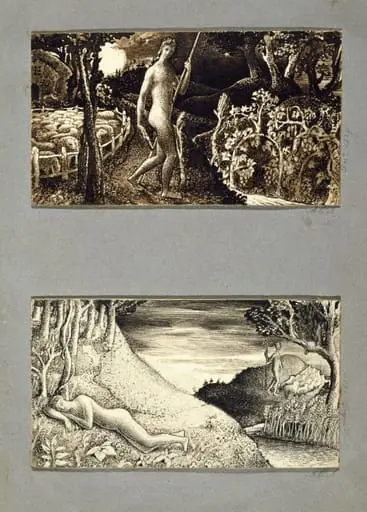
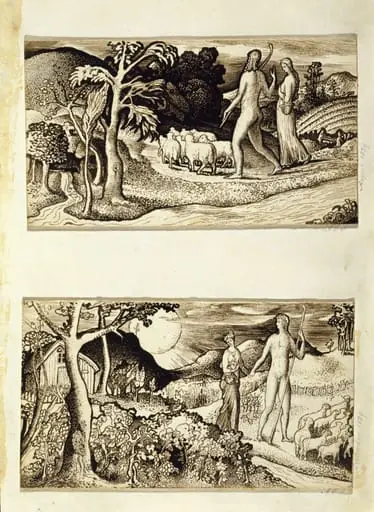
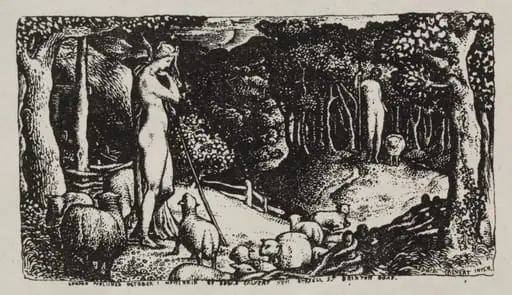
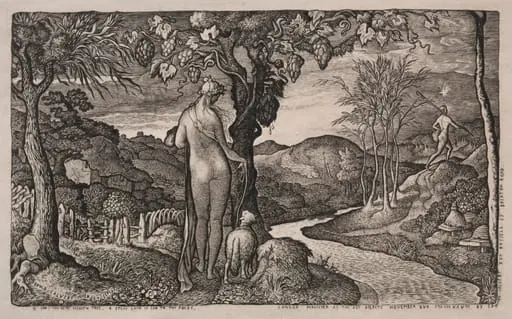
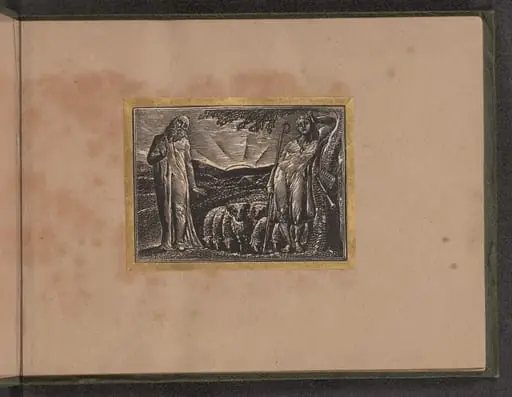
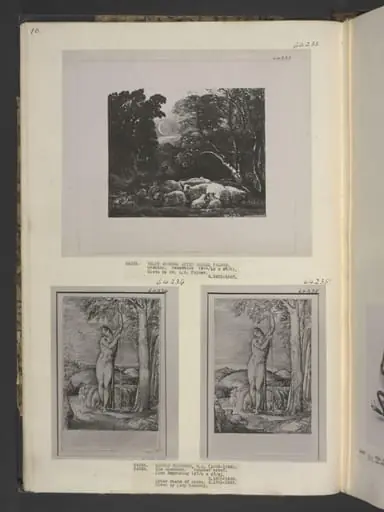
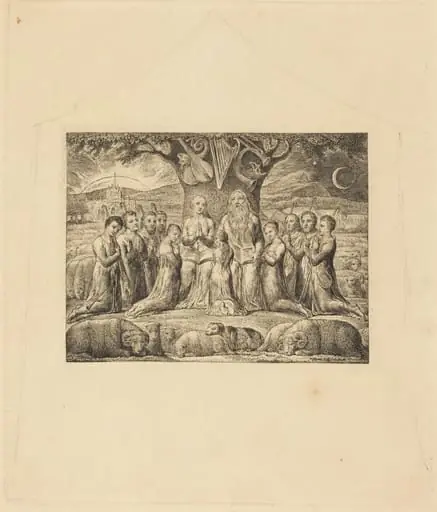
The image presents a nude shepherd engaged in conversation with a woman in a gown as they lead a flock of sheep across a valley. A moonlit landscape frames the pair, with a staff in one hand, a basket in the other, grazing sheep in the distance, and a modest house beside a tree, suggesting a tranquil rural scene.
Technique & Style
The artist employs fine, linear strokes to render shadows and textures, delineating the folds of the woman's dress, the sheen of the shepherd's skin, and the wool of the sheep. This meticulous line work creates a sense of depth and detail despite the medium’s simplicity.
History & Provenance
The drawing forms part of the Ionides Album, assembled by the Ionides family, noted collectors of art and antiquities in the eighteenth and nineteenth centuries. The album’s provenance traces to the family’s private collection before entering public holdings, where it is now preserved as a representative example of the period’s drawing practice.
Context
Works of this type—genre scenes of pastoral life rendered in pencil—were popular in the era’s drawing albums, serving both as study material for artists and as decorative objects for collectors interested in bucolic idealism and the technical skill of line drawing.
Artist & collection
Artist
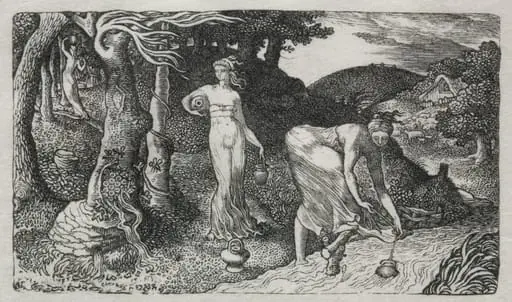
In Greek mythology, the Ionides were a sisterhood of water nymphs. Their individual names were Calliphaea, Synallasis, Pegaea and Iasis.