Artwork
The Pastorals of Virgil
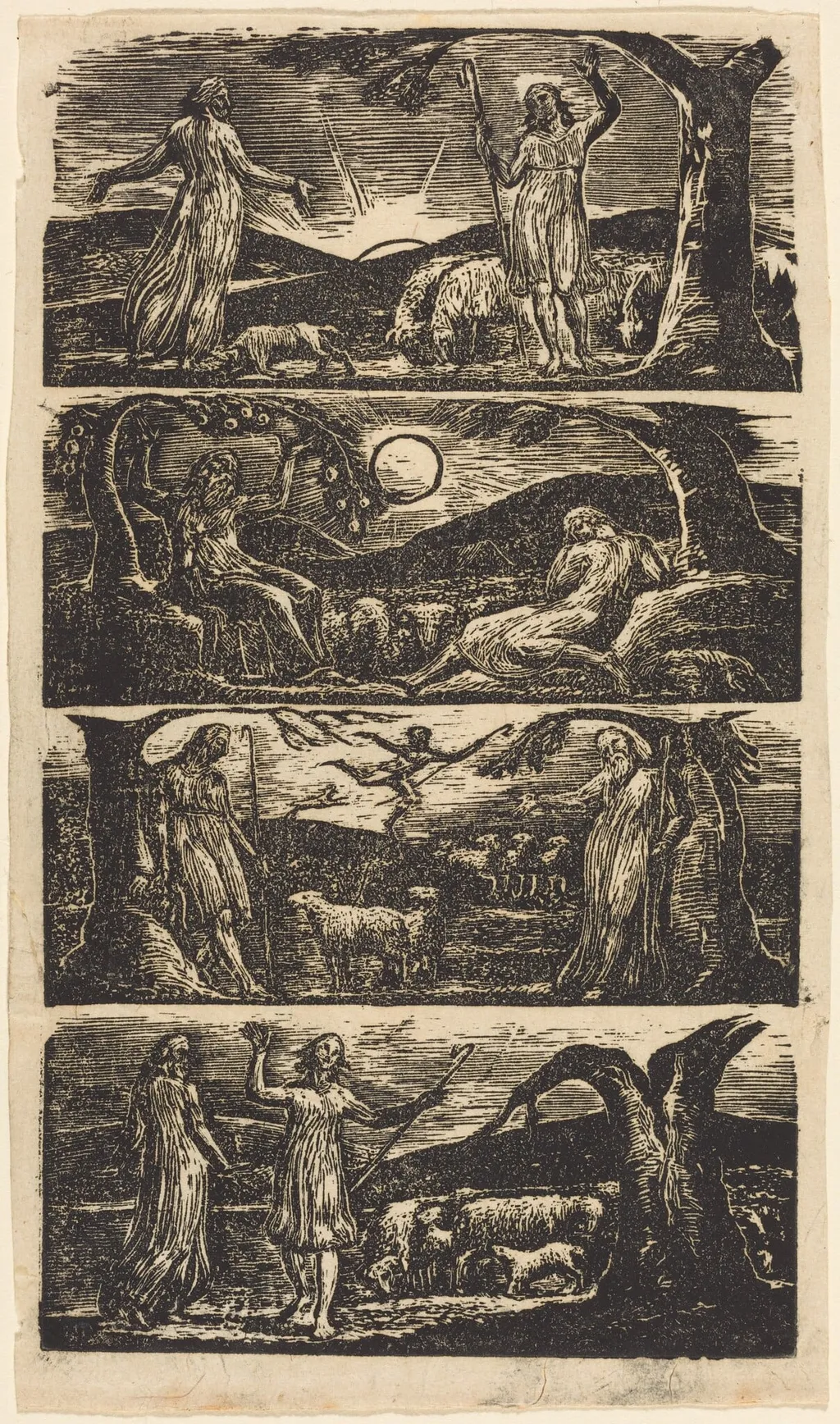
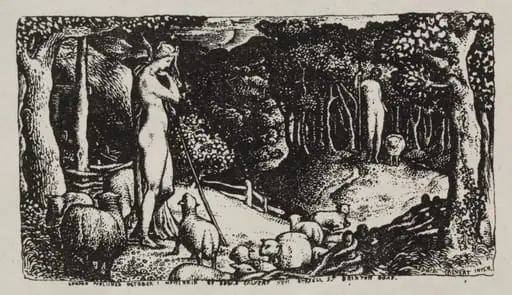
The Pastorals of Virgil is an ink print by the Romanticist artist William Blake. It dates from 1821 and is held in the collection of the National Gallery of Art.
About this work
Overview
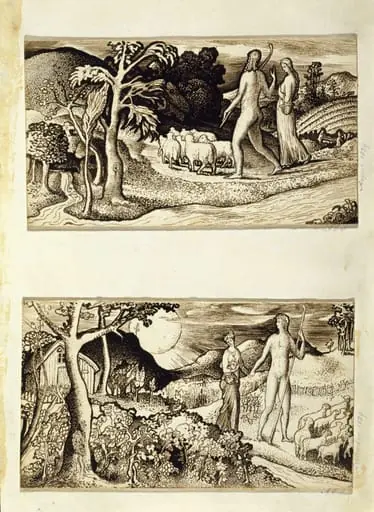
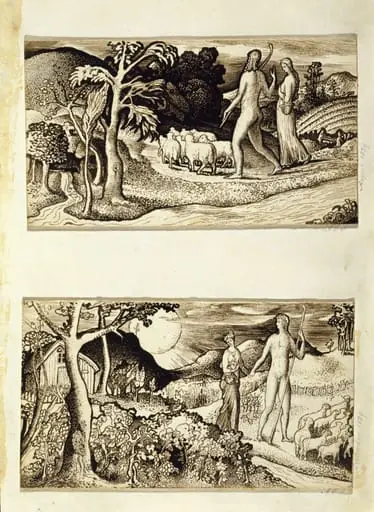
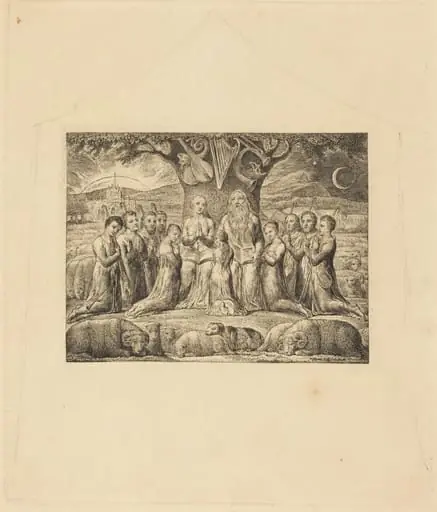
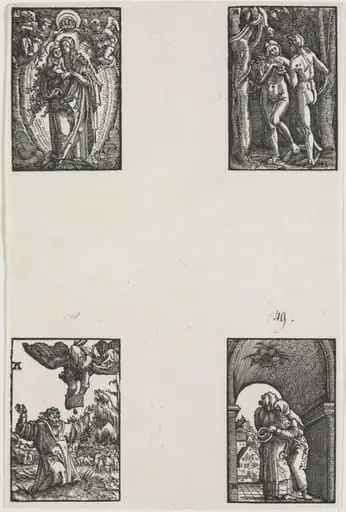
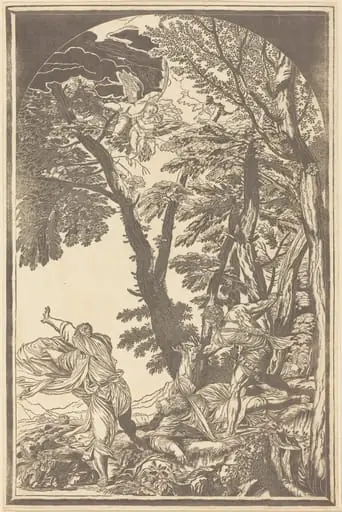
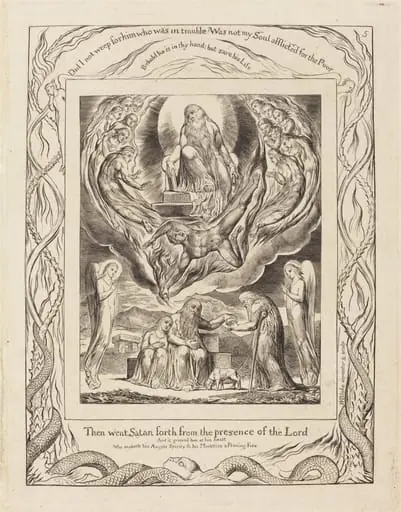
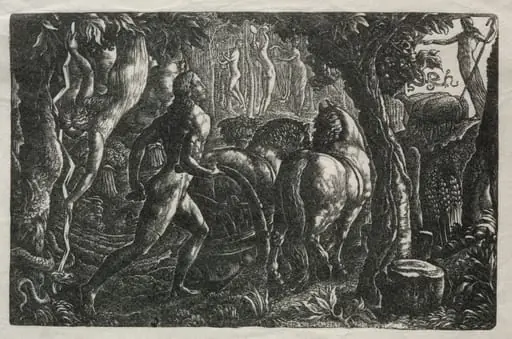
The Pastorals of Virgil is a wood engraving by William Blake, created in 1821. Comprising four proofs on a single uncut sheet, this work showcases Blake's technical proficiency in printmaking alongside his characteristic imaginative and symbolic approach.
Subject & Meaning
Depicting pastoral scenes with figures in long robes amidst animals, trees, hills, and celestial elements, the engraving emphasizes the harmony between humans and nature, reflecting Blake's visionary and Romantic sensibilities.
Technique & Style
Executed in wood engraving, the piece leverages the medium's textural qualities to enhance depth and realism. The style aligns with Blake's broader oeuvre, characterized by symbolic expression and imaginative depth.
History & Provenance
Created during Blake's later years, this work, like much of his output, was underappreciated in his lifetime. It has since contributed to his posthumous recognition as a key figure in Romantic-era art and literature.
Context
Part of the Romantic movement, The Pastorals of Virgil situates Blake among contemporaries exploring emotional, natural, and imaginative themes. For deeper insight into this context, examining works by other Romantic artists can provide additional perspective.
Legacy
This engraving plays a role in establishing Blake's legacy as a multifaceted artist and a foundational figure in Romanticism, influencing subsequent generations in both visual arts and literature.
Artist & collection
Artist
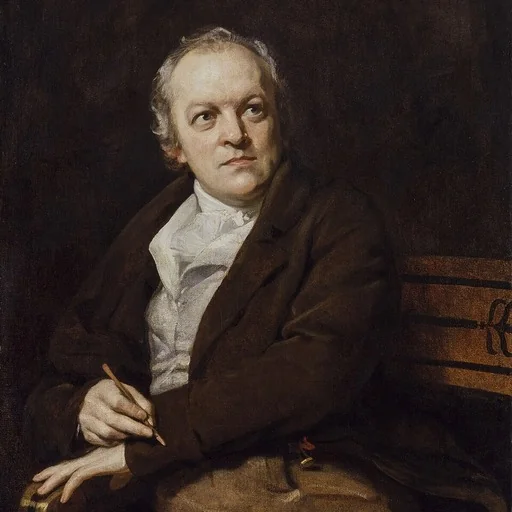
William Blake (28 November 1757 – 12 August 1827) was an English poet, painter and printmaker.