Artwork
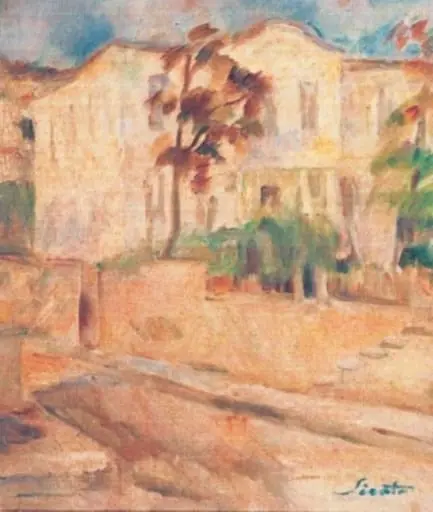
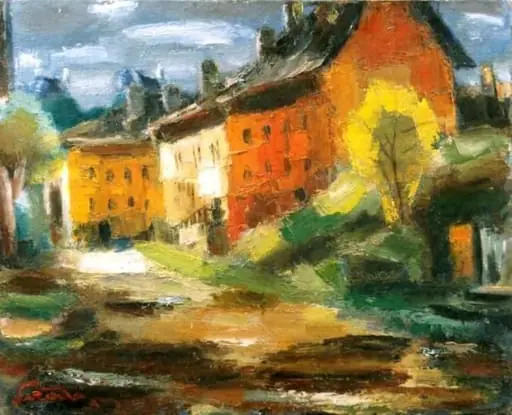
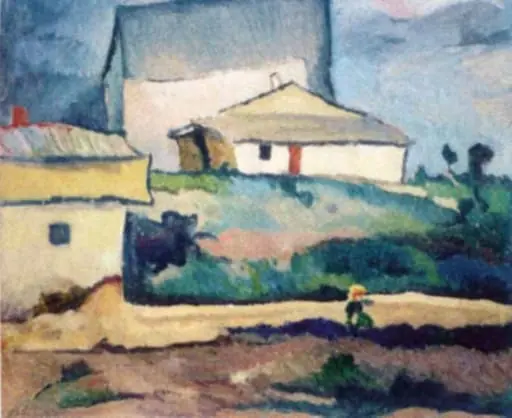
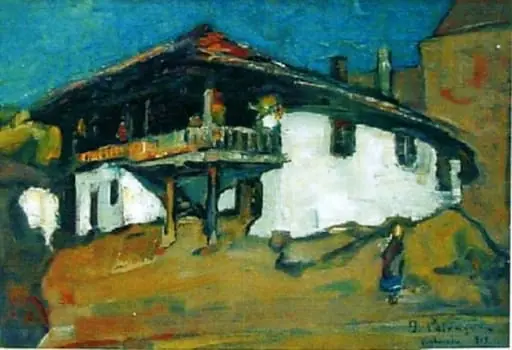
Peisaj dobrogean (Uliță la Tuzla)
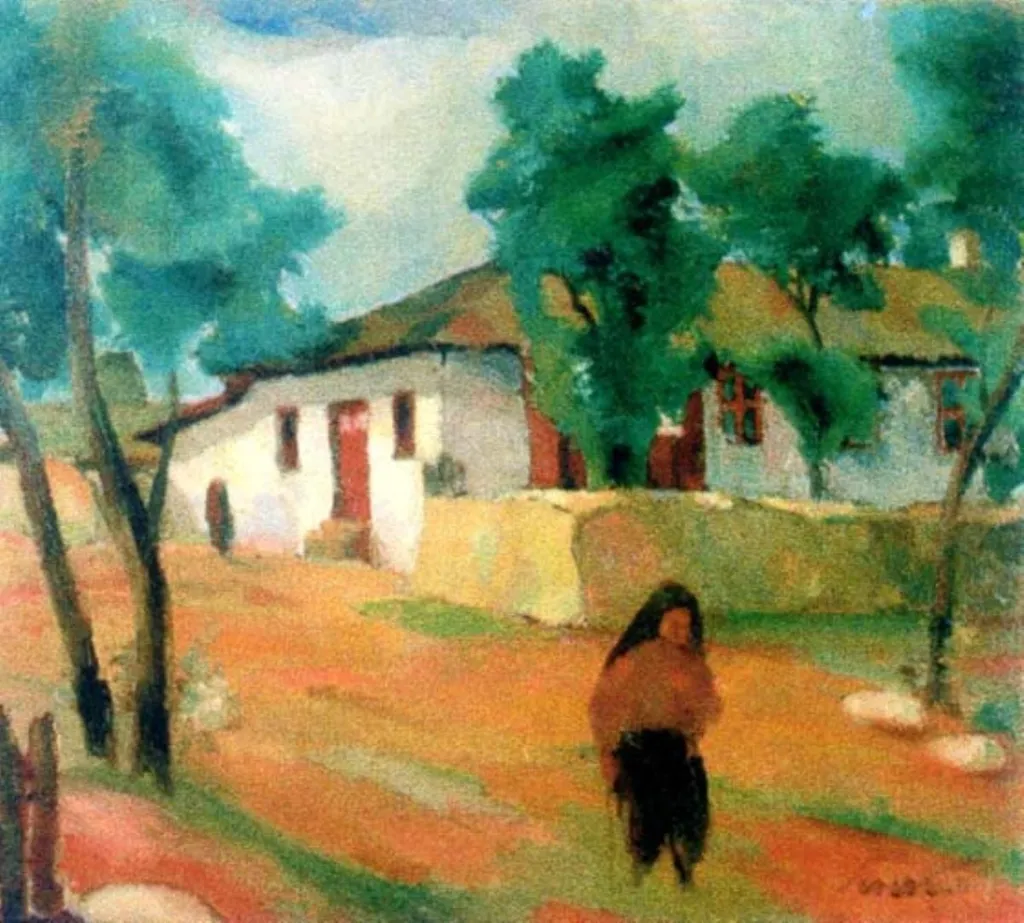
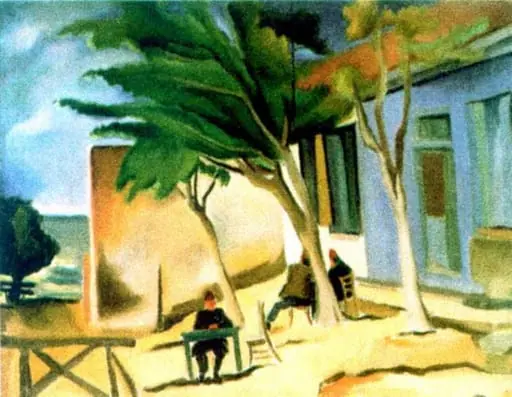
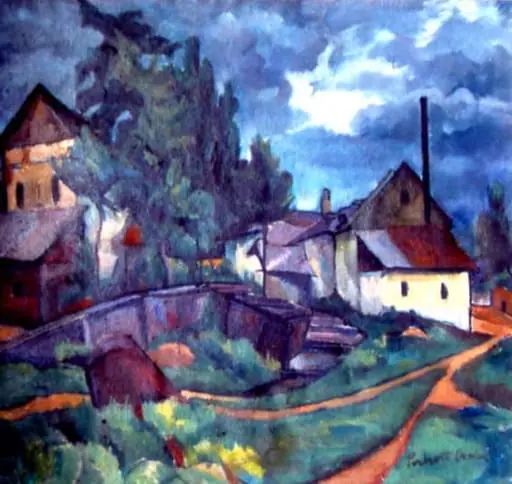
Peisaj dobrogean (Uliță la Tuzla) is a print by Francisc Șirato. It dates from 1925 and is held in the collection of the Art Museum of Constanta.
About this work
Overview
As a member of the influential Grupul celor patru, Șirato helped shape modern Romanian art through painting, graphic work, and critical writing.
Painted around 1925 by Francisc Șirato, *Peisaj dobrogean (Uliță la Tuzla)* captures a quiet moment in the Dobruja region of Romania. As a member of the influential Grupul celor patru, Șirato helped shape modern Romanian art through painting, graphic work, and critical writing. This landscape, now held by the Museum of Ethnography, reflects his interest in everyday rural life and subtle atmospheric effects.
Subject & Meaning
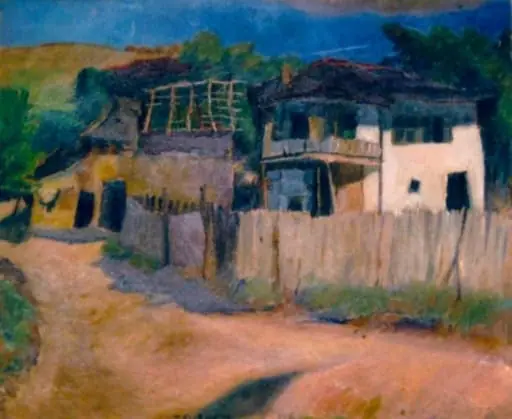
The scene depicts a solitary figure walking along a narrow path in Tuzla, accompanied by a dog. Two modest dwellings, one with red shutters, stand behind, partially obscured by foliage. The absence of dramatic action and the quiet solitude suggest a meditation on stillness and routine. The painting avoids idealization, presenting a humble, unembellished corner of rural Romania with quiet dignity.
Technique & Style
Șirato employed muted earth tones—soft greens, browns, and ochres—to unify the composition. Brushwork is restrained, with gentle transitions between light and shadow rather than sharp contrasts. The placement of the tree trunk on the left and the receding houses creates subtle depth, while the path draws the viewer’s eye toward the figure. The effect is contemplative, emphasizing tone over detail.
History & Provenance
Created in the mid-1920s, the painting entered the collection of the Museum of Ethnography in Romania, where it remains today. Its inclusion in an ethnographic institution reflects its value as a document of regional life, not merely as an aesthetic object. Șirato’s association with modernist circles ensured its recognition within broader artistic discourse of the period.
Context
In interwar Romania, artists like Șirato turned from academic traditions toward intimate, localized subjects. The Dobruja region, with its blend of cultures and quiet landscapes, offered a rich source of inspiration. This work aligns with a broader trend among Romanian modernists who sought to define national identity through everyday scenes rather than historical or mythological themes.
Legacy
Though not widely exhibited outside Romania, *Peisaj dobrogean* exemplifies Șirato’s contribution to a quieter strain of modernism—one grounded in observation rather than abstraction. His focus on rural tranquility influenced later generations interested in regional realism. The painting endures as a quiet testament to the aesthetic value of ordinary places and moments.
Artist & collection
Artist
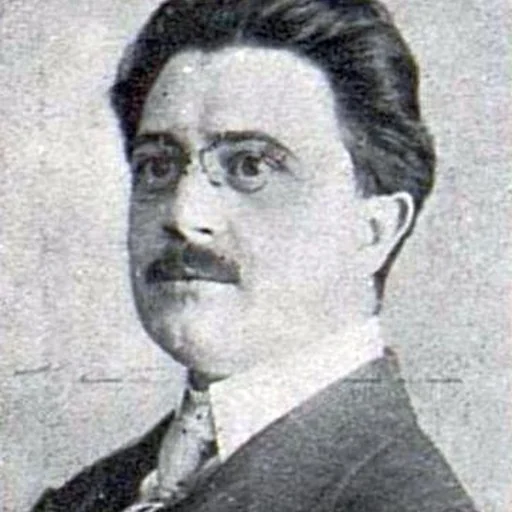
Francisc Şirato (15 August 1877 — 4 August 1953) was a Romanian painter, graphic artist, art critic, and designer.