Artwork
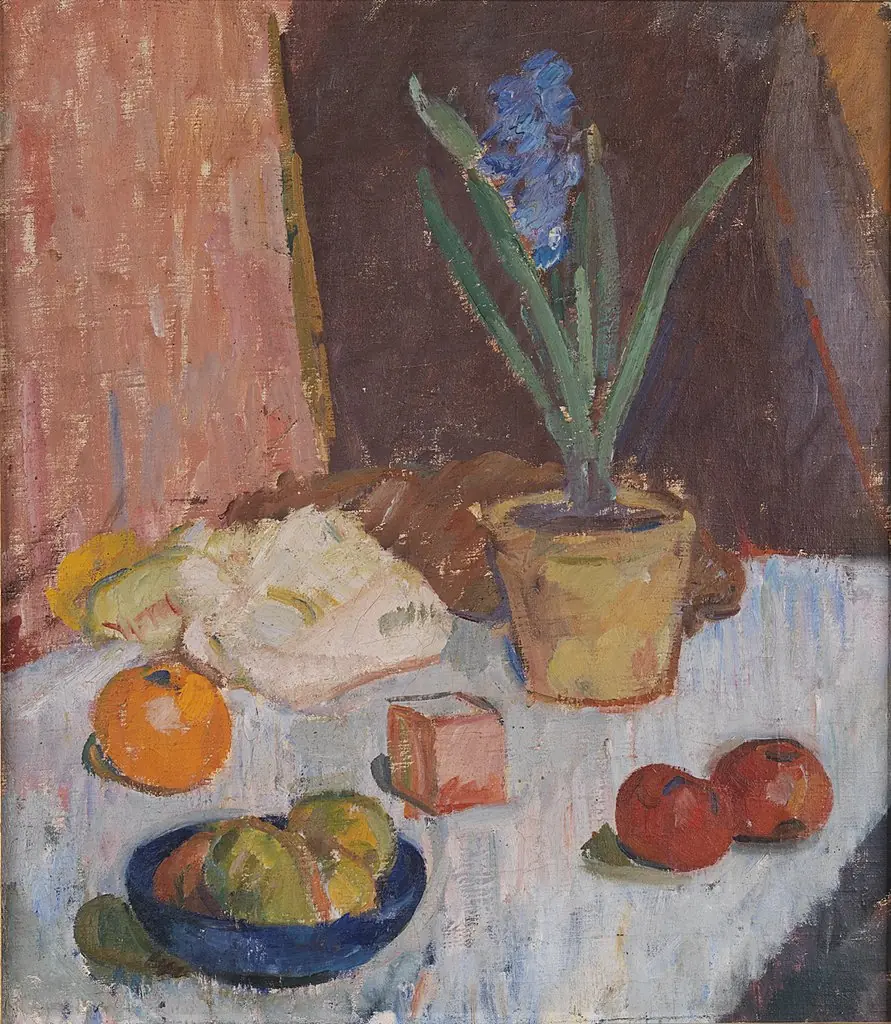
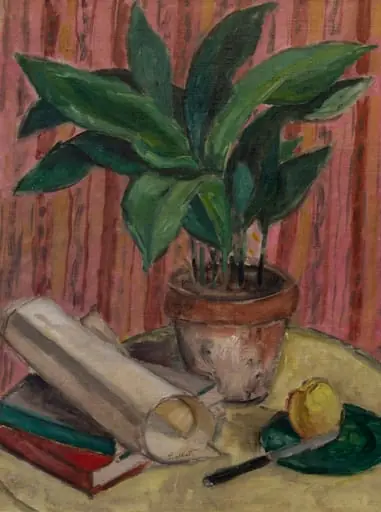
Appelsiinipuu
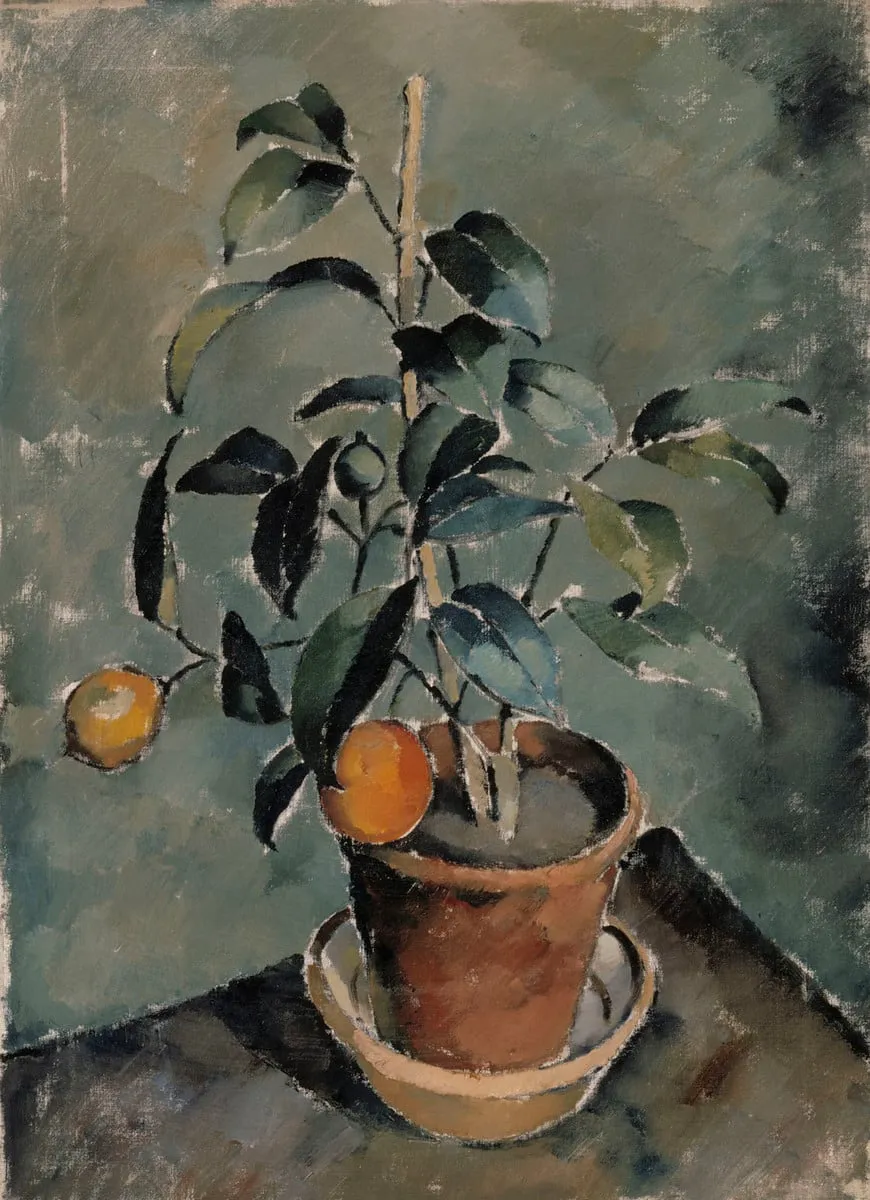
Appelsiinipuu is an unspecified painting by Karl Isakson. It dates from 1910 and is held in the collection of the Finnish National Gallery.
About this work
Overview
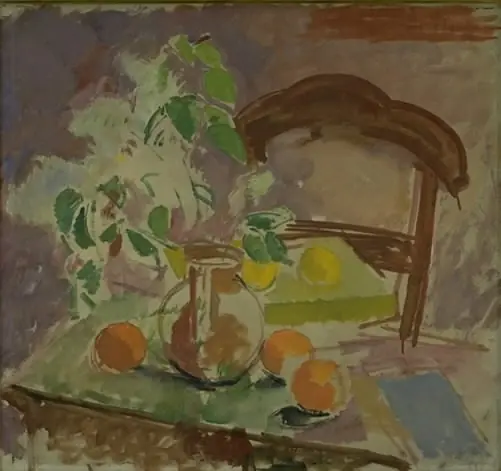
Karl Isakson’s painting titled Appelsiinipuu dates from around 1910. It presents a compact still‑life composition that centers on a small potted plant, its foliage rendered in vivid green, and two round oranges suspended among the leaves. The pot rests on a simple saucer, while the background consists of an unadorned, muted green field that emphasizes the central objects.
Subject & Meaning
The work isolates a domestic scene—a plant and fruit that might be found on a windowsill—inviting quiet observation. By juxtaposing the bright orange of the fruit with the deep green of the leaves and pot, Isakson creates a subtle visual dialogue about contrast and harmony within everyday objects, suggesting a contemplative appreciation of ordinary beauty.
Technique & Style
Isakson employs a thick impasto application, allowing brushstrokes to remain visible and giving the foliage a tactile surface. The palette is restrained, focusing on saturated greens and the luminous orange of the fruit, while the pot is rendered in darker tones. This emphasis on simple geometric forms and bold color blocks reflects a move toward modernist simplification.
History & Provenance
Created circa 1910, Appelsiinipuu belongs to the early phase of Isakson’s career, a period when he explored still‑life subjects with a heightened attention to materiality. The painting’s provenance traces through private collections before entering a public institution, where it has been displayed as part of exhibitions highlighting early 20th‑century Nordic modernism.
Artist & collection
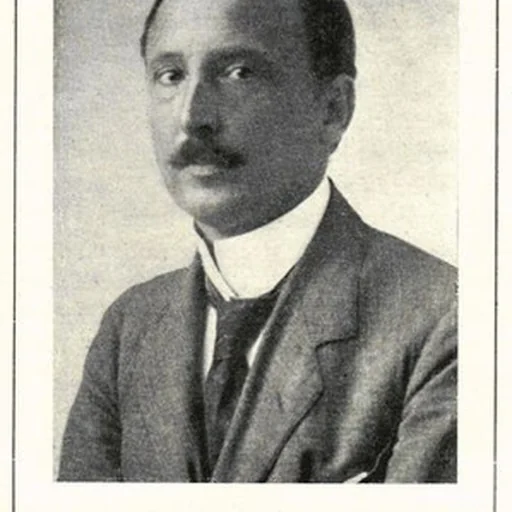
Artist
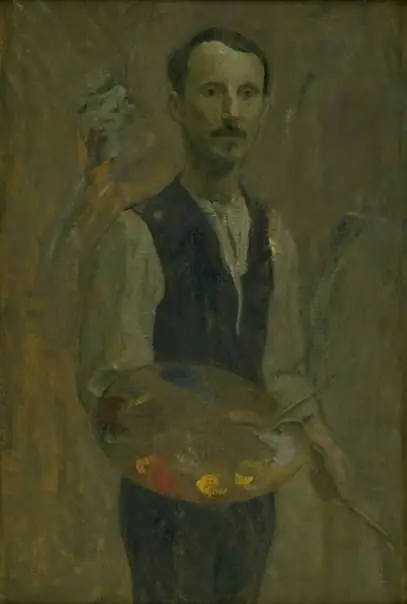
Karl Oscar Isakson (16 January 1878, in Stockholm – 19 February 1922) was a Swedish painter who spent much of his professional life in Denmark where he is considered to be one of the fathers of Modernism.