Artwork
Cafenea din Balcic
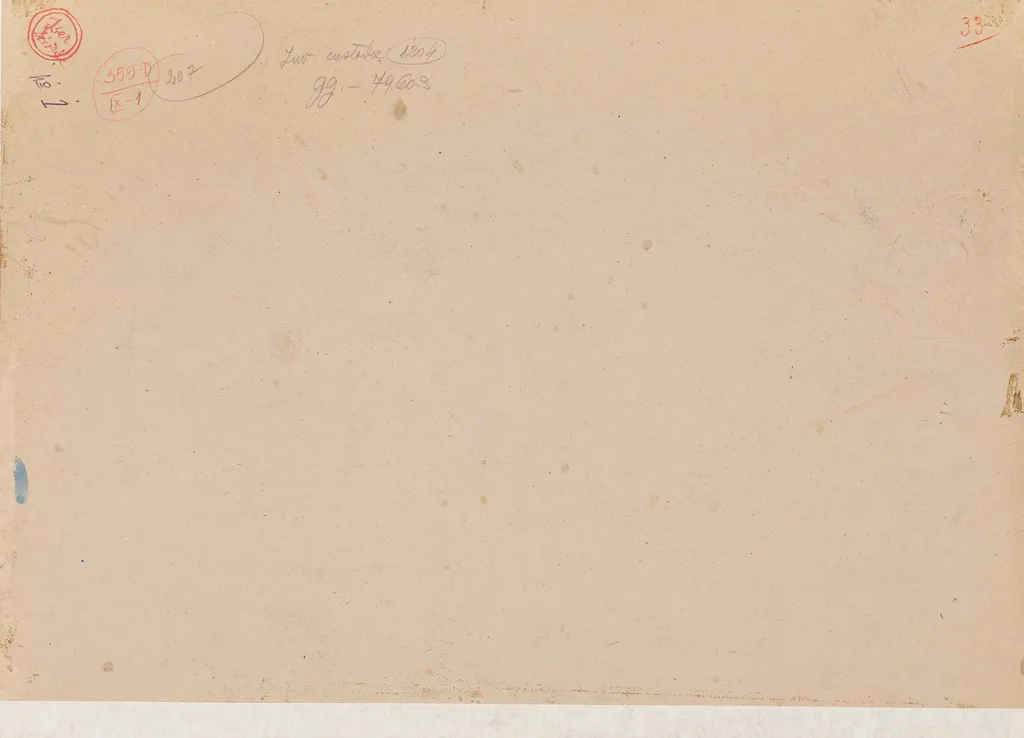
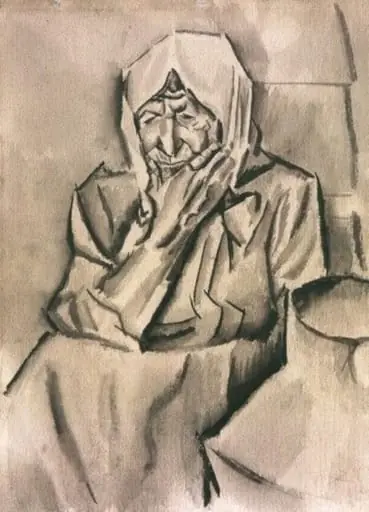
Cafenea din Balcic is a print by Iosif Iser. It dates from 1850 and is held in the collection of the National Museum of Art of Romania.
About this work
Overview
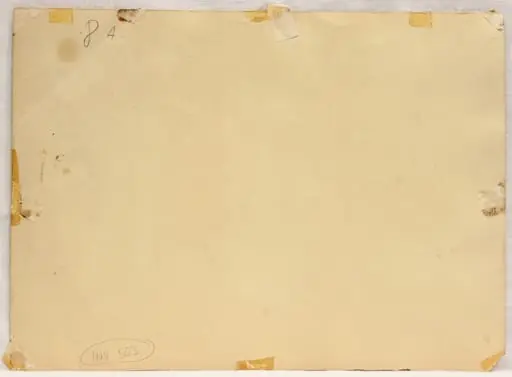
The surface shows signs of wear, including smudges and stains, suggesting practical, everyday use rather than artistic presentation.
Cafenea din Balcic is a fragmentary document attributed to Iosif Iser, dated around 1850. It consists of a beige, textured sheet of paper bearing handwritten annotations and administrative stamps. The surface shows signs of wear, including smudges and stains, suggesting practical, everyday use rather than artistic presentation. Its physical state implies it was handled frequently, possibly in a transient or utilitarian context.
Subject & Meaning
The content includes a series of illegible alphanumeric notations, likely records of transactions, names, or logistical data. The red stamps and blue smudge point to bureaucratic or commercial activity, possibly related to a café in Balchik. The absence of clear narrative or composition indicates this was not intended as a finished artwork, but rather a working note tied to daily operations.
Technique & Style
The handwriting is hurried and unrefined, executed with a basic pen on rough paper, indicating limited access to formal stationery. The ink shows uneven flow and smearing, consistent with improvised tools. No deliberate composition or aesthetic intent is evident; the marks appear functional, prioritizing speed over legibility or presentation.
History & Provenance
The document’s origin is tied to Iser’s time in Balchik, a Black Sea port town then under Ottoman administration. Its survival suggests it was preserved incidentally, perhaps among personal or institutional archives. No definitive record of its early ownership exists, and its transition into an art-historical context appears to be a later reclassification.
Context
In mid-19th century Balchik, cafés served as social and commercial hubs, often managed by local entrepreneurs with minimal formal record-keeping. This document reflects the informal administrative practices common in such settings. Iser, known for urban scenes, may have recorded logistical details while observing daily life, blurring the line between observer and participant.
Legacy
Though not a traditional artwork, Cafenea din Balcic offers insight into the material culture of its time. It survives as an artifact of mundane labor, revealing how individuals navigated bureaucratic and commercial systems. Its preservation underscores shifting scholarly interests toward ephemeral documents as historical evidence.
Artist & collection


 Peisaj la Tulcea
 Portul Tulcea
 Anul 1821
 Studiu de peisaj cu un lac. În prim-plan, malul lacului acoperit de iarbă. În plan secund, lacul cu o barcă roșie în marginea din dreapta a lucrării și cu o cabană parțial acoperită de un dâmb în extremitatea opusă. În fundal, cerul cu linia orizontului joasă, cu soarele aproape dispărând și luminând roșu-indigo, albastru. Semnat cu negru, dreapta jos: Craiu.
 Peisaj Deltă
 Iarna la Tulcea
 Peisaj de iarnă
 Pe marginea lacului
 FĂT- FRUMOS DIN LACRIMĂ
 Studiu de peisaj. În prim-plan, iarbă colorată în culorile toamnei (verde, ocru, roșu, indigo). În plan îndepărtat, un gard negru, în spatele căruia se observă culoarea roșie reflectorizantă, indigo și albastru spre marginea de sus. Tușe surte care agită suprafața. Disonanță cromatică. Semnat cu indigo, dreapta jos: Victor M. Craiu.
 Ghivece
 La terasă