Artwork
Peisaj Deltă
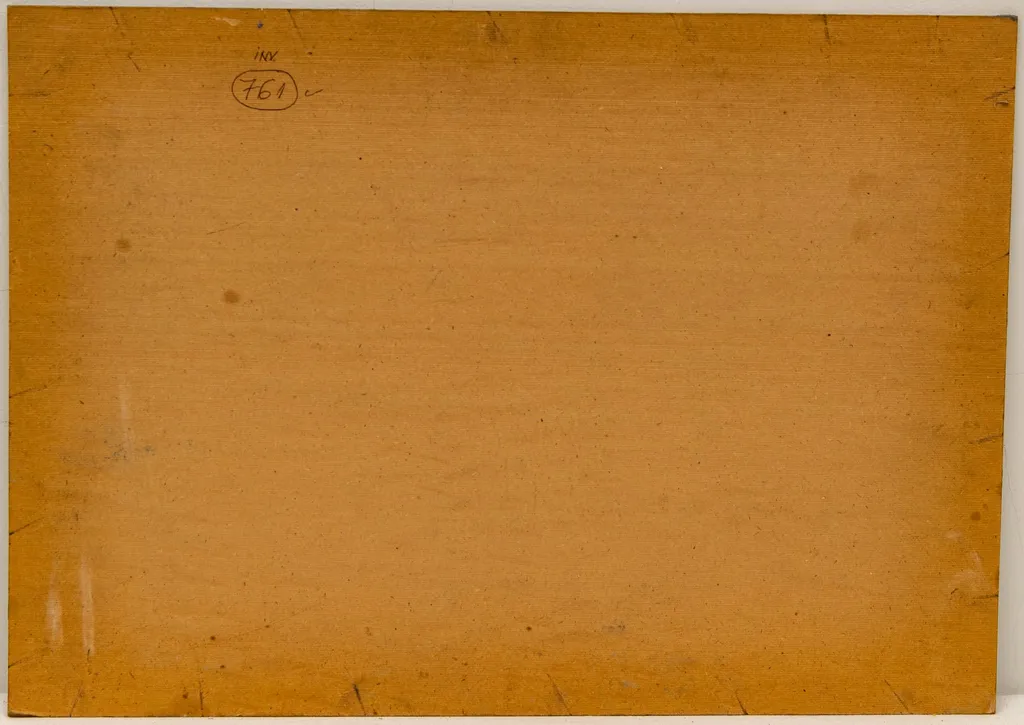
Peisaj Deltă is an unspecified painting by Truță Maria. It is held in the collection of the Gavrila Simion Eco-Museum Research Institute Tulcea.
About this work
Overview
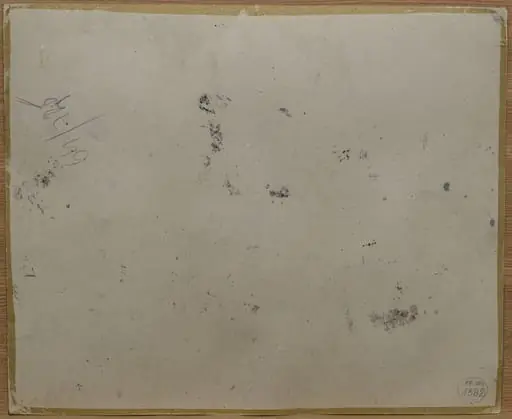
The surface is smooth yet bears subtle signs of wear, including faint discolorations and a small handwritten numeral in the upper right.
Peisaj Deltă is a minimalist painting composed of a uniform, warm yellow-brown field. The surface is smooth yet bears subtle signs of wear, including faint discolorations and a small handwritten numeral in the upper right. No brushstrokes, forms, or representational elements are present. The work presents an absence of traditional landscape features, inviting contemplation of space and materiality rather than depiction.
Subject & Meaning
The title references the Danube Delta, yet the painting contains no visual representation of water, reeds, or birds. Instead, the empty field suggests a meditation on absence, memory, or the ineffable qualities of place. Truță Maria’s approach reduces landscape to its conceptual essence—evoking the feeling of a vast, quiet expanse through silence rather than detail.
Technique & Style
The work employs a single, even wash of pigment applied to canvas, with no visible brushwork or texture. The slight surface imperfections and faded spots suggest aging or environmental exposure, possibly intentional. This restrained technique aligns with Truță Maria’s broader practice of using minimal means to foreground material presence over illusionistic representation.
History & Provenance
The handwritten number in the corner likely serves as a studio identifier or inventory mark, common in the artist’s practice. The painting’s provenance traces back to Truță Maria’s personal archive, where it was preserved alongside other monochromatic works from the 1980s. Its exhibition history remains limited, primarily shown in regional Romanian galleries focused on postwar abstraction.
Context
Created during a period of state-enforced realism in Romania, Truță Maria’s minimalism functioned as a quiet act of resistance. By rejecting narrative and figuration, she shifted focus to the physicality of the canvas and the viewer’s perception. Her work resonated with broader Eastern European tendencies toward conceptual and reductive art, though it remained largely outside official channels.
Legacy
Peisaj Deltă exemplifies Truță Maria’s enduring interest in emptiness as a formal and philosophical tool. Though not widely known internationally, her work has influenced a generation of Romanian artists who explore silence and restraint in visual language. The painting continues to be studied for its quiet challenge to conventional notions of what a landscape can be.
Artist & collection
Artist
Truță Maria painted quiet scenes of the Danube Delta in the mid-20th century. One example is Peisaj Deltă, a calm view of waterways and reeds that feels rooted in observation. Without a formal movement tag, her small…
Museum
Gavrila Simion Eco-Museum Research Institute Tulcea
Continue through works from the same source collection.
 Ghivece
 Studiu de peisaj cu un lac. În prim-plan, malul lacului acoperit de iarbă. În plan secund, lacul cu o barcă roșie în marginea din dreapta a lucrării și cu o cabană parțial acoperită de un dâmb în extremitatea opusă. În fundal, cerul cu linia orizontului joasă, cu soarele aproape dispărând și luminând roșu-indigo, albastru. Semnat cu negru, dreapta jos: Craiu.
 Peisaj de iarnă
 Pe marginea lacului
 Peisaj (cu stradă)
 FĂT- FRUMOS DIN LACRIMĂ
 Peisaj cu case Balcic
 Anul 1821
 Compoziție
 Peisaj
 S 32 - Peisaj la Sulina (Dunăre și maluri pierdute în pete de culoare)
 Iarna la Afumați