Artwork
Soldați în tranșee
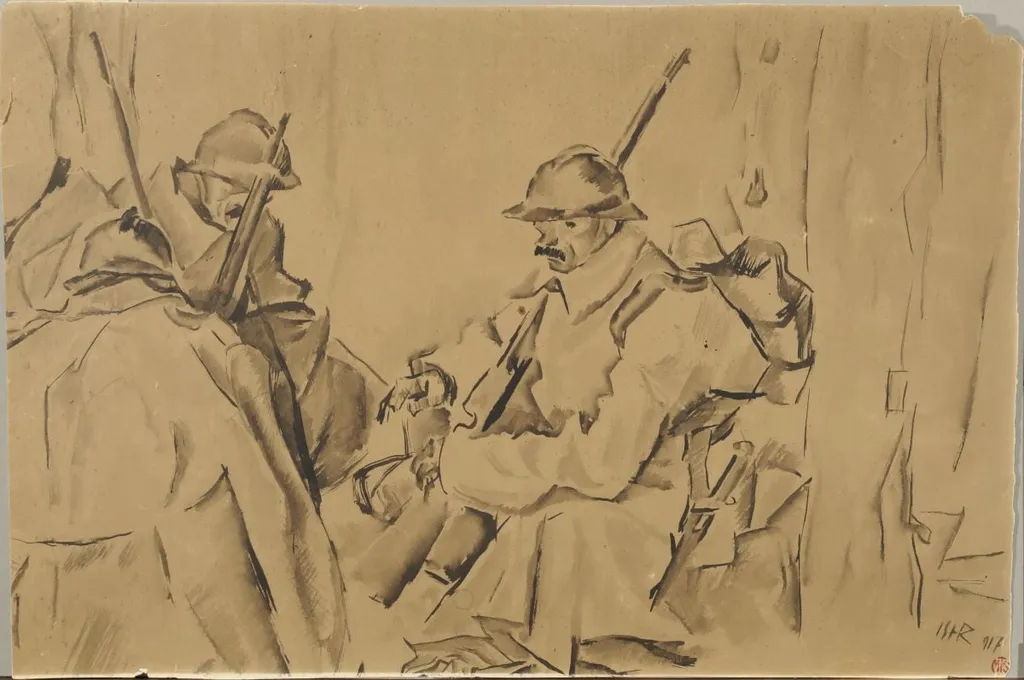
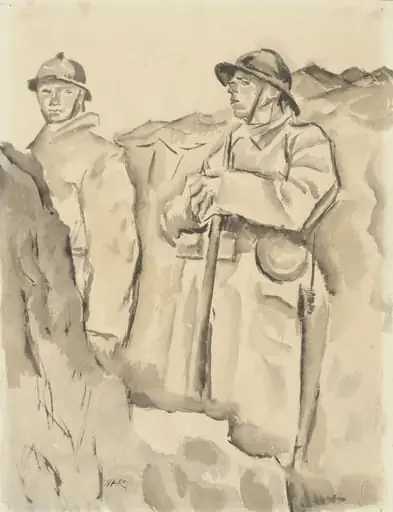
Soldați în tranșee is a drawing by Iosif Iser. It dates from 1917 and is held in the collection of the National Museum of Art of Romania.
About this work
This drawing shows soldiers crouched in a muddy trench, their faces sharp and tired. The lines are rough but controlled. Iosif Iser used quick strokes to show fear and exhaustion.
He drew this in 1917 during World War I. It’s one of the few works about the war from a Romanian artist. The focus is on people, not battles.
Look up the Museum of Ethnography to see more of his drawings.
Overview
Soldați în tranșee is a 1917 ink drawing by Romanian artist Iosif Iser, depicting soldiers in a trench during World War I.
Soldați în tranșee is a 1917 ink drawing by Romanian artist Iosif Iser, depicting soldiers in a trench during World War I. Executed in rapid, deliberate lines, the work captures the physical and emotional strain of frontline life. Unlike grand battle scenes, it centers on quiet endurance, offering a rare Romanian perspective on the war’s human toll. The piece belongs to a small body of wartime drawings Iser produced while serving on the front.
Subject & Meaning
The drawing portrays a group of soldiers hunched in a mud-filled trench, their postures slumped and faces etched with fatigue. There is no action, no weapons raised—only stillness and shared exhaustion. Iser avoids heroism, instead emphasizing the anonymity and weariness of ordinary men. The focus on individual suffering, rather than military strategy, reflects a humanist approach to documenting war’s daily reality.
Technique & Style
Iser employed swift, angular ink strokes to convey tension and fragility. The lines are unpolished yet precise, avoiding detail in favor of expressive rhythm. Shading is minimal, relying on density and direction to suggest depth and texture in the mud and uniforms. This economical style mirrors the urgency of sketching under field conditions, reinforcing the immediacy of the soldiers’ experience.
History & Provenance
Created in 1917 while Iser was stationed on the Romanian front, the drawing emerged from his personal observations during active service. It was likely made as a field sketch, later preserved in his personal archive. The work entered institutional collections after the war, with holdings at the Museum of Ethnography and other Romanian institutions preserving his wartime drawings as historical documents.
Context
During World War I, Romania’s involvement brought widespread hardship, yet few artists documented the soldier’s daily life. Iser’s drawings stand apart from official propaganda, offering unvarnished glimpses into trench conditions. His work aligns with broader European trends of war realism but remains distinct for its Romanian perspective, capturing a national experience often overlooked in art historical narratives.
Legacy
Soldați în tranșee endures as one of the few visual records of Romanian soldiers’ wartime experience from an insider’s viewpoint. Iser’s approach influenced later generations of Romanian illustrators and documentary artists who prioritized human dignity over spectacle. The drawing is now studied as both an artistic and historical artifact, valued for its quiet authenticity and emotional restraint.
Artist & collection


 Natură moartă cu rodii
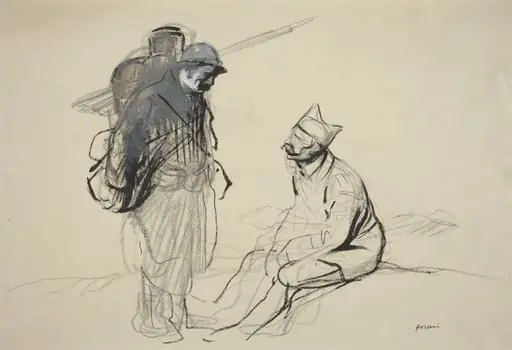 Poilu and Tommy Conversing
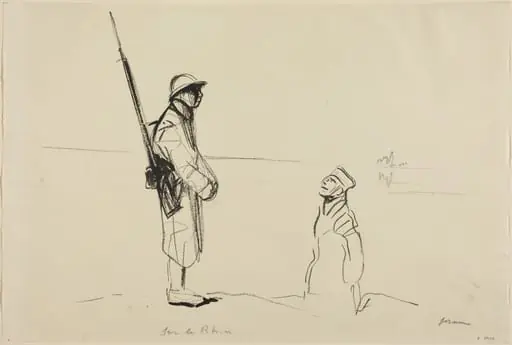 Sur le Rhin
![Studies for "Gassed" [recto], by John Singer Sargent](https://artifactworldgallery.com/img/john-singer-sargent--studies-for-gassed-recto--1cd4a47eb68752d0-w320.webp) Studies for "Gassed" [recto]
Studies for "Gassed" [recto]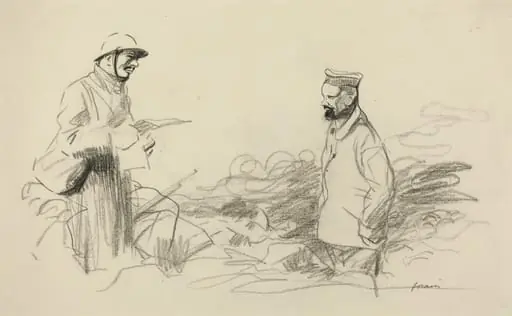 Poilu Acknowledging German Soldier
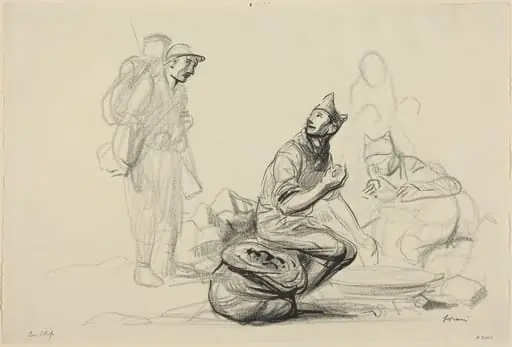 Les chefs (The Chefs)
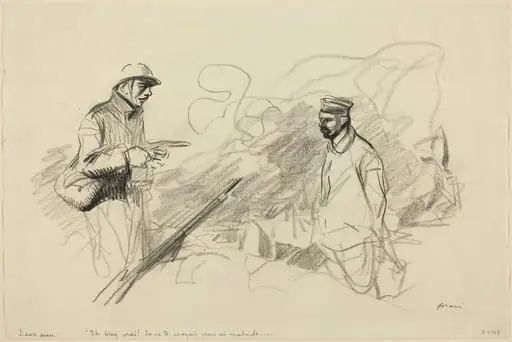 Poilu Acknowledging German Soldier
![Studies for "Entering the War" [recto], by John Singer Sargent](https://artifactworldgallery.com/img/john-singer-sargent--studies-for-entering-the-war-recto--358a2c3ea8bd7639-w320.webp) Studies for "Entering the War" [recto]
Studies for "Entering the War" [recto]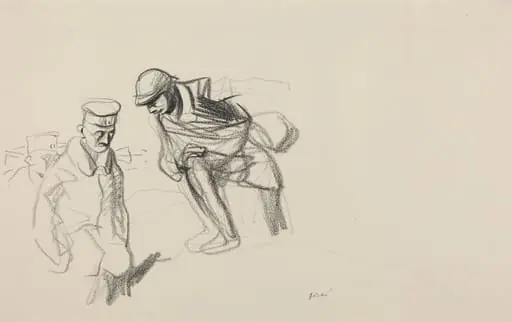 Lost Illusions
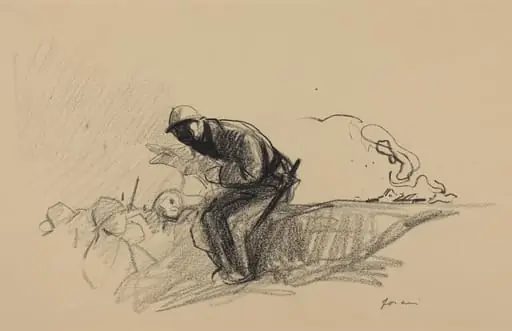 News in the Trenches
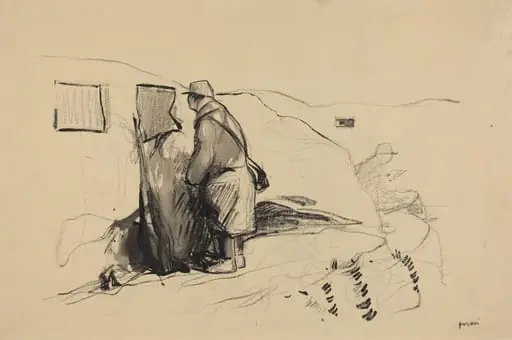 a) In the Trenches (recto); b) Study for In the Trenches (verso)
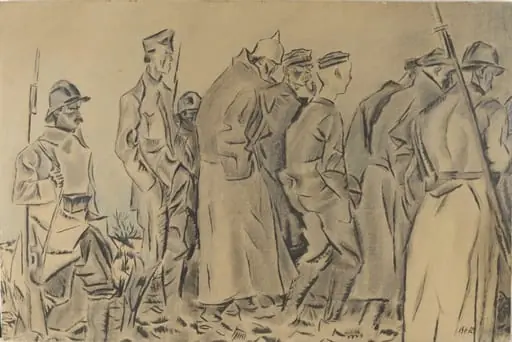 Prizonieri germani