Artwork
Reînhumarea rămășițelor lui Constantin Brâncoveanu în Biserica Sfântul Gheorghe Nou
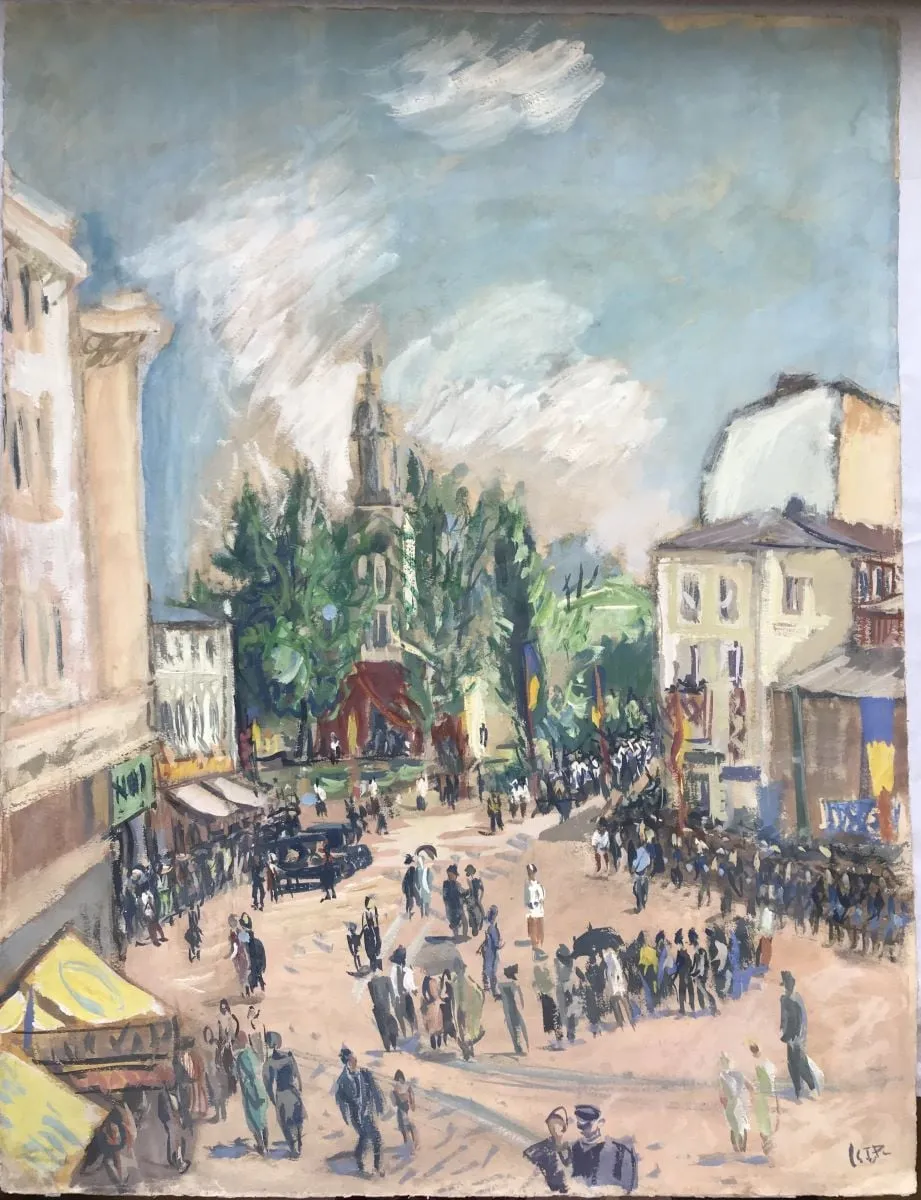
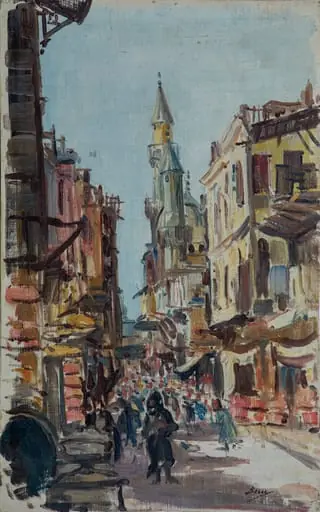
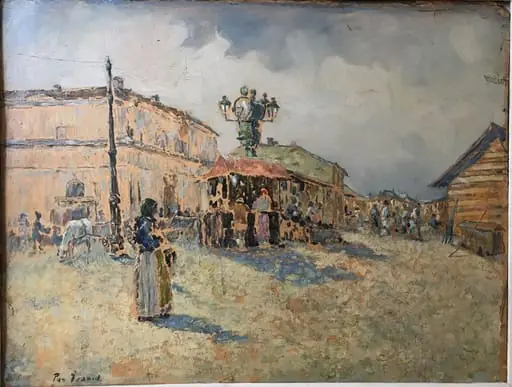
Reînhumarea rămășițelor lui Constantin Brâncoveanu în Biserica Sfântul Gheorghe Nou is an unspecified painting by Iosif Iser. It dates from 1929 and is held in the collection of the Bucharest Municipality Museum.
About this work
Overview
The painting resides in the Museum of Ethnography, reflecting its cultural rather than purely religious function in modern Romanian memory.
Painted around 1929 by Iosif Iser, this work depicts the reburial ceremony of Prince Constantin Brâncoveanu and his sons in the New Saint George Church in Bucharest. Though the scene appears as a bustling urban street, it commemorates a solemn historical event from 1714, reinterpreted through early 20th-century sensibilities. The painting resides in the Museum of Ethnography, reflecting its cultural rather than purely religious function in modern Romanian memory.
Subject & Meaning
The painting illustrates the 1929 transfer of Brâncoveanu’s remains from their original burial site to the New Saint George Church, a gesture of national reverence. While the event itself was religious, Iser emphasizes public participation—crowds, banners, and carts suggest a civic procession. The inclusion of Romanian tricolor flags frames the act as both spiritual and patriotic, aligning the prince’s martyrdom with emerging national identity in interwar Romania.
Technique & Style
Iser employs loose, rapid brushwork to convey motion and atmosphere, characteristic of his impressionistic approach. The light blue sky and soft clouds lend a calm brightness, contrasting with the dense human activity below. Buildings frame the church’s steeple as a visual anchor, while flags and umbrellas add rhythmic detail. The composition avoids theatricality, favoring everyday realism to ground the ceremonial moment in lived experience.
History & Provenance
The painting was created for the 1929 reburial commemoration, commissioned to mark the 215th anniversary of Brâncoveanu’s execution. It entered the Museum of Ethnography’s collection soon after completion, where it remains. Its placement there, rather than in a religious or art museum, signals its role as a document of popular memory and cultural ritual rather than ecclesiastical devotion.
Context
In interwar Romania, Brâncoveanu was increasingly venerated as a symbol of sovereignty and Christian resistance under Ottoman rule. His reburial was part of a broader state effort to construct a national narrative rooted in Orthodox tradition and princely legacy. Iser’s depiction, with its emphasis on public turnout and urban setting, reflects how historical memory was being reshaped through visual culture during this period.
Legacy
The painting endures as a visual record of how Romania’s past was reinterpreted in the early 20th century. While not widely exhibited outside institutional settings, it contributes to understanding the intersection of religion, politics, and art in shaping national identity. Iser’s choice to render the event as a public procession, rather than a sacred tableau, underscores a shift toward secularized commemoration in modern Romanian culture.
Artist & collection