Artwork
Shi Gatsu|The Fourth Month
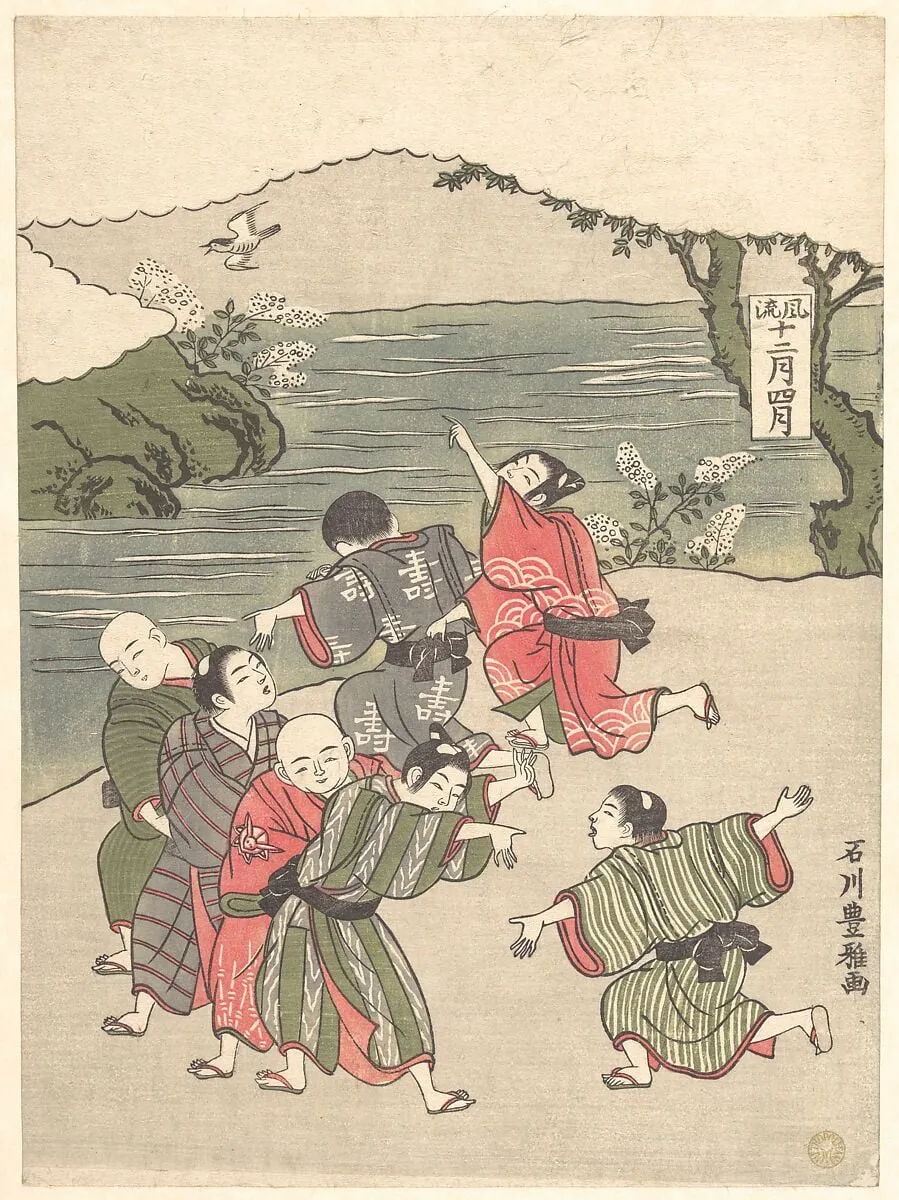
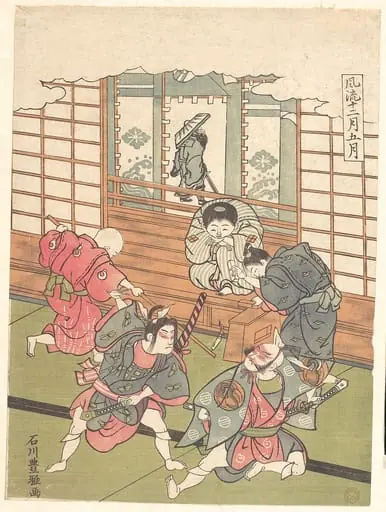
Shi Gatsu|The Fourth Month is an ink print by the Romanticist artist Ishikawa Toyomasa. It dates from 1767 and is held in the collection of the Metropolitan Museum of Art.
About this work
Overview
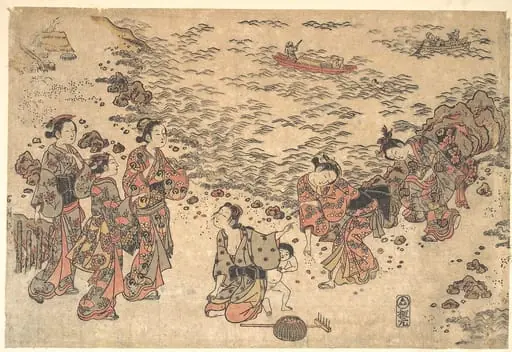
Shi Gatsu, or The Fourth Month, is a woodblock print produced around 1767 by Ishikawa Toyomasa. Executed in ink and color on paper, it belongs to a series depicting monthly scenes and is currently held in the collection of The Metropolitan Museum of Art. The composition captures a moment of communal activity, rendered with vivid hues and clear outlines characteristic of Edo-period popular prints.
Subject & Meaning
The inclusion of a small textual panel may reference calendrical or locational information, grounding the activity in a specific time and place.
The scene portrays a group engaged in a festive game, likely tied to seasonal celebrations in the fourth month of the lunar calendar. Figures in colorful robes lift one individual into the air, while others gesture in excitement. The presence of a bird, river, and distant hills suggests an outdoor festival setting. The inclusion of a small textual panel may reference calendrical or locational information, grounding the activity in a specific time and place.
Technique & Style
Toyomasa employed bold, flat areas of color and simplified forms to emphasize motion and energy. The figures are defined by strong outlines, with red clothing drawing immediate attention to the central jumper. Background elements like hills and water are rendered minimally, allowing the dynamic human interaction to dominate. This approach reflects the conventions of ukiyo-e, prioritizing visual immediacy over detailed realism.
History & Provenance
The print was produced during the mid-Edo period, a time when woodblock prints flourished as affordable art for urban audiences. It was likely part of a multi-print series illustrating the months of the year, a popular genre among merchants and townspeople. The work entered The Metropolitan Museum of Art’s collection through documented acquisitions, preserving its place in the history of Japanese printmaking.
Context
Festivals in the fourth month often involved communal games and rituals celebrating spring’s arrival, including physical contests and processions. The act of lifting someone into the air may reflect local customs of play or ritual elevation, common in regional celebrations. Such scenes were frequently depicted in ukiyo-e to connect urban viewers with seasonal traditions, blending entertainment with cultural memory.
Legacy
Shi Gatsu exemplifies how Edo-period artists translated everyday festivities into accessible imagery. Its emphasis on movement and collective joy influenced later depictions of public life in Japanese prints. While not widely known today, it remains a representative example of how popular prints documented the rhythms of seasonal life beyond elite or religious themes.
Artist & collection

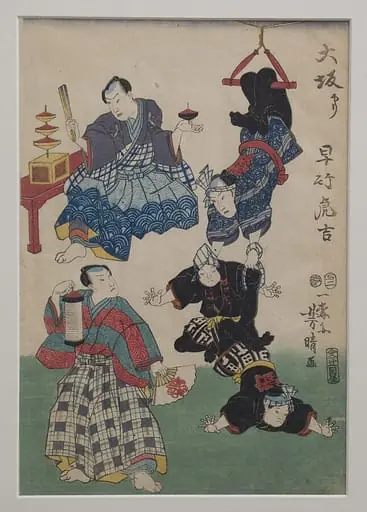 大坂下り早竹虎吉|Hayatake Torakichi from Osaka
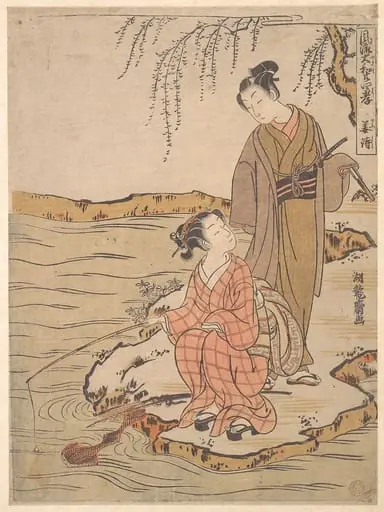 Untitled
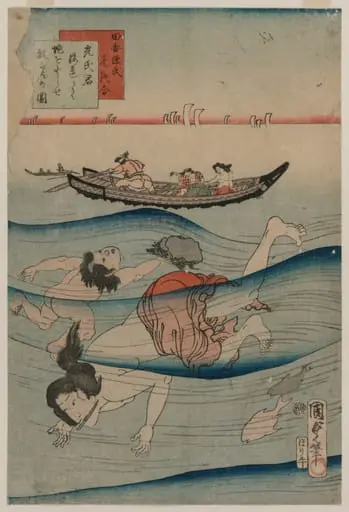 Rustic Genji's Poetry Contest: Mitsuuji's Excursion to the Seaside to See Abalone Diving (Inaka Genji shikishi awase, Mitsuuji umibe ni te awabi o torase yūran no zu)
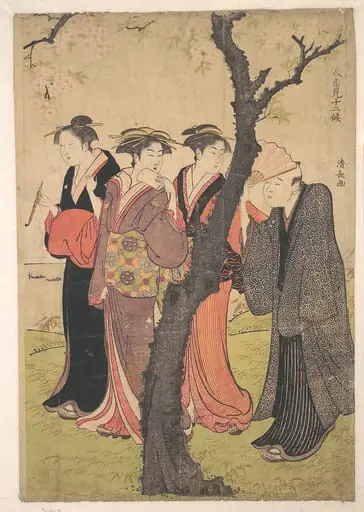 Untitled
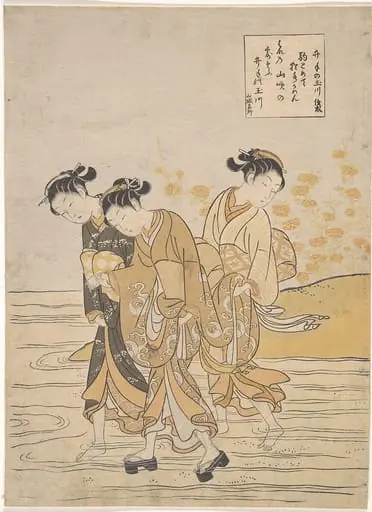 井手の玉川|Jewel River at Ide (Ide no Tamagawa)
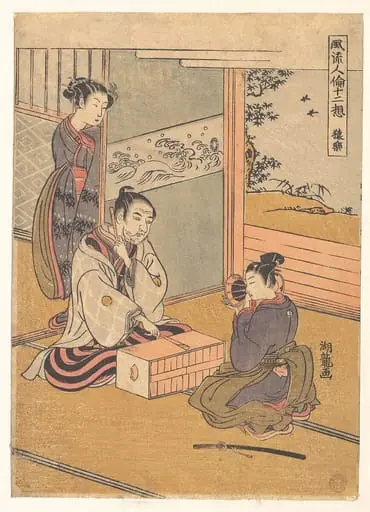 Untitled
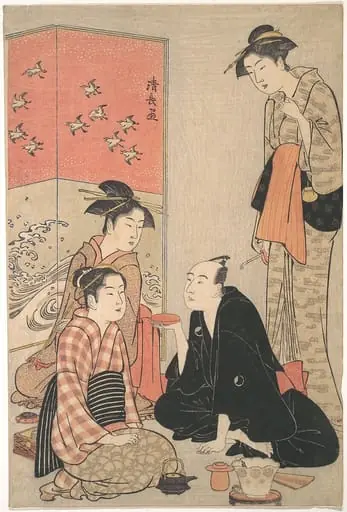 三代目沢村宗十郎と遊女|The Kabuki Actor Sawamura Sōjūrō III and Courtesans
 Untitled
 Umemi Tsuki|Plum-Seeing Month: Second Month