Artwork
Hina no Sekku|The Festival of Dolls (Third Month)
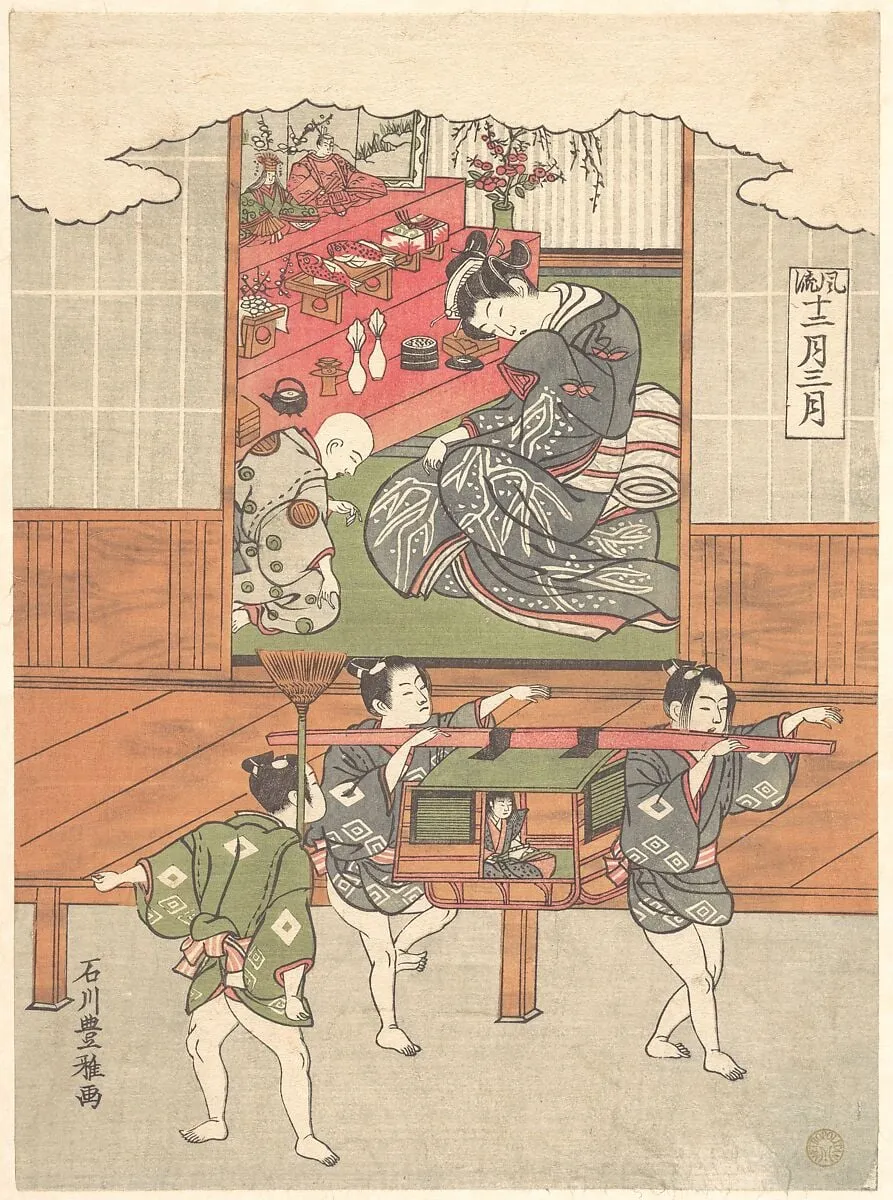
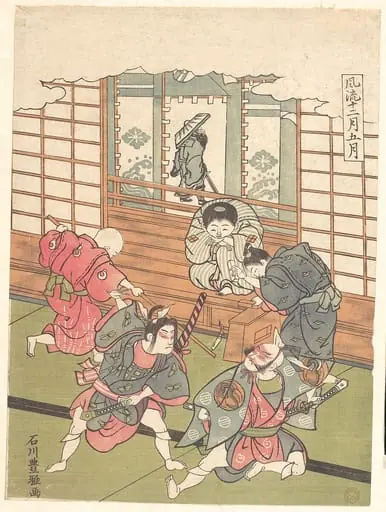
Hina no Sekku|The Festival of Dolls (Third Month) is an ink print by the Romanticist artist Ishikawa Toyomasa. It dates from 1767 and is held in the collection of the Metropolitan Museum of Art.
About this work
Overview
Below, three male figures transport a wooden box, one wielding a broom, against a backdrop of tiled walls and a faintly rendered sky.
Ishikawa Toyomasa’s woodblock print, dated around 1767, depicts the traditional Japanese Hinamatsuri celebration. Executed in ink and color on paper, the composition presents a lively interior where a woman in an elaborate kimono presides over a platform laden with miniature dolls, seasonal foods, and floral arrangements. Below, three male figures transport a wooden box, one wielding a broom, against a backdrop of tiled walls and a faintly rendered sky.
Subject & Meaning
The scene captures the third‑month festival, known as the Festival of Dolls, when families display ornamental figures representing the imperial court. The central female figure, surrounded by the dolls, symbolizes the ceremonial hostess, while the accompanying men suggest the preparation and cleaning associated with the rite. The inclusion of food and flowers underscores themes of renewal and prosperity in early spring.
Technique & Style
Toyomasa employs the ukiyo‑e hallmark of bold, black outlines that define forms, while flat, saturated pigments fill the figures and objects. Subtle cross‑hatching creates tonal variation, particularly in the shadows cast by the platform and the figures’ garments. The print’s compositional balance relies on a clear division between the elevated platform and the lower activity, guiding the viewer’s eye through the narrative.
History & Provenance
Created in the mid‑eighteenth century, the print entered the collection of The Metropolitan Museum of Art, where it is catalogued as part of the museum’s Japanese prints holdings. Its acquisition reflects the institution’s broader effort to represent Edo‑period visual culture and the domestic rituals depicted in ukiyo‑e works.
Context
Hinamatsuri, celebrated on March 3, was a popular subject for ukiyo‑e artists, who often rendered the elaborate displays of dolls and associated customs. Toyomasa, active in Osaka, contributed to this genre by focusing on the intimate, interior aspects of the festival, contrasting with more public, outdoor depictions by his contemporaries.
Artist & collection

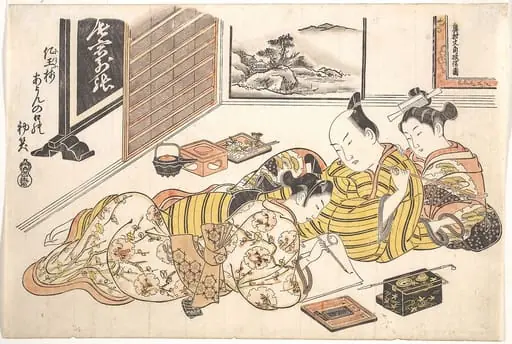 『閨の雛形』 正月|Plate from the Erotic Book Mounds of Dyed Colors: A Pattern Book for the Boudoir (Someiro no yama neya no hinagata), First Month
 Untitled
 Untitled
 Untitled
 Untitled
 Untitled
 Untitled
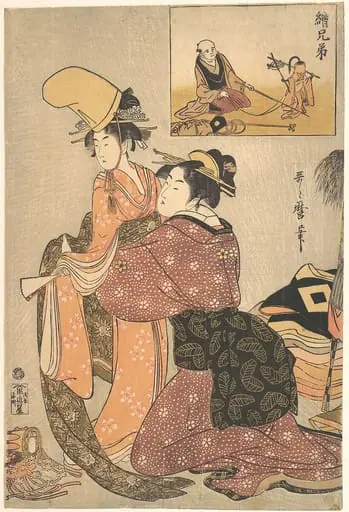 喜多川歌麿画 絵兄弟娘道成寺 見立猿廻し 「絵兄弟」|A Woman Dressing a Girl for a the Kabuki Dance “Musume Dojōji,” with “Brother Picture” (E-kyōdai) of a Monkey Trainer
 Untitled
 Untitled
 Untitled
 あやめ燈籠図|Three Women Enjoying Literary Pursuits