Artwork
Shō gatsu|The First Month
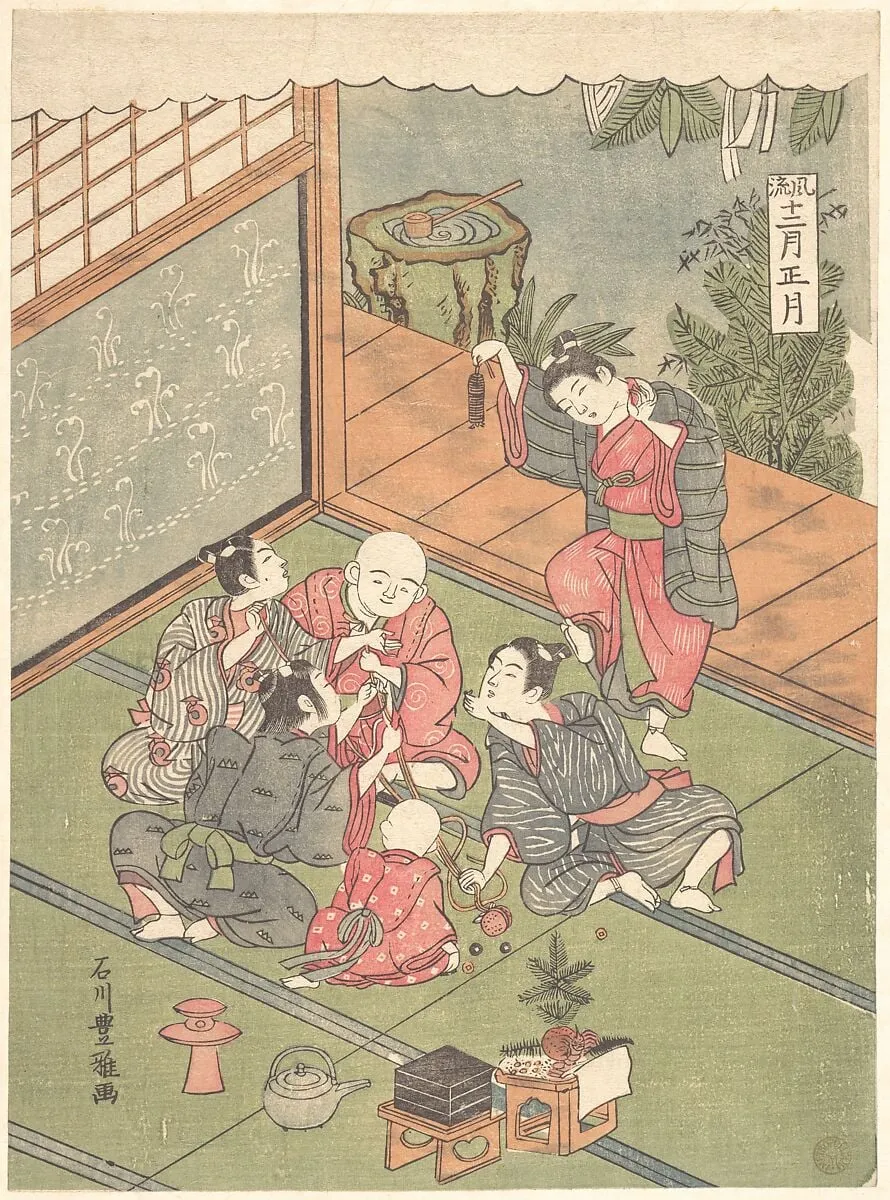
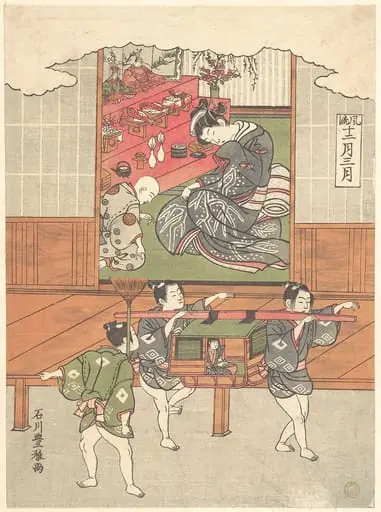
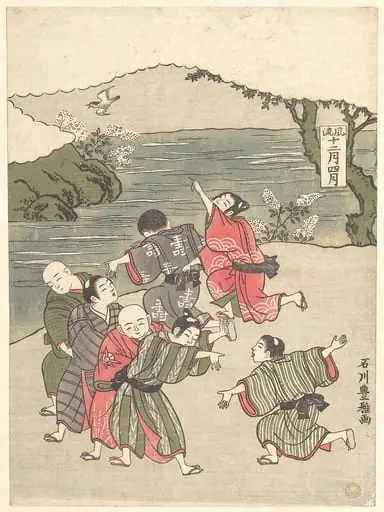
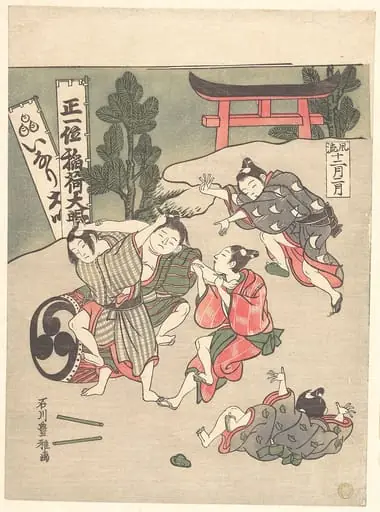
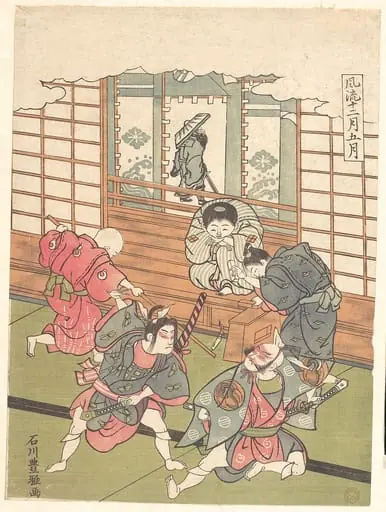
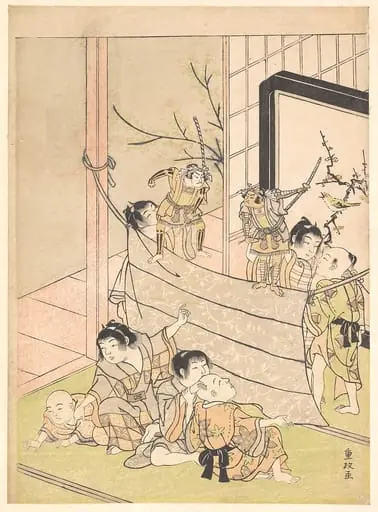
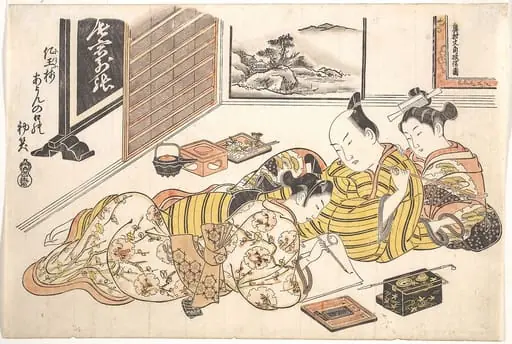
Shō gatsu|The First Month is an ink print by the Romanticist artist Ishikawa Toyomasa. It dates from 1767 and is held in the collection of the Metropolitan Museum of Art.
About this work
Overview
Shō gatsu | The First Month is a color woodblock print produced around 1767 by Ishikawa Toyomasa. It depicts a domestic scene from early Japanese New Year celebrations, rendered in ink and pigments on paper. The work is part of the collection at The Metropolitan Museum of Art, where it represents the ukiyo-e tradition of capturing everyday life with quiet precision and seasonal awareness.
Subject & Meaning
The print illustrates a family gathering during the first month of the lunar calendar, a time associated with renewal and ritual.
The print illustrates a family gathering during the first month of the lunar calendar, a time associated with renewal and ritual. Figures sit on the floor around a low table, engaged in quiet play with traditional toys. The presence of seasonal plants and the teapot suggest a moment of calm observance, reflecting customs of hospitality and familial continuity during the New Year’s observances in Edo-period Japan.
Technique & Style
Toyomasa employed the ukiyo-e woodblock method, using multiple carved blocks to layer ink and color with subtle gradations. The composition is restrained, with soft outlines and muted tones that emphasize texture over drama. The green-tinted floor and delicate rendering of textiles reflect a refined aesthetic, characteristic of late 18th-century domestic scenes, where detail serves mood rather than spectacle.
History & Provenance
Created during the Meiwa era, the print circulated as a commercial print among urban middle-class households. It entered The Metropolitan Museum of Art’s collection through established channels of Japanese art acquisition in the early 20th century. Its preservation reflects its status as a representative example of Toyomasa’s output and the broader genre of New Year-themed prints from the period.
Context
In Edo-period Japan, the first month was marked by rituals of purification, gift-giving, and family gatherings. Prints like this one served both as decorative art and as cultural records, aligning with the popularity of seasonal themes in ukiyo-e. Toyomasa’s focus on interior life contrasts with the more common depictions of actors or courtesans, offering insight into private, non-elite experiences of the time.
Legacy
Shō gatsu | The First Month remains a quiet testament to the nuance of domestic ukiyo-e. While not widely known outside scholarly circles, it contributes to understanding how ordinary moments were elevated through print culture. Its inclusion in major collections underscores its value as a document of social ritual and artistic restraint in 18th-century Japan.
Artist & collection