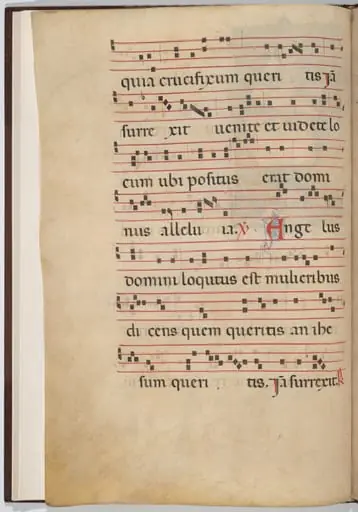
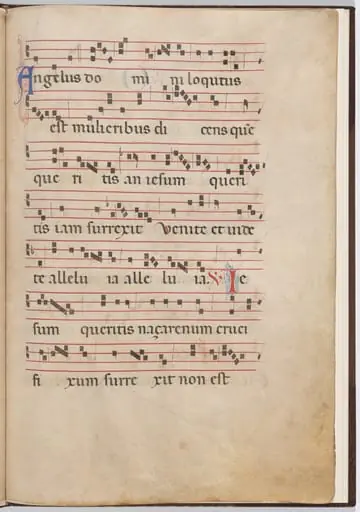
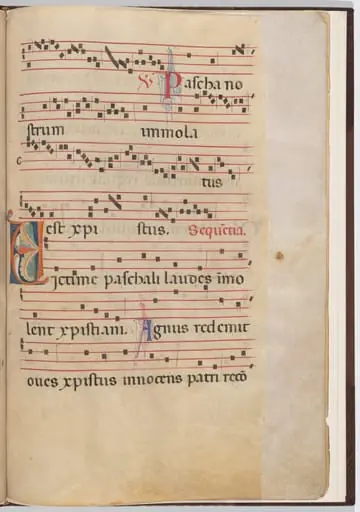
Artwork
Leaf 4 from an antiphonal fragment (verso)
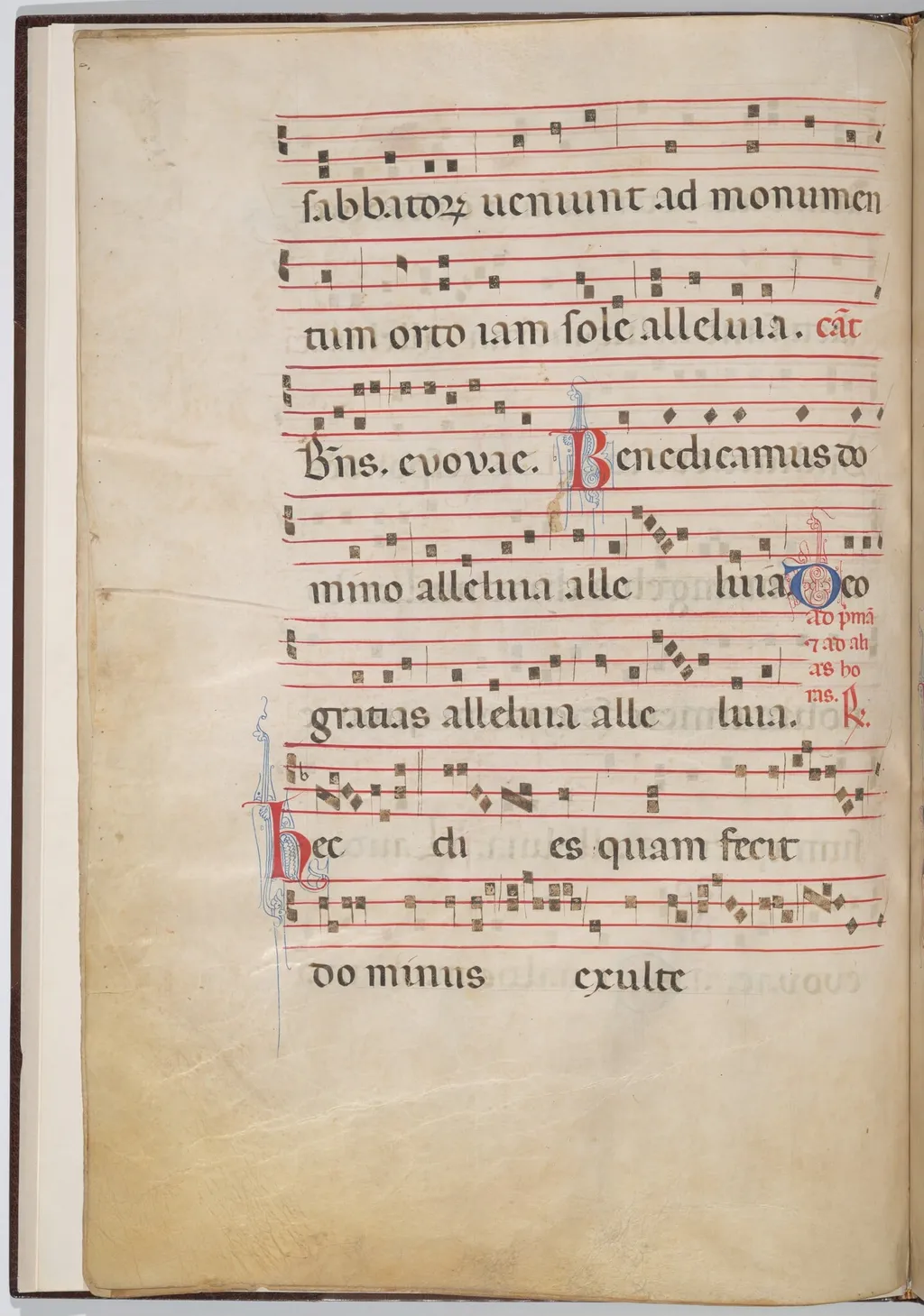
Leaf 4 from an antiphonal fragment (verso) is an ink drawing by Italian 13th Century. It dates from 1275 and is held in the collection of the National Gallery of Art. This fragment comes from a medieval antiphonal, a liturgical book containing chants for choir use.
About this work
Overview
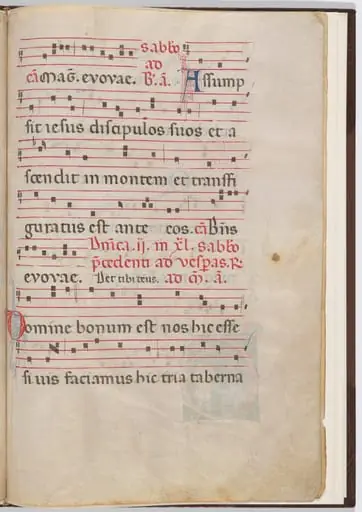
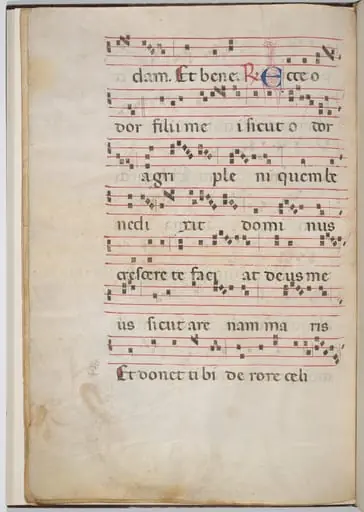
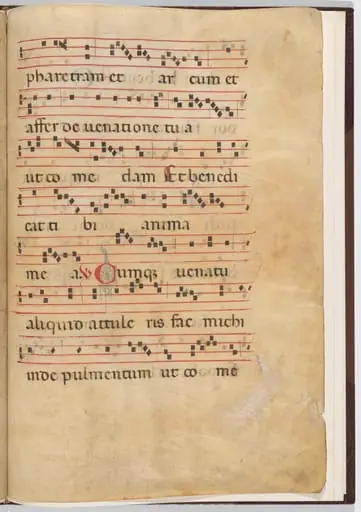
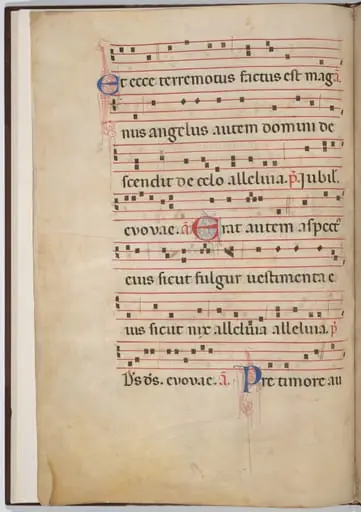
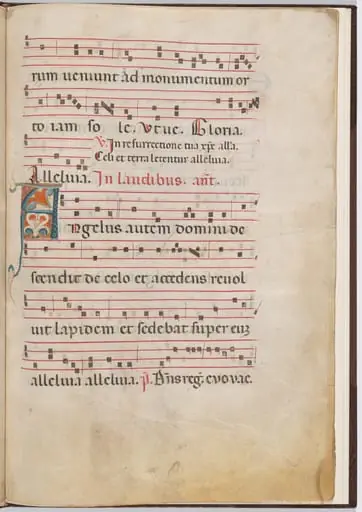
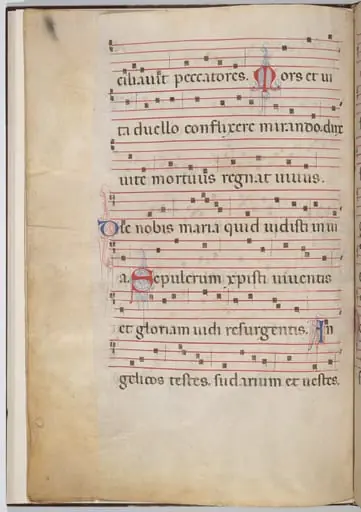
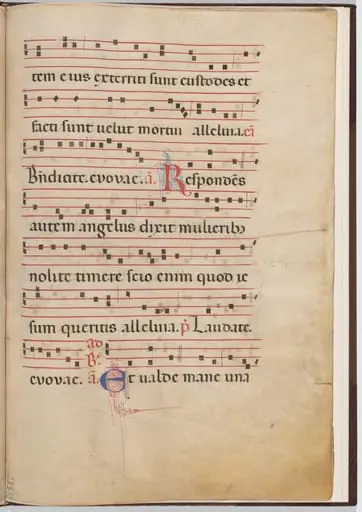
The verso side preserves text and musical notation in red and brown ink on vellum, with ornamental initials in red and blue.
This fragment comes from a medieval antiphonal, a liturgical book containing chants for choir use. The verso side preserves text and musical notation in red and brown ink on vellum, with ornamental initials in red and blue. The presence of neumes—early musical symbols above the text—indicates its function in guiding plainsong performance. Red lines likely served as a staff or pitch guide for singers, reflecting the notation practices of the period.
Subject & Meaning
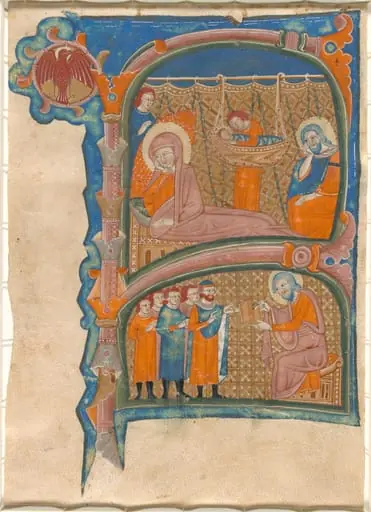
The text contains liturgical chants intended for use in Christian worship, likely for the Divine Office. Its content would have been drawn from the Psalms or other scriptural passages, arranged for antiphonal singing between choir sections. The decorative initials mark the beginning of important sections, signaling shifts in the liturgical cycle. The purpose was both functional and devotional, aiding communal prayer through structured melody.
Technique & Style
The script is a form of Gothic bookhand, characterized by tall, narrow letterforms arranged in dense, even lines. Decorative initials are rendered in red and blue with simple linear flourishes, typical of 13th- to 14th-century liturgical manuscripts. Neumes, drawn in black ink, are placed above the text to indicate melodic contour rather than precise pitch. The use of red for both initials and musical guides reflects a standardized system of visual hierarchy.
History & Provenance
This leaf was once part of a larger antiphonal used in a monastic or cathedral choir, likely produced in a scriptorium in northern Europe. Its survival as a fragment suggests it was separated from the original volume, possibly due to reuse of vellum, damage, or later disbinding. The style and materials point to production between the late 1200s and early 1300s, though its exact origin remains undocumented.
Context
Antiphonals were essential in medieval liturgy, containing chants for daily prayer services. Before the standardization of staff notation, neumes were the primary means of preserving melody. This leaf reflects a transitional phase in musical notation, where visual cues helped singers recall oral traditions. Similar fragments survive in ecclesiastical collections, illustrating the widespread use of such books across Western Europe.
Legacy
Though no longer part of its original volume, this fragment preserves evidence of medieval liturgical practice and early musical notation. It contributes to the study of how sacred music was transmitted before printed scores. Today, such fragments are valued as material witnesses to the devotional life of medieval communities, offering insight into the intersection of text, sound, and ritual.
Artist & collection

Artist
This artist shaped the look of church music between 1250 and 1299, painting bold red-and-blue initials on vellum pages meant for choirs.