Artwork
Leaf 3 from an antiphonal fragment (verso)
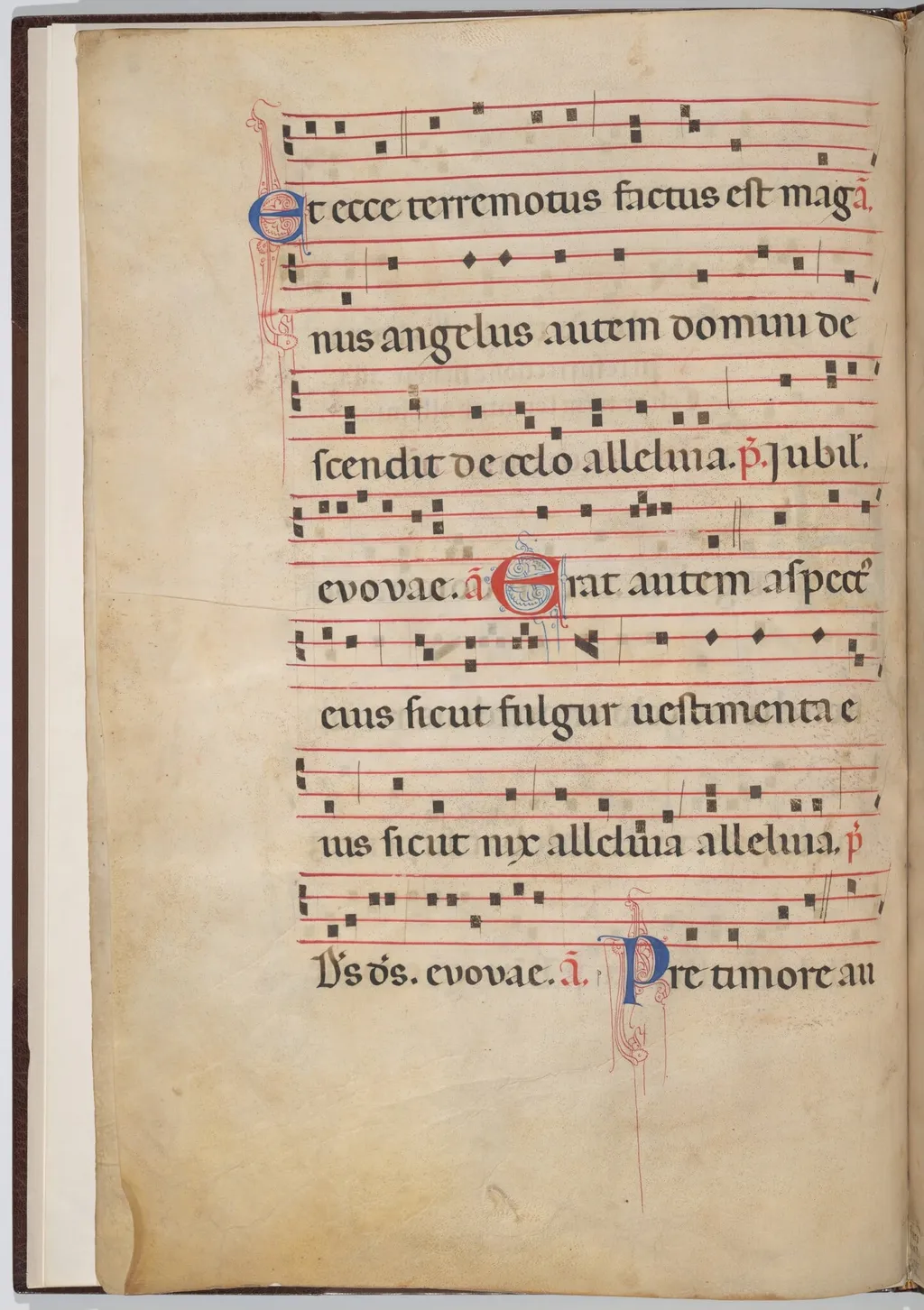
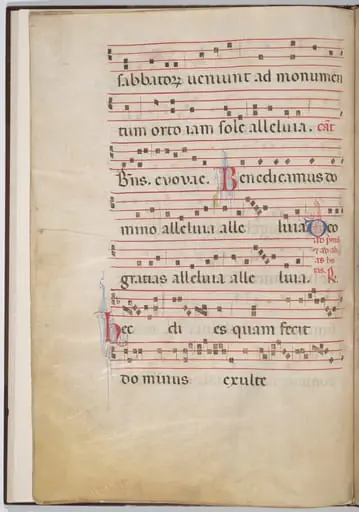
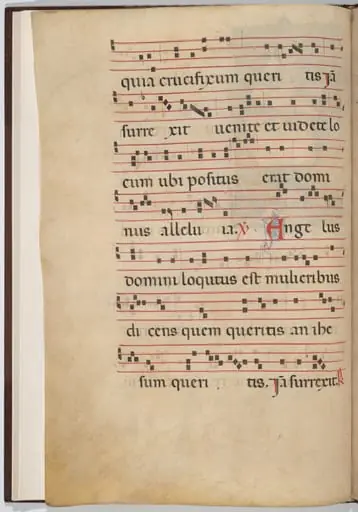
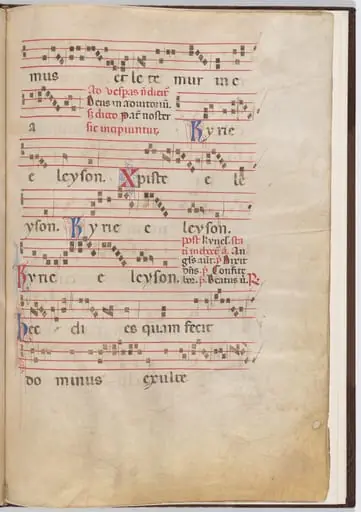
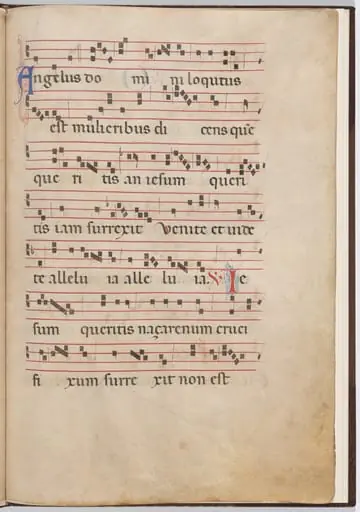
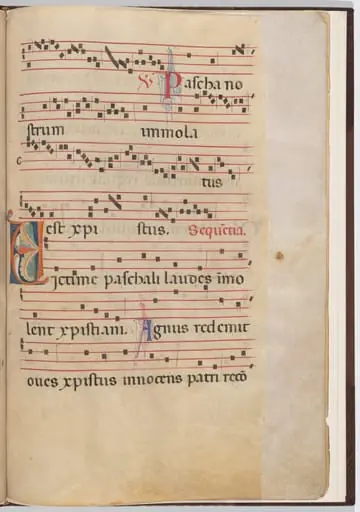
Leaf 3 from an antiphonal fragment (verso) is an ink drawing by Italian 13th Century. It dates from 1275 and is held in the collection of the National Gallery of Art. This fragment comes from a medieval antiphonal, a liturgical book used in church services to guide choral singing.
About this work
Overview
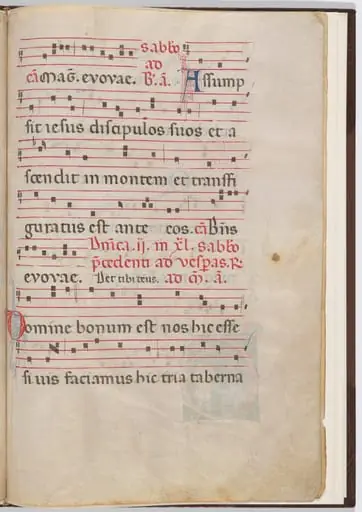
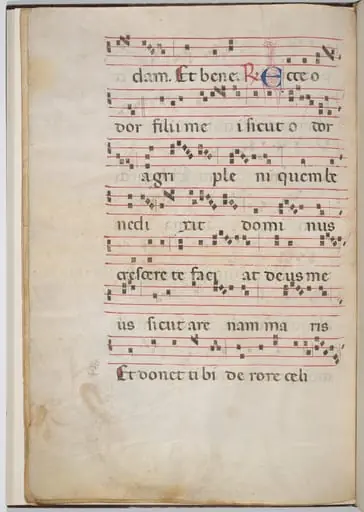
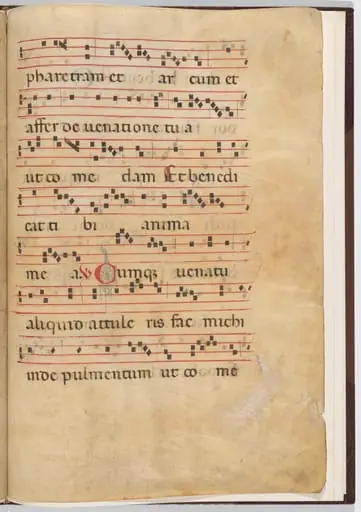
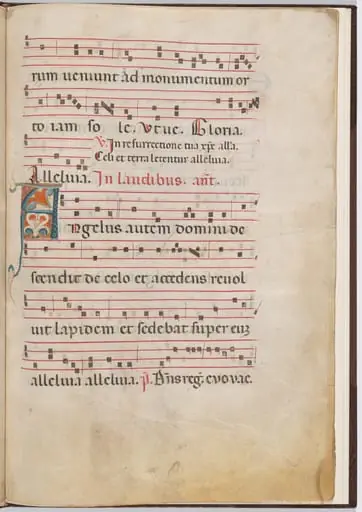
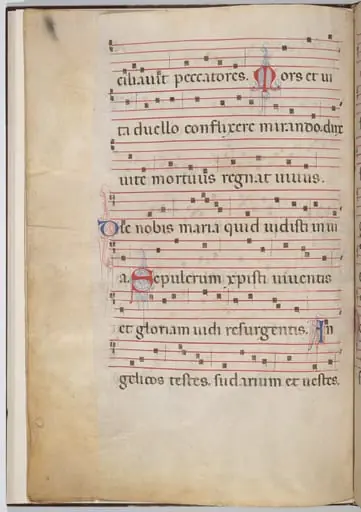
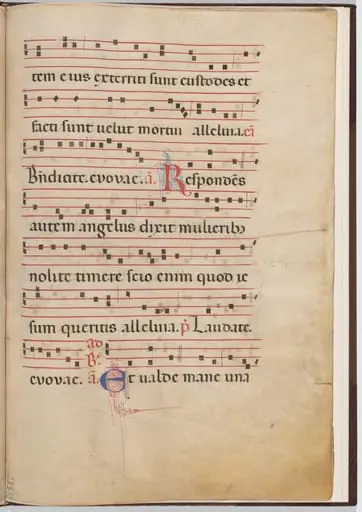
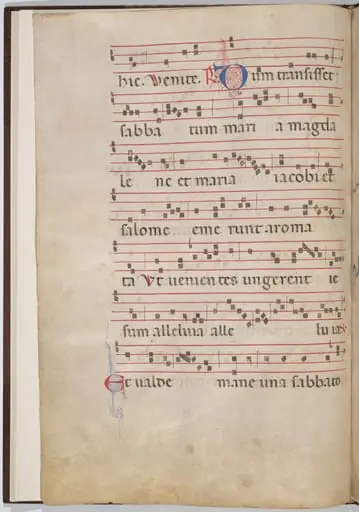
Made on vellum with red and brown ink, it contains Latin text accompanied by neumes—early musical notation above the words.
This fragment comes from a medieval antiphonal, a liturgical book used in church services to guide choral singing. Made on vellum with red and brown ink, it contains Latin text accompanied by neumes—early musical notation above the words. Decorated initials in red and blue mark the beginning of chants, while red horizontal lines serve as a visual guide for pitch and phrasing, helping singers maintain rhythm and tone during worship.
Subject & Meaning
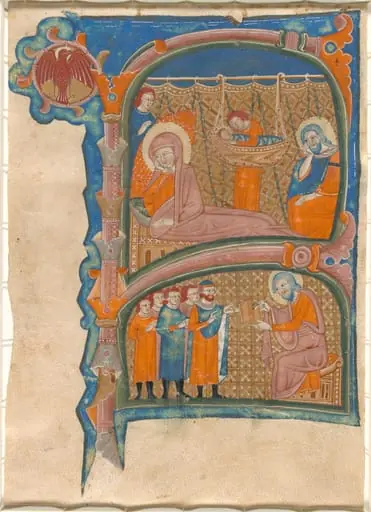
The text is liturgical, intended for use in the Divine Office, with each section corresponding to a specific chant for prayer or ceremony. The presence of musical notation indicates its function as a performance aid, not merely a devotional text. The elaborate initials, including one with a human face, may symbolize divine presence or the voice of the singer as an offering to God, blending sacred function with artistic embellishment.
Technique & Style
The script is a form of Gothic bookhand, characterized by tall, angular letterforms and careful spacing. Neumes, drawn in brown ink, are placed precisely above syllables to indicate melodic contour. Decorated initials are rendered in red and blue with minimal but deliberate ornamentation. The use of red lines as a staff-like guide reflects an early system of musical notation, preceding the modern five-line staff by centuries.
History & Provenance
This leaf likely originated in a monastic scriptorium during the 12th or 13th century, when antiphonals were commonly produced for cathedral and abbey choirs. Its survival as a fragment suggests it was separated from its original binding, possibly due to reuse of vellum, damage, or later collection practices. Its current form reflects centuries of handling, preservation, and eventual dispersal from its liturgical context.
Context
Antiphonals were central to the daily rhythm of monastic life, containing chants for morning and evening prayer. Their production required collaboration between scribes, illuminators, and musicians. This fragment exemplifies the integration of text, music, and decoration in medieval liturgical practice, where visual form supported auditory function, and every element served the communal act of sacred song.
Legacy
Though no longer used in worship, such fragments preserve critical evidence of early Western musical notation and scribal traditions. They inform modern reconstructions of medieval chant and illustrate the craftsmanship behind liturgical books. As surviving pieces of a larger whole, they remind viewers of the material culture of medieval devotion and the quiet labor of those who sang and scribed the divine.
Artist & collection

Artist
This artist shaped the look of church music between 1250 and 1299, painting bold red-and-blue initials on vellum pages meant for choirs.