Artwork
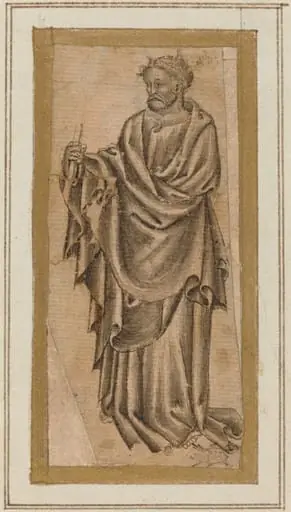
The Destruction of the Egyptian Idols [verso]
![The Destruction of the Egyptian Idols [verso], by Italian 15th Century, 1401](https://artifactworldgallery.com/img/italian-15th-century--the-destruction-of-the-egyptian-idols-verso--646d3c2b8098cfee-w1024.webp)
The Destruction of the Egyptian Idols [verso] is a drawing by the Renaissance artist Italian 15th Century. It dates from 1401 and is held in the collection of the National Gallery of Art.
About this work
The artist used bright colors and ink details to tell the Bible story fast.
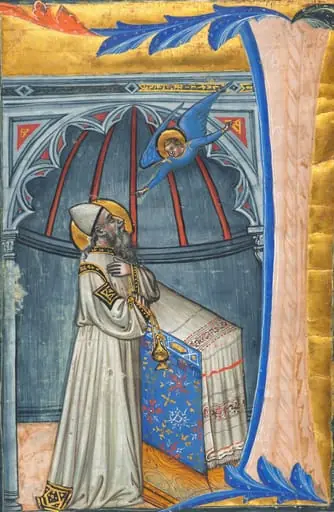
This tiny painting shows Moses standing over broken idols. He holds a staff, rays come from his head, and flames rise behind him. The weird thing is the gold leaf still gleams. Most old miniatures lose their shine, but this one sparkles.
It’s from an Italian prayer book made around 1500. Vellum pages were expensive, so only rich folks owned them. The artist used bright colors and ink details to tell the Bible story fast.
Look up the National Gallery of Art, Washington to see it in person.
Overview
This miniature drawing, executed on vellum, portrays a biblical scene in which Moses stands amid shattered idols, his staff raised and a halo of light emanating from his head. Behind him flames rise, and the work retains a striking gold‑leaf surface that continues to catch the eye despite its age.
Subject & Meaning
The image illustrates the Exodus narrative of Moses confronting the golden calf, emphasizing divine authority through the illuminated figure and the destruction of false gods. The composition underscores the triumph of the true deity over idolatry, a theme commonly invoked in devotional texts of the period.
Technique & Style
Created with bright pigments, fine ink lines and applied gold leaf, the miniature combines vivid coloration with delicate detailing typical of early‑sixteenth‑century Italian illumination. The use of vellum, a smooth, translucent animal skin, allows for precise brushwork and the preservation of the gold’s reflective quality.
History & Provenance
The work originates from an Italian prayer book dating to around 1500, a luxury object produced for affluent patrons who could afford the costly vellum pages. The manuscript later entered the collection of the National Gallery of Art in Washington, where it is currently held.
Context
During the Renaissance, miniature illumination served both liturgical and instructional purposes, providing visual reinforcement of scriptural stories for private devotion. The depiction of Moses reflects contemporary interest in biblical moral exempla and the didactic role of prayer books among the elite.
Artist & collection

Artist
This anonymous Italian engraver from the 1490s carved images that could be peeled apart like paper dolls—each knot in the "First Knot" print was cut from a single sheet so you could lift the loops right off the page.

![The Flight into Egypt [recto], by Italian 15th Century](https://artifactworldgallery.com/img/italian-15th-century--the-flight-into-egypt-recto--8f4d5275d7f90f98-w320.webp)
 The Passion: Christ before Caiaphas
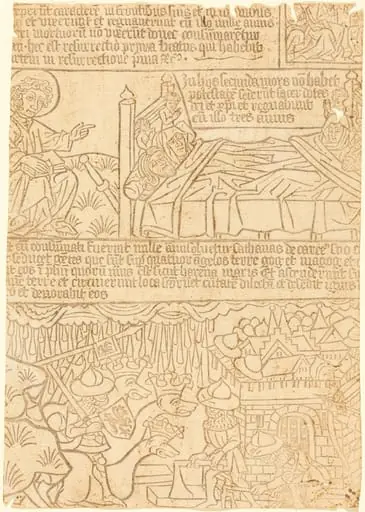 Apocalypse of John, Leaf 42
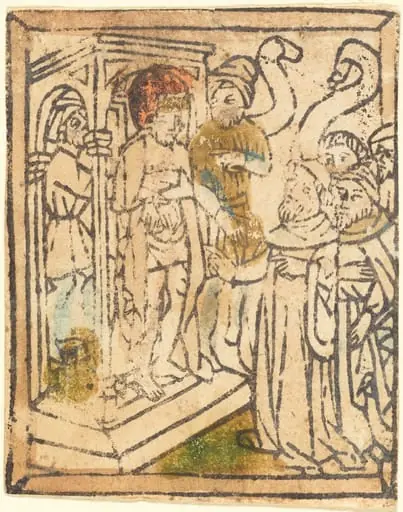 Ecce Homo
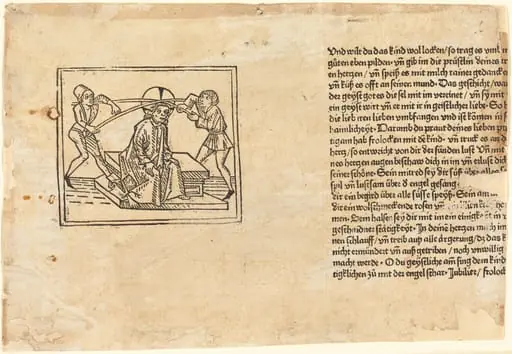 Christ Crowned with Thorns
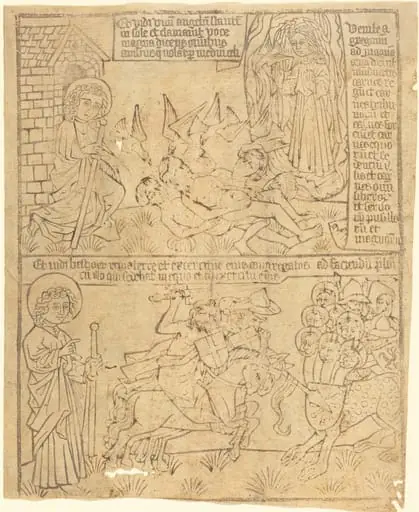 Apocalypse of John, Leaf 10
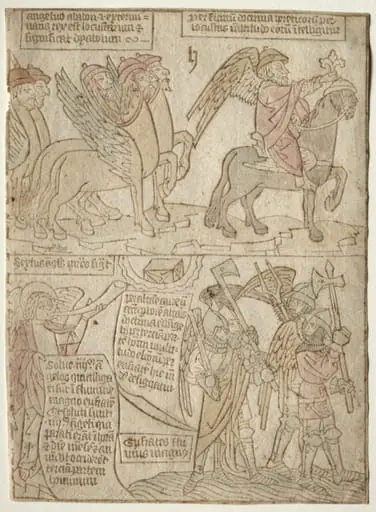 page from the Apocalypse (The Locusts with the Angel of the Abyss and The Sixth Trumpet)
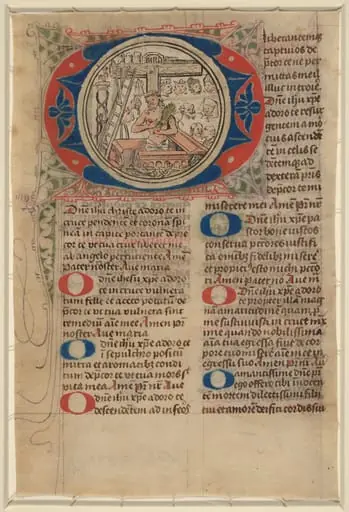 Christ as the Man of Sorrows
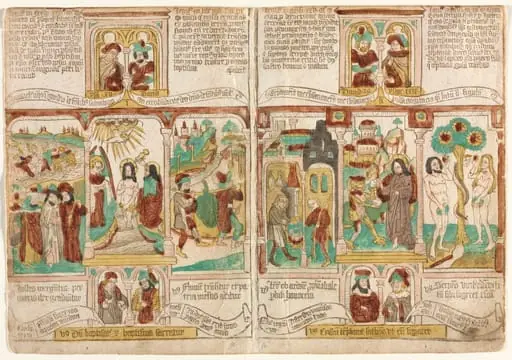 The Bible of the Poor (Biblia Pauperum),
Pharaoh's Army Drowned in the Red Sea; Baptism of Christ; and Moses' Spies Returning with Grapes from Canaan
Esau Selling Jacob his Birthright; Temptation of Christ; and Temptation of Adam and Eve
The Bible of the Poor (Biblia Pauperum),
Pharaoh's Army Drowned in the Red Sea; Baptism of Christ; and Moses' Spies Returning with Grapes from Canaan
Esau Selling Jacob his Birthright; Temptation of Christ; and Temptation of Adam and Eve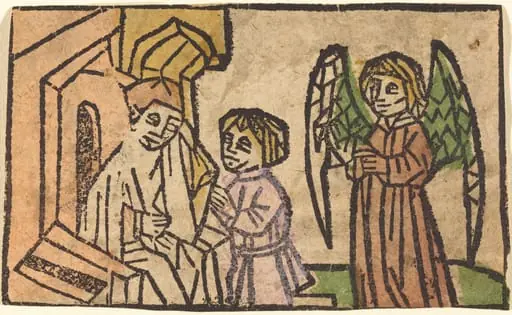 Confession
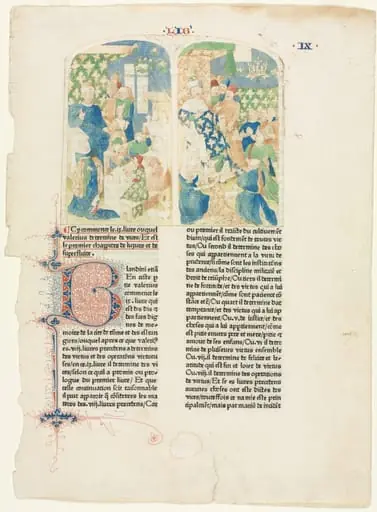 Opening Page of Book IX of Valerius Maximus's Facta et dicta memorabilia
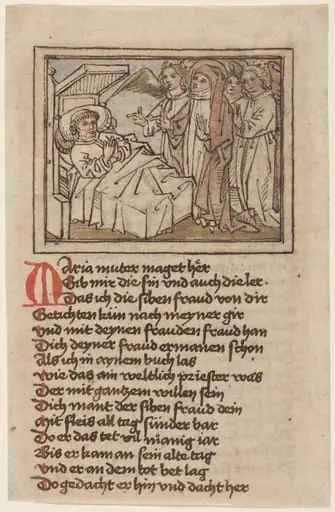 The Virgin Appearing to a Dying Priest