Artwork
Saint Simon Zelotes (?) or Saint Judas Thaddeus (?)
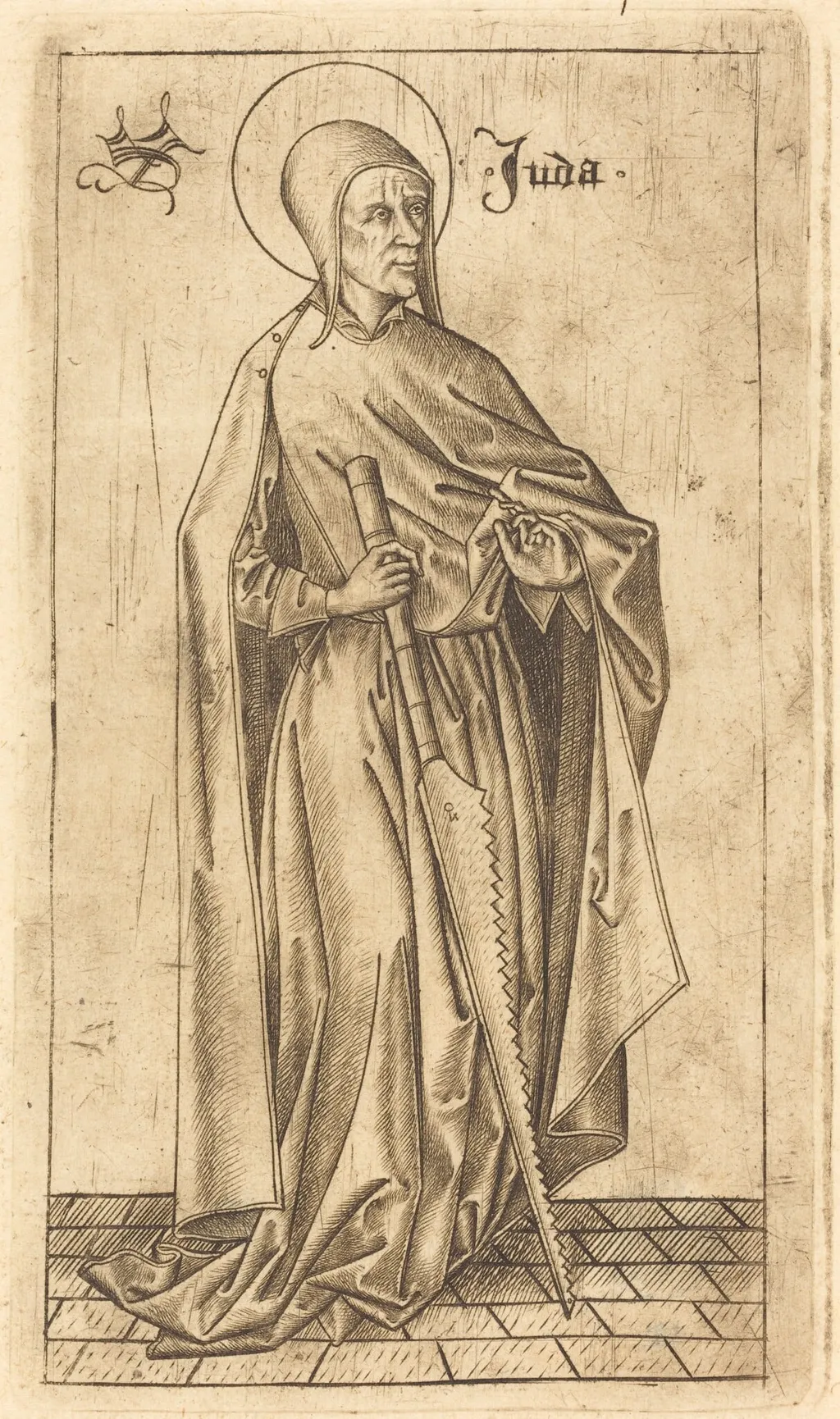
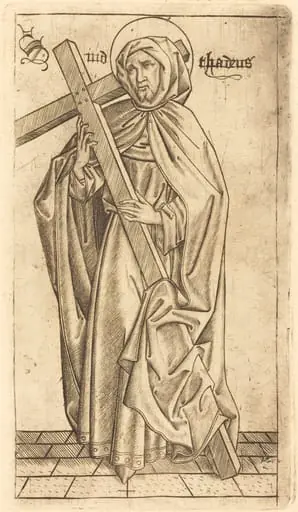
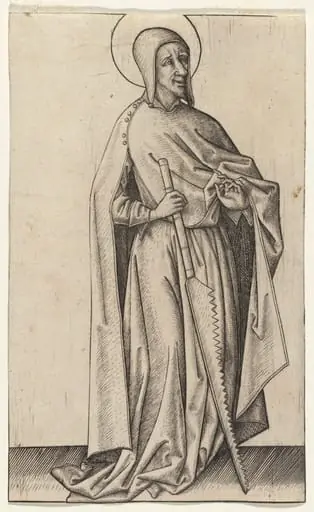
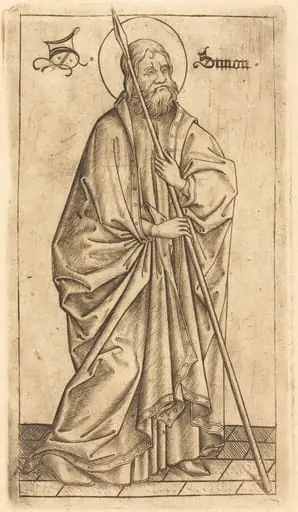
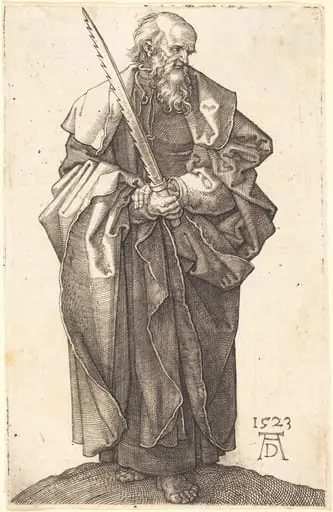
Saint Simon Zelotes (?) or Saint Judas Thaddeus (?) is an ink print by the Renaissance artist Israhel van Meckenem. It dates from 1475 and is held in the collection of the National Gallery of Art.
About this work
Overview
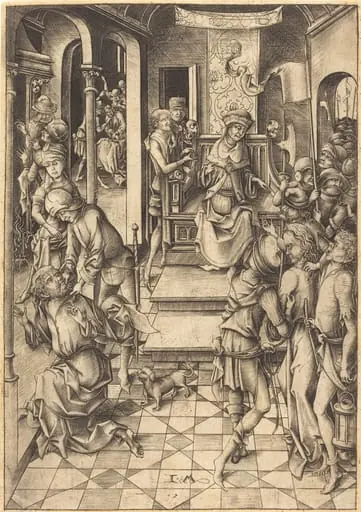
This engraving on laid paper, created around 1475 by Israhel van Meckenem, portrays a kneeling, haloed figure, likely an apostle, amidst detailed linework and textures, characteristic of the artist's technique.
Subject & Meaning
The subject is identified as either Saint Simon Zelotes or Saint Judas Thaddeus, indicated by the inscription 'Juda' above the figure's halo. The depiction of a staff and a book/scroll in the figure's hands reinforces the religious theme.
Technique & Style
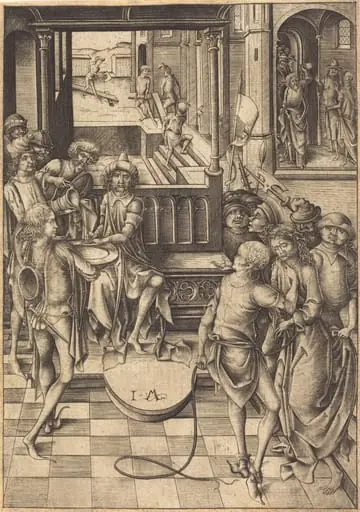
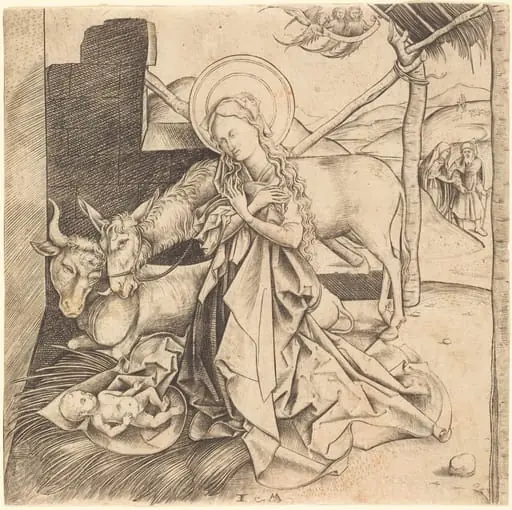
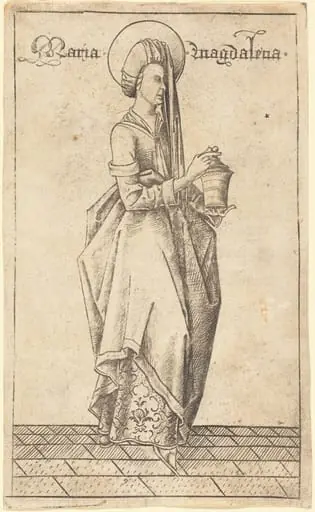
Van Meckenem employed engraving, scratching lines into the paper to achieve detailed textures, evident in the robe's folds and the patterned floor. This method allowed for the creation of deep shadows through closely spaced, parallel lines.
History & Provenance
Israhel van Meckenem, a prolific German printmaker and goldsmith (active 1465-1503), produced this work. As the most prolific fifteenth-century engraver, he contributed significantly to early Northern European printmaking with over 620 prints, many being copies of existing works.
Context
Created in the late 15th century, this engraving reflects the era's religious themes and the burgeoning printmaking industry in Northern Europe, facilitated by techniques like engraving.
Legacy
While the specific impact of this piece is not highlighted, van Meckenem's overall body of work, including this engraving, played a crucial role in disseminating religious imagery and advancing printmaking techniques in Northern Europe during the Renaissance.
Artist & collection
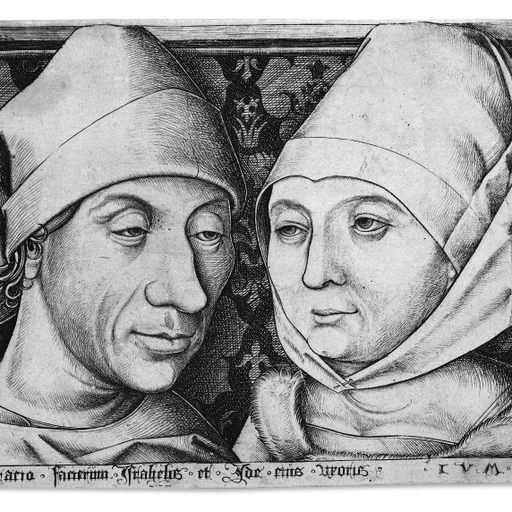
Artist
Israhel van Meckenem (c. 1445 – 10 November 1503), also known as Israhel van Meckenem the Younger, was a German printmaker and goldsmith, perhaps of a Dutch family origin. He was the most prolific engraver of the…