Artwork
Arch of the Claudian Aqueduct
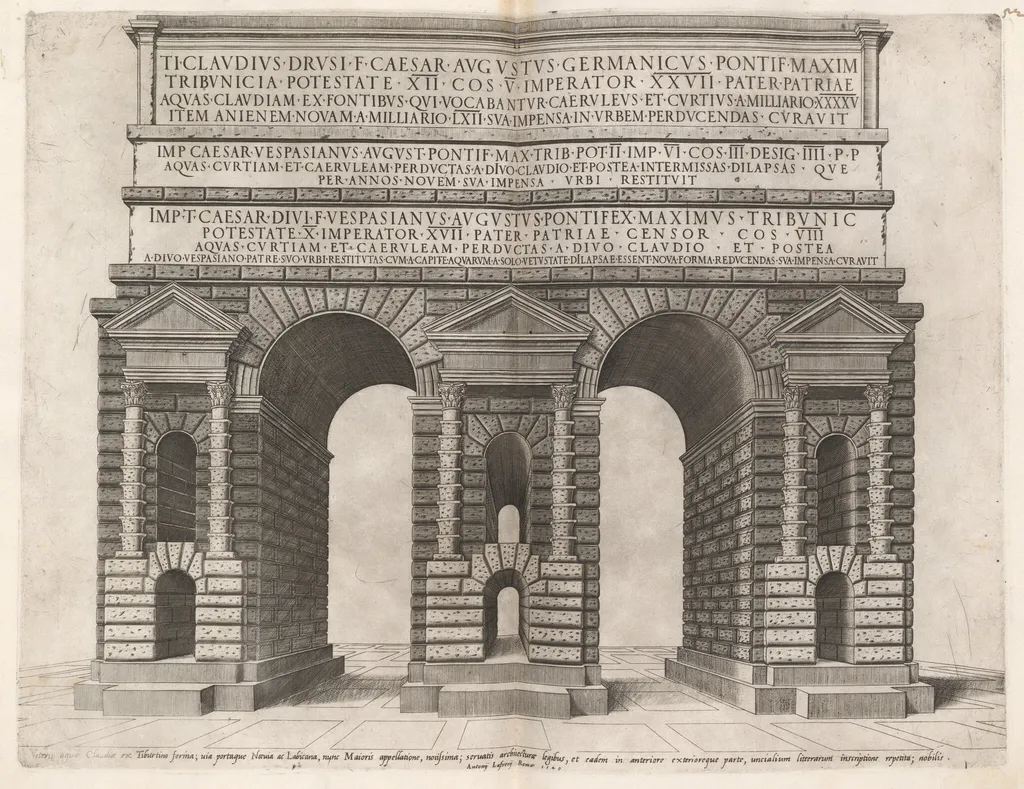
Arch of the Claudian Aqueduct is an ink print by the Renaissance artist Italian 16th Century. It dates from 1549 and is held in the collection of the National Gallery of Art.
About this work
Overview
The work is an engraving titled “Arch of the Claudian Aqueduct.” Rendered in black and white, it depicts a stone aqueduct archway composed of three large, sequential arches, flanked by two smaller circular openings. A flat lintel bears Latin inscription, and a paved street leads toward the structure, all rendered with precise linear detail.
Subject & Meaning
The image records the architectural features of a Roman aqueduct, emphasizing its monumental arches and the functional openings that would have allowed water flow. The inclusion of the Latin inscription underscores the historical context of the Claudian period, linking the structure to imperial patronage.
Technique & Style
Executed as an engraving, the artist employed fine incised lines and cross‑hatching to convey stone texture and depth. The meticulous line work creates a near‑technical illustration, suggesting a focus on accuracy rather than decorative embellishment.
History & Provenance
The print originates from a period when engravings served as documentary records of antiquities. Its precise rendering indicates it may have been produced for scholarly or antiquarian audiences interested in Roman engineering.
Context
Roman aqueducts, such as the Claudian system, were vital for supplying water to cities across the empire. The engraving reflects 18th‑century European fascination with classical ruins, aligning with the broader trend of documenting ancient architecture for study and collection.
Artist & collection

Artist
A 16th-century Italian sculptor left us small bronze works in dark brown and gold.




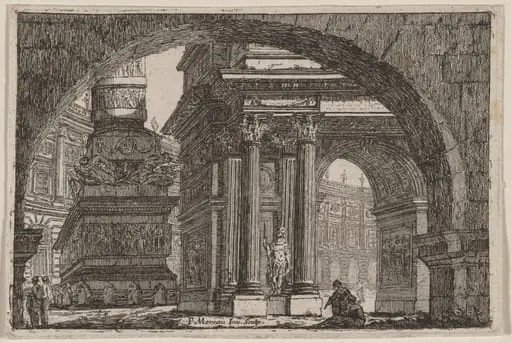 Ancient Forum Seen Beneath an Arch
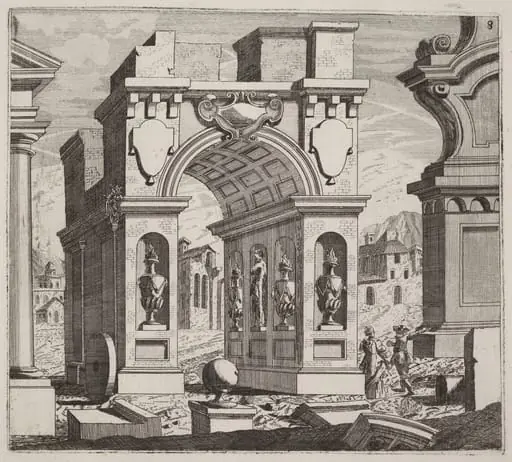 Architectural Fantasy with a Triumphal Arch
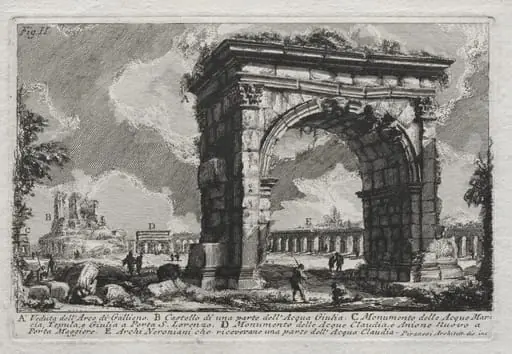 Veduta dell'Arco di Gallieno
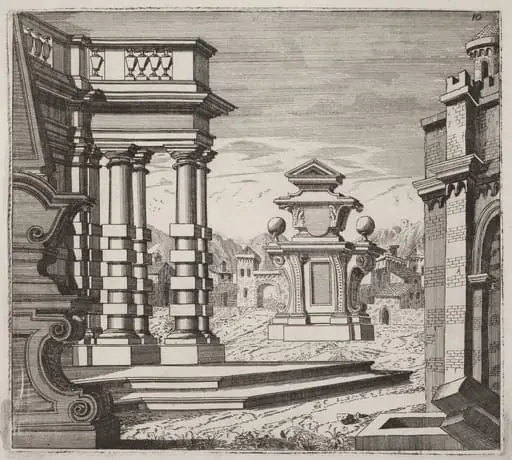 Architectural Fantasy with Portals and Monuments
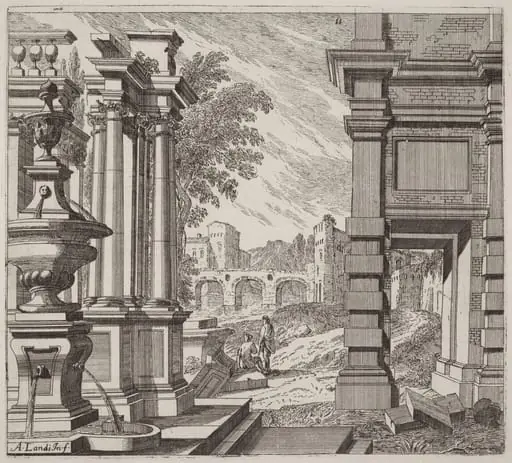 Architectural Fantasy with a Fountain, Classical Ruins, and a Bridge
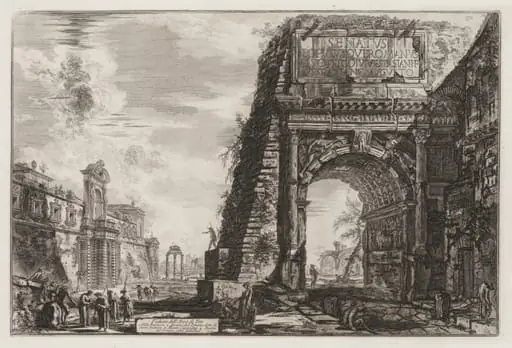 Views of Rome: The Arch or Titus
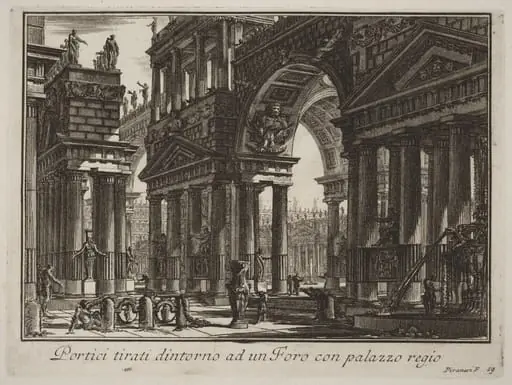 Portici tirati dintorno ad un Foro con palazzo regio
![Pantheum Romanum [The Roman Pantheon], by Nicolas Beatrizet](https://artifactworldgallery.com/img/nicolas-beatrizet--pantheum-romanum-the-roman-pantheon--8069db7dd8e6f190-w320.webp) Pantheum Romanum [The Roman Pantheon]
Pantheum Romanum [The Roman Pantheon]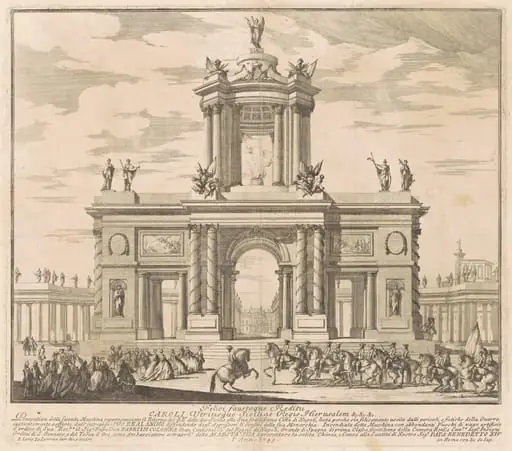 The Seconda Macchina for the Chinea of 1745: Triumphal Arch for the Return of King Charles of Bourbon to Naples
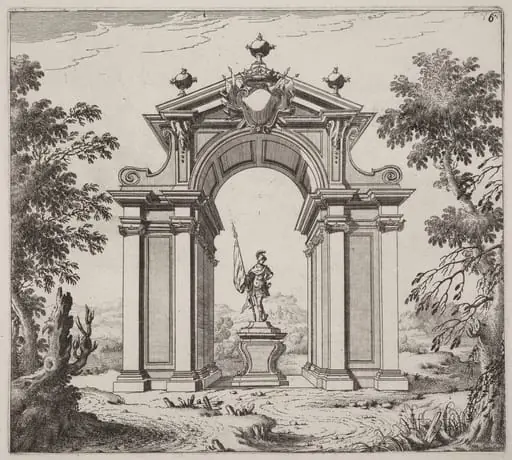 Triumphal Arch in a Landscape