Artwork
The Seconda Macchina for the Chinea of 1745: Triumphal Arch for the Return of King Charles of Bourbon to Naples
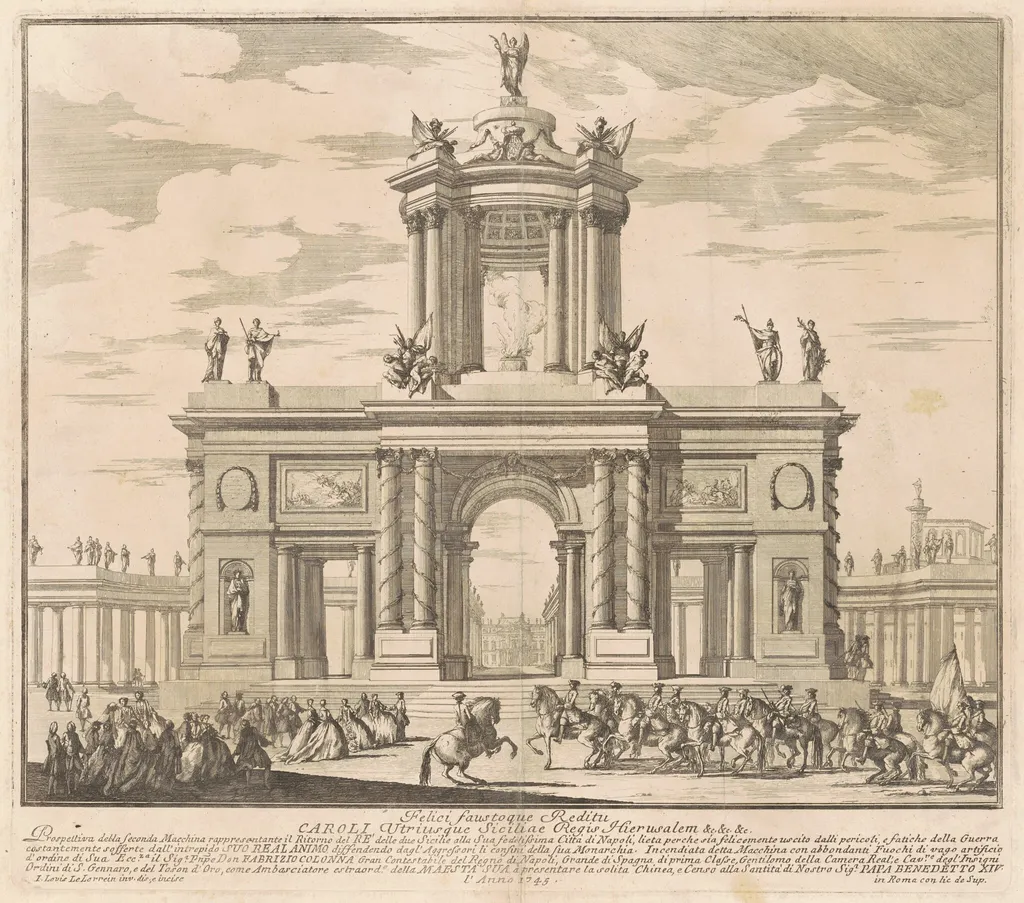
The Seconda Macchina for the Chinea of 1745: Triumphal Arch for the Return of King Charles of Bourbon to Naples is an ink print by the Baroque artist Louis-Joseph Le Lorrain. It dates from 1745 and is held in the collection of the National Gallery of Art.
About this work
Overview
Louis‑Joseph Le Lorrain’s 1745 etching, titled *The Seconda Macchina for the Chinea of 1745: Triumphal Arch for the Return of King Charles of Bourbon to Naples*, presents a staged celebration of the monarch’s homecoming. Rendered in fine, linear detail, the print imagines a monumental stone arch that frames a procession of soldiers, riders and flag‑bearers moving in orderly ranks.
Subject & Meaning
The composition functions as a visual program for a royal pageant, the so‑called Chinea, a ceremonial tribute to the Spanish king. The central arch, topped by a statuary figure, serves as a symbolic gateway, while the surrounding crowd conveys the civic pride and loyalty of Neapolitan subjects toward Charles of Bourbon.
Technique & Style
Executed as an etching, the work relies on delicate incised lines that produce a crisp, architectural quality. Le Lorrain’s handling of line creates depth in the stone columns and clarity in the miniature figures, allowing the viewer to discern individual riders, flags and the intricate ornamentation of the imagined structure.
History & Provenance
Created in the mid‑eighteenth century, the print was intended as a design for the “second machine” – a temporary architectural element used during the Chinea festivities in Naples. It reflects the court’s practice of commissioning printed visualizations to coordinate large‑scale public celebrations, and it remains a primary documentary source for the event’s staging.
Artist & collection


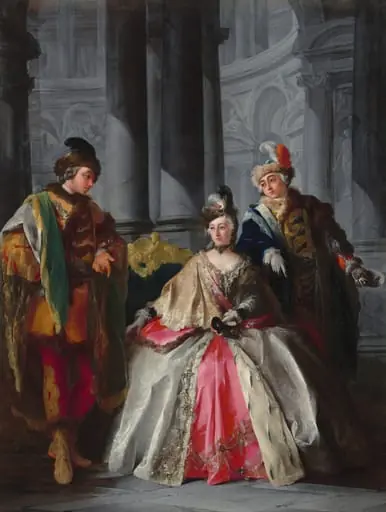 Three Figures Dressed for a Masquerade
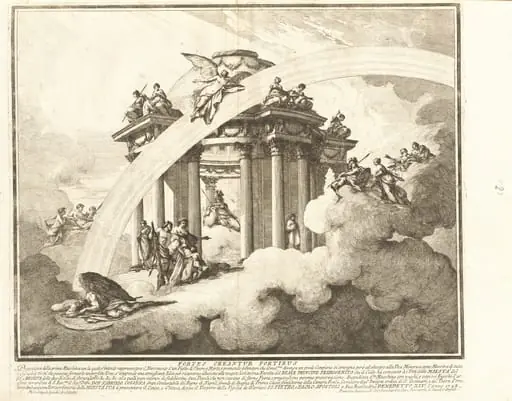 The Prima Macchina for the Chinea of 1748: The Son of Venus and Mars Presented to the Temple of Minerva
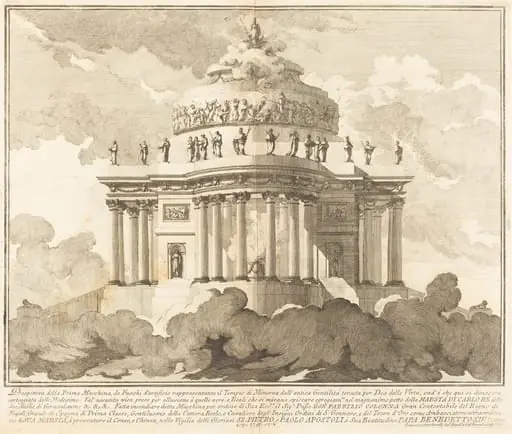 The Prima Macchina for the Chinea of 1746: The Temple of Minerva
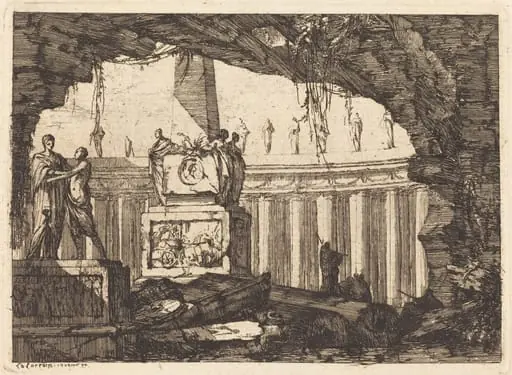 Architectural Fantasy with an Obelisk and Arcade
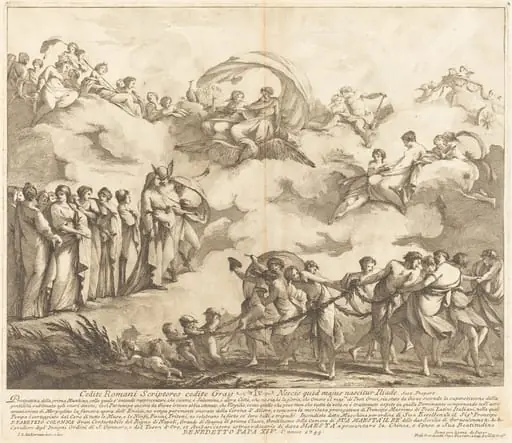 The Prima Macchina for the Chinea of 1744: The Glorification of Virgil
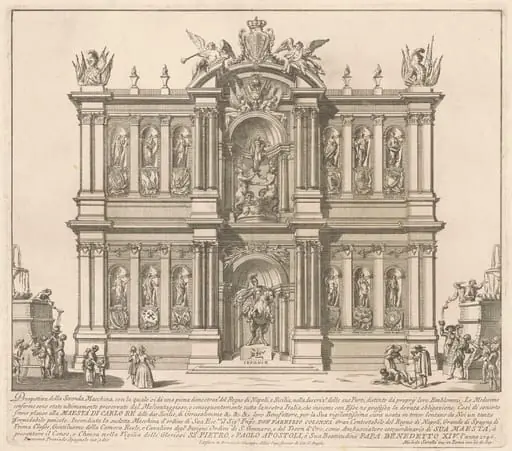 The Seconda Macchina for the Chinea of 1746: The Territories of the Kingdom of Naples
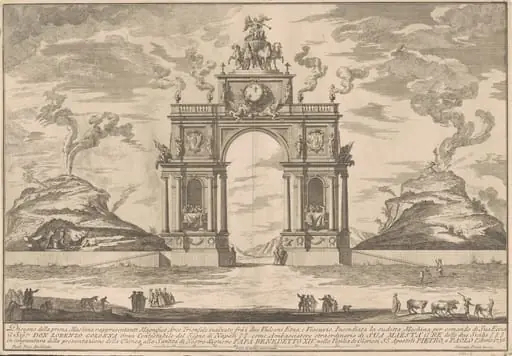 The Prima Macchina for the Chinea of 1756: A Triumphal Arch between Mount Etna and Mount Vesuvius
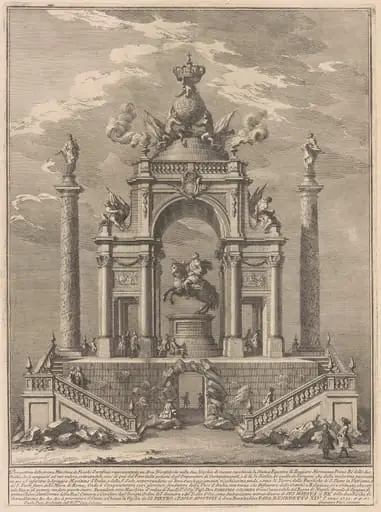 The Prima Macchina for the Chinea of 1751: Triumphal Arch for Roger I of Sicily
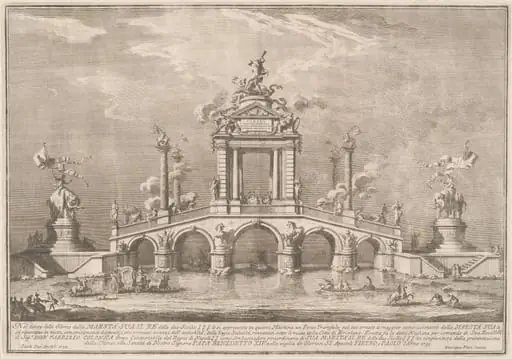 The Prima Macchina for the Chinea of 1755: A Triumphal Bridge with Antiquities from Herculaneum
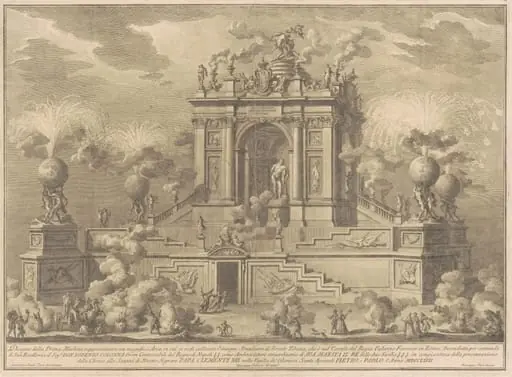 The Prima Macchina for the Chinea of 1767: A Triumphal Arch with the Farnese Hercules
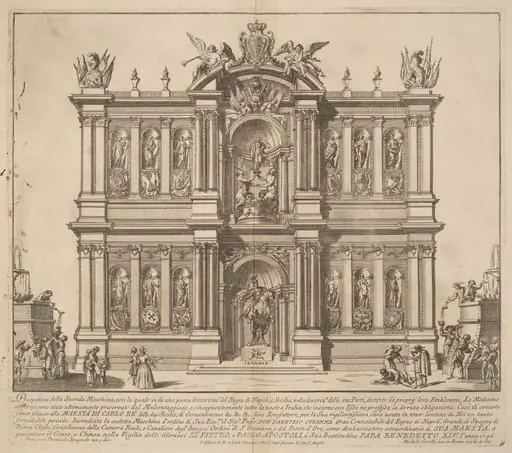 The Seconda Macchina for the Chinea of 1746: The Territories of the Kingdom of Naples
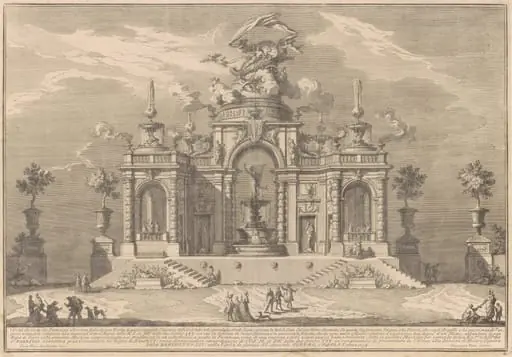 The Prima Macchina for the Chinea of 1754: The Palace of Venus in Cyprus
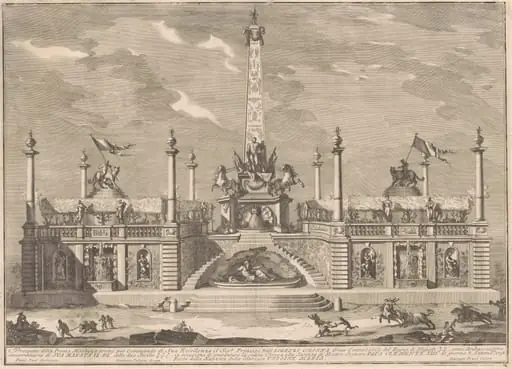 The Prima Macchina for the Chinea of 1758: A "Deliziosa" with Hanging Gardens
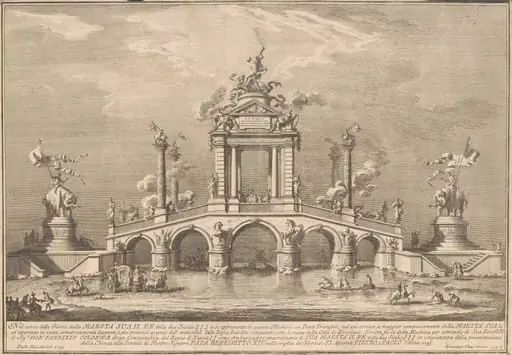 The Prima Macchina for the Chinea of 1755: A Triumphal Bridge with Antiquities from Herculaneum
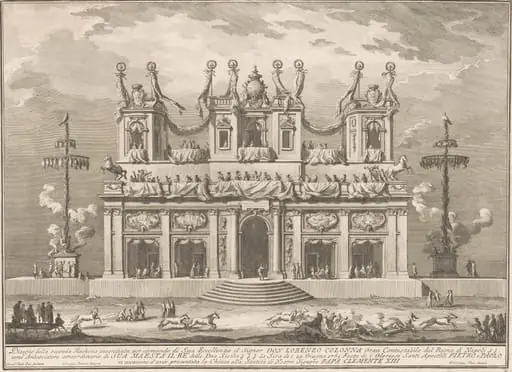 The Seconda Macchina for the Chinea of 1765: A Decorated Building with Cockaigne Poles