Artwork
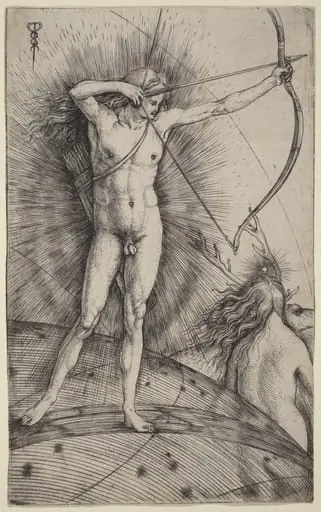
Archer Drawing a Bow
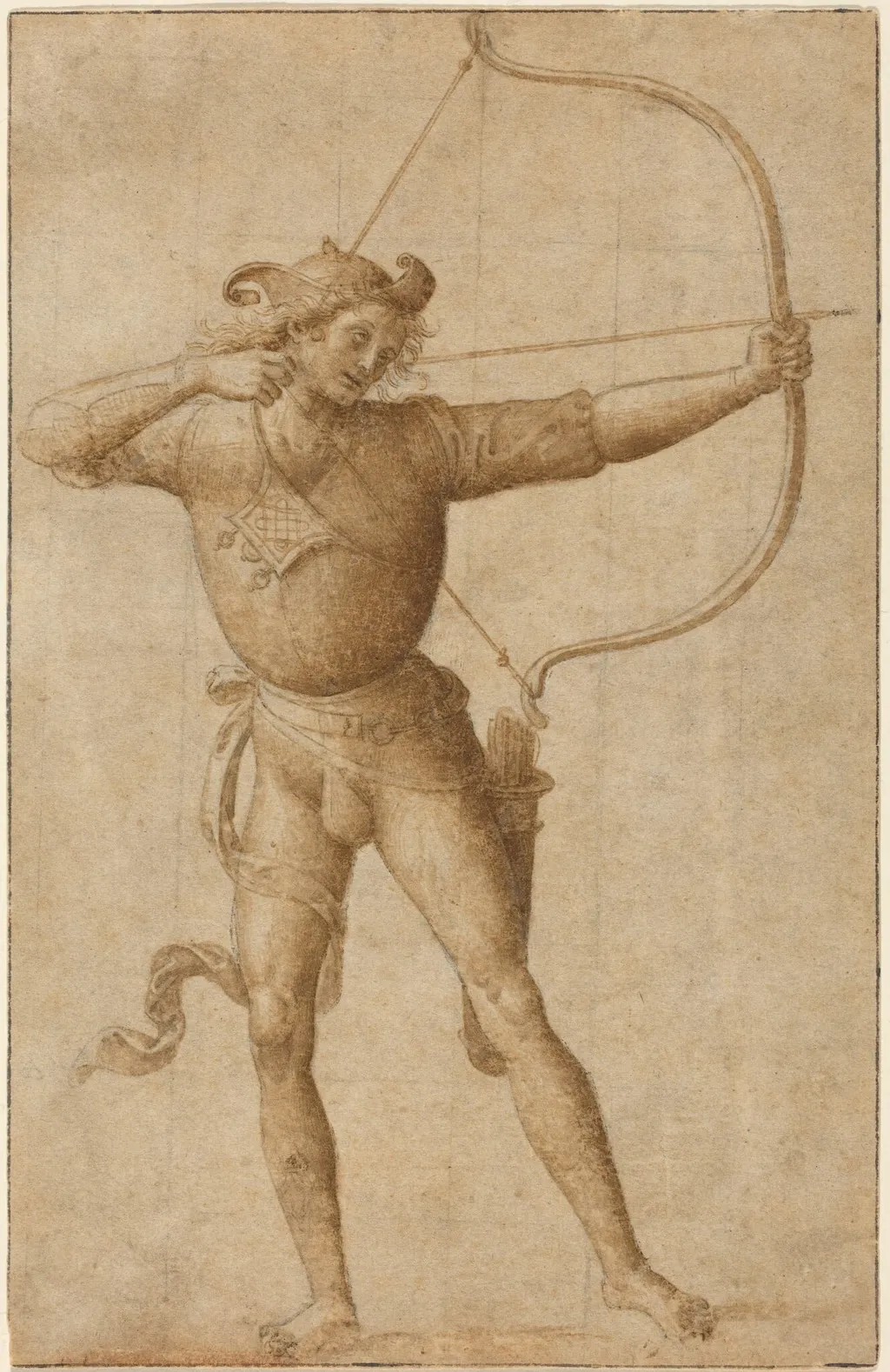
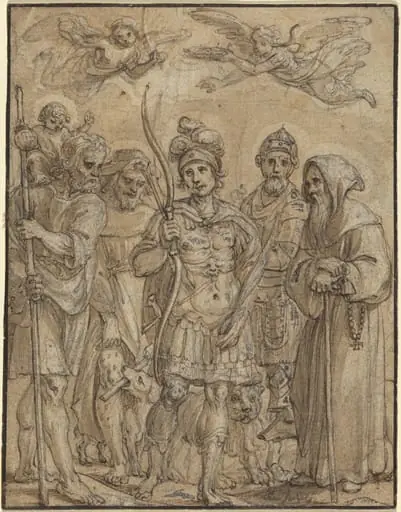
Archer Drawing a Bow is a chalk drawing by the Renaissance artist Italian 16th Century. It dates from 1505 and is held in the collection of the National Gallery of Art. The work is a drawing executed in black chalk, brown wash, and white highlights on laid paper.
About this work
Overview
The work is a drawing executed in black chalk, brown wash, and white highlights on laid paper. It portrays a figure in a short tunic and hat, drawing a bow with his right hand while the left hand steadies the weapon. A quiver of arrows rests on his back, and the composition is rendered with careful attention to the texture of clothing and equipment.
Subject & Meaning
The image captures a moment of preparation for archery, emphasizing the physical tension of pulling a bowstring. The attire—a simple tunic and headgear—suggests a civilian or possibly a militia figure rather than a mythic hero, focusing the viewer on the practical aspects of the skill rather than allegorical symbolism.
Technique & Style
The artist combines dry black chalk for line work with a brown wash that adds tonal depth, while strategic touches of white create highlights that model the forms. The use of laid paper, with its subtle ribbed texture, contributes to the drawing’s tactile quality, aligning it with Renaissance interests in realistic representation and anatomical accuracy.
History & Provenance
Created during the Renaissance period, the drawing reflects the era’s fascination with human anatomy and the study of movement. Its precise execution suggests it may have served as a study for a larger composition or as a teaching tool for artists learning to render dynamic poses.
Context
Within the broader Renaissance context, such studies were common among artists seeking to master the depiction of the human body in action. The emphasis on a solitary archer aligns with contemporary interests in individual skill, military preparedness, and the revival of classical themes related to the hunt and warfare.
Artist & collection

Artist
A 16th-century Italian sculptor left us small bronze works in dark brown and gold.