Artwork
Circe
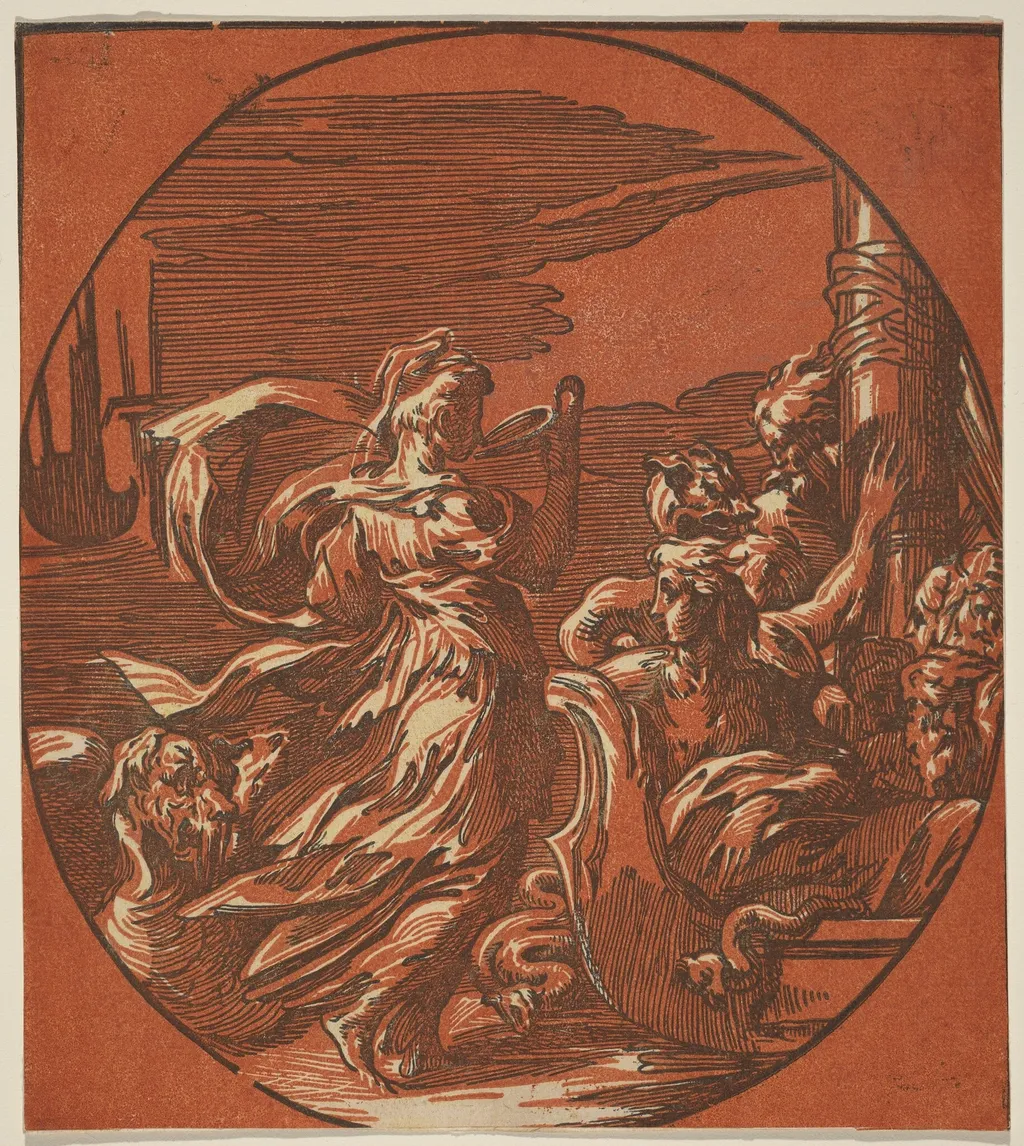
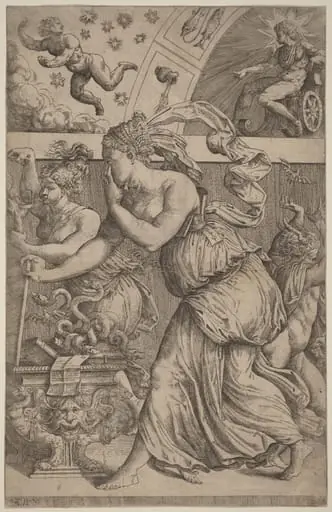
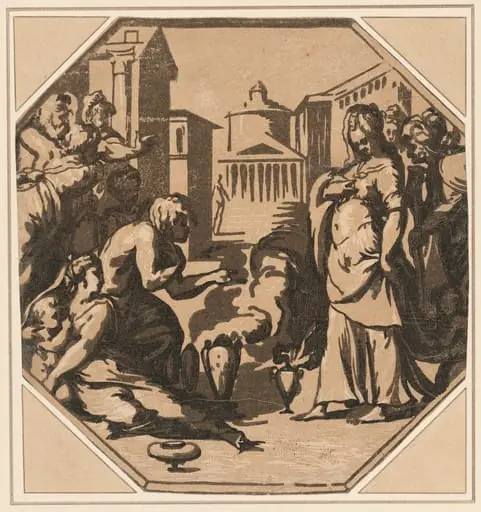
Circe is an ink print by the Renaissance artist Italian 16th Century. It dates from 1550 and is held in the collection of the National Gallery of Art.
About this work
Overview
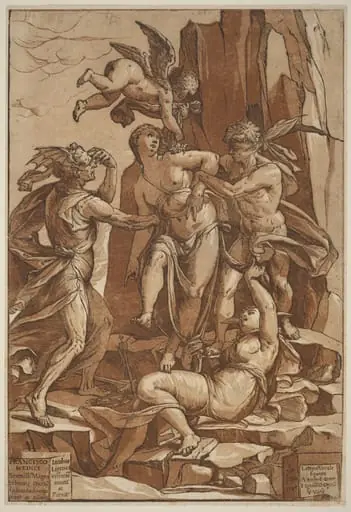
This print is a chiaroscuro woodcut rendered in burnt orange and black, depicting a mythological scene centered on the sorceress Circe.
This print is a chiaroscuro woodcut rendered in burnt orange and black, depicting a mythological scene centered on the sorceress Circe. The technique involves multiple woodblocks to layer tones, creating a dramatic interplay of light and shadow. The composition emphasizes contrast, with figures emerging sharply from a deep, textured background. It belongs to the Renaissance tradition of printmaking that sought to emulate the tonal richness of painting through relief techniques.
Subject & Meaning
Circe, the enchantress from Homer’s Odyssey, is shown wielding a staff amid transformed figures—human bodies fused with animal forms. These contorted shapes represent her power to alter nature through magic. The scene captures a moment of transformation, reflecting Renaissance fascination with classical myth and the boundaries between human and beast. Her central position asserts dominance over the chaos surrounding her.
Technique & Style
The print employs chiaroscuro woodcut, using separate blocks for light and dark tones to build depth without color. The burnt orange background, printed from a key block, contrasts with the stark black outlines and shadows of the figures. This method, developed in early 16th-century Italy, allowed printmakers to achieve sculptural volume and emotional intensity, mimicking the chiaroscuro effects seen in contemporary paintings.
History & Provenance
Created during the height of the Italian Renaissance, this print likely dates to the early 1500s, a period when chiaroscuro woodcuts gained popularity among artists and collectors. Though the specific artist remains unidentified, the style aligns with workshops in Rome or Venice that produced such prints for elite audiences. Its survival suggests it was valued as both artistic and intellectual object, circulated among humanist circles.
Context
Renaissance Europe witnessed renewed interest in classical literature, and Circe’s story resonated as a metaphor for control, transformation, and the dangers of unchecked power. Printmakers responded by translating mythological themes into accessible images. Chiaroscuro woodcuts, though technically demanding, offered a way to bring painterly drama into domestic settings, bridging fine art and popular culture.
Legacy
This print exemplifies the technical ambition of Renaissance printmaking, influencing later artists who explored tonal contrast in relief. While overshadowed by painting in historical narratives, such works preserved mythological imagery for wider audiences. Today, they serve as key evidence of how print culture disseminated complex ideas, blending art, literature, and craftsmanship in early modern Europe.
Artist & collection

Artist
A 16th-century Italian sculptor left us small bronze works in dark brown and gold.

![Tobias and the Angel [verso], by Hermann Weyer](https://artifactworldgallery.com/img/hermann-weyer--tobias-and-the-angel-verso--e00682edf3b74b17-w320.webp)
![The Challenge [right], by Gabriel de Saint-Aubin](https://artifactworldgallery.com/img/gabriel-de-saint-aubin--the-challenge-right--75162e00e6876b27-w320.webp)