Artwork
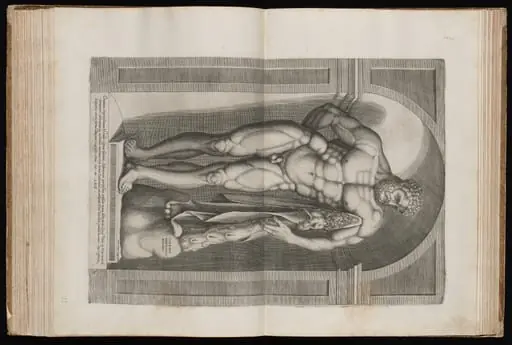
Heracles with the Infant Telephos
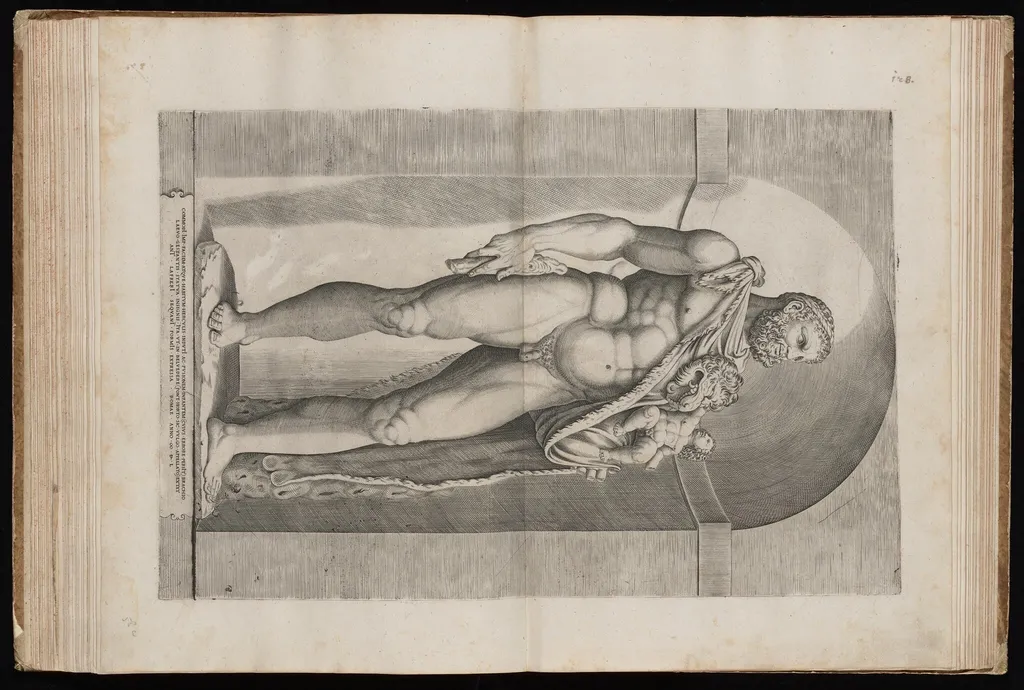
Heracles with the Infant Telephos is an ink print by the Renaissance artist Italian 16th Century. It dates from 1550 and is held in the collection of the National Gallery of Art.
About this work
Overview
Heracles with the Infant Telephos is a 16th-century engraving that references an ancient work, likely a Hellenistic original. The print depicts a scene from Greek mythology.
Subject & Meaning
The engraving shows Heracles encountering Telephos, his infant son, being suckled by a doe. The scene is associated with the founding myth of Pergamum, linked to the Attalid rulers.
Technique & Style
The work is an engraving, a printmaking technique that allows for detailed and intricate designs. It is characterized by a calm and peaceful atmosphere.
Context
The engraving is connected to an ancient Greek myth and the history of Pergamum, a city in modern-day Turkey. The mythological scene it depicts was significant to the Attalid dynasty.
History & Provenance
The print is now held at the National Gallery of Art, Washington, where it can be studied in the context of Renaissance art and classical influences.
Artist & collection

Artist
A 16th-century Italian sculptor left us small bronze works in dark brown and gold.


![Roma Victrix [The Roma of Cardinal Cesi], by Nicolas Beatrizet](https://artifactworldgallery.com/img/nicolas-beatrizet--roma-victrix-the-roma-of-cardinal-cesi--d7ac2e26f0fc874b-w320.webp)