Artwork
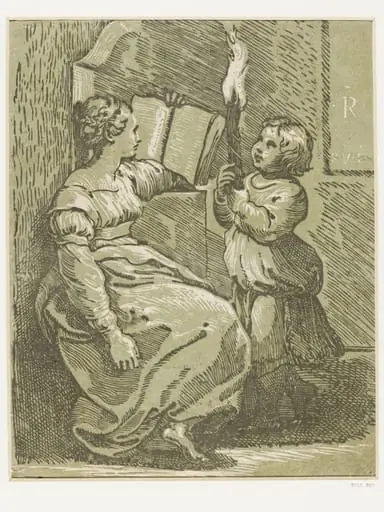
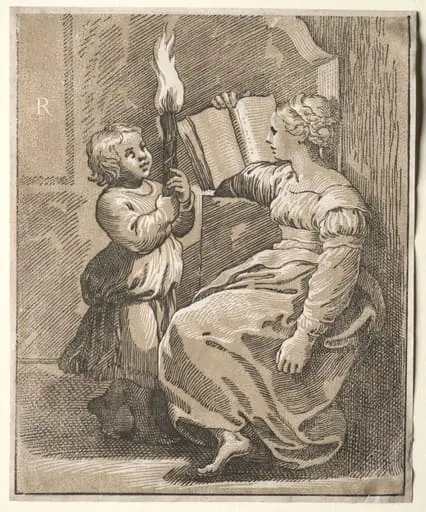
Sibyl Reading
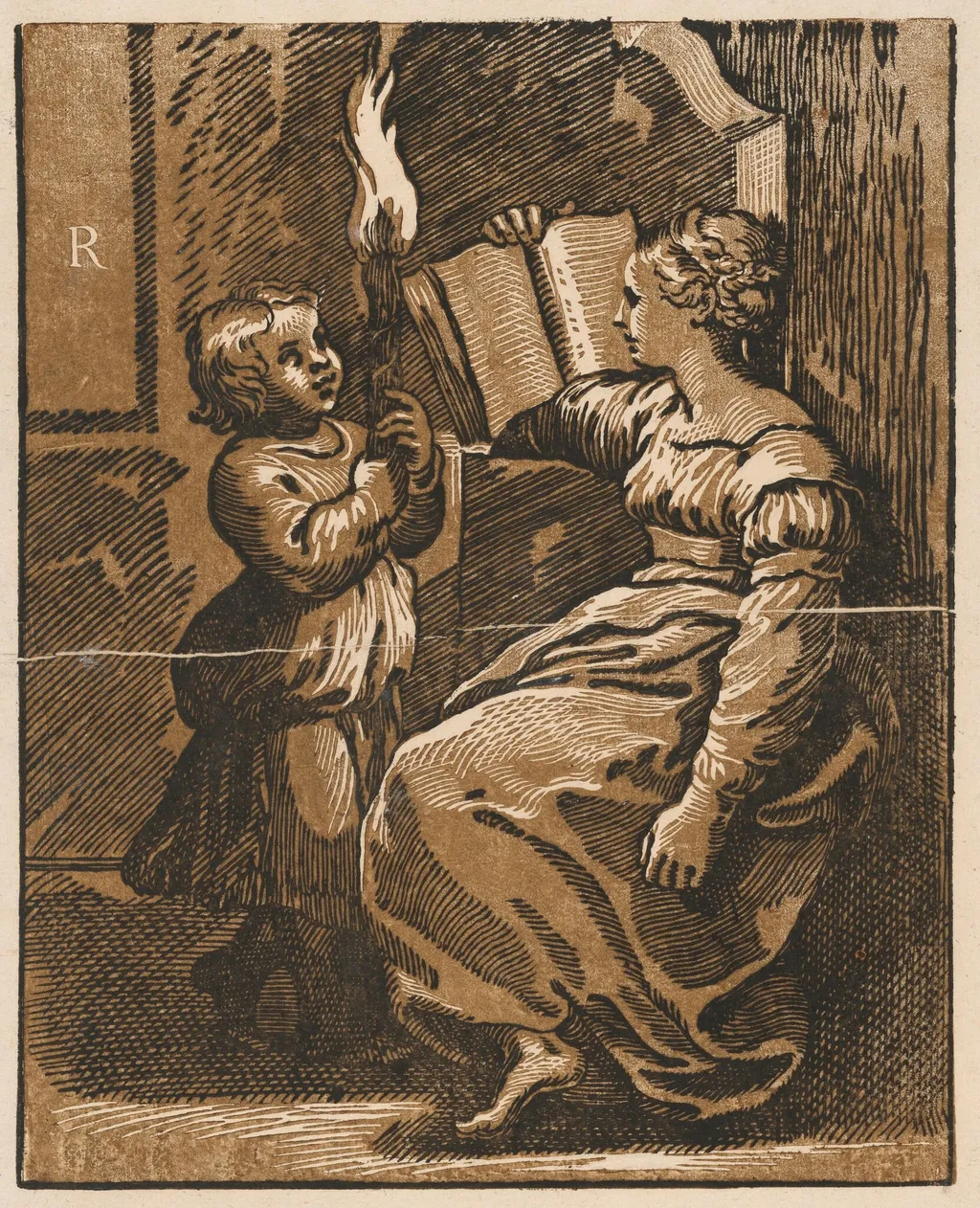
Sibyl Reading is an ink print by the Renaissance artist Italian 16th Century. It dates from 1550 and is held in the collection of the National Gallery of Art.
About this work
Overview
Sibyl Reading is a chiaroscuro woodcut executed in two blocks, printed in black and brown on laid paper. The print presents a seated woman holding an open book, her left hand raised, while a child stands nearby clutching a torch and a book. The composition is set against a deep, shadowed background, emphasizing the figures through stark tonal contrasts.
Subject & Meaning
The central figure is a female sibyl, a prophetic woman from classical antiquity, depicted in a moment of study or contemplation. The accompanying child, illuminated by a torch, may symbolize the transmission of knowledge or the curiosity of youth, reinforcing themes of learning and revelation.
Technique & Style
The work employs the chiaroscuro woodcut method, using two separate blocks to achieve a nuanced range of tones. The darker block provides deep shadows, while the lighter brown block adds mid‑tones, creating a three‑dimensional effect reminiscent of Renaissance drawing. The careful carving and registration allow for delicate gradations of light and shade.
Context
Produced during the Renaissance, the print reflects the period’s fascination with classical subjects and the revival of ancient literary figures. The use of chiaroscuro woodcut aligns with contemporary experiments in printmaking that sought to emulate the tonal richness of drawing and painting.
History & Provenance
Specific details of the print’s origin, including the artist and date of execution, are not documented in the available information. The work is known primarily through its inclusion in collections of Renaissance prints, where it is cited as an example of early chiaroscuro technique.
Artist & collection

Artist
A 16th-century Italian sculptor left us small bronze works in dark brown and gold.