Artwork
Untitled
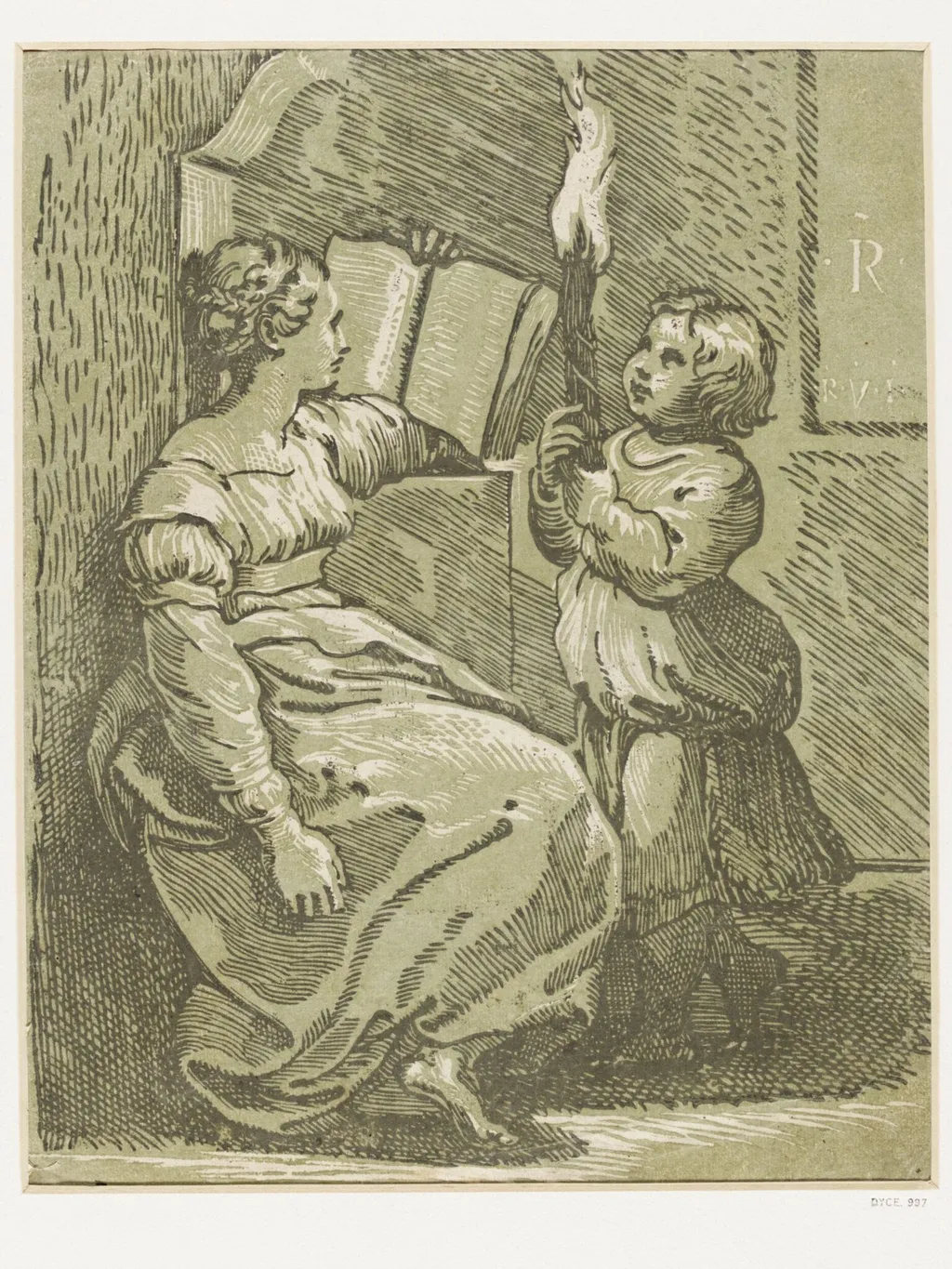
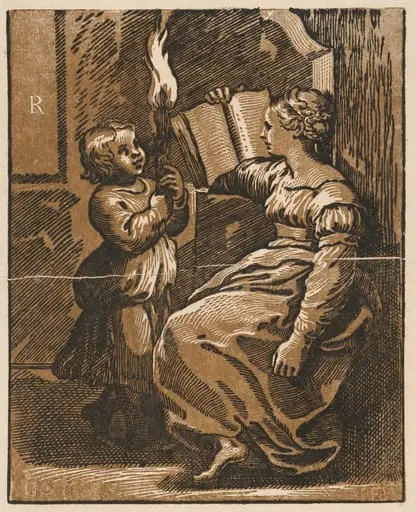
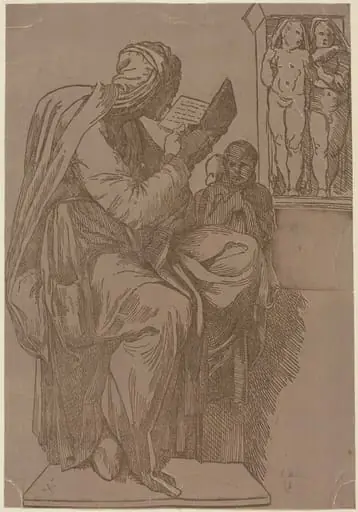
Untitled is a print by the Renaissance artist Ugo da Carpi. It dates from 1500 and is held in the collection of the Victoria and Albert Museum.
About this work
Overview
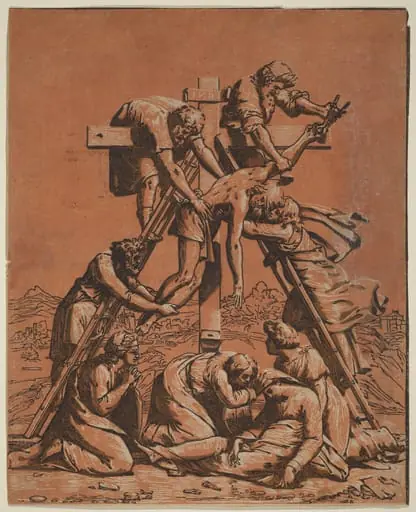
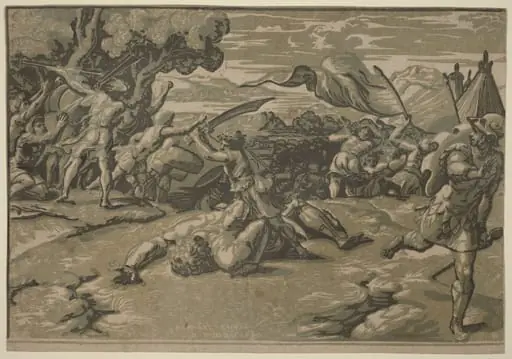
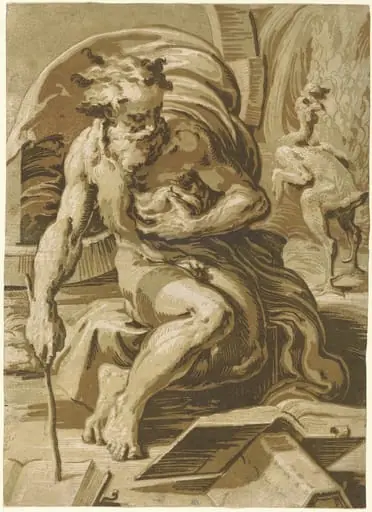
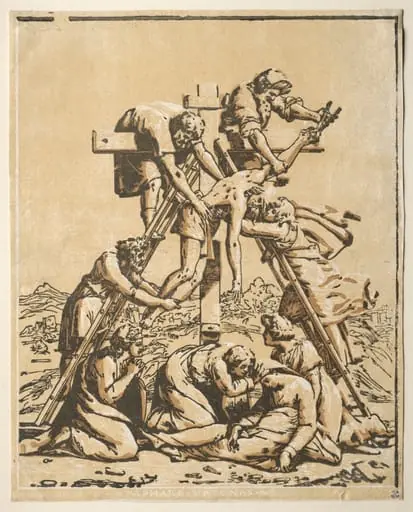
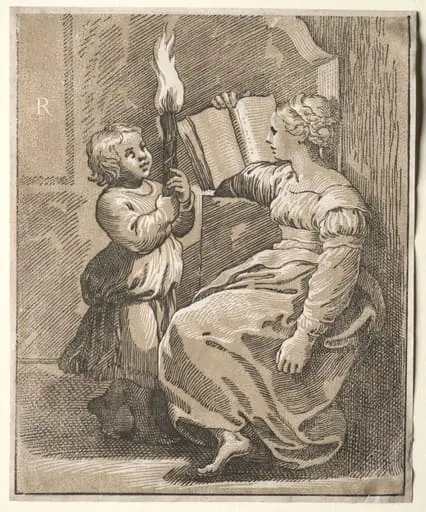
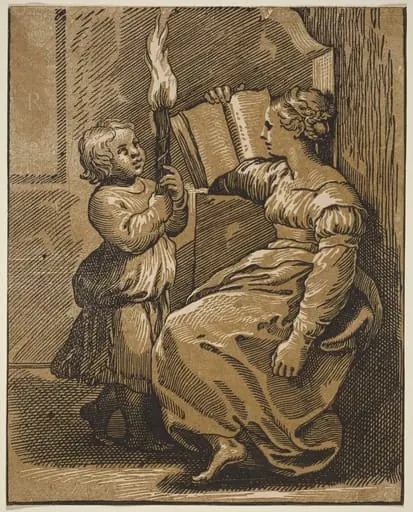
This chiaroscuro print depicts a sibyl engaged in quiet instruction, seated with an open book as a child stands beside her holding a lit candle.
This chiaroscuro print depicts a sibyl engaged in quiet instruction, seated with an open book as a child stands beside her holding a lit candle. Executed in ink on paper, the work translates a compositional idea originally conceived by Raphael into the medium of printmaking. The interplay of light and shadow defines the figures against a minimal background, emphasizing intimacy over narrative detail.
Subject & Meaning
The scene portrays a moment of transmission—knowledge passed from an adult to a child through reading. The sibyl, traditionally a prophetic figure, is rendered here in a domestic setting, softening her mythic role into one of quiet mentorship. The candle, held by the child, symbolizes the awakening of understanding, its glow illuminating the child’s face as the focal point of the composition.
Technique & Style
The artist employs tonal gradations through carefully placed lines and washes to simulate the effects of light and volume, a hallmark of chiaroscuro. The figures emerge from a neutral background through subtle contrasts, with the candle’s glow casting delicate highlights on skin and fabric. Drapery is rendered with flowing contours, enhancing the sense of naturalism without overt detail.
History & Provenance
The print derives from a design by Raphael, likely produced in the early 16th century by a printmaker working in his circle. Though the exact hand remains uncertain, the composition aligns with the dissemination of Raphael’s ideas through reproductive prints. Its survival in private and institutional collections reflects its role in spreading High Renaissance ideals beyond painting.
Context
During the Renaissance, prints served as vehicles for disseminating artistic ideas across Europe. This work reflects the period’s interest in humanist themes—education, moral instruction, and the dignity of quiet contemplation. The sibyl’s presence connects classical antiquity with Christian pedagogy, a common synthesis in Renaissance visual culture.
Legacy
The print exemplifies how reproductive techniques extended the reach of major artists’ compositions, influencing generations of printmakers and educators. Its restrained lighting and focus on intimate human interaction became a model for later genre scenes in Northern and Southern European art, embedding Raphael’s aesthetic into broader visual traditions.
Artist & collection
Artist
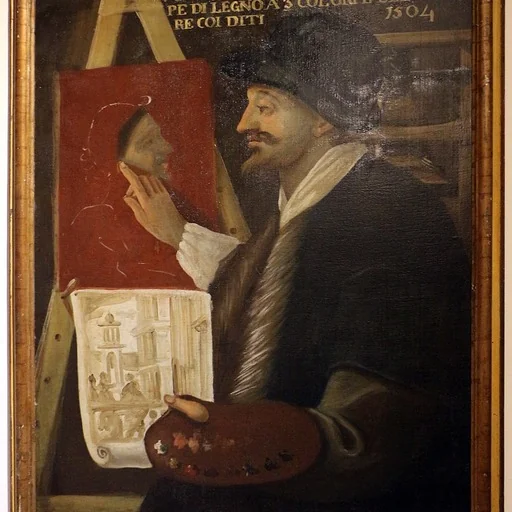
Ugo da Carpi (c. 1450–1480 – c. 1523–1532) was an Italian printmaker active between 1502 and 1532 in the cities of Venice, Rome and Bologna. He is known for his technical and stylistic contributions to the chiaroscuro…