Artwork
Stage Design
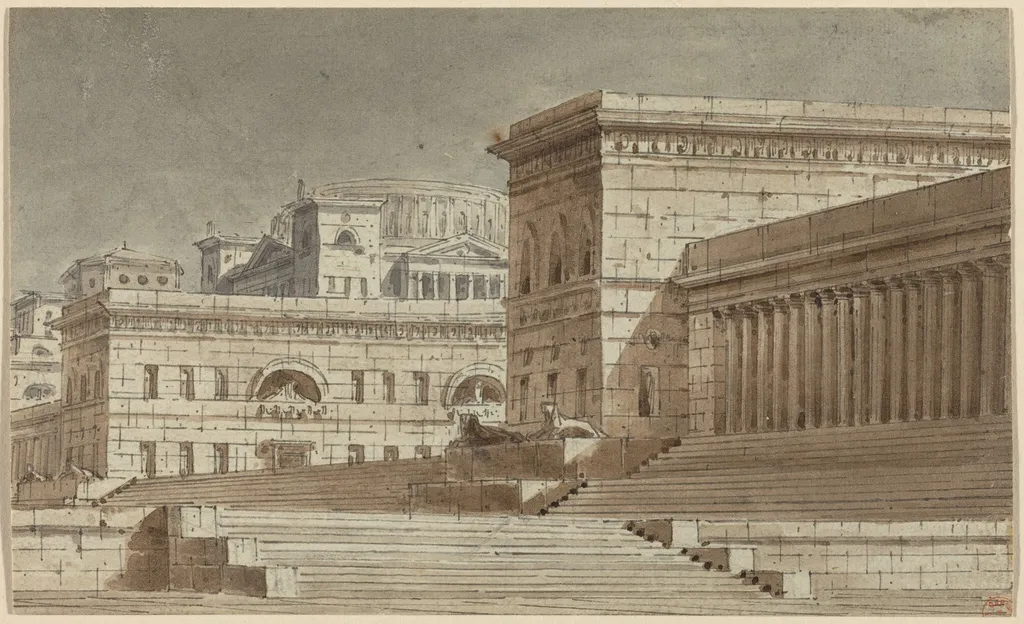
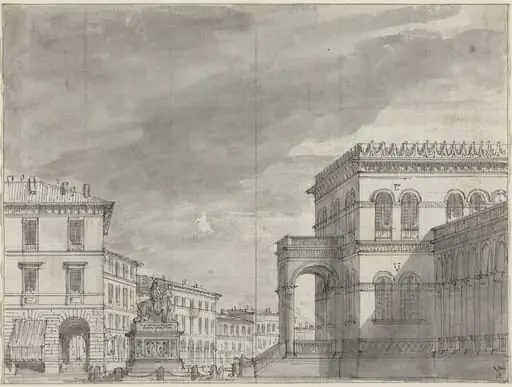
Stage Design is an ink drawing by the Romanticist artist Italian 19th Century. It dates from 1850 and is held in the collection of the National Gallery of Art.
About this work
Overview
This drawing is a stage design executed in pen and gray ink, enhanced with brown and gray washes over graphite on laid paper.
This drawing is a stage design executed in pen and gray ink, enhanced with brown and gray washes over graphite on laid paper. It depicts an elaborate theatrical backdrop of simulated ancient ruins, rendered with careful attention to light and texture. The composition suggests a decaying architectural space, where structural elements appear both intact and collapsed, creating a sense of temporal dislocation suited for dramatic performance.
Subject & Meaning
The scene presents an imagined ruin—broken columns, fractured arches, and uneven steps—designed to evoke a lost civilization. These elements are not literal ruins but painted illusions meant to suggest grandeur and decay simultaneously. The interplay between preservation and collapse implies themes of memory, impermanence, and the theatricality of history, reinforcing the stage’s role as a space where time is manipulated for emotional effect.
Technique & Style
The artist employed fine pen lines and layered washes to model form and depth, using subtle gradations of gray and brown to simulate atmospheric lighting. Cross-hatching and controlled tonal shifts define the surfaces of stone and shadow, lending realism to fabricated architecture. The graphite underdrawing guides the ink work, while the washes unify the composition and enhance the illusion of volume beneath a dim, directional light source.
History & Provenance
The drawing originates from the tradition of 18th-century theatrical design, likely created for a performance in a European opera house or court theater. Though the specific production and artist remain unidentified, its materials and style align with workshop practices of the period, where designers produced detailed preparatory sketches for scenic painters to translate onto canvas and wood.
Context
During the 18th century, stage design evolved to prioritize illusionistic depth and historical authenticity, even in fantastical settings. This drawing reflects the era’s fascination with classical antiquity and the use of ruins as symbolic backdrops. Such designs were not merely decorative but integral to narrative tone, helping audiences suspend disbelief through meticulously rendered environments that felt both grand and hauntingly abandoned.
Legacy
This work exemplifies the technical precision and imaginative reconstruction central to pre-modern theatrical design. Though ephemeral by nature—intended for temporary use—the survival of such drawings offers insight into the collaborative artistry behind stagecraft. They stand as records of lost performances and the skilled labor that transformed paper into imagined worlds, influencing later developments in scenic realism.
Artist & collection
Artist
This artist made prints and sculpture in 19th-century Italy, blending old techniques with new.