Artwork
Formă tronconică; fond cărămiziu. În partea centrală sînt dispuse puncte de culoare albă (majoritatea cu smalțul sărit) sub forma unei flori, încadrate de o spirală de culoare maro închis și o bandă circulară de culoare albă. Pe peretele vasului sînt amplasate cinci frunze de culoare albă și o bandă circulară de culoare maro închis decorată cu puncte de culoare albă. Buza vasului prezintă grupuri de puncte de culoare albă pe un fond maro închis. Folosită la decorarea interiorului țărănesc în așa numita - cameră bună.
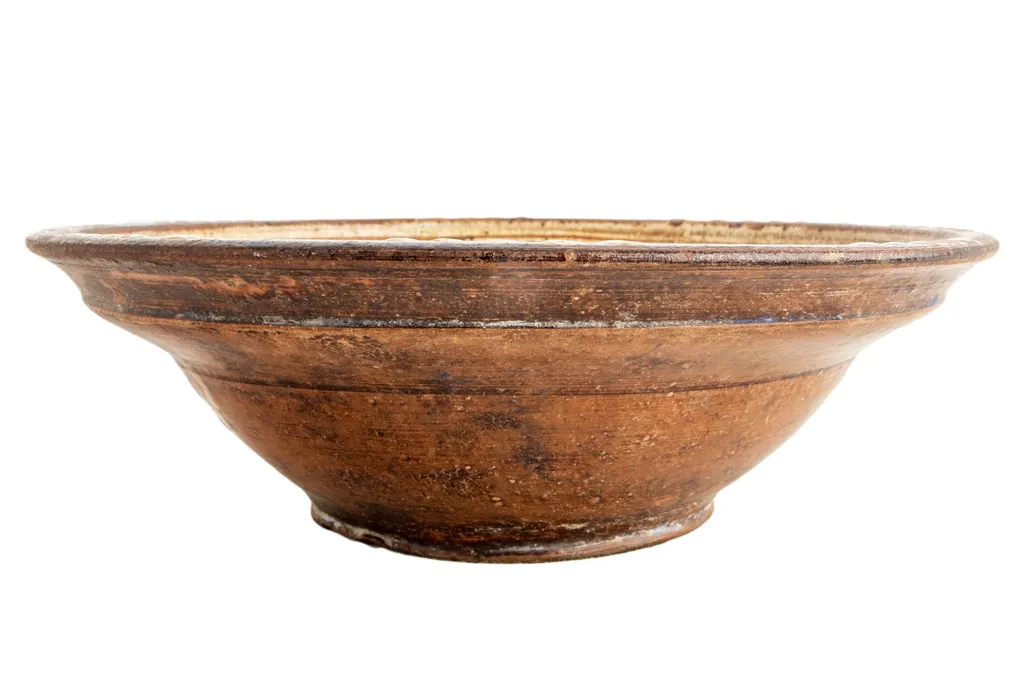
Formă tronconică; fond cărămiziu. În partea centrală sînt dispuse puncte de culoare albă (majoritatea cu smalțul sărit) sub forma unei flori, încadrate de o spirală de culoare maro închis și o bandă circulară de culoare albă. Pe peretele vasului sînt amplasate cinci frunze de culoare albă și o bandă circulară de culoare maro închis decorată cu puncte de culoare albă. Buza vasului prezintă grupuri de puncte de culoare albă pe un fond maro închis. Folosită la decorarea interiorului țărănesc în așa numita - cameră bună. is a print by Iulică Maria. It is held in the collection of the Romanian Peasant Museum. The object is a ceramic bowl of conical shape, its body painted in a reddish‑brown tone with darker brown spiral and circular bands.
About this work
Overview
The object is a ceramic bowl of conical shape, its body painted in a reddish‑brown tone with darker brown spiral and circular bands. White decorative points, many of which have lost their glaze, form a floral motif at the interior centre, while the rim and exterior feature additional white leaf motifs and a dark brown band.
Subject & Meaning
The arrangement of white dots suggests a stylised flower surrounded by a spiral, a common decorative scheme in rural Romanian folk art that symbolises fertility and protection within the domestic sphere.
Technique & Style
The vessel is hand‑formed from clay and fired, then painted with mineral pigments. The white accents were applied with slip that has partially flaked, indicating an older glaze technique typical of peasant workshops.
History & Provenance
Originally used as an interior decorative piece in a "cameră bună"—the main room of a peasant household—the bowl now belongs to the collection of the Museum of Ethnography, where it serves as an example of traditional Romanian ceramic ornamentation.
Context
Such bowls were part of everyday material culture in rural Romania, reflecting local aesthetic preferences and the transmission of motifs across generations of village artisans.
Artist & collection
Artist
Iulică Maria painted the walls of Romanian farmhouses with bold, simple vases. She used bright colors—rust red, deep brown, and white—to outline flowers and waves, as if translating the patterns of embroidery straight…

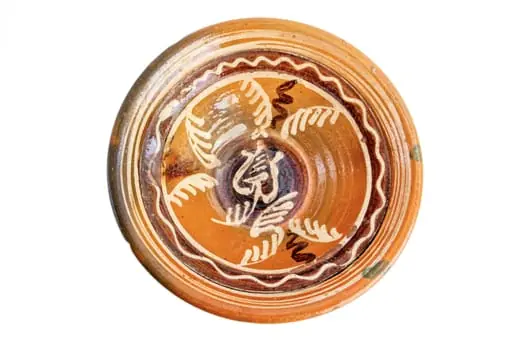 Formă tronconică; fond cărămiziu. În centru vasului este amplasată o lalea albă pe un fond maro închis încadrată de șase frunze de culoare albă și două valuri de culoare maro închis dispuse vertical. Pe peretele vasului dispusă o bandă circulară de culoare maro decorată cu un val de culoare albă. Sub buza vasului sînt trei cercuri concentrice de culoare albă. Compoziția este înscrisă într-un cerc de culoare albă. Folosită la decorarea interiorului țărănesc în așa numita - cameră bună.
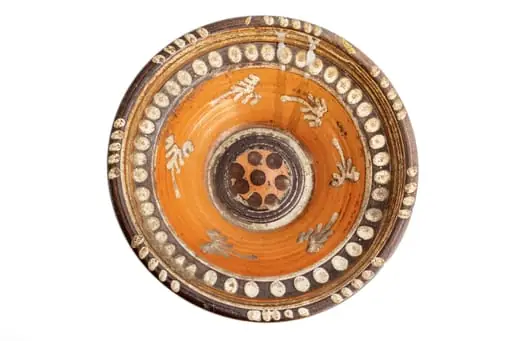 Formă tronconică; fond cărămiziu. În partea centrală sînt dispuse puncte de culoare maro sub forma unei flori, încadrată de o spirală de culoare maro închis și o bandă circulară de culoare albă. Pe peretele vasului sînt amplasate șase frunze de culoare albă și o bandă circulară de culoare maro închis decorată cu puncte de culoare albă. Buza vasului prezintă grupuri de puncte de culoare albă pe un fond maro închis. Folosită la decorarea interiorului țărănesc în așa numita - cameră bună.
 Formă tronconică; fond cărămiziu; pe fundul vasului, în centru este dispusă o serie de cercuri concentrice de culoare albă încadrate de un vrej circular cu frunze de culoare brun închis. Pe peretele farfuriei este amplasat un registru compus din cercuri concentrice de culoare albă, subțiri ,decorat cu linii verticale de culoare albă cu puncte brun închis. Pe umărul vasului sînt dispuse vrejuri semicirculare de culoare albă, respectiv galbenă cu frunze brune. Buza vasului decorată cu vrejuri similare alternînd cromatic. Folosită la decorarea interiorului țărănesc în așa numita - cameră bună.
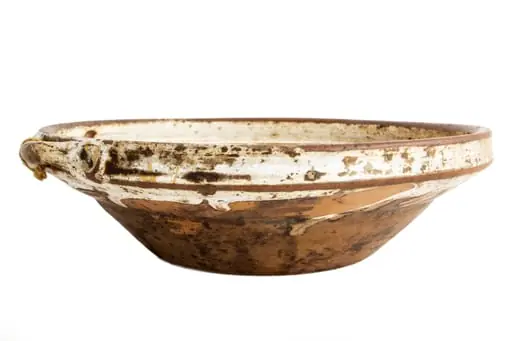 Formă tronconică; fond alb; în centrul vasului este amplasat un buchet de flori format din trei flori de floarea soarelui și doi boboci de culoare albastră încadrat de un vrej cu frunze de culoare verde și albastră dispus circular într-o bandă de culoare cărămizie; în planul următor este amplasată o bandă circulară de culoare albă. Sub buza vasului într-o bandă circulară delimitată de două cercuri de culoare albă este amplasat un vrej similar cu cel descris mai sus. Folosită la decorarea interiorului țărănesc în așa numita - cameră bună.
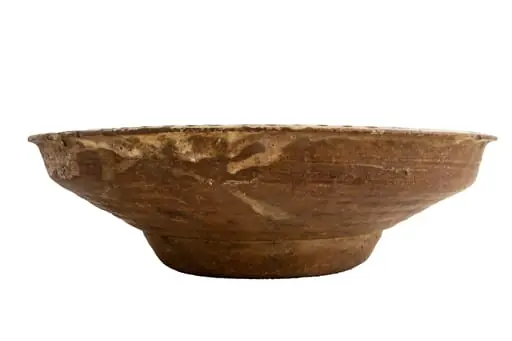 Formă tronconică; fond alb fildeșiu; pe fundul vasului este dispusă o bandă circulară de culoare cărămizie; pe umărul vasului sînt amplasate două cercuri realizate din puncte de culoare verde între care se intercalează o bandă circulară mai lată decorată cu motivul specific centrului: pînza de păianjen - realizată prin tehnică jirăvirii cu gaița. Pe pînza de păianjen sânt amplasate mici pete de culoare cărămizie. Buza este decorată cu un val circular de culoare brună. Piesa reprezintă una dintre primele achiziții ale lui Alexandru Tzigara Samurcaș. Folosită la decorarea interiorului țărănesc în așa numita - cameră bună.
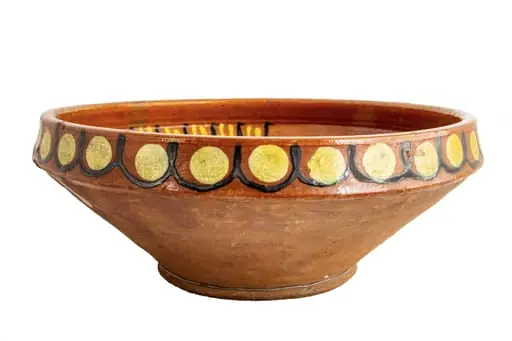 Formă tronconică; fond cărămiziu. Decorul constă într-o spirală de culoare galbenă amplasată central pe fundul vasului, o bandă circulară de culoare galbenă încadrată de două cercuri de culoare brun închis și o linie circulară în zig -zag de culoare galbenă. Pe peretele vasului sub buză sînt dispuse trei grupuri de semicercuri cu conturul exterior de culoare brun închis; cel înterior fiind de culoare galbenă. La exterior sub buză este amplasat un șir de semicercuri de culoare brun închis; fiecare semicerc are în interior un cerc de culoare galbenă. Folosită la decorarea interiorului țărănesc în așa numita - cameră bună.
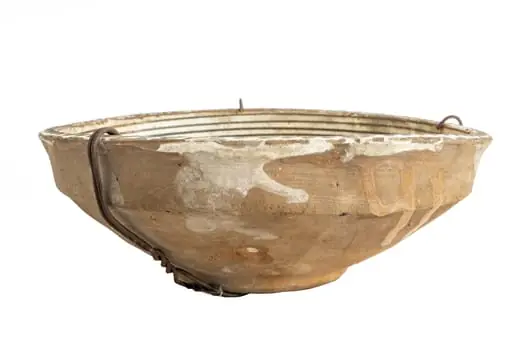 Formă tronconică; fond alb; în centrul vasului este amplasat un un cerc de culoare maro înscris în altul de culoare similară. Pe peretele vasului sînt dispuse câteva registre decorative: unul circular în care sînt plasate segmente de val de culoare verde, un altul mai lat decorat cu semicercuri cu contururi duble de culoare maro și verde, punctate la exterior; sub buza vasului în alt registru circular sînt amplasate linii vălurite de culoare cărămizie; buza vasului decorată cu un val circular de culoare maro închis. Folosită la decorarea interiorului țărănesc în așa numita - cameră bună.
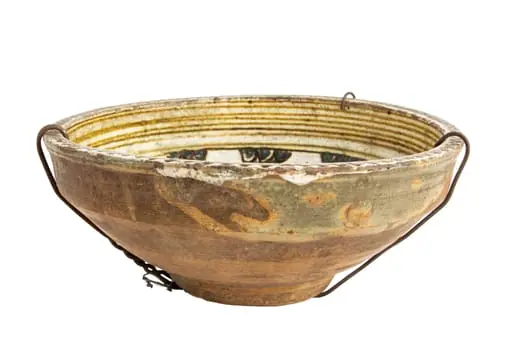 Formă tronconică; fond alb. Decorul, pictat pe fond alb și amplasat în centrul farfuriei, este reprezentat de o spirală dispusă central, de culoare maro încadrată de un soare stilizat cu șase raze. Pe peretele vasului este amplasat un soare de culoare albă cu nouă raze. Între razele soarelui sînt amplasate triunghiuri de culoare maro închis formate din alăturarea unor semicercuri. Sub buza vasului sînt amplasate mai multe cercuri concentrice de culoare maro. Buza farfuriei este decorată cu un val de culoare maro Folosită la decorarea interiorului țărănesc în așa numita - cameră bună.
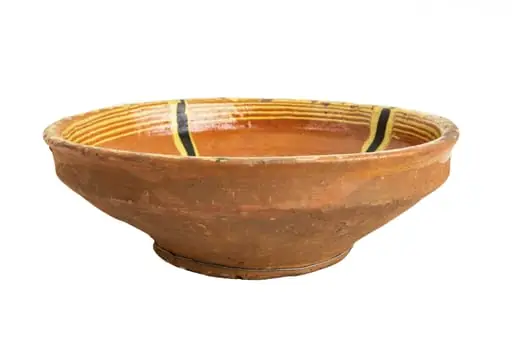 Formă tronconică; fond cărămiziu. Pe fundul vasului, în centru este amplasată o spirală de culoare galbenă încadrată de o serie de cercuri concentrice subțiri de aceeași culoare. Pe peretele vasului sînt dispuse vertical patru linii de culoare brună cu contururi galbene. Buza vasului este decorată cu un val circular de culoare galbenă.
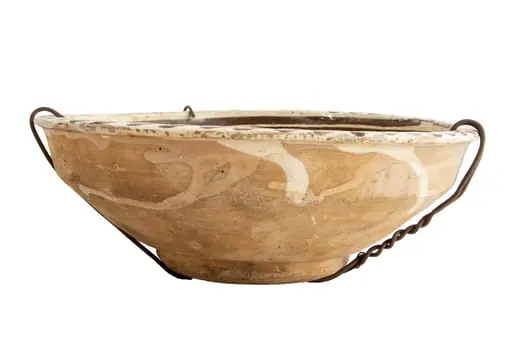 Formă tronconică; fond alb fildeșiu; pe fundul vasului este amplasată o spirală de culoare maro închis încadrată de semicercuri cu contur maro și interior de culoare verde; pe peretele vasului este amplasată o bandă circulară mai lată decorată cu motivul specific centrului: pînza de păianjen - realizată prin tehnică jirăvirii cu gaița. Întreaga compoziție este încadrată de un soare stilizat cu raze de culoare galben - portocaliu. Buza este decorată cu un val circular de culoare brună. Piesa reprezintă una dintre primele achiziții ale lui Alexandru Tzigara Samurcaș. Folosită la decorarea interiorului țărănesc în așa numita - cameră bună
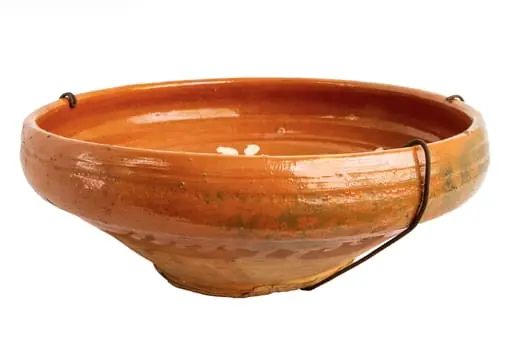 Formă tronconică; fond cărămiziu. În partea centrală este amplasată o floare stilizată cu petale de culoare verde și albă. Pe peretele vasului sînt amplasate două grupaje florale, compuse fiecare din două lalele de culoare verde și trei flori albe cu cinci petale. Folosită la decorarea interiorului țărănesc în așa numita - cameră bună dar și în bucătărie.
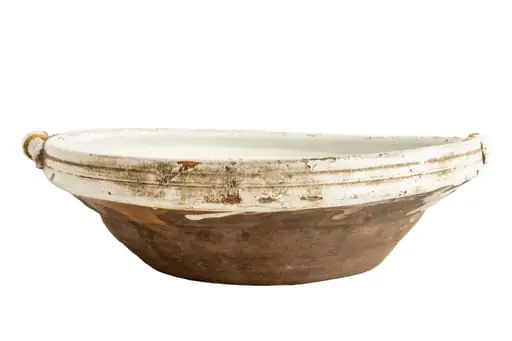 Formă tronconică; fond alb. Decorul amplasat în centrul farfuriei, este reprezentat de trei flori stilizate și două frunze, de culoare albastră. Pe umărul vasului într-un registru circular delimitat de linii albastre sînt amplasate ramuri de brad de culoare albastră și verde alternînd cromatic. Pe laterale se disting două toarte. Folosită la decorarea interiorului țărănesc în așa numita - cameră bună.