Artwork
Ancient ruins in and near Rome
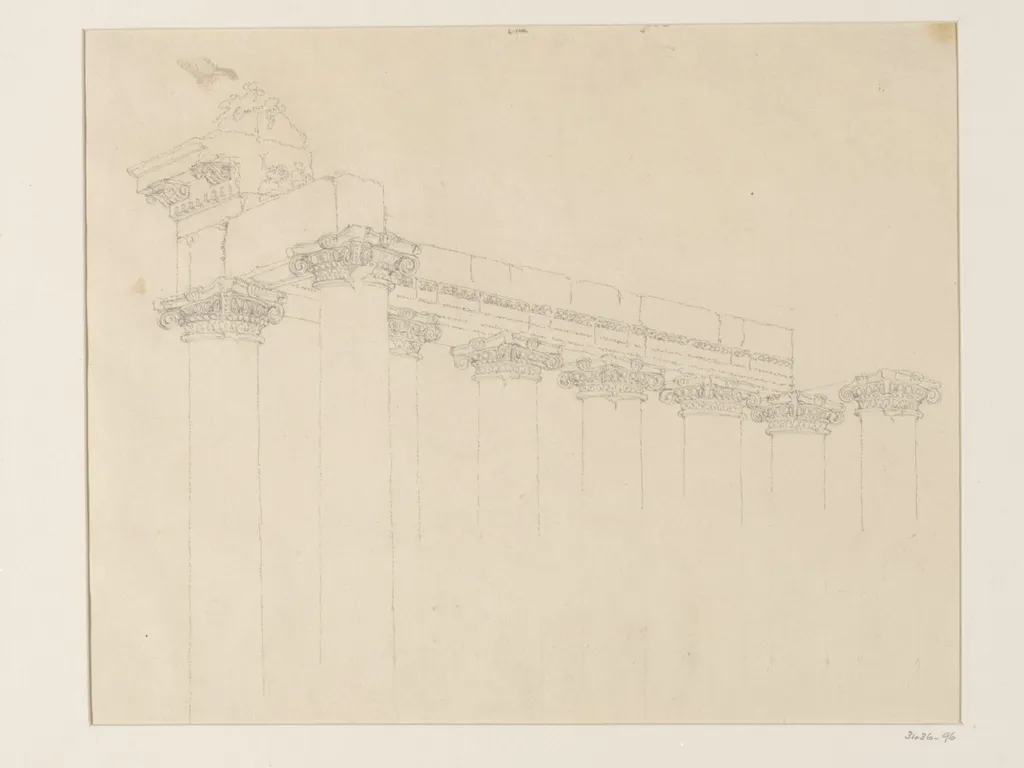
Ancient ruins in and near Rome is a drawing by the Romanticist artist J. Cousins. It dates from 1778 and is held in the collection of the Victoria and Albert Museum. The drawing, executed in 1778 by J.
About this work
Overview
The drawing, executed in 1778 by J. Cousins, records the remains of Rome’s Temple of Concord. Rendered in pencil, the work captures a fragmentary colonnade with elaborately carved capitals, set against the suggestion of a roofed structure and a modest tower beyond. The composition emphasizes the vertical thrust of the columns and the delicate ruinous atmosphere of the site.
Subject & Meaning
The image focuses on the architectural remnants of the Temple of Concord, a Roman sanctuary associated with harmony and civic unity. By isolating the column row and hinting at the surrounding building, the sketch conveys both the grandeur of the original edifice and the passage of time that has reduced it to fragmented form, inviting contemplation of antiquity’s legacy.
Technique & Style
The drawing prioritizes precise linear definition over tonal richness, a common approach among 18th‑century artists documenting archaeological sites.
Cousins employed light pencil strokes to delineate the structural lines, using cross‑hatching to model shadows and suggest depth. The drawing prioritizes precise linear definition over tonal richness, a common approach among 18th‑century artists documenting archaeological sites. The subtle gradations of line create a sense of three‑dimensionality while maintaining the clarity needed for architectural study.
History & Provenance
Originally compiled within an album of architectural designs assembled by the architect Charles James Richardson, the sketch entered the museum’s collection in 1863. Its inclusion in Richardson’s album reflects the period’s interest in systematic documentation of classical ruins, and the museum acquisition marks its transition from a private study resource to a public reference object.
Artist & collection
Artist
This British artist in the late 1700s recorded ancient Roman ruins with careful lines and cross-hatched shadows.

 Brickwork in Rimini
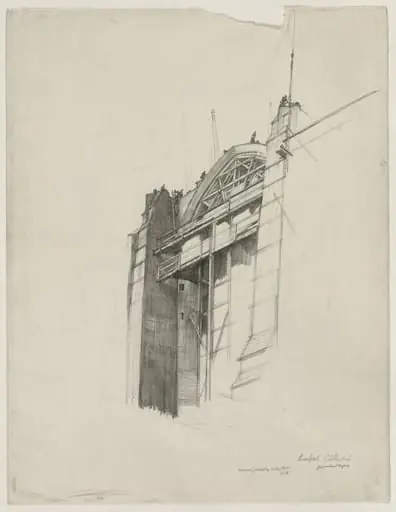 Liverpool Cathedral
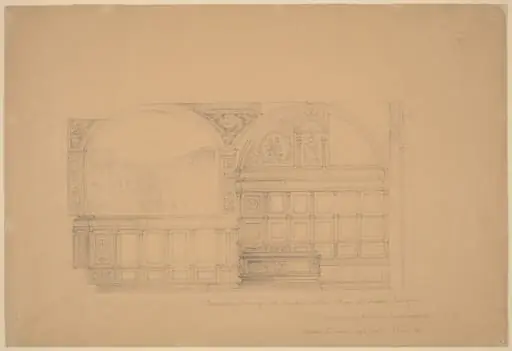 Perugino's Udienza del Cambio in the Collegio del Cambio, Perugia
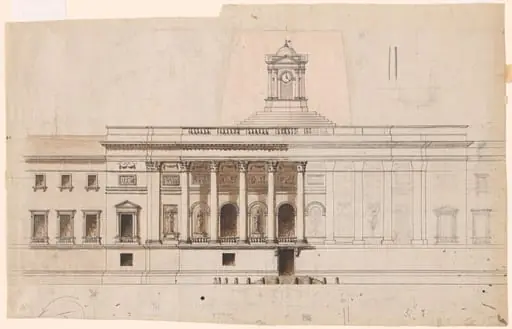 Architectural Study
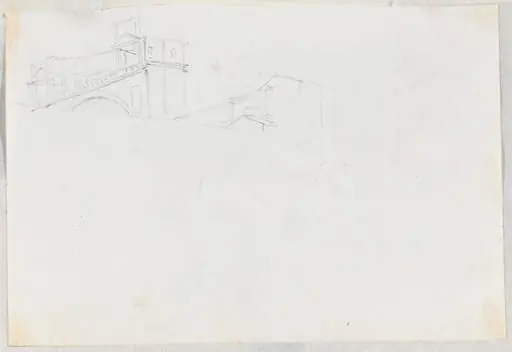 Classical Buildings above a Wall
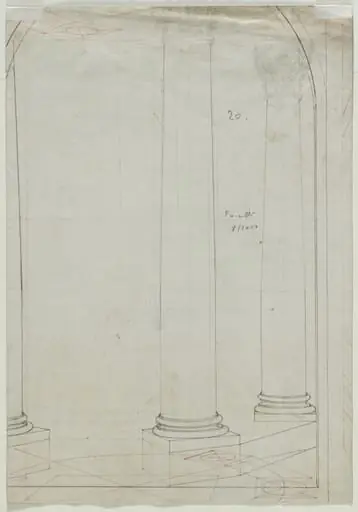 Architectural Drawing of Columns (verso)
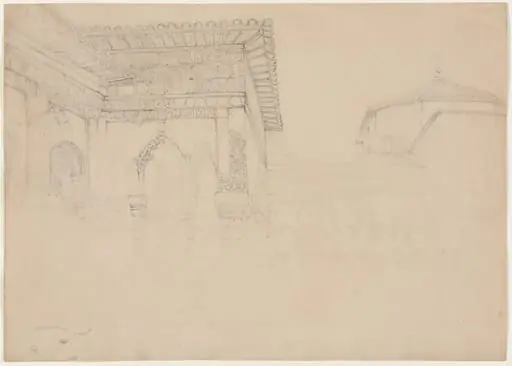 The Court of the Lions, Alhambra
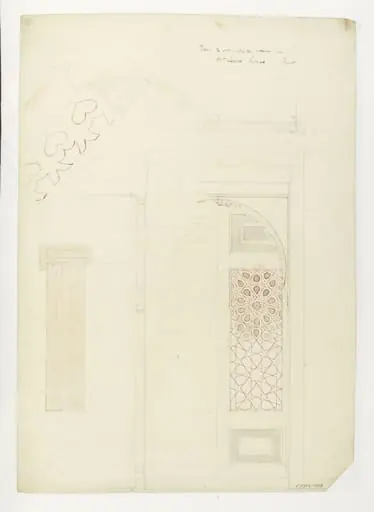 Drawing of a door, John Frederick Lewis house in Cairo
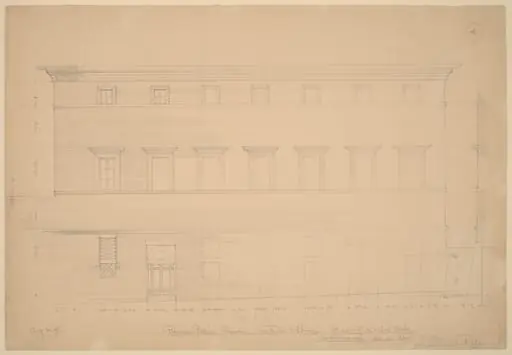 Palazzo Pollini, Siena, Attributed to Peruzzi
![The Erectheum, West Elevation [left half], by John Russell Pope](https://artifactworldgallery.com/img/john-russell-pope--the-erectheum-west-elevation-left-half--10b9b48e87f30a0f-w320.webp) The Erectheum, West Elevation [left half]
The Erectheum, West Elevation [left half]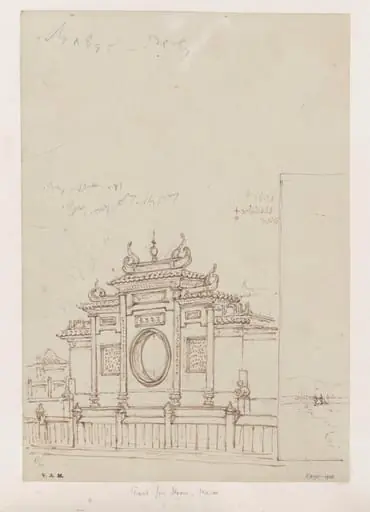 The main entrance to the A-Ma Temple, Macau
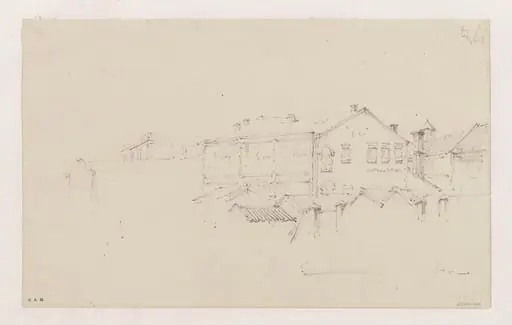 Chinese buildings, probably in Guangzhou (Canton)