Artwork
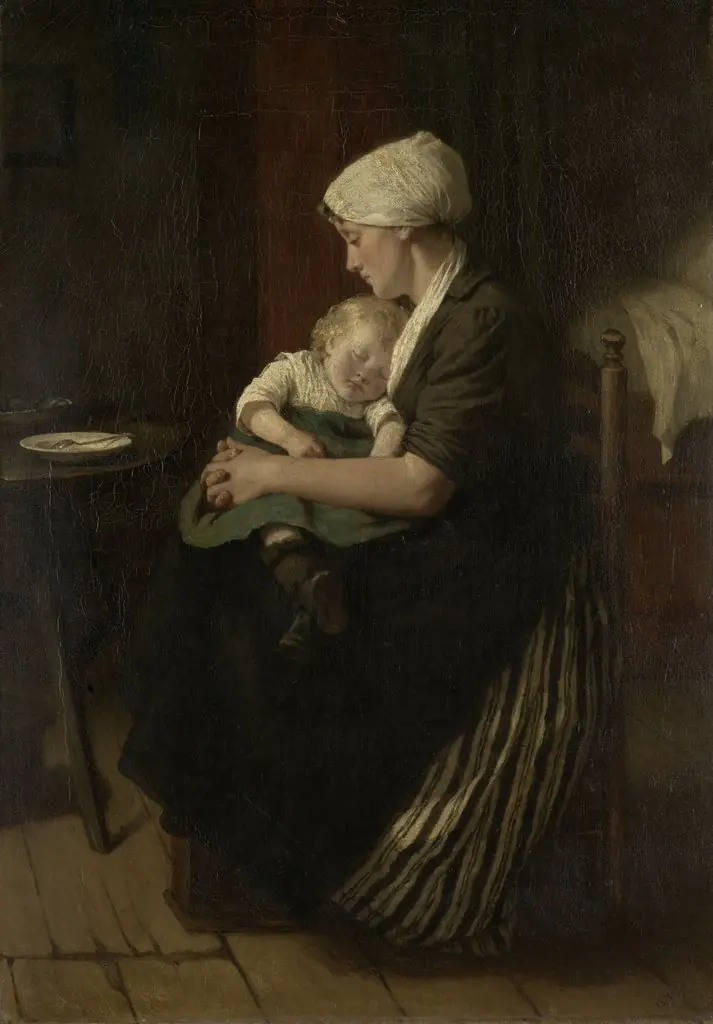
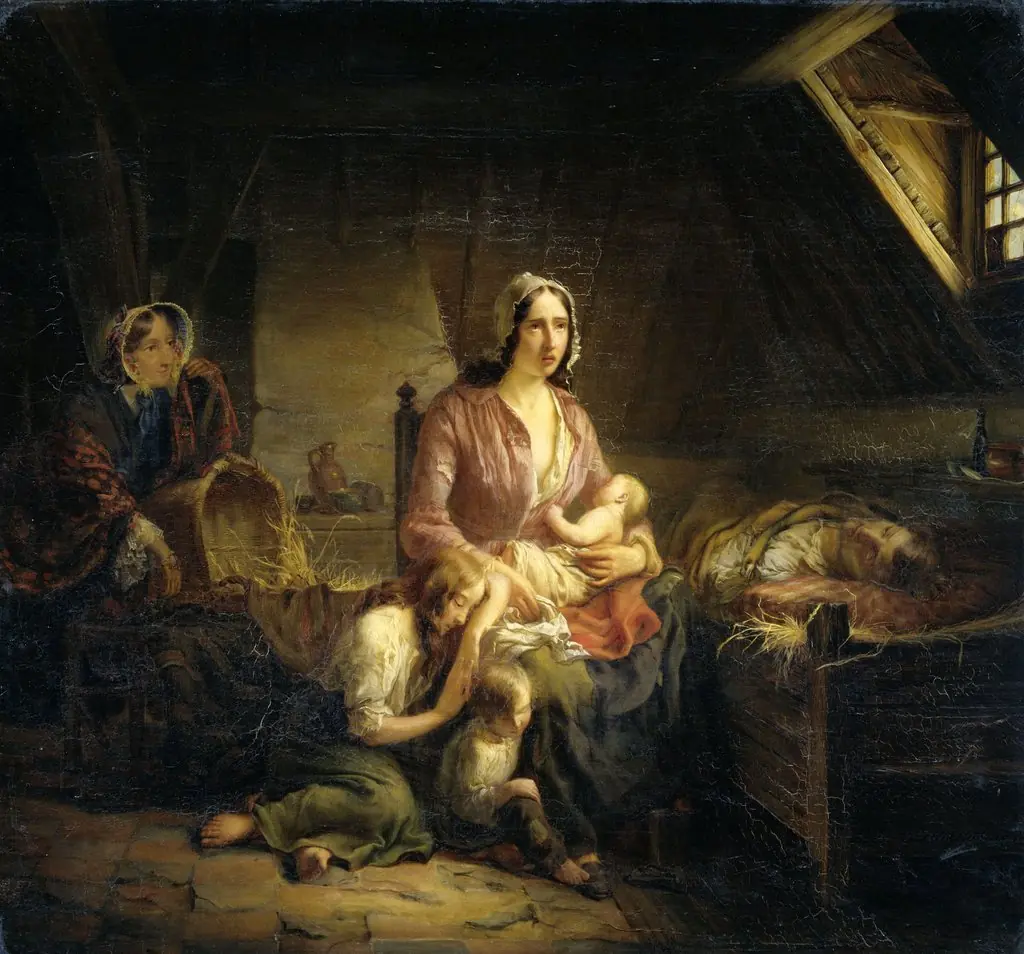
Tired Out (Mother Watched)
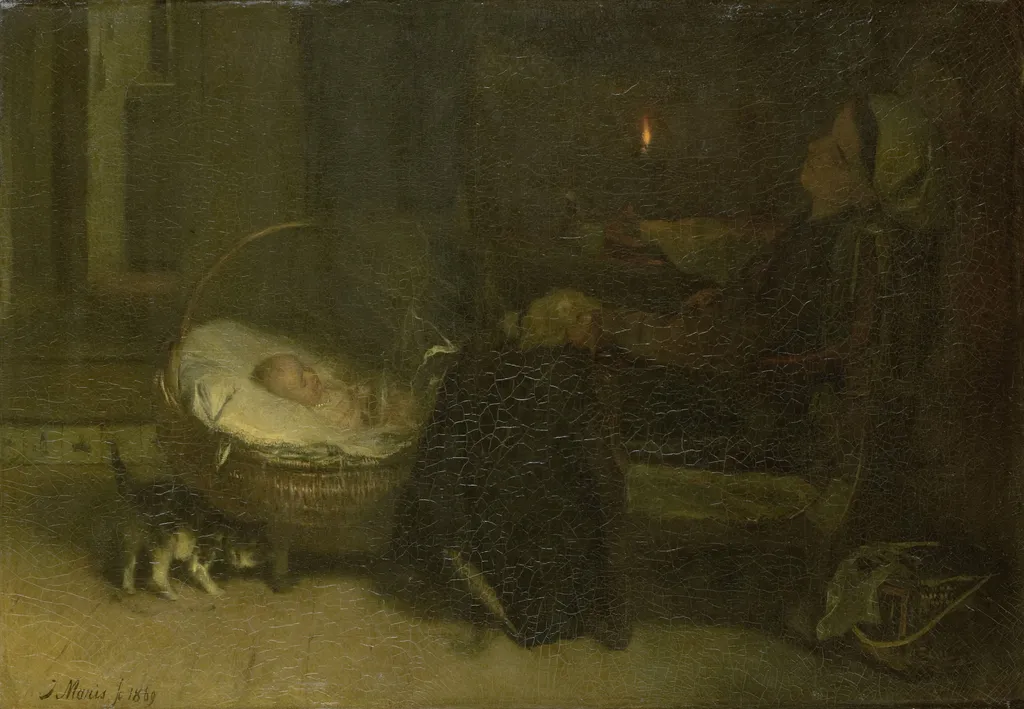
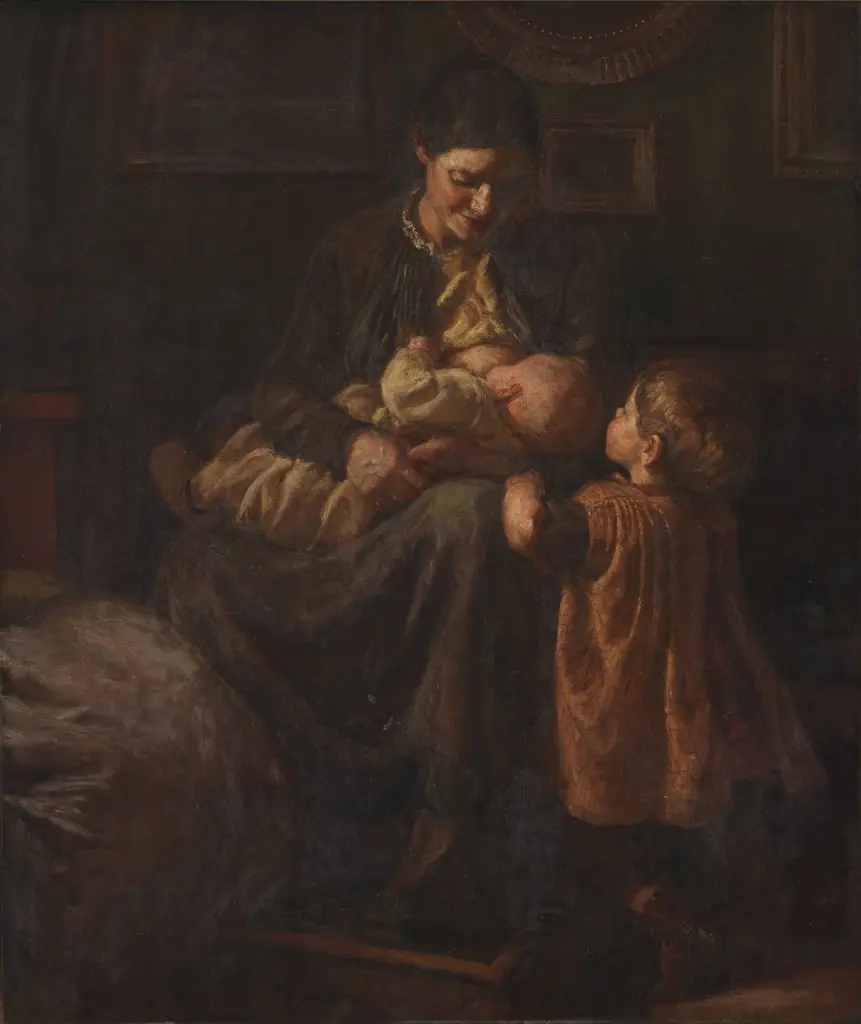
Tired Out (Mother Watched) is an oil painting by the Realist artist Jacob Maris. It dates from 1869 and is held in the collection of the Rijksmuseum.
About this work
If you're interested in learning more about this style, you might want to look up the artist Jacob Maris.
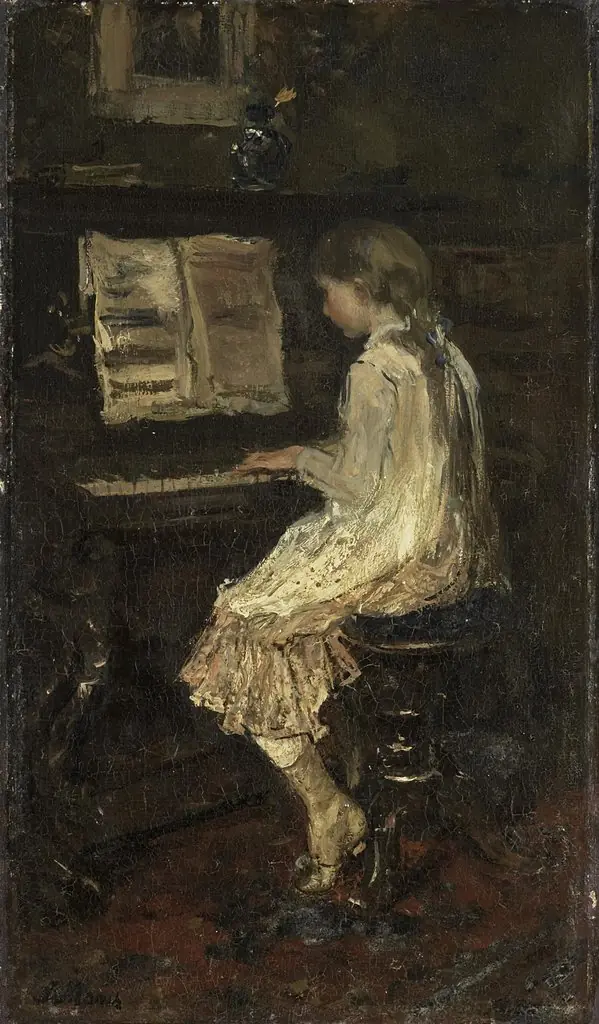
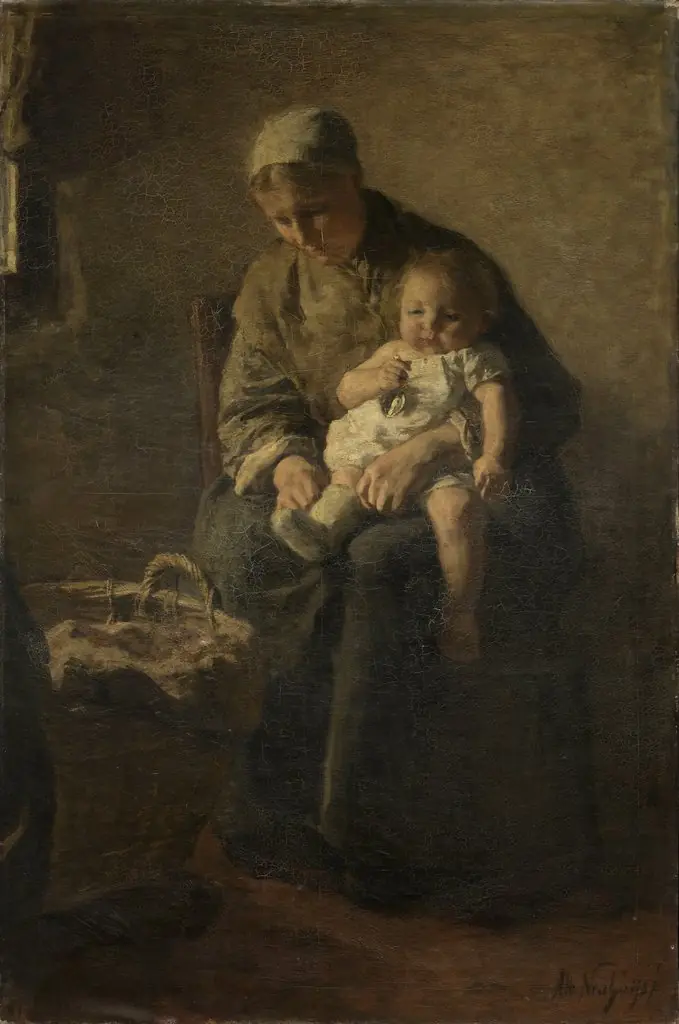
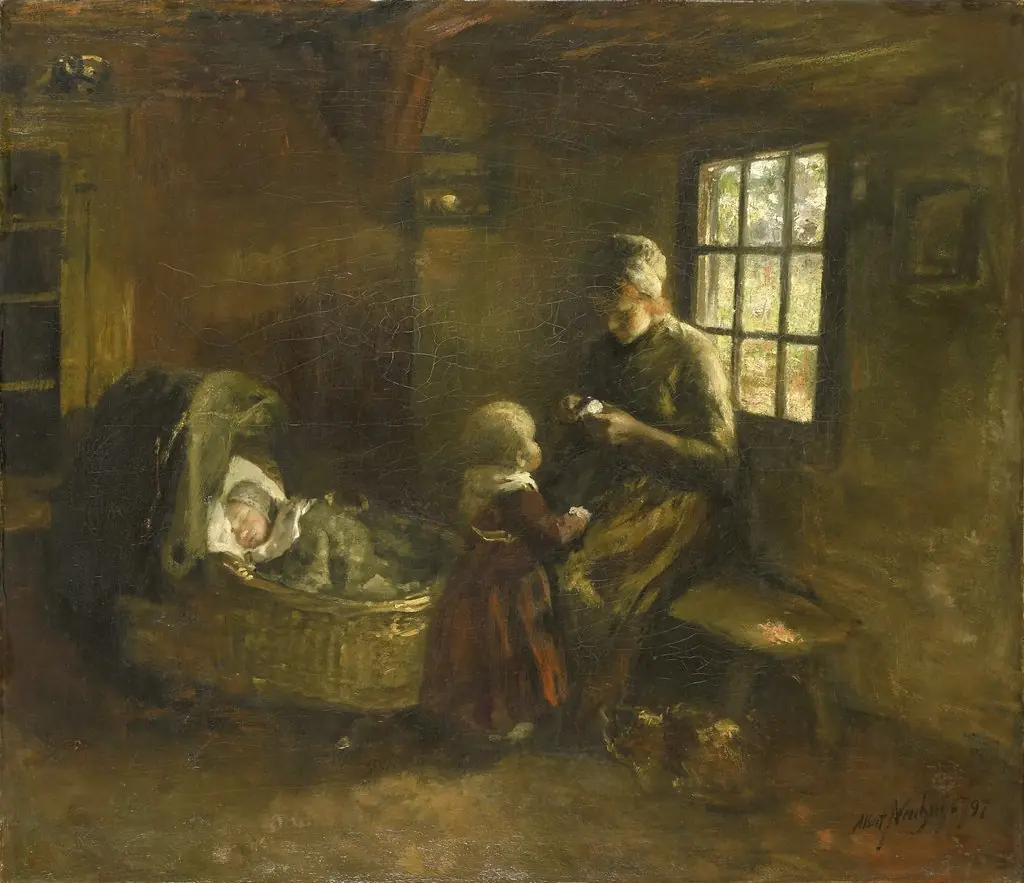
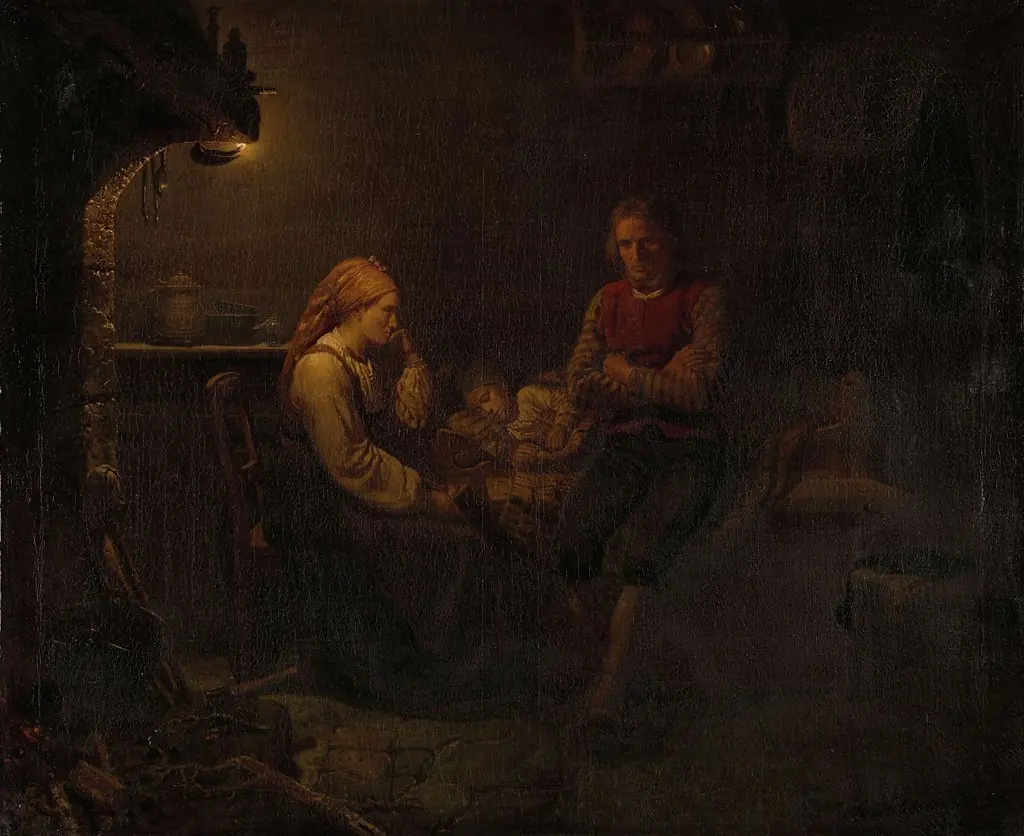
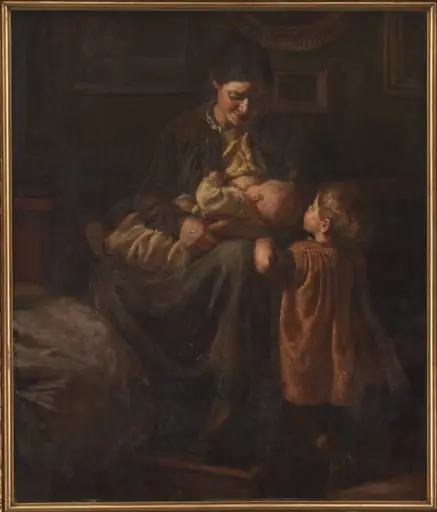
The painting shows a woman sitting in a dark room, holding a baby in her lap. The woman is wearing a dark dress and has a white cap on her head. The baby is lying on a white blanket, and there is a small dog standing next to them. The room is dimly lit, with only a small amount of light coming from a window in the background.
The painting is done in a realistic style, with a lot of attention to detail. The woman's face is serene, and the baby looks peaceful. The dog is looking up at the woman, as if waiting for something.
The painting is a beautiful example of Dutch art from the 19th century. If you're interested in learning more about this style, you might want to look up the artist Jacob Maris.
Overview
Painted in 1869 by Jacob Maris, *Tired Out (Mother Watched)* is an oil-on-canvas work reflecting the Hague School’s commitment to quiet, everyday realism. Maris, part of a prominent Dutch artistic family, focused on domestic and rural scenes with restrained emotion. The painting captures a moment of stillness within a dim interior, emphasizing atmosphere over narrative. It is now part of the Rijksmuseum’s permanent collection, representing 19th-century Dutch genre painting.
Subject & Meaning
The scene portrays a mother seated in shadow, cradling her infant, while a small dog stands nearby, gazing upward. The figures are still, their expressions calm, suggesting exhaustion and quiet vigilance. No overt drama is present; instead, the painting conveys the unspoken rhythms of domestic labor and maternal care. The absence of bright color or movement reinforces a sense of solitude and endurance within the home.
Technique & Style
Maris employed subtle tonal gradations to model form in low light, using muted earth tones and soft contrasts to suggest the dim interior. Brushwork is precise yet unobtrusive, with careful attention to textures: the fabric of the mother’s dress, the wool of the blanket, the fur of the dog. The limited palette and controlled lighting reflect the Hague School’s preference for naturalism over theatricality, prioritizing observed reality over idealization.
History & Provenance
Created in 1869, the painting entered the Rijksmuseum’s collection in the late 19th century, likely through acquisition or donation. It has remained in public ownership since, with no documented private ownership after its completion. Its inclusion in the museum’s holdings aligns with the institution’s broader effort to preserve works by Dutch Realists who depicted ordinary life with dignity and restraint.
Context
In the mid-to-late 1800s, Dutch artists moved away from romanticized historical themes toward scenes of daily life, influenced by French Realism and a growing interest in social observation. The Hague School, to which Maris belonged, emphasized atmospheric effects and humble subjects. *Tired Out (Mother Watched)* fits within this trend, portraying domestic quietude as worthy of artistic attention without sentimentality.
Legacy
The painting endures as a quiet example of 19th-century Dutch genre painting, valued for its emotional restraint and technical subtlety. While not widely exhibited, it contributes to scholarly understanding of how artists like Maris captured the rhythms of domestic life without embellishment. Its presence in the Rijksmuseum ensures continued access for study and reflection on the aesthetics of everyday existence in the Netherlands.
Own this work as a print
Artist & collection
Artist
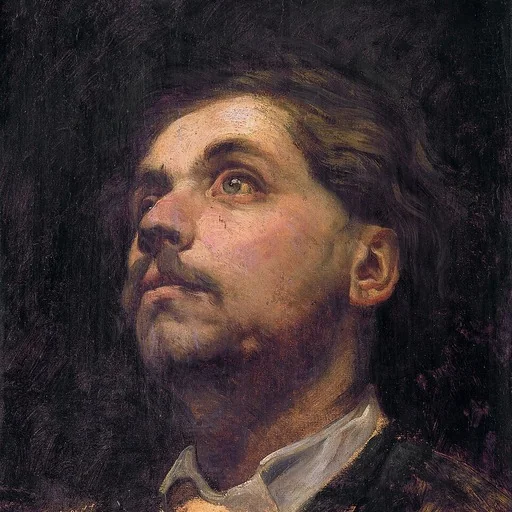
Jacob Henricus Maris (August 25, 1837 – August 7, 1899) was a Dutch painter, who with his brothers Willem and Matthijs belonged to what has come to be known as the Hague School of painters.