Artwork
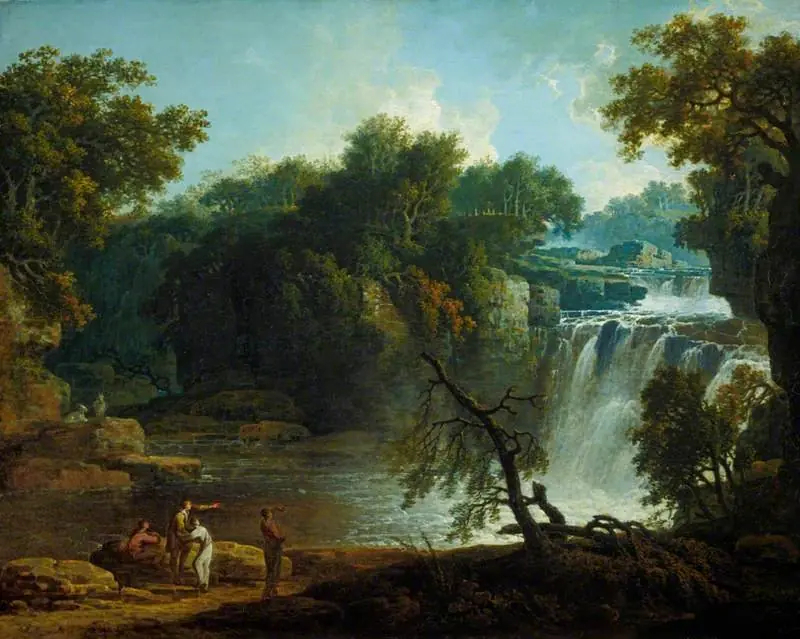
Bonnington Linn on the River Clyde
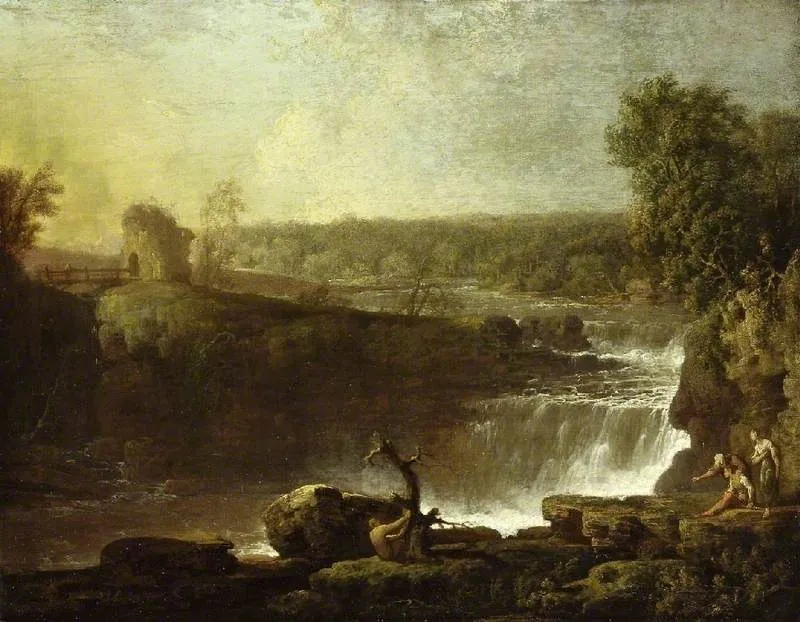
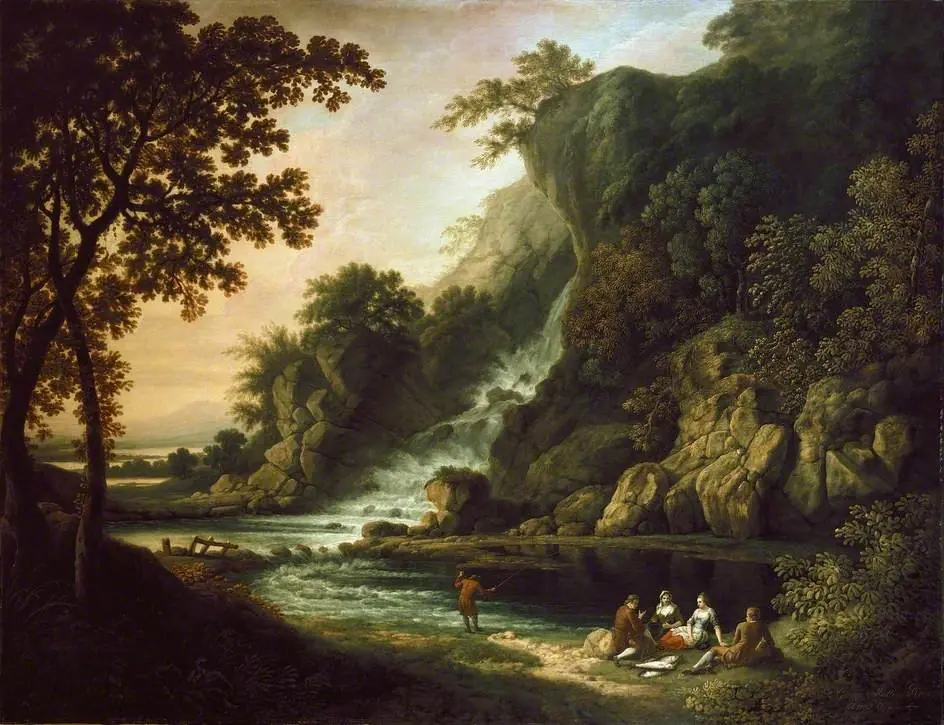
Bonnington Linn on the River Clyde is an oil painting by Jacob More. It dates from 1776 and is held in the collection of the Fitzwilliam Museum.
About this work
Overview
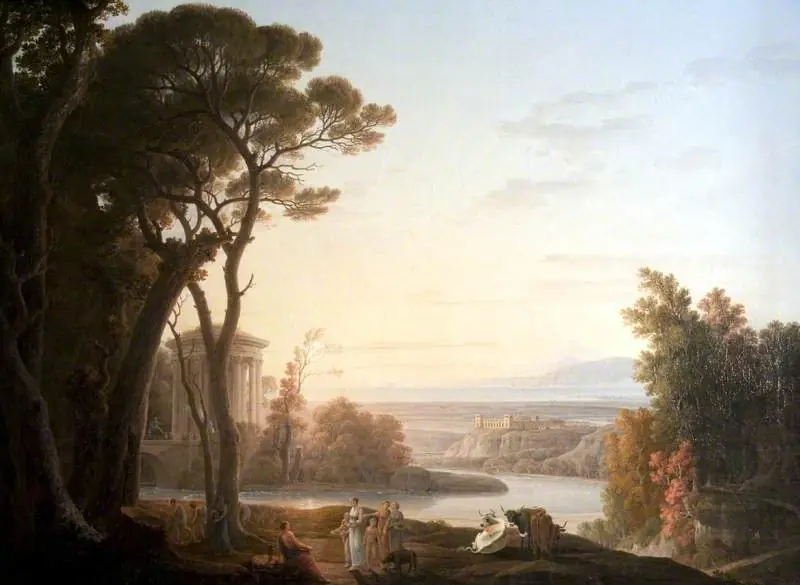
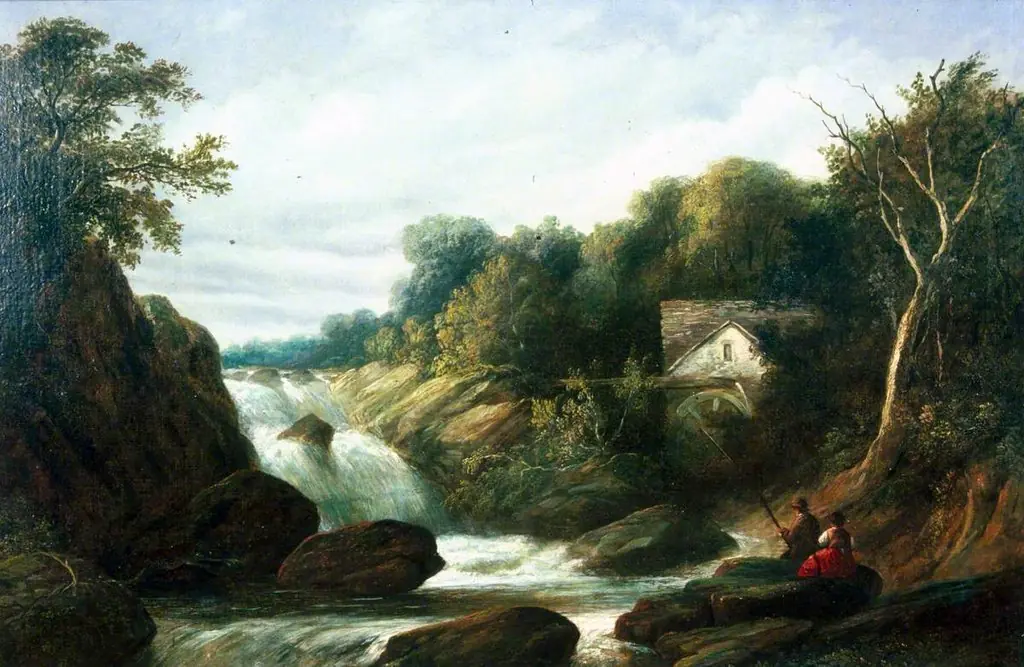
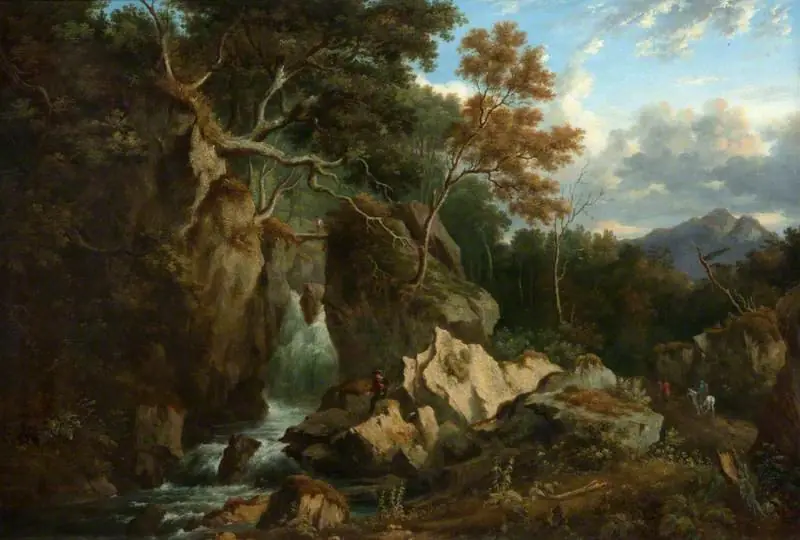
Jacob More’s landscape, titled Bonnington Linn on the River Clyde, dates from around 1776 and is executed in oil on canvas. The composition captures a Scottish waterfall framed by rocky banks and foliage, with a modest group of figures observing the cascade. The work is part of the Fitzwilliam Museum’s collection, where it represents the artist’s interest in natural scenery and the picturesque.
Subject & Meaning
The painting depicts the Bonnington Linn waterfall on the River Clyde, a popular 18th‑century tourist site. Three clothed figures stand near a barren tree, gazing at the falling water, suggesting a contemplative encounter with nature. The scene balances the ruggedness of the rocks with the surrounding trees, inviting viewers to consider the sublime qualities of the Scottish landscape.
Technique & Style
More employs a muted palette of browns and greens, allowing the light sky to soften the overall tone. The waterfall is rendered with delicate brushwork that conveys movement from the upper right to the lower left. Atmospheric perspective is achieved through gradual color shifts, while the figures are painted in a restrained, almost anecdotal manner, typical of late‑Baroque landscape conventions.
History & Provenance
Created circa 1776, the canvas entered the Fitzwilliam Museum’s holdings at an unspecified later date, becoming part of its British art collection. Its provenance reflects the 18th‑century fascination with Scottish scenery, a theme that attracted both domestic and continental patrons of the period.
Artist & collection