Artwork
The Monastery
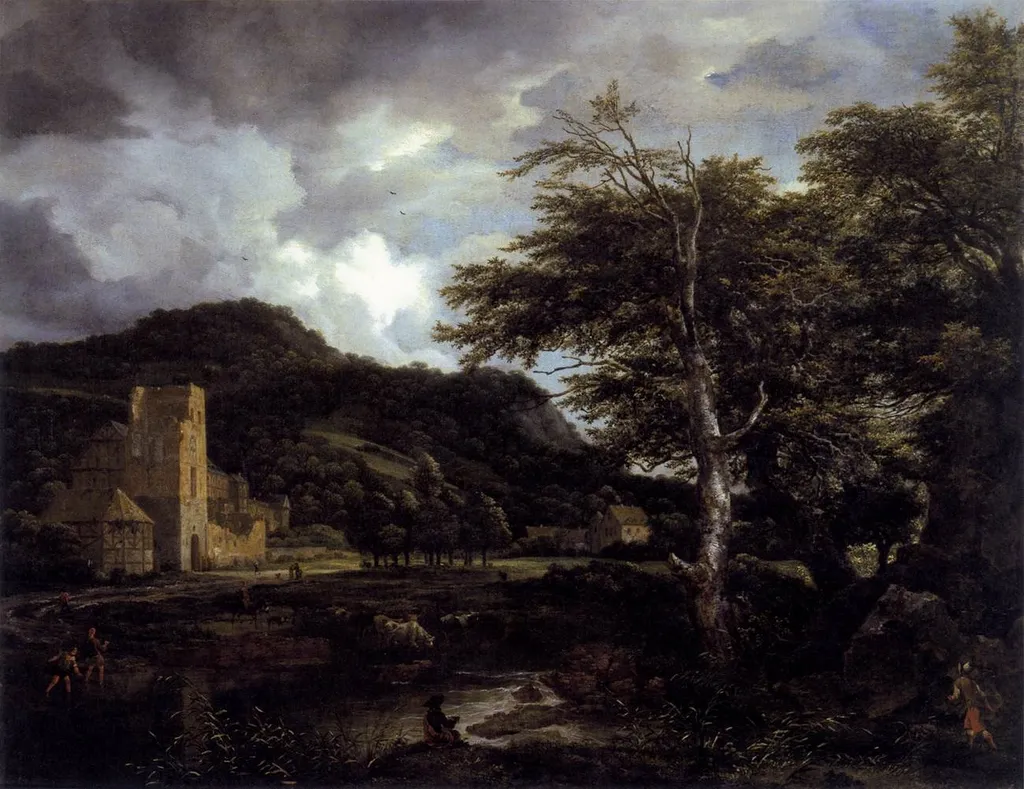
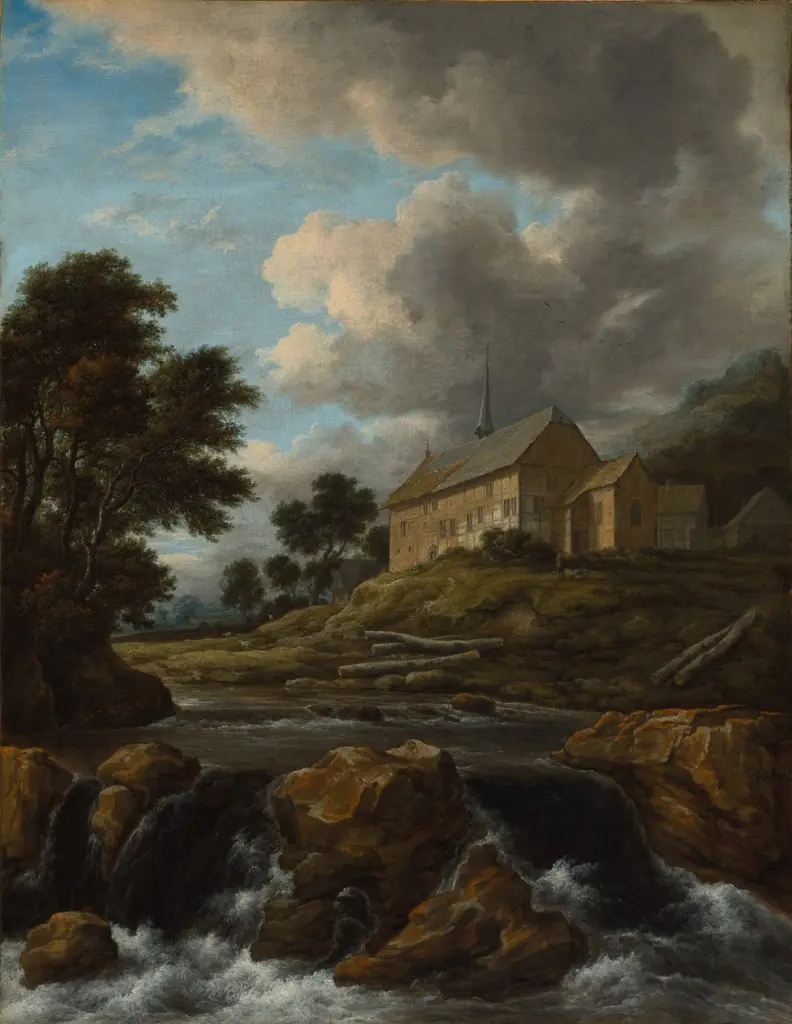
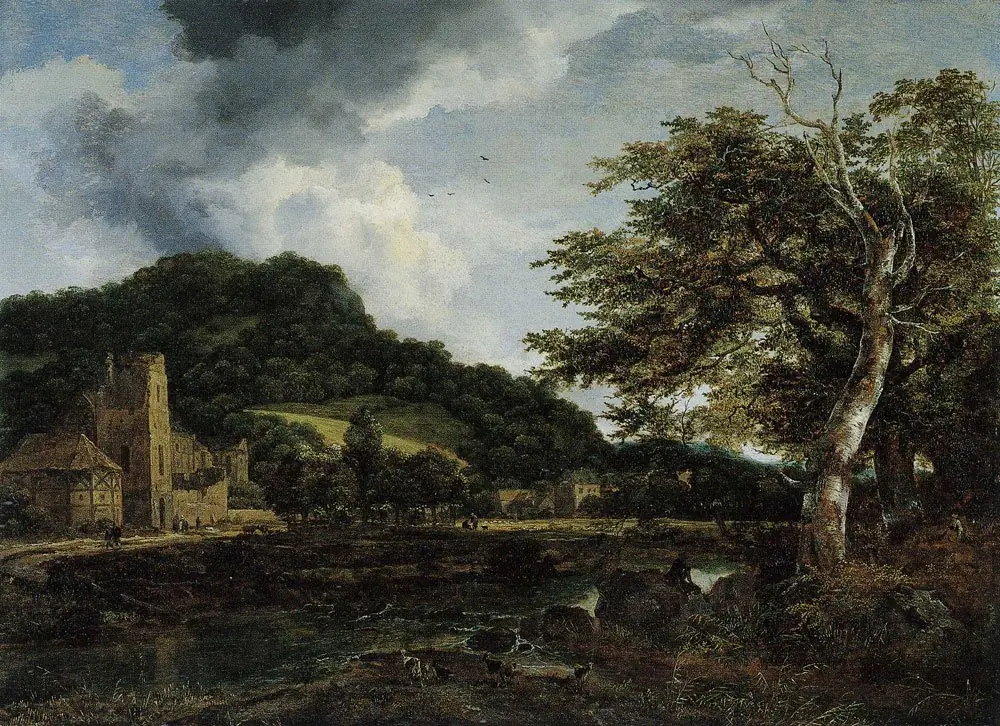
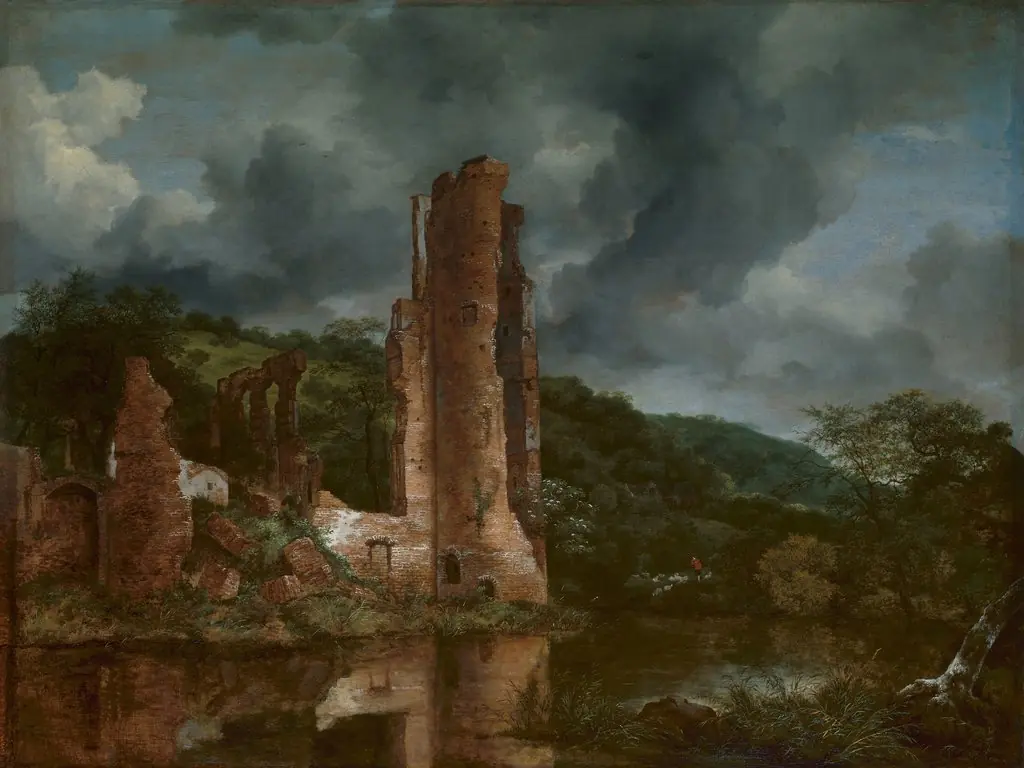
The Monastery is an oil painting by the Dutch Golden Age artist Jacob van Ruisdael. It dates from 1650 and is held in the collection of the Staatliche Kunstsammlungen Dresden.
About this work
Overview
The work resides in the Gemäldegalerie Alte Meister in Dresden, where it is part of a broader collection of Dutch Golden Age landscapes.
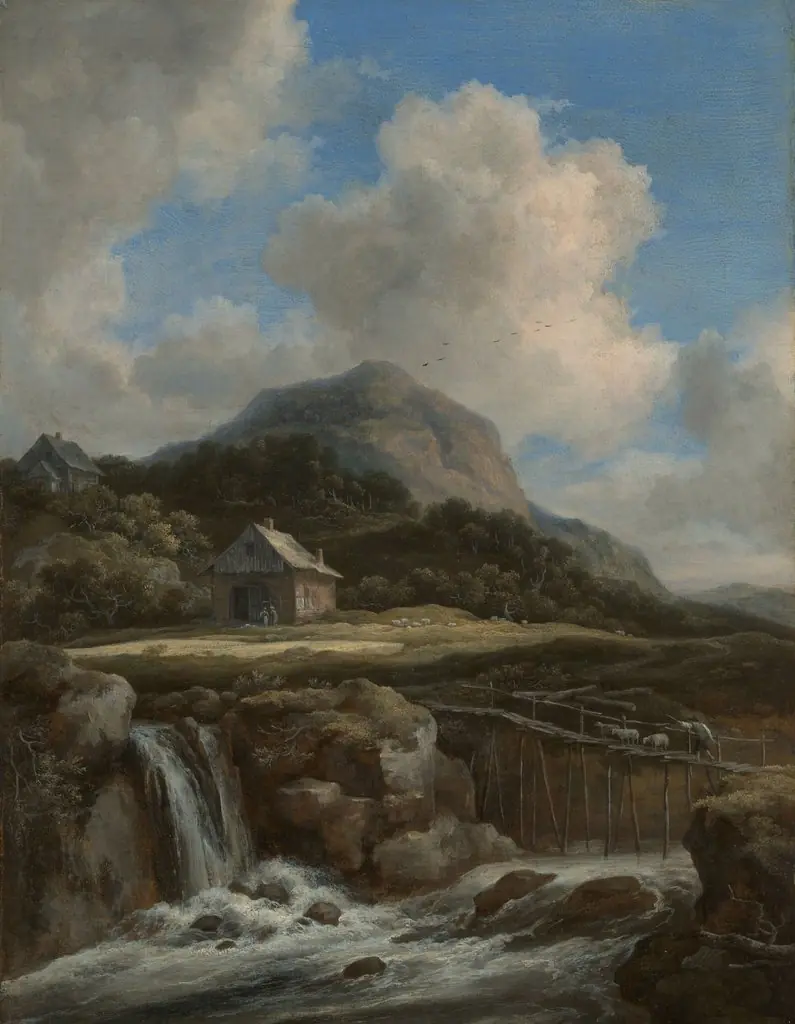
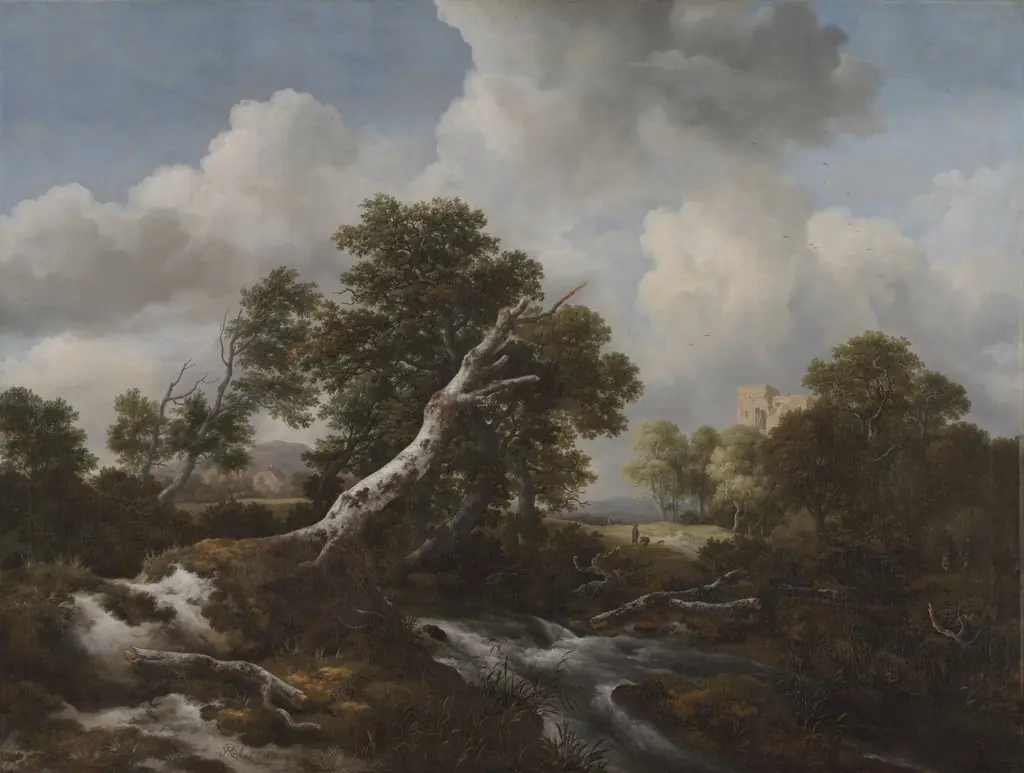
Painted around 1650, The Monastery is an oil-on-canvas landscape by Jacob van Ruisdael. It presents a quiet, wooded scene centered on a distant religious structure, rendered with careful attention to natural detail. The work resides in the Gemäldegalerie Alte Meister in Dresden, where it is part of a broader collection of Dutch Golden Age landscapes. Its subdued palette and measured composition reflect the artist’s interest in atmospheric harmony.
Subject & Meaning
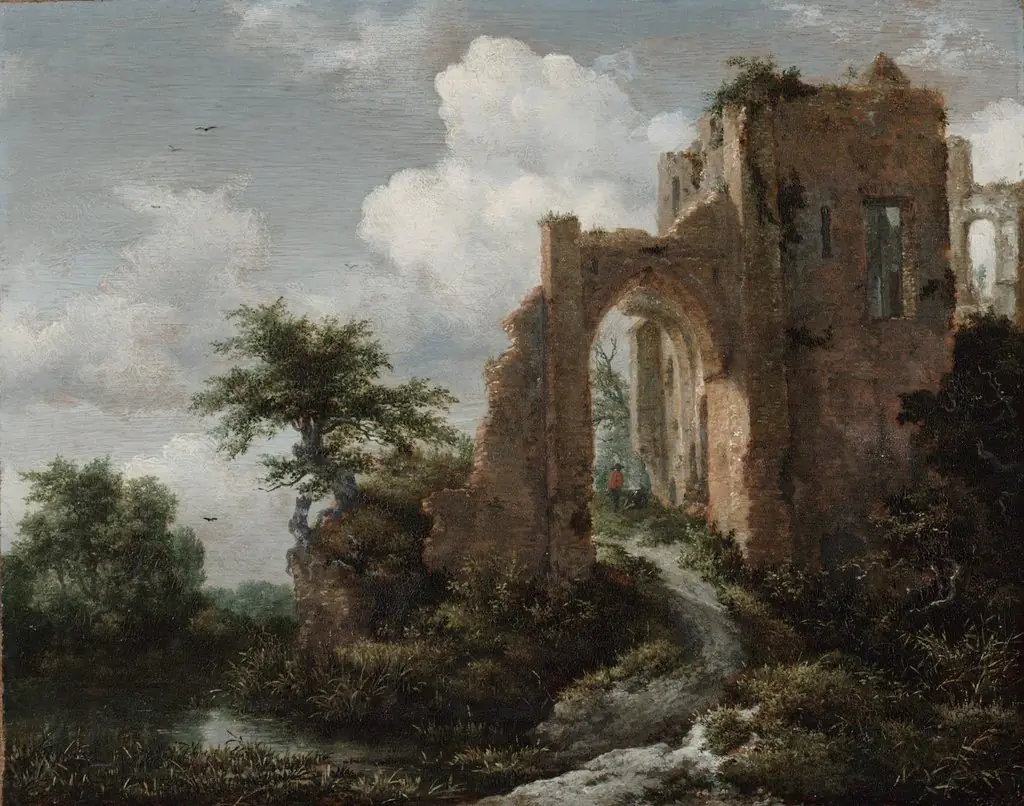
The painting features a secluded monastery nestled within a dense forest, its presence neither grand nor dominant but integrated into the natural order. The structure suggests contemplation and retreat, aligned with the quietude of the surrounding landscape. No human figures are present, reinforcing a sense of solitude and timelessness. The monastery functions less as a religious symbol and more as an anchor of stillness within nature’s quiet rhythm.
Technique & Style
Ruisdael employed layered oil glazes to achieve subtle shifts in light and texture, particularly in the rendering of foliage and water. The stream in the foreground reflects ambient tones, while the trees are rendered with varied brushwork to suggest depth and volume. Atmospheric perspective is used to soften distant forms, guiding the eye toward the monastery. The composition avoids dramatic contrasts, favoring a balanced, meditative arrangement.
History & Provenance
The painting entered the collection of the Gemäldegalerie Alte Meister in the 18th century, likely through the Saxon royal holdings. Its early ownership history is not fully documented, but it was recognized by contemporaries as a representative example of Ruisdael’s mature landscape style. It has remained in the same institution since at least the 1700s, with no record of significant alteration or restoration.
Context
Created during the Dutch Golden Age, the work reflects a broader cultural interest in nature as a subject worthy of serious artistic attention. Unlike Italianate landscapes, Dutch painters like Ruisdael favored local topography and weathered, unidealized scenes. The monastery’s inclusion may nod to the region’s religious past, even as the Dutch Republic embraced secular values. The painting aligns with a trend toward introspective, nature-centered imagery.
Legacy
The Monastery exemplifies Ruisdael’s influence on later landscape traditions, particularly in his treatment of light and mood. While not widely reproduced in his lifetime, it became a reference point for 19th-century Romantic painters drawn to its quiet solemnity. Today, it is studied for its technical restraint and emotional nuance, standing as a quiet testament to the artist’s ability to convey stillness through observation rather than spectacle.
Artist & collection
Artist
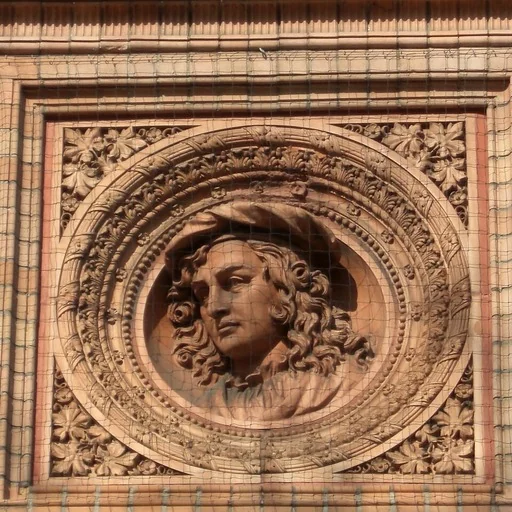
Jacob Isaackszoon van Ruisdael was a Dutch painter, draughtsman, and etcher. He is generally considered the pre-eminent landscape painter of the Dutch Golden Age, a period of great wealth and cultural achievement when…