Artwork
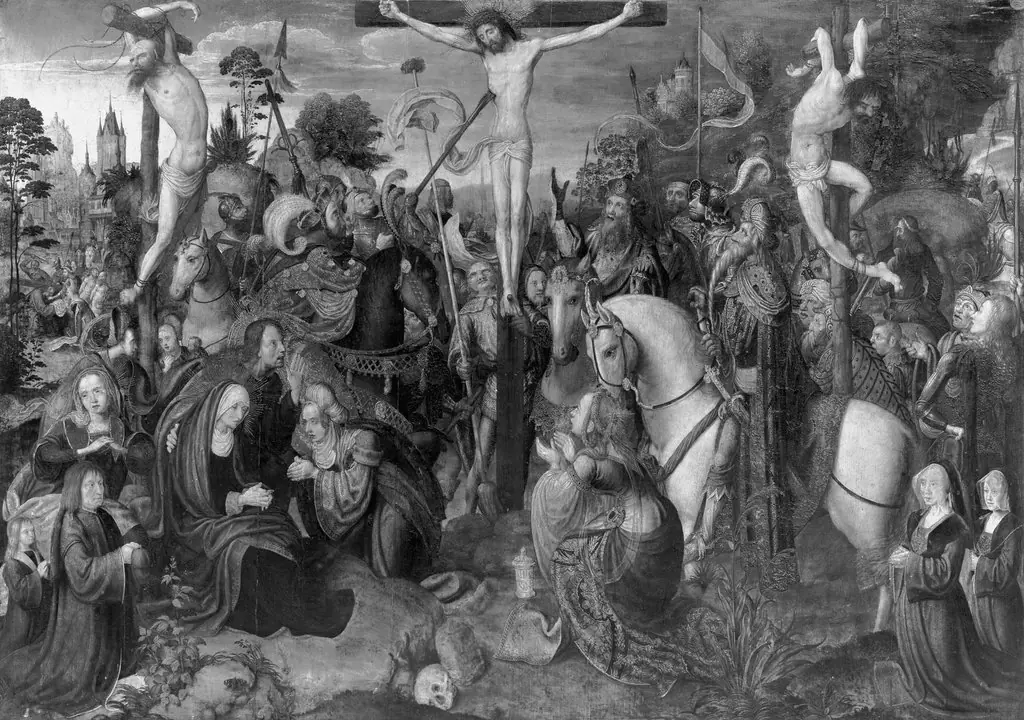
Christ on the cross
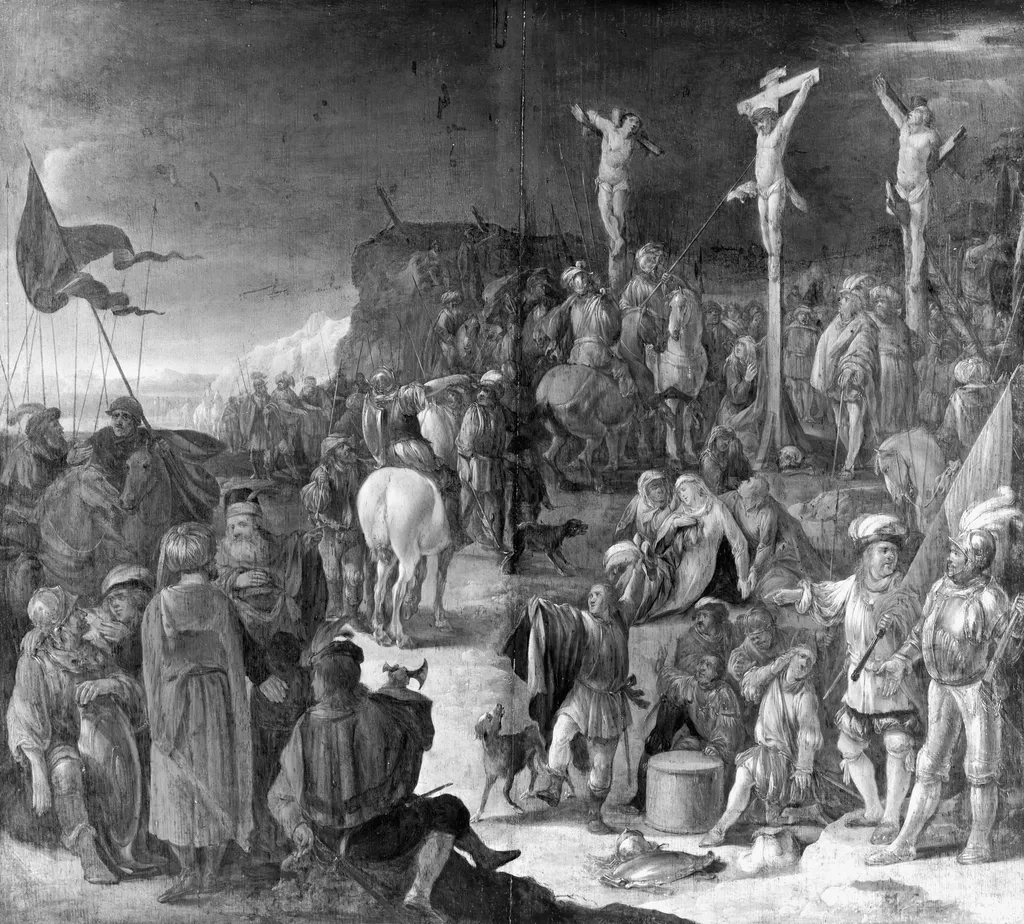
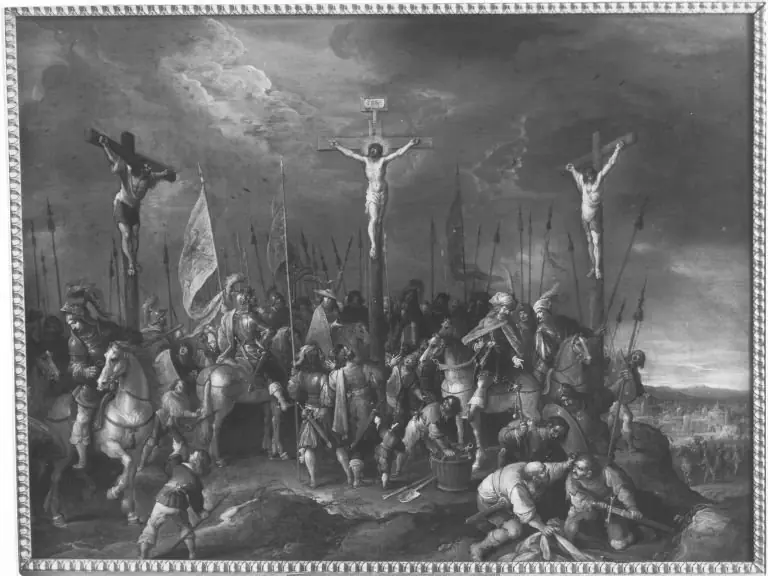
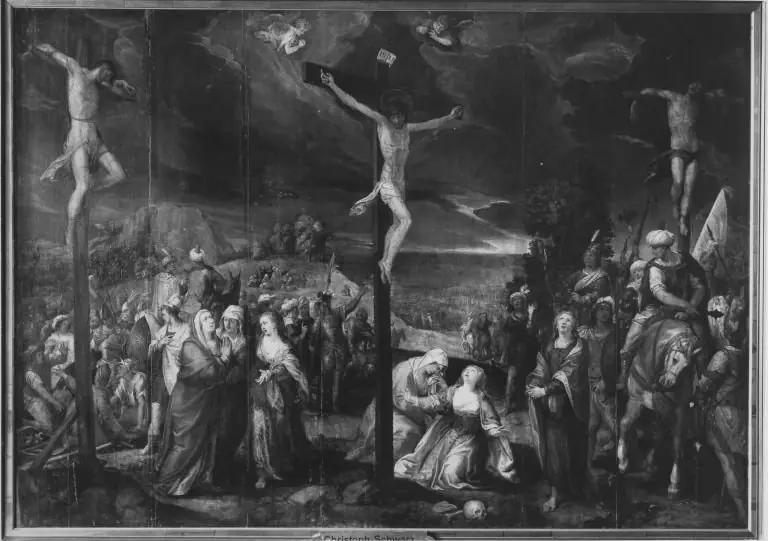
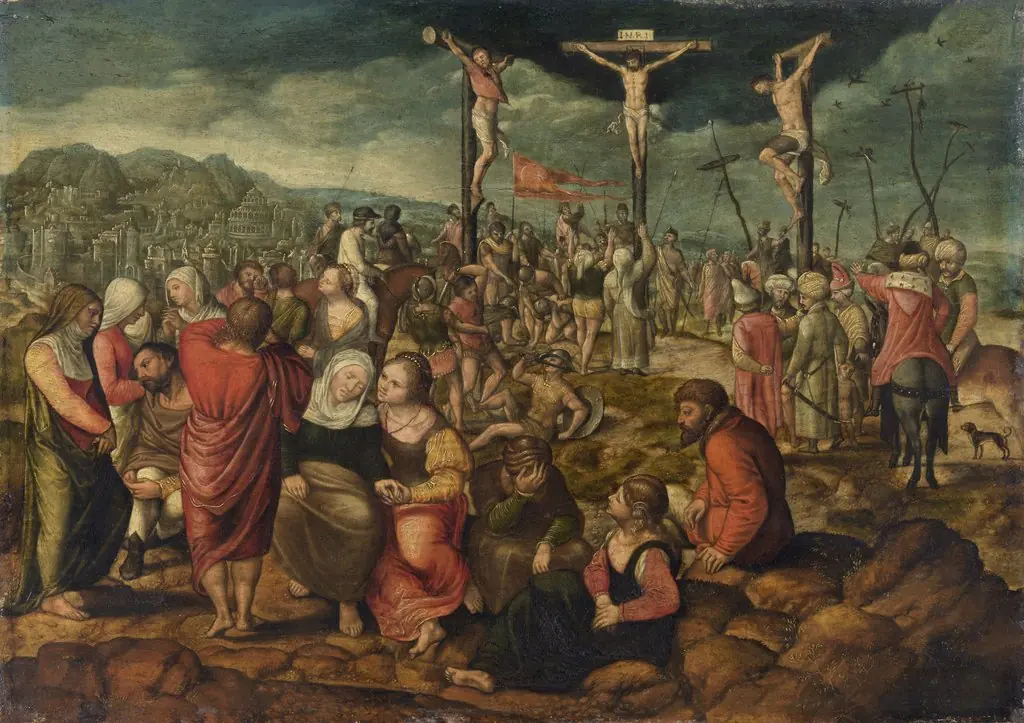
Christ on the cross is a paint painting by the Flemish Baroque painting artist Jacob Weyer. It dates from 1655 and is held in the collection of the Gemäldegalerie Berlin.
About this work
Overview
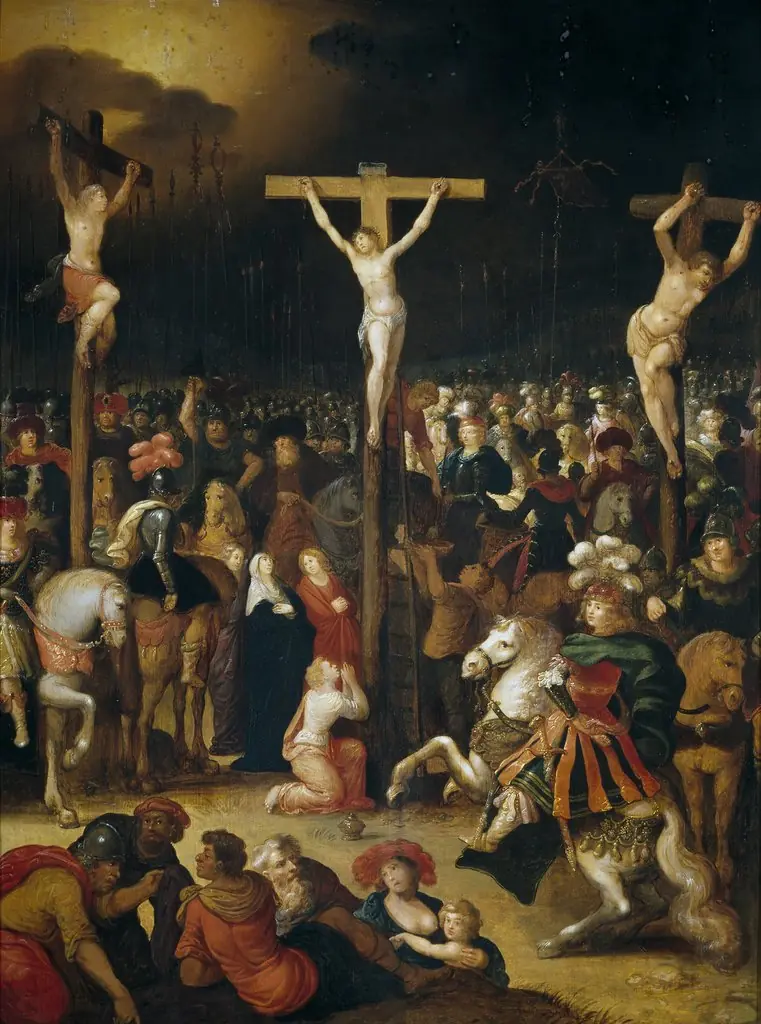
Jacob Weyer’s 1655 oil painting, titled *Christ on the Cross*, presents a densely populated scene set before a rugged hill. Three crucified figures dominate the upper portion, while soldiers in armor, a white horse, and a varied crowd of townspeople fill the lower space, creating a narrative tableau of the Passion.
Subject & Meaning
The work centers on the crucifixion of Jesus Christ, a pivotal event in Christian theology. By surrounding the crosses with soldiers, flag‑bearing troops, and a mixture of praying and arguing civilians, Weyer underscores the public and political dimensions of the execution, inviting contemplation of faith amid societal turmoil.
Technique & Style
Weyer employs a pronounced chiaroscuro, contrasting deep shadows with illuminated figures to heighten drama and guide the viewer’s eye toward the central crosses. The strong modeling of bodies and the interplay of light and dark reflect the Baroque emphasis on emotional intensity and three‑dimensionality.
History & Provenance
Created in the mid‑17th century, the painting entered the collection of Berlin’s Gemäldegalerie, where it remains on display. Its acquisition history is not extensively documented, but the work has been part of the museum’s holdings since the early 20th century, contributing to the gallery’s representation of German Baroque art.
Context
The painting emerges from a period when German artists were adapting Italian Baroque techniques, particularly the use of chiaroscuro, to local religious subjects. Weyer’s depiction aligns with contemporary devotional imagery intended for both private contemplation and public instruction within a post‑Reformation cultural landscape.
Own this work as a print
Artist & collection