Artwork
Appolon and Marsyas
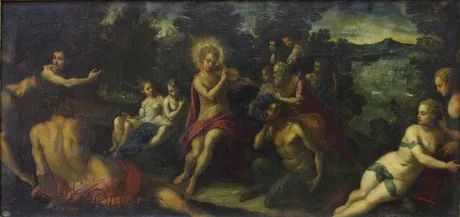
Appolon and Marsyas is an oil painting by the Mannerist artist Jacopo Tintoretto. It dates from 1566 and is held in the collection of the National Gallery of Armenia.
About this work
Overview
Though often misidentified as depicting Pan, the figure playing the flute is Marsyas, a satyr who challenged Apollo to a musical contest.
Painted circa 1566, this oil on canvas by Jacopo Tintoretto portrays a mythological encounter between Apollo and Marsyas. Executed in the Mannerist tradition, the work reflects the artist’s energetic brushwork and compositional dynamism. Though often misidentified as depicting Pan, the figure playing the flute is Marsyas, a satyr who challenged Apollo to a musical contest. The painting resides in the National Gallery of Armenia, part of a broader collection of Renaissance-era works from the Venetian school.
Subject & Meaning
The scene illustrates the myth of Marsyas, a satyr who dared to compete with Apollo in music and was punished by being flayed alive for his hubris. Tintoretto captures the moment after the contest, with Marsyas seated, still holding his flute, while Apollo and others observe. The composition conveys tension and moral consequence, emphasizing the peril of challenging divine authority. The figures’ postures and expressions underscore the gravity of the myth’s lesson.
Technique & Style
Tintoretto employed rapid, expressive brushstrokes and layered glazes to model forms and suggest atmospheric depth. Figures are rendered with elongated proportions and dramatic poses, typical of Mannerism. The landscape background, with its rolling hills and dense foliage, recedes subtly through tonal gradation. Light falls unevenly across the scene, heightening emotional intensity and directing focus to the central group without idealizing their anatomy.
History & Provenance
The painting entered the National Gallery of Armenia’s collection in the 20th century, though its earlier ownership remains undocumented. It was likely acquired during a period of expanded European art acquisitions by Soviet-era institutions. No records confirm its presence in Venetian collections before the 1800s. Its survival through centuries of political and cultural change underscores its endurance as a significant, if lesser-known, work of Tintoretto’s oeuvre.
Context
Created during the height of Venetian Mannerism, the painting reflects the era’s fascination with mythological narratives and emotional extremes. Tintoretto, working alongside Titian and Veronese, diverged from classical harmony by favoring movement and psychological tension. This work aligns with contemporaneous commissions for private patrons who sought dramatic, morally charged imagery, distinct from the more serene religious themes of the High Renaissance.
Legacy
Though not widely exhibited or studied compared to Tintoretto’s larger religious works, this painting exemplifies his ability to infuse myth with psychological weight. Its presence in Armenia highlights the global dispersal of Renaissance art beyond Western Europe. Scholars recognize it as a compact yet potent example of how Venetian artists adapted classical themes through expressive, non-idealized forms, influencing later Baroque treatments of myth.
Artist & collection
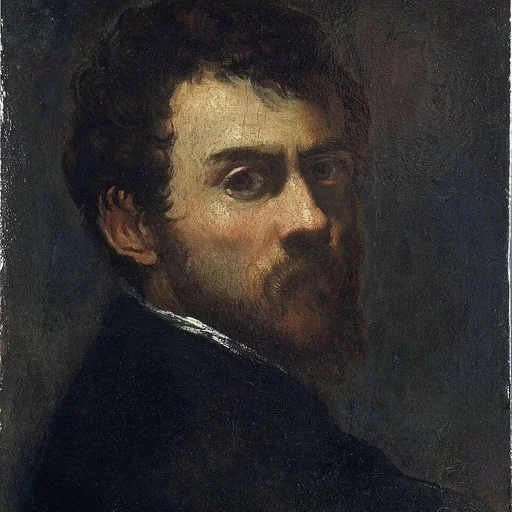
Artist
Jacopo Robusti (late September or early October 1518 – 31 May 1594), best known as Tintoretto ( TIN-tə-RET-oh; Italian: ; Venetian: ), was an Italian Renaissance painter of the Venetian school.

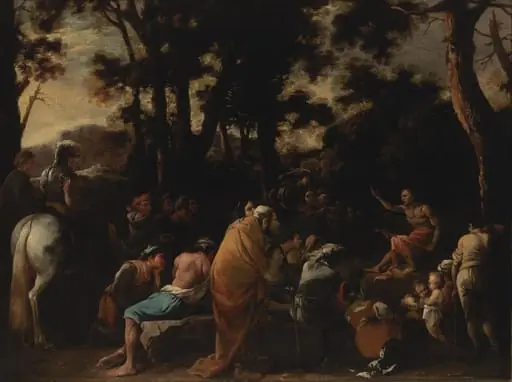 Johannes Kastaja saarnaa
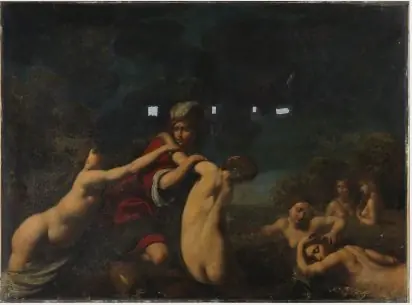 Hylas and the Nymphs
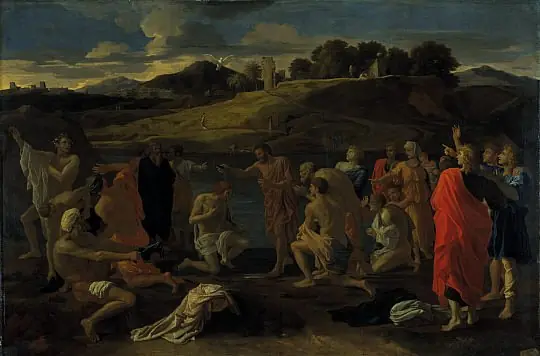 The Sacrament of Baptism
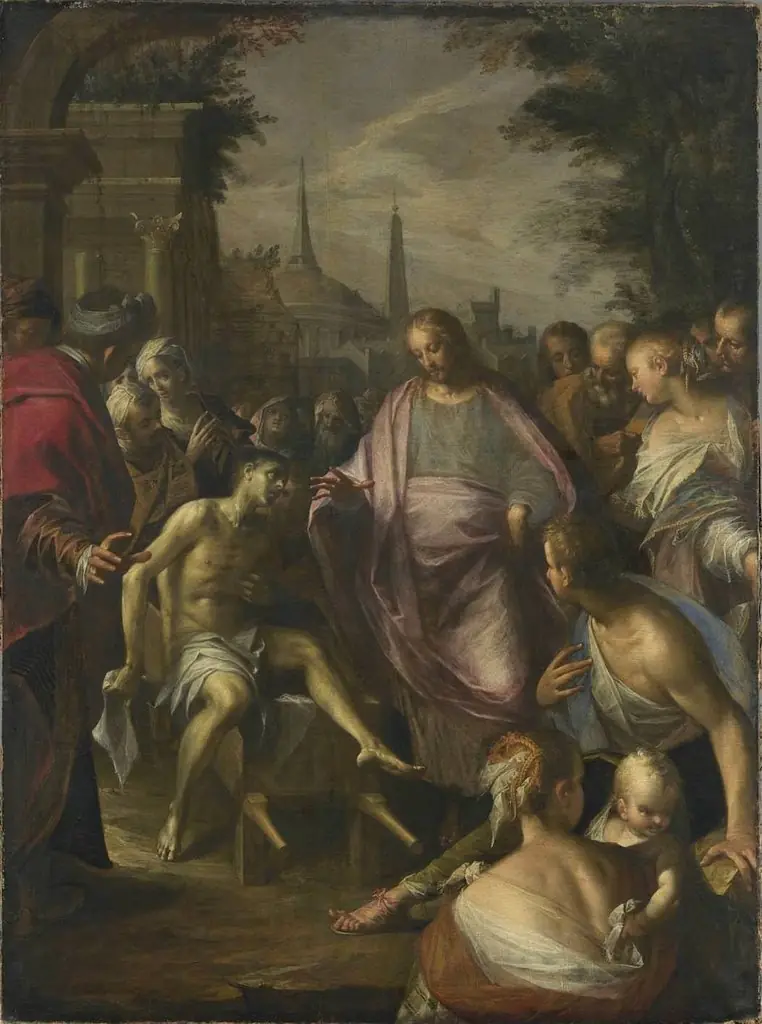 Die Auferweckung des Jünglings von Naim
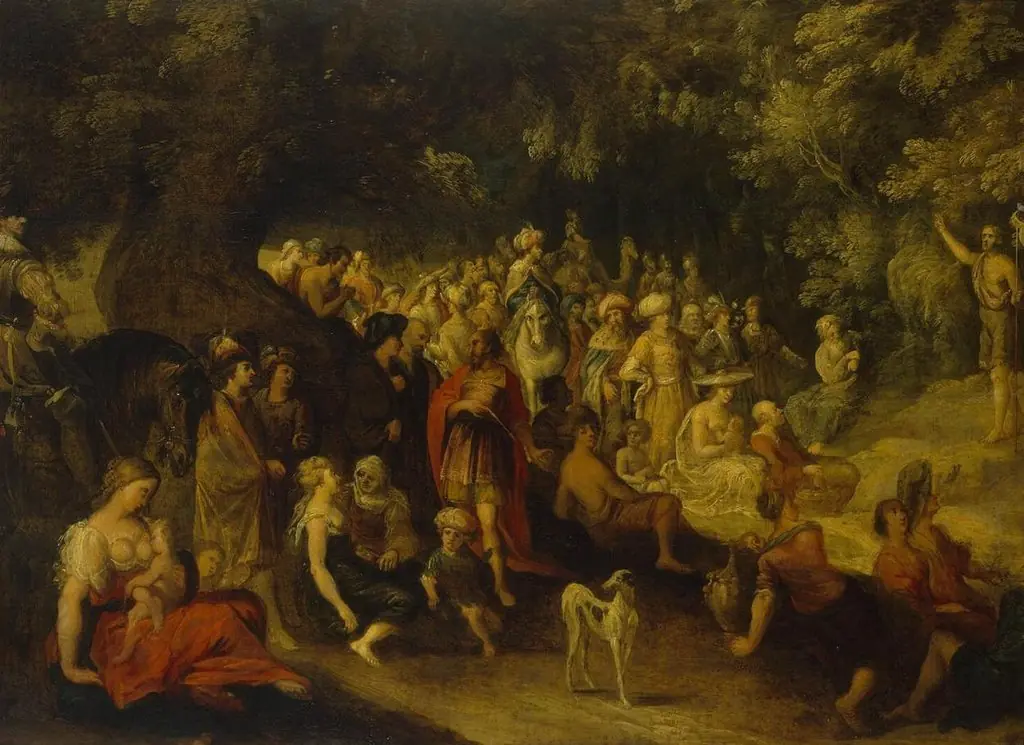 Sermon of St John the Baptist
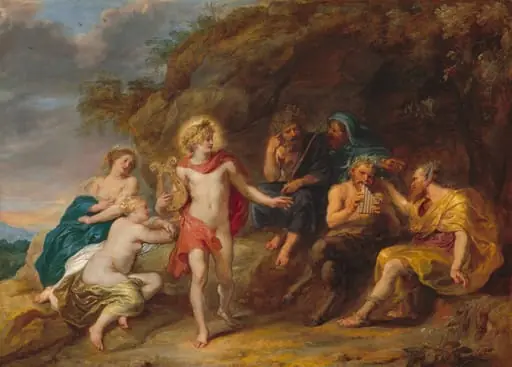 The Judgment of Midas
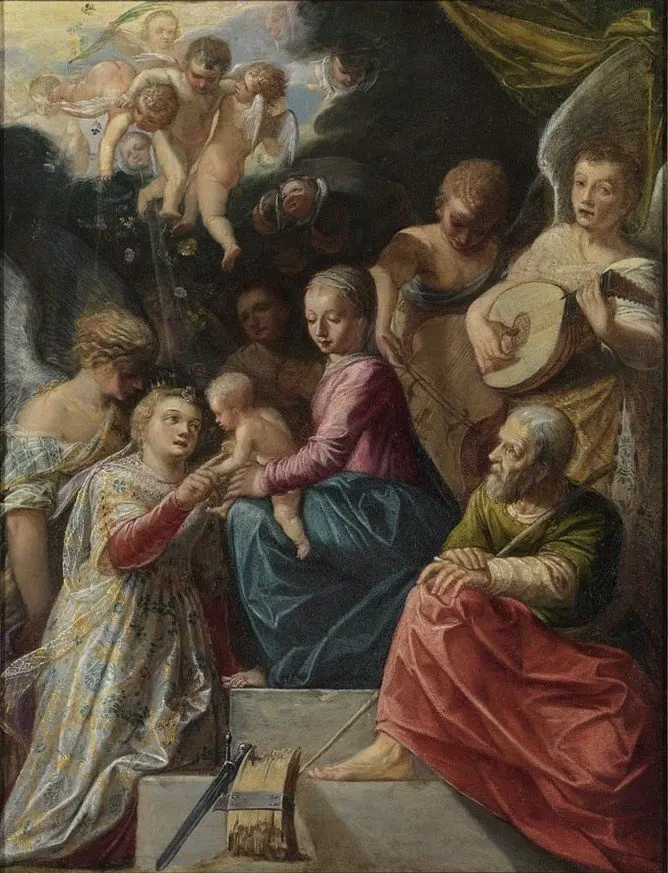 The Mystic Marriage of St. Catherine
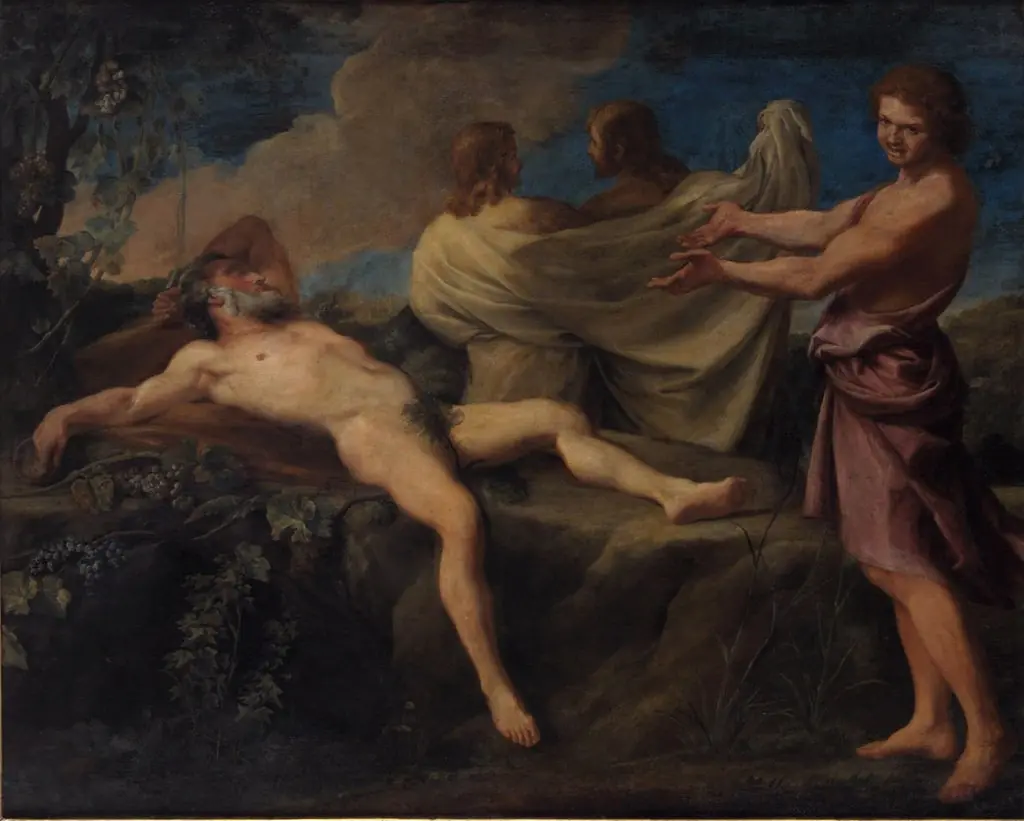 Drunkenness of Noah
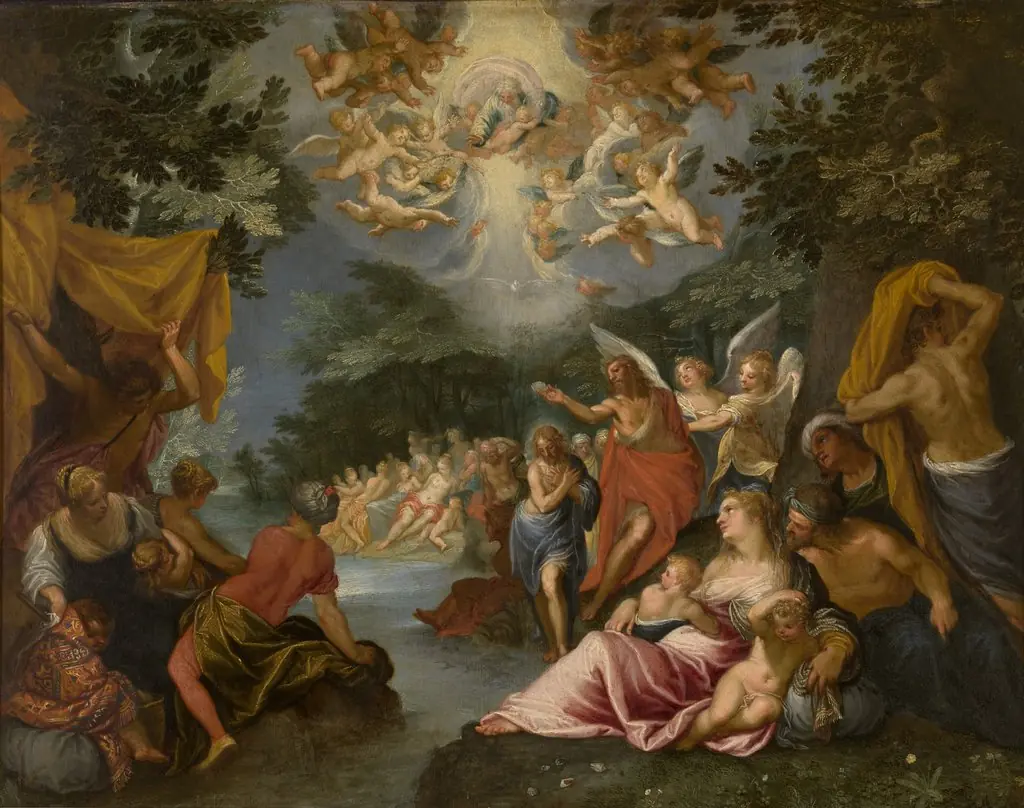 The Baptism of Christ
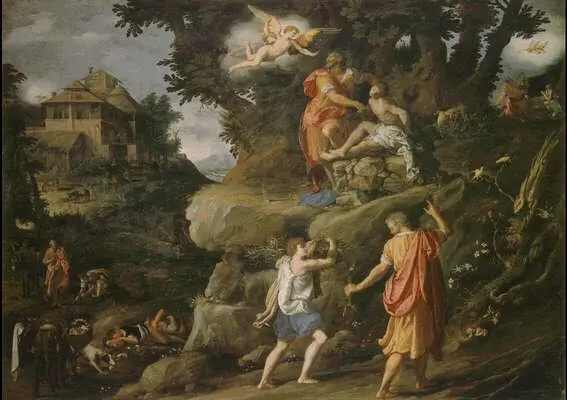 The Sacrifice of Isaac
 Lamentation with angels
 Musizierende Nymphen und Putti