Artwork
Apollo and Daphne
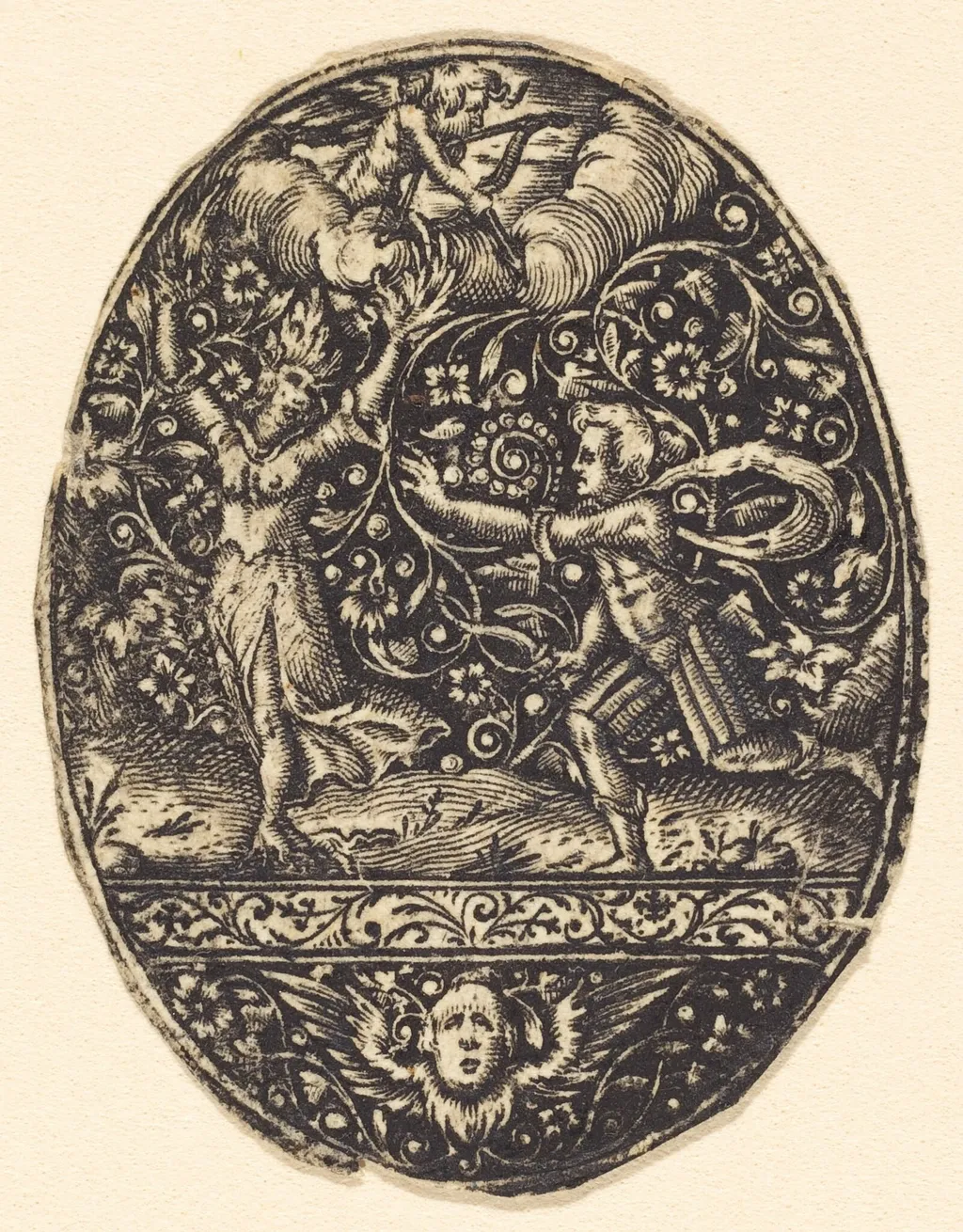
Apollo and Daphne is an ink print by the Renaissance artist Antoine Jacquard. It dates from 1612 and is held in the collection of the National Gallery of Art.
About this work
Overview
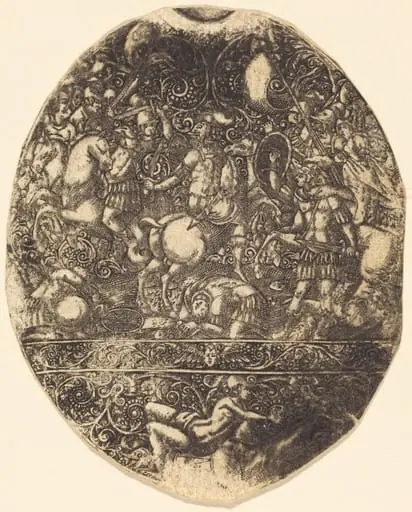
The scene is densely packed with figures and foliage, emphasizing movement and tension through linear precision rather than shading.
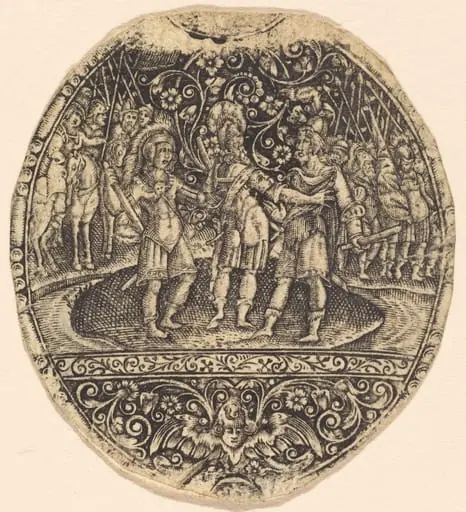
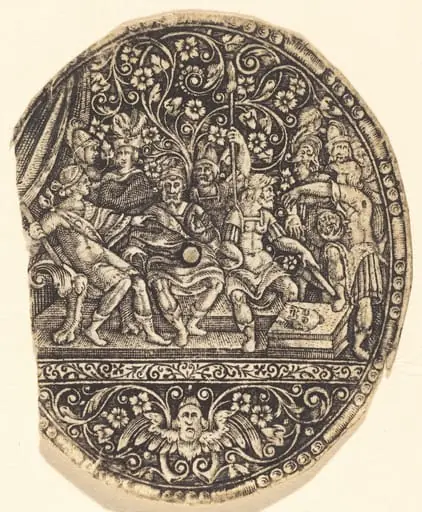
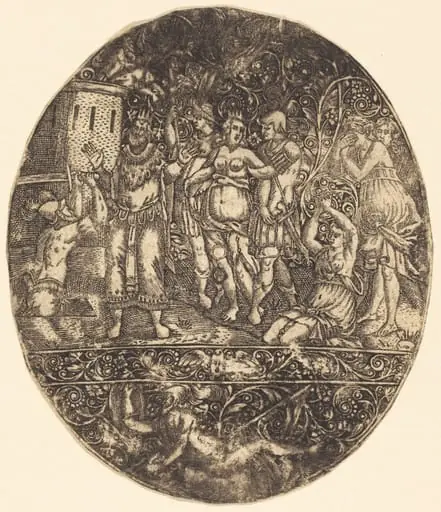
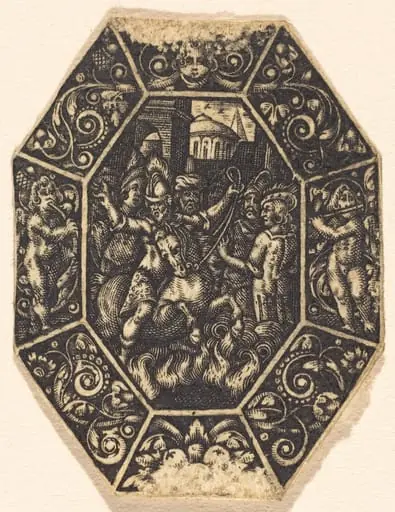
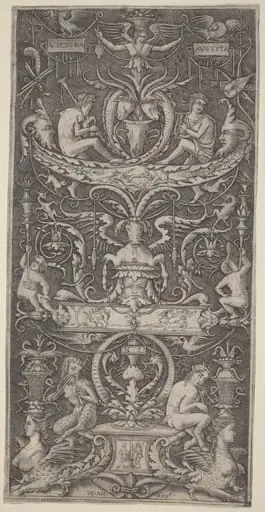
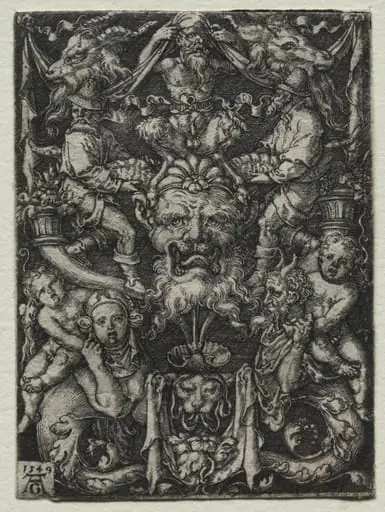
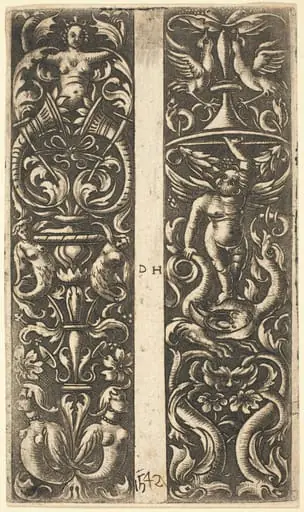
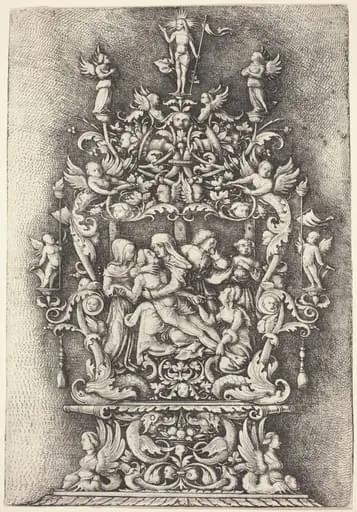
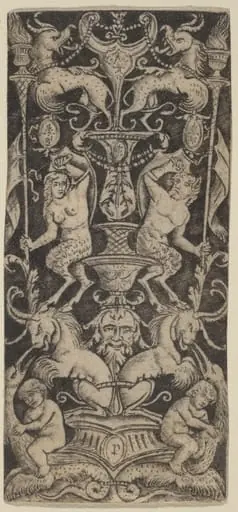
Created in 1612 by Antoine Jacquard, this engraving depicts the myth of Apollo and Daphne as a dynamic composition rendered in fine white lines against a black ground. The technique relies on incised grooves in a metal plate, inked and pressed onto paper to produce intricate, high-contrast imagery. The scene is densely packed with figures and foliage, emphasizing movement and tension through linear precision rather than shading.
Subject & Meaning
The print illustrates the moment from Ovid’s Metamorphoses when Apollo pursues Daphne, who transforms into a laurel tree to escape him. Her limbs elongate into branches, her fingers into leaves, while Apollo reaches desperately toward her. The entanglement of human and plant forms symbolizes the collision of desire and divine metamorphosis, a common theme in Renaissance humanist art that explores transformation and fate.
Technique & Style
Jacquard employed fine, controlled engraving lines to model form and texture, avoiding tonal gradients in favor of linear contrast. The black background enhances the luminosity of the white figures, a stylistic choice common in Northern Renaissance prints. The swirling vines and overlapping bodies create a sense of chaotic motion, achieved through rhythmic, interwoven strokes that guide the viewer’s eye through the narrative.
History & Provenance
The print was produced in the early 17th century, likely in France or the Low Countries, where engraving was a well-established medium for disseminating mythological scenes. Few records of its early ownership survive, but its technical quality suggests it was made for a learned audience familiar with classical literature. It reflects the continued popularity of Ovidian themes in print culture after the Renaissance.
Context
During the early 1600s, engraved mythological subjects were widely circulated among collectors and scholars as both artistic and intellectual objects. Jacquard’s work aligns with a tradition of Northern European printmakers who translated classical narratives into detailed, linear compositions. The absence of color and reliance on line reflect the medium’s constraints and the era’s appreciation for draftsmanship over painterly effects.
Legacy
Though not widely reproduced in later centuries, Jacquard’s engraving exemplifies the technical rigor of early 17th-century printmaking. Its preservation in institutional collections underscores its value as a document of how classical myths were visually interpreted in print form. The work remains a quiet testament to the enduring influence of Ovid and the precision of hand-engraved imagery before the rise of etching and lithography.
Artist & collection