Artwork
Seige of Troy
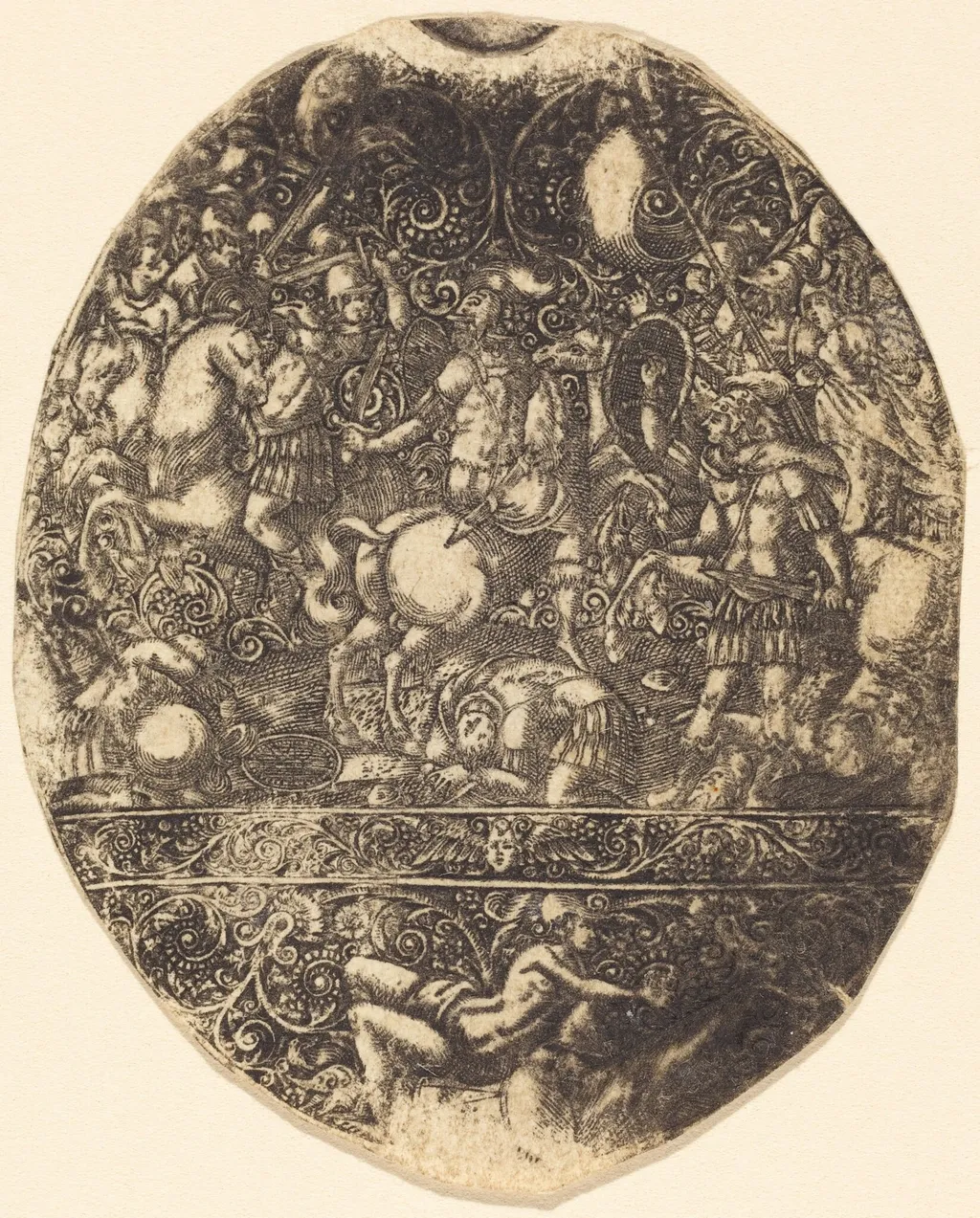
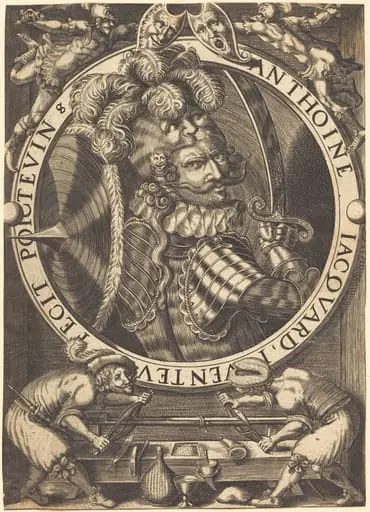
Seige of Troy is an ink print by the Renaissance artist Antoine Jacquard. It dates from 1612 and is held in the collection of the National Gallery of Art.
About this work
Overview
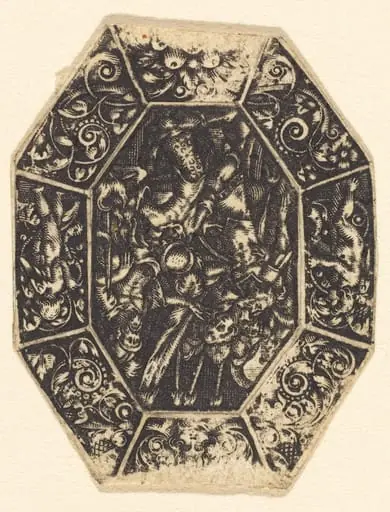
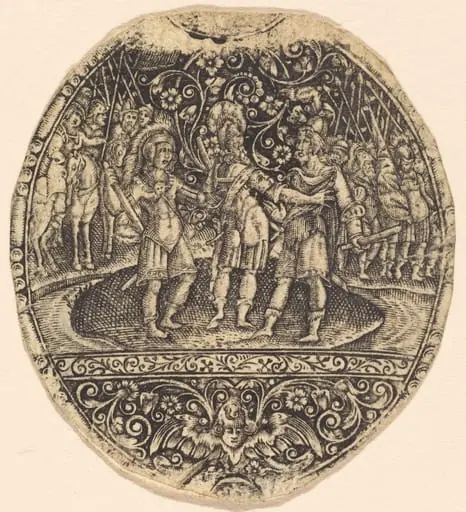
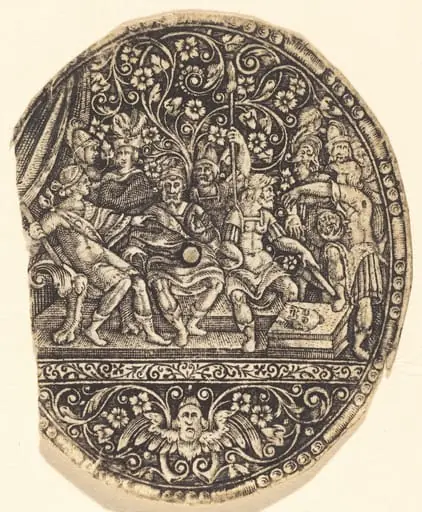
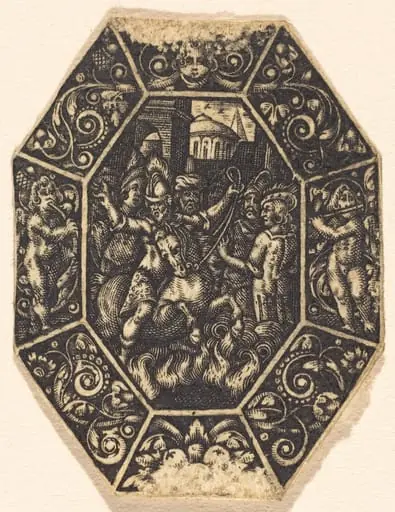
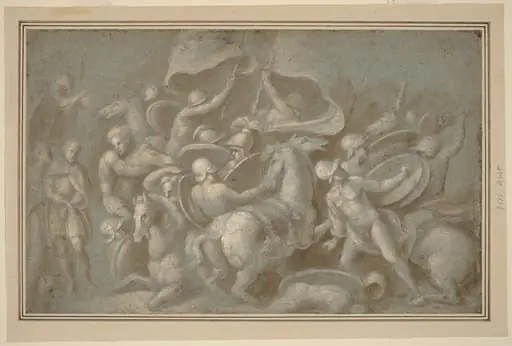
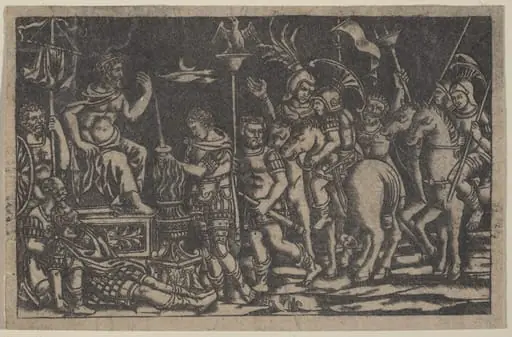
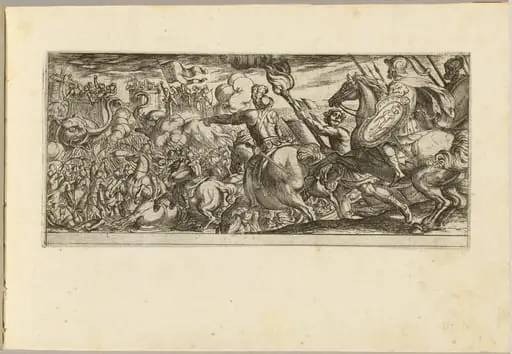
Created in 1612 by Antoine Jacquard, this engraving depicts the Siege of Troy as a densely packed, dynamic scene rendered entirely in black and white. The composition teems with figures, horses, and architectural elements, all compressed into a single frame to convey the intensity of battle. Fine, intersecting lines dominate the surface, generating texture and depth without color.
Subject & Meaning
The scene illustrates a moment from the legendary Trojan War, focusing on the chaos of assault rather than a specific narrative episode.
The scene illustrates a moment from the legendary Trojan War, focusing on the chaos of assault rather than a specific narrative episode. Soldiers scale walls, horses rear in confusion, and towers loom overhead, suggesting the scale and violence of the siege. The absence of clear focal points reinforces the overwhelming nature of conflict, aligning with contemporary interpretations of myth as a mirror of human turmoil.
Technique & Style
Jacquard employed meticulous cross-hatching to model form and suggest volume through tonal variation. Delicate, overlapping lines build shadows and highlights, giving weight to armor, drapery, and stone. The background recedes through sparser marks, while foreground elements are densely worked, enhancing spatial depth. A decorative border of ornamental patterns frames the scene, typical of early 17th-century print conventions.
History & Provenance
The engraving was produced in the early 1600s, during a period when mythological subjects were popular in Northern European printmaking. Jacquard, active in France, likely drew from published accounts of classical epics and earlier visual traditions. While its early ownership is undocumented, the work reflects the broader circulation of engraved narratives among educated collectors of the time.
Context
In the early 17th century, engravings like this served both as artistic expressions and as vehicles for disseminating classical stories to a literate, non-elite audience. The emphasis on movement and detail aligned with contemporary tastes for dramatic, narrative-rich imagery. Similar compositions appeared in illustrated books and wall decorations, reinforcing mythological themes in domestic and scholarly spaces.
Legacy
Jacquard’s engraving contributes to a tradition of Trojan War imagery that persisted through the Renaissance and Baroque periods. Its technical precision and compositional density influenced later printmakers working in historical and military subjects. Though not widely reproduced today, it remains a representative example of how classical narratives were visually translated in early modern Europe.
Artist & collection