Artwork
A young Woman at her Toilet: 'Pride'
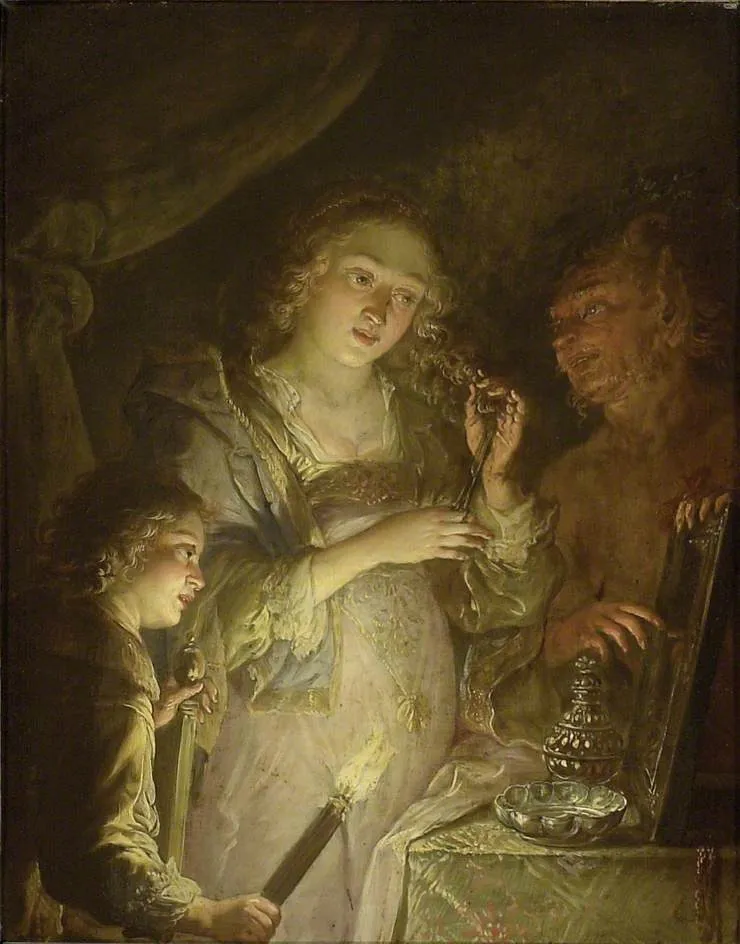
A young Woman at her Toilet: 'Pride' is an oil painting by the Flemish Baroque painting artist Jacques de l'Ange. It dates from 1642 and is held in the collection of the Ashmolean Museum.
About this work
Overview
The small-scale panel depicts a private moment of grooming, rendered with sharp detail and dramatic lighting.
Painted in 1642 on copper, this work by Jacques de l'Ange belongs to the Flemish Baroque tradition. Though long misattributed to other Northern Caravaggisti, it is now recognized as his. The small-scale panel depicts a private moment of grooming, rendered with sharp detail and dramatic lighting. Its medium and subject reflect the period’s interest in intimate genre scenes infused with moral undertones.
Subject & Meaning
The woman, absorbed in adjusting her hair before a mirror, embodies the theme of Pride. A small, horned figure peering over her shoulder suggests a lurking spiritual danger, implying vanity as a moral failing. The mirror, reflecting her gaze back at herself, reinforces self-obsession. The creature’s presence transforms a domestic act into a symbolic warning against excess and self-indulgence.
Technique & Style
De l'Ange employs chiaroscuro to model the figure and fabric with sculptural intensity, drawing from Caravaggio’s dramatic lighting. The copper support allows for fine detail, particularly in the lace, embroidery, and carved mirror frame. Brushwork is precise yet fluid, capturing the texture of silk and the sheen of metal. The composition is tightly framed, focusing attention on the woman’s interaction with her reflection and the unseen observer.
History & Provenance
The painting entered the Ashmolean Museum’s collection in the 19th century. Prior to modern attribution, it was often credited to artists like Gerrit van Honthorst or Matthias Stomer due to stylistic similarities. Research in the late 20th century reconnected it to de l'Ange through archival records and comparative analysis of his known works on copper.
Context
In early 17th-century Flanders, moralizing genre scenes were popular, often illustrating the Seven Deadly Sins. Paintings of women at their toilets were common, but the inclusion of a demonic figure was less frequent, suggesting a more explicit theological warning. Such works catered to a growing urban elite interested in both aesthetic refinement and religious instruction.
Legacy
De l'Ange’s work remains a rare example of a Flemish painter adapting Caravaggio’s naturalism to moral allegory on copper. While not widely known during his lifetime, his oeuvre has gained scholarly attention for its nuanced blending of realism and symbolism. This painting contributes to broader understanding of how Northern artists interpreted Italian innovations within local devotional and ethical frameworks.
Artist & collection
Artist
Jacques de l'Ange or the Monogrammist JAD (c. 1621 – 1650) was a Flemish painter and draughtsman known for his genre scenes and history paintings executed in a Caravaggesque style. The artist was only rediscovered in…

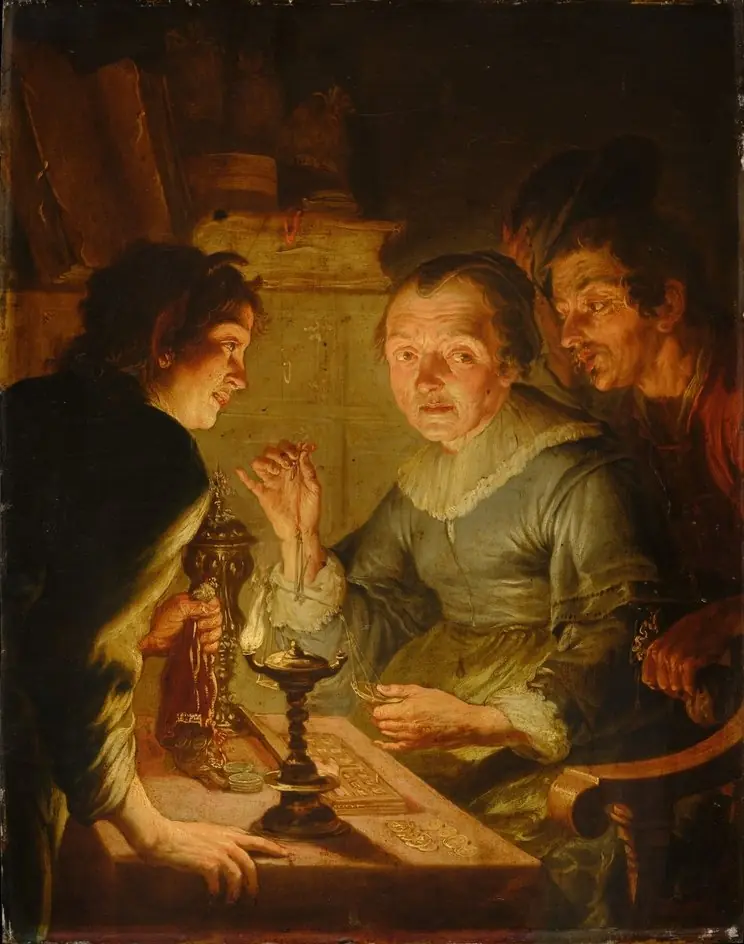
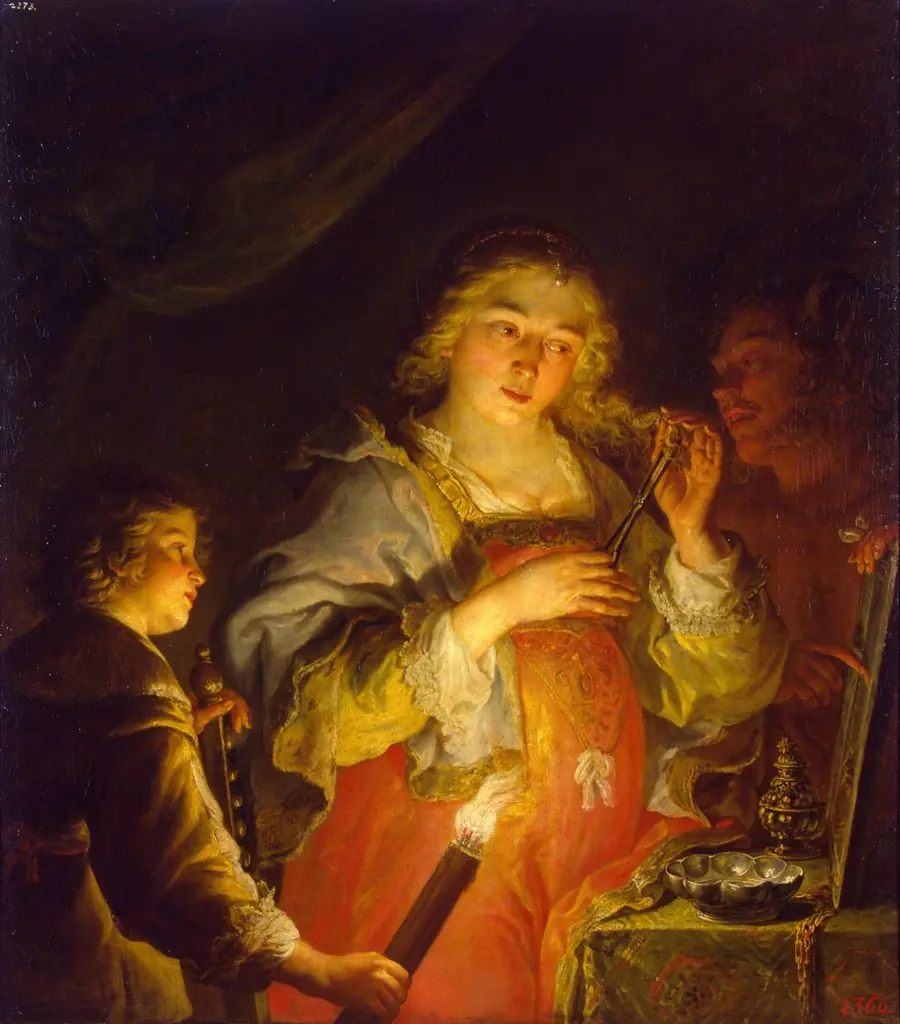 Allegory of Vanity
 Fire and Light (A Girl Places a Candle in a Lantern and a Boy Blows on the Coals in a Chafing-Dish)
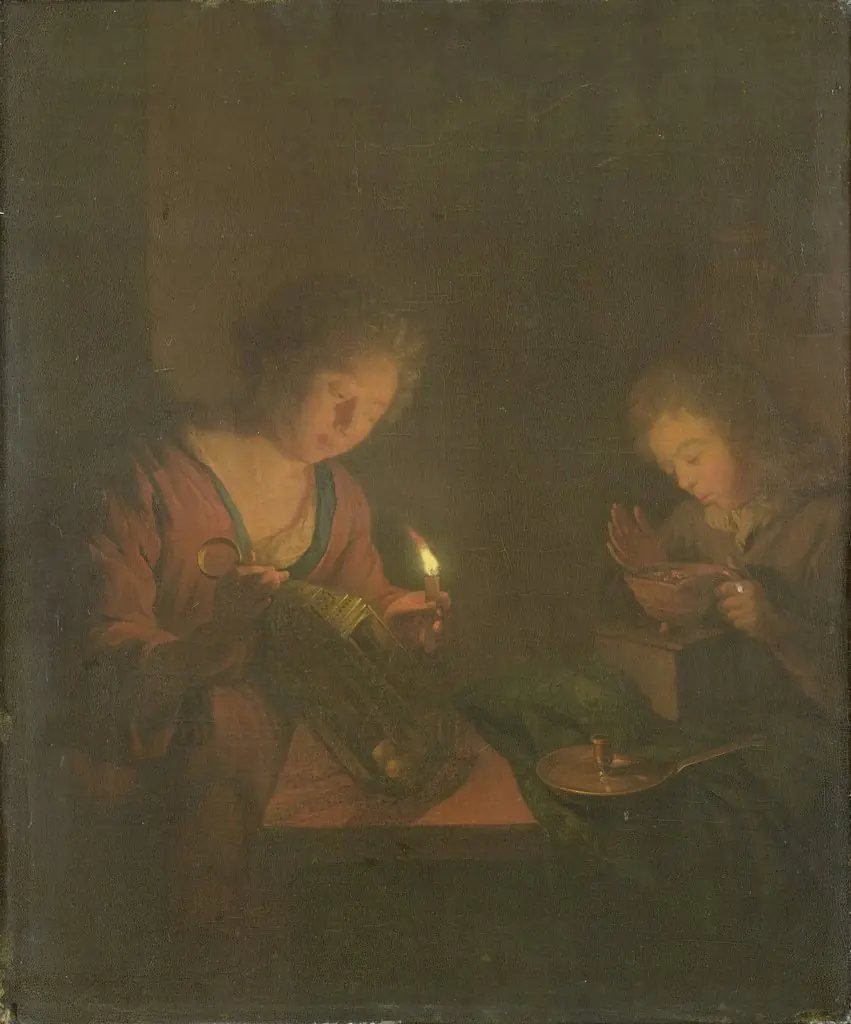 A girl putting a candle in a lantern and a boy testing the fire in a footwarmer
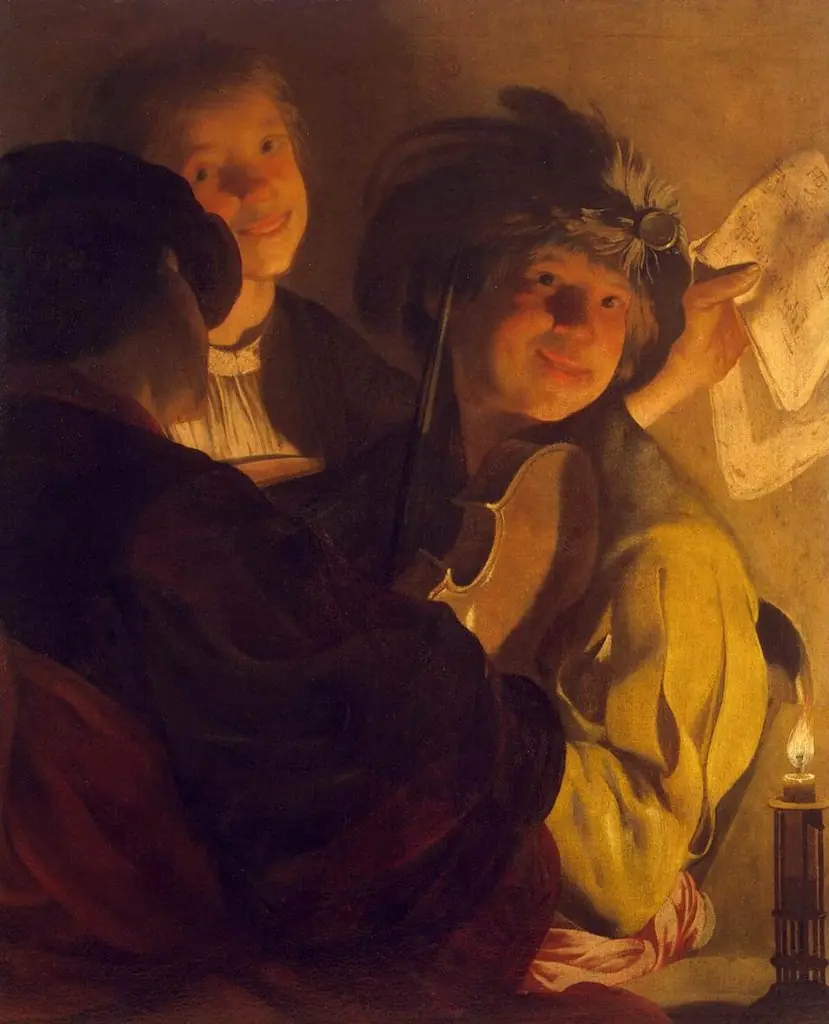 Concert
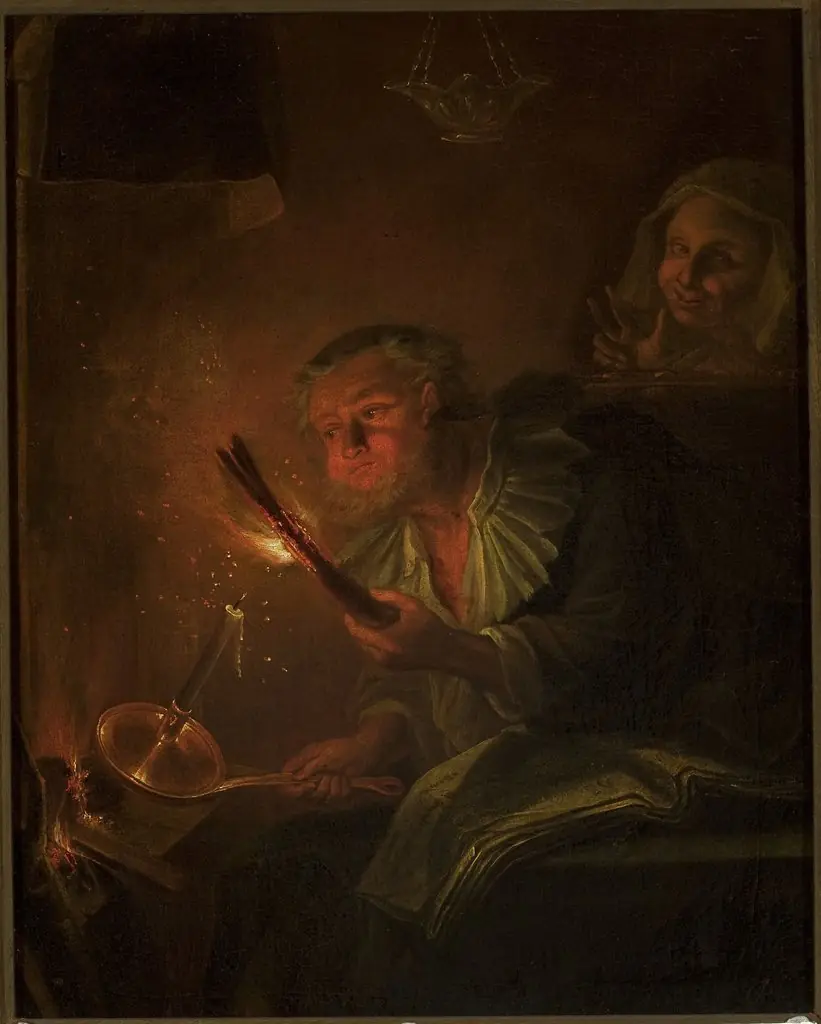 Man with a fire torch
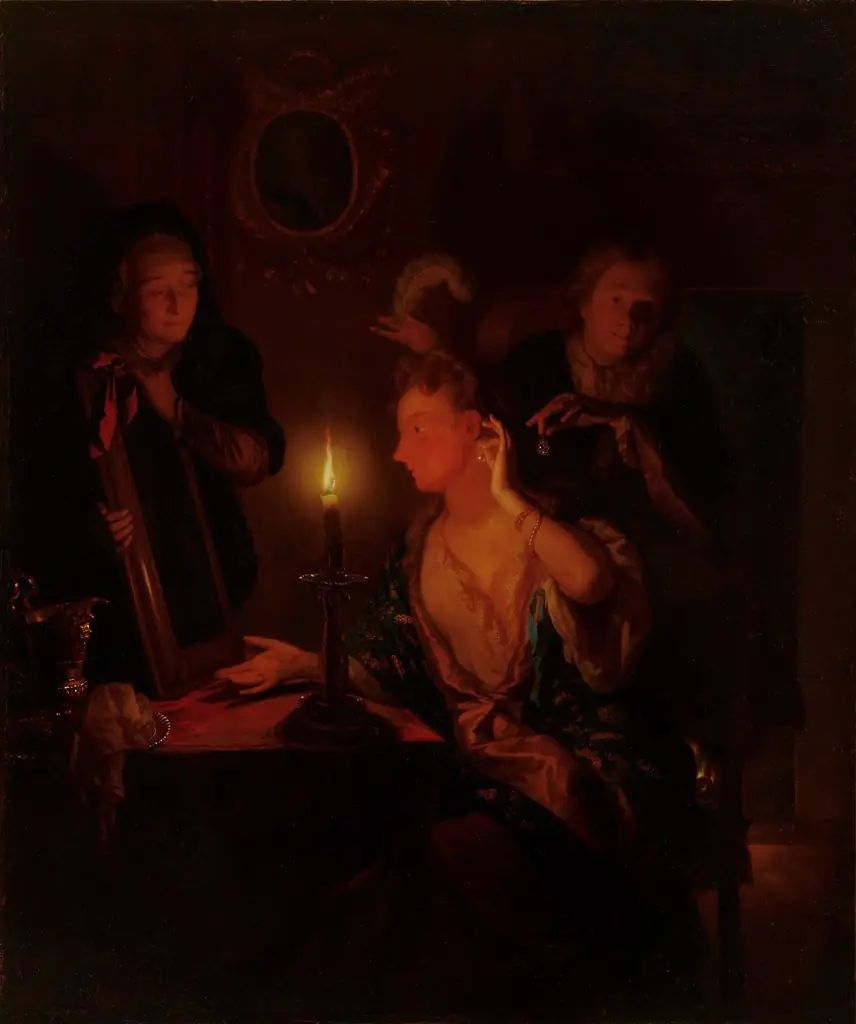 Lady at a Mirror by Candlelight
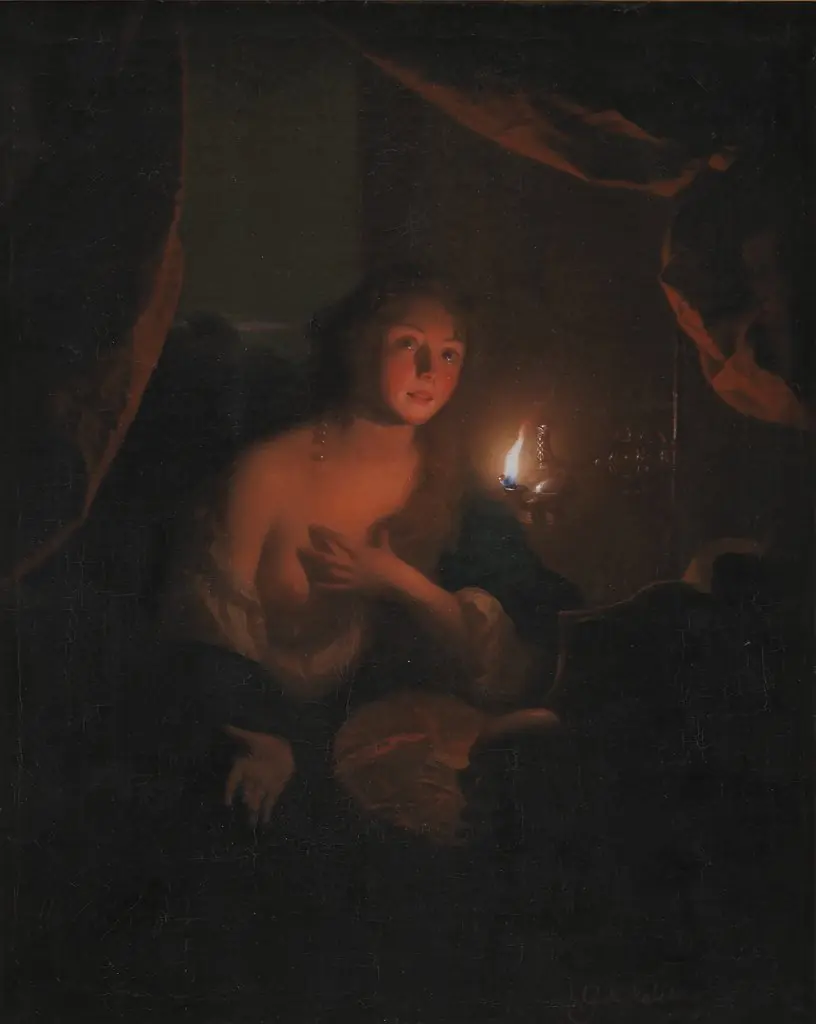 The Penitent Saint Mary Magdalene
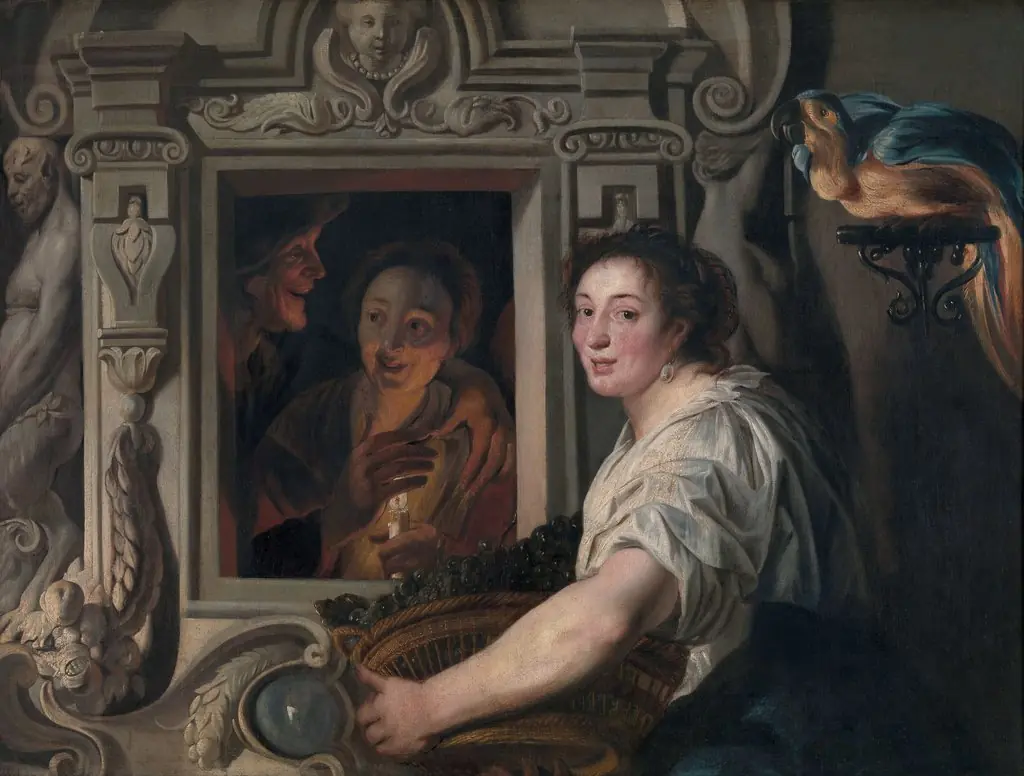 A maidservant with a basket of fruit and two lovers
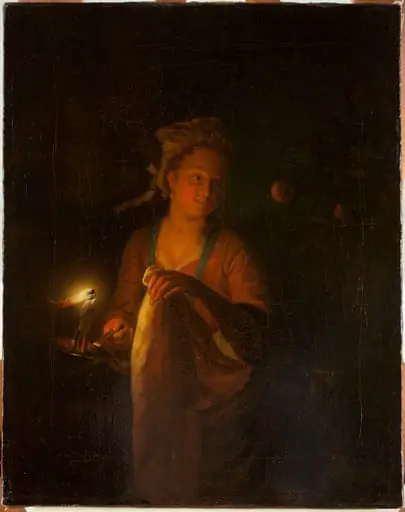 Junge Frau mit brennender Kerze
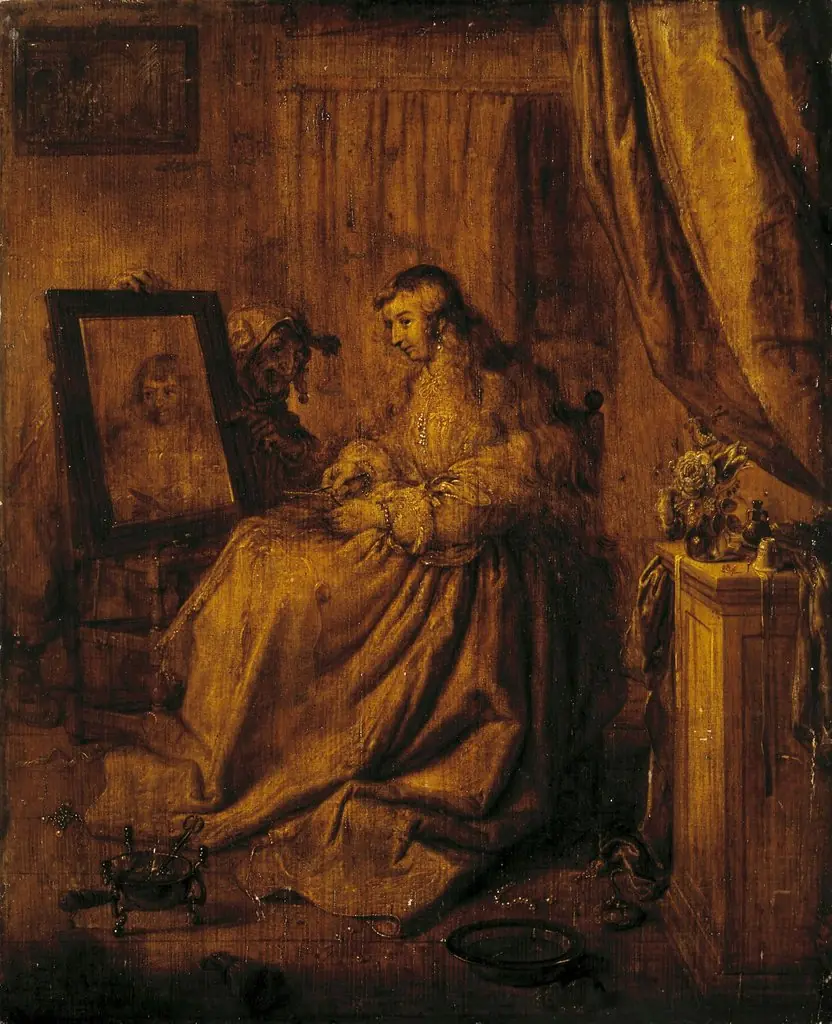 Young Woman in front of a Mirror (Allegory of the Vanity)