Artwork
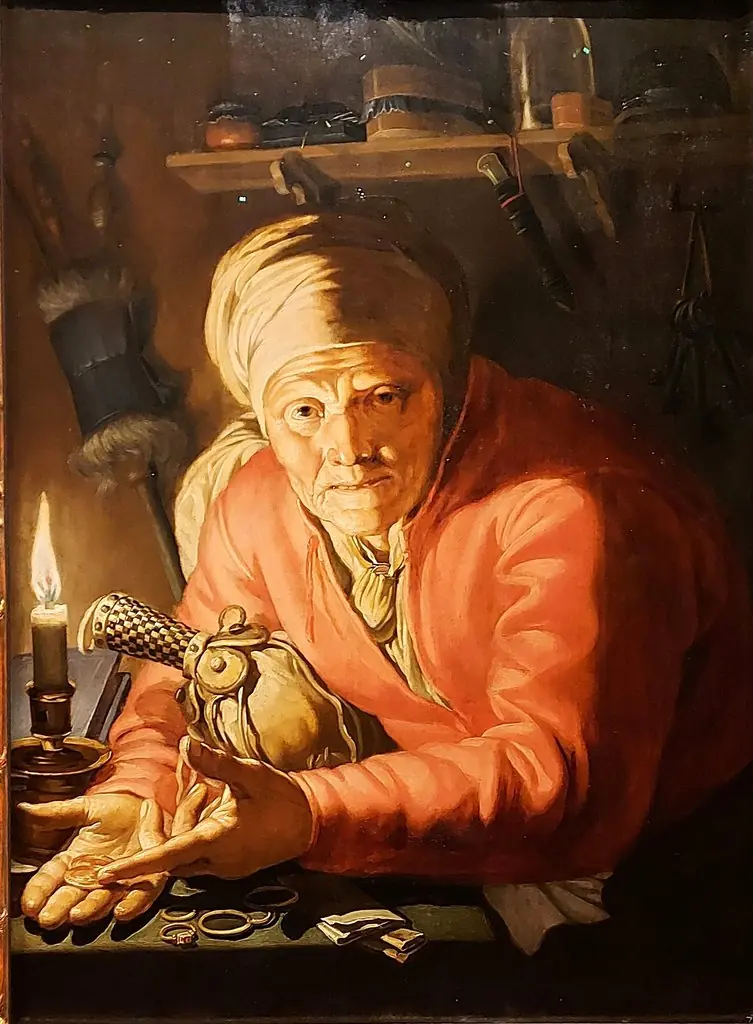
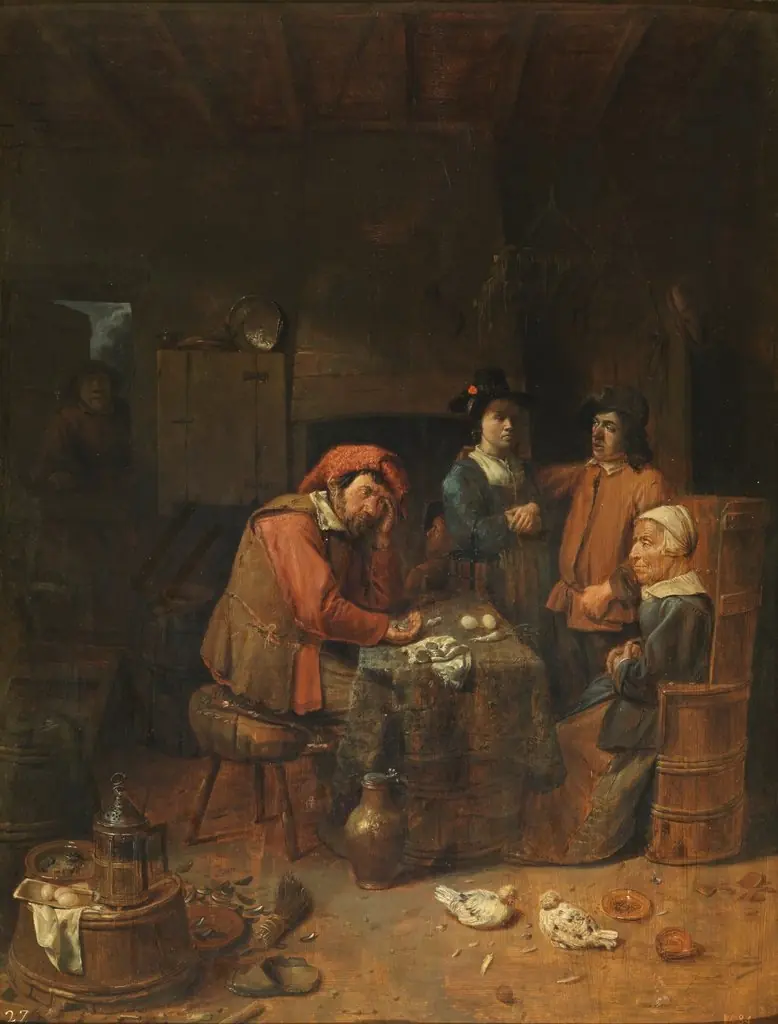
An old Woman weighing Gold: 'Avarice'
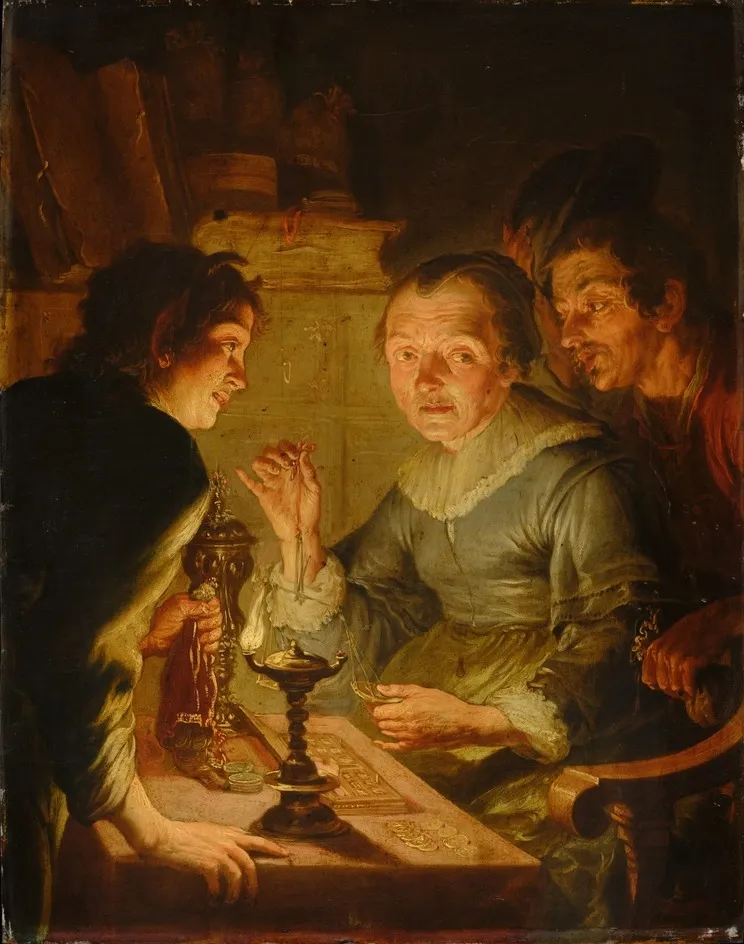
An old Woman weighing Gold: 'Avarice' is an oil painting by the Flemish Baroque painting artist Jacques de l'Ange. It dates from 1642 and is held in the collection of the Ashmolean Museum.
About this work
Overview
Created in 1642, this copper painting by the Flemish artist Jacques de l’Ange portrays an intimate interior scene centered on an elderly woman weighing gold. The composition is confined to a dimly lit room filled with assorted objects, and three figures are arranged around a small scale and a bag of coins. The work is part of the Ashmolean Museum’s collection.
Subject & Meaning
The central figure, an aged woman, carefully balances a handful of gold coins, a visual allegory for greed and the moral caution against avarice common in 17th‑century Northern European art. The surrounding figures—one observing the scale, another looking over the woman’s shoulder—reinforce the theme of scrutiny and the social implications of hoarding wealth.
Technique & Style
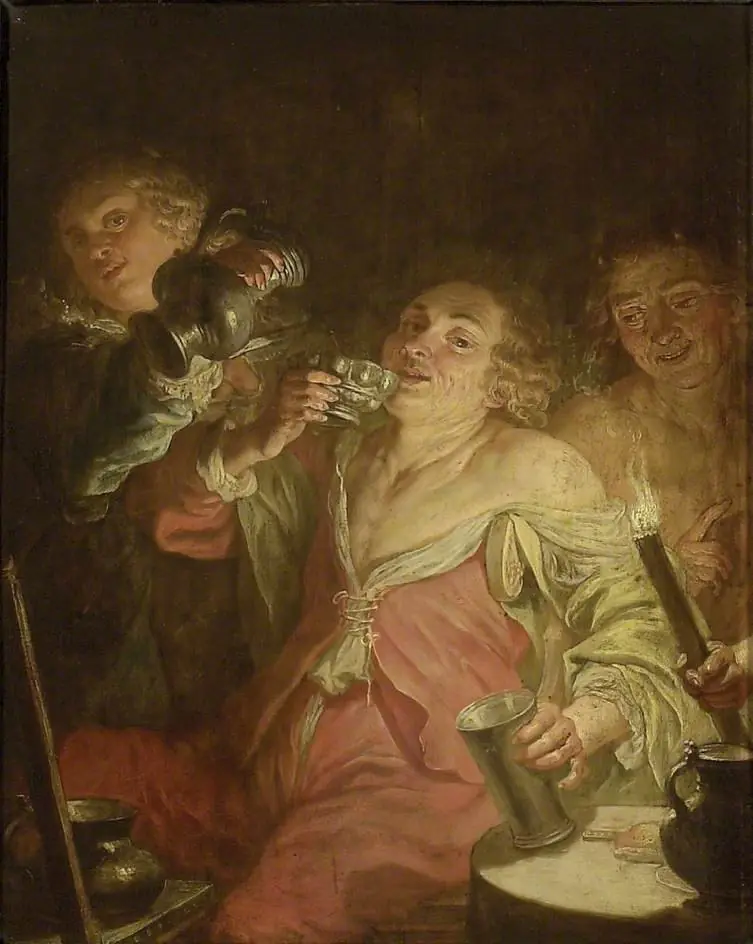
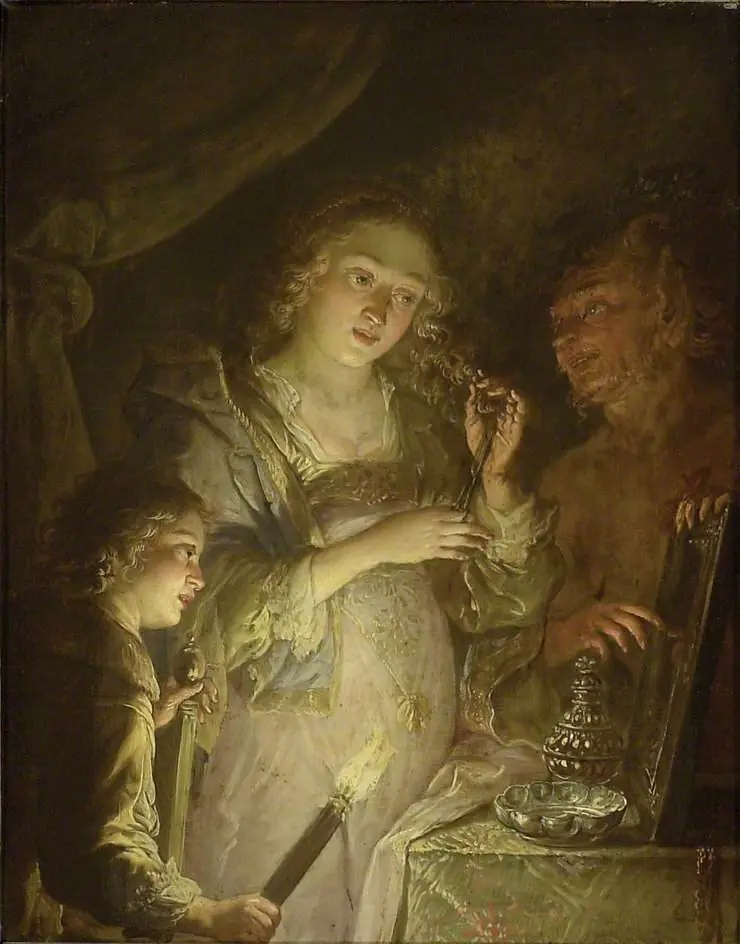
Executed on copper, the painting exhibits the precise brushwork and luminous surface typical of Flemish Baroque works influenced by Caravaggio.
Executed on copper, the painting exhibits the precise brushwork and luminous surface typical of Flemish Baroque works influenced by Caravaggio. Muted, earthy tones dominate, while a subtle, unseen light source creates a warm glow that enhances the texture of fabrics, metal, and glass. The realistic rendering emphasizes material details, from the sheen of the coins to the grain of the wooden table.
History & Provenance
Jacques de l’Ange, active in the early to mid‑1600s, was long confused with other Northern Caravaggisti until scholarly research in the 1990s clarified his individual oeuvre. The painting entered the Ashmolean Museum’s holdings through acquisition in the late 20th century, where it remains displayed as a representative example of his genre and moralizing subjects.
Context
The work reflects the broader Flemish Baroque interest in genre scenes that combine everyday life with didactic messages. By choosing a domestic setting and a modest, elderly protagonist, de l’Ange aligns with contemporary concerns about the corrupting influence of wealth, echoing similar moralizing motifs found in the period’s literature and religious discourse.
Artist & collection
Artist
Jacques de l'Ange or the Monogrammist JAD (c. 1621 – 1650) was a Flemish painter and draughtsman known for his genre scenes and history paintings executed in a Caravaggesque style. The artist was only rediscovered in…