Artwork
Suite of Vases: Plate 10
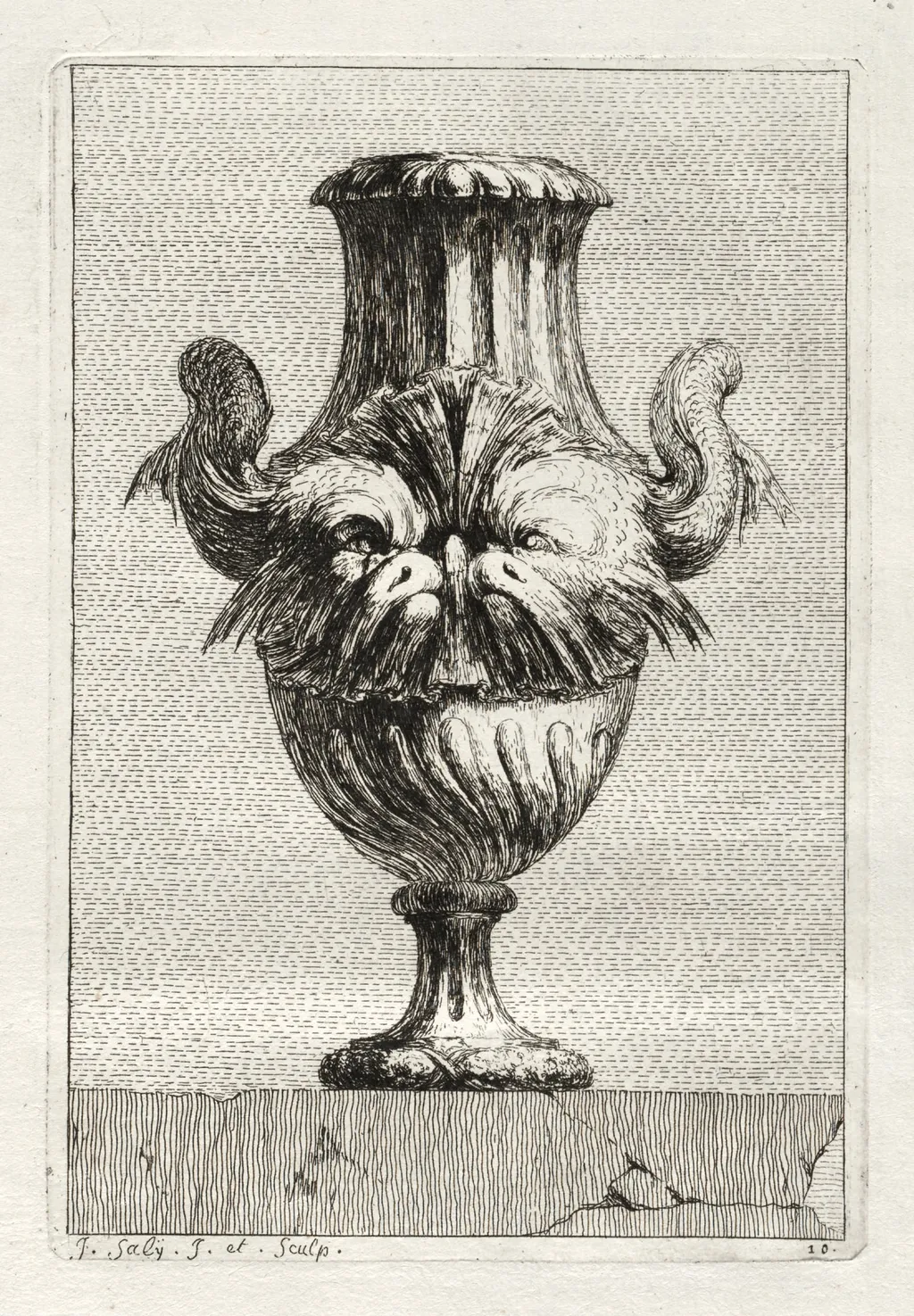
Suite of Vases: Plate 10 is a print by the Baroque artist Jacques François Saly. It dates from 1746 and is held in the collection of the Cleveland Museum of Art.
About this work
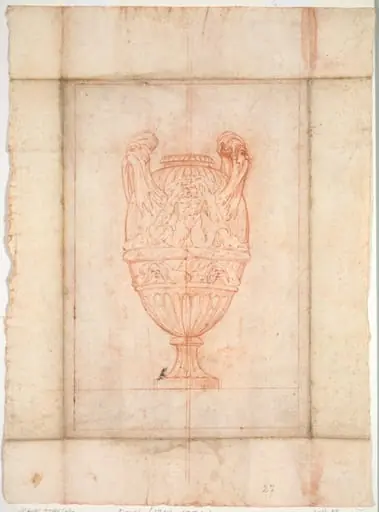
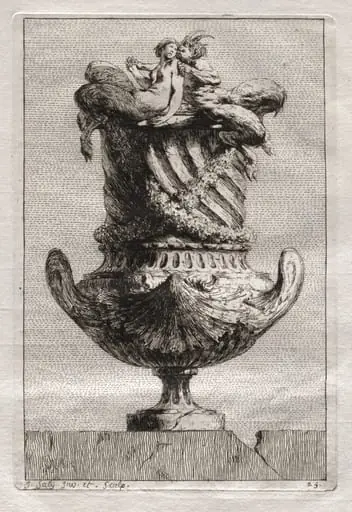
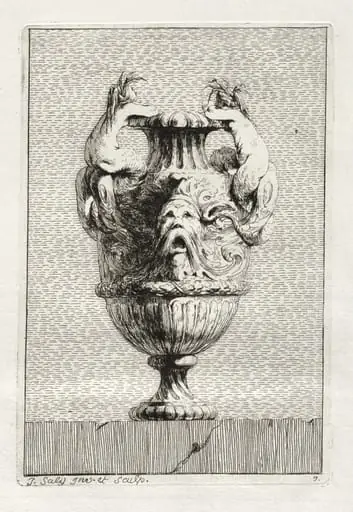
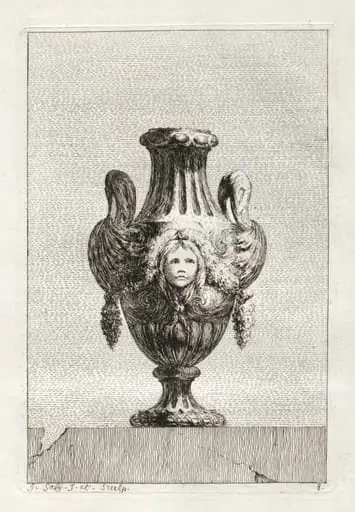
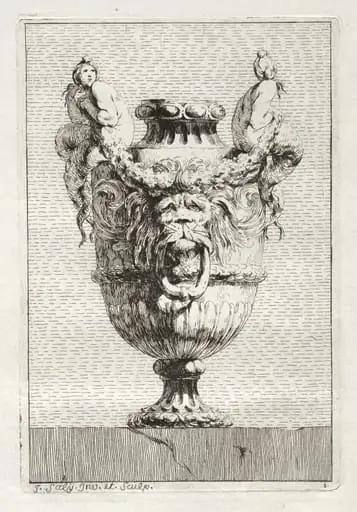
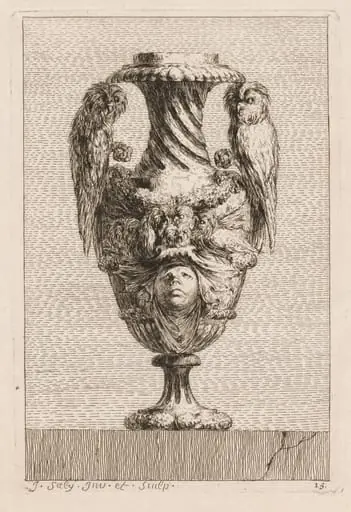
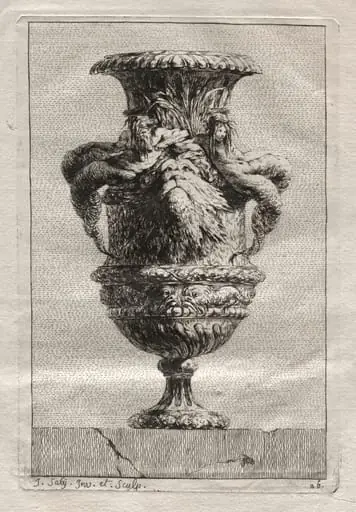
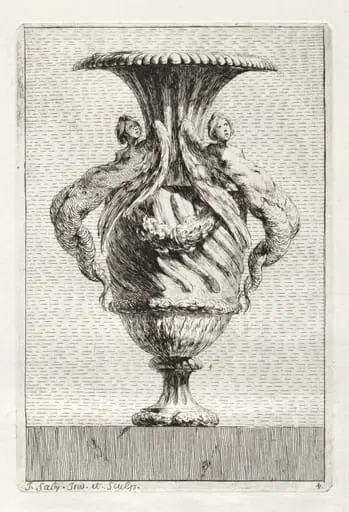
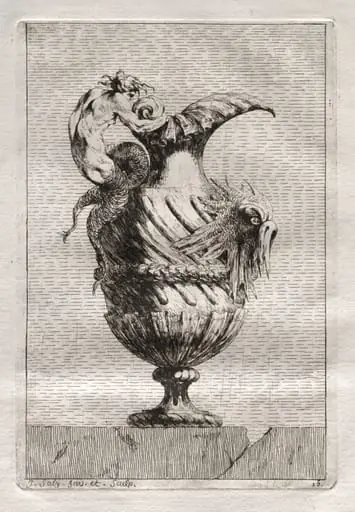
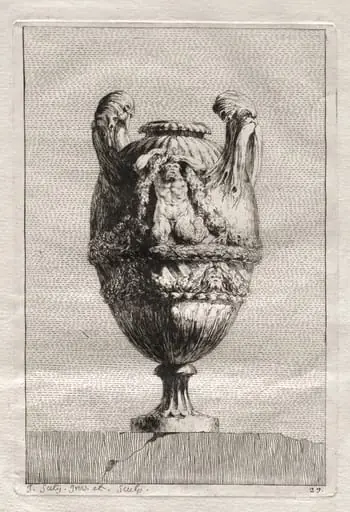
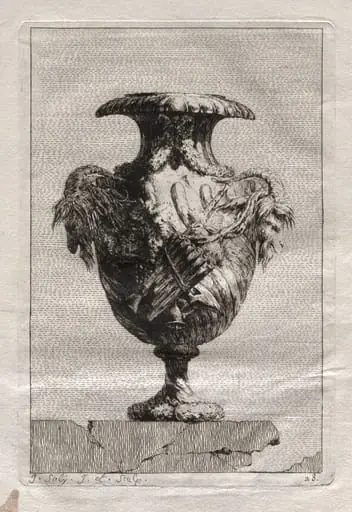
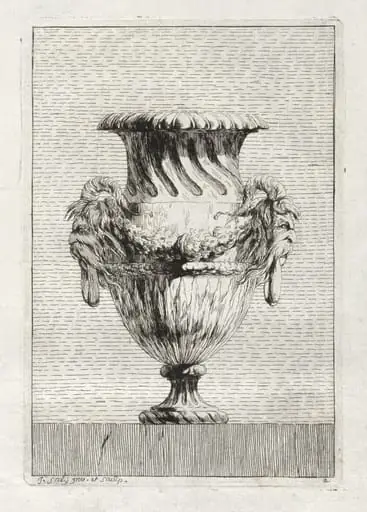
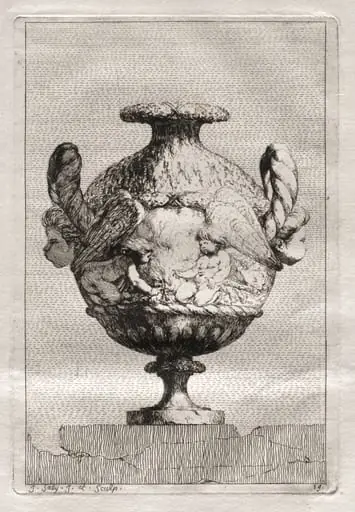
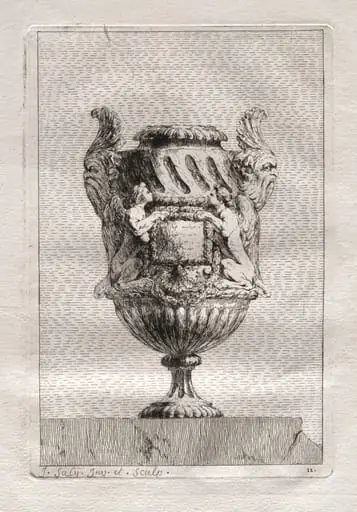
This etching shows a fancy vase covered in swirly leaves, twisting vines, and odd creatures that look half-bird, half-lizard.
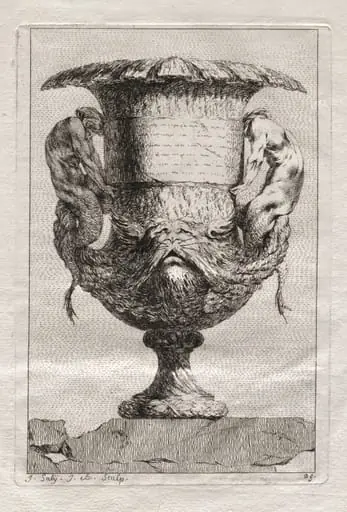
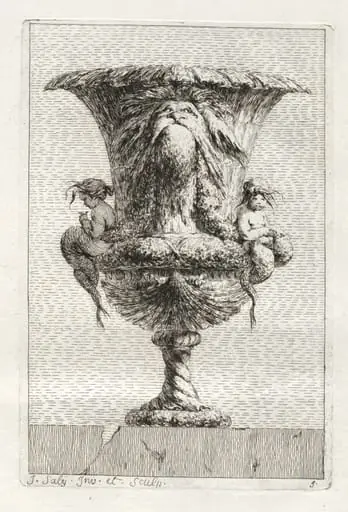
This etching shows a fancy vase covered in swirly leaves, twisting vines, and odd creatures that look half-bird, half-lizard. The artist mixed real vase shapes with wild, made-up details. Saly studied old Roman art in Rome but went off-script with his own imagination.
It’s part of a set of 30 etchings he made in 1746. Most artists stuck to classic rules back then, but Saly played with fantasy instead.
See how the lines curve and twist? It pulls your eye all over the page. Check out Jacques François Saly (French, 1717–1776) next.
Overview
Jacques François Saly created this etching in 1746 as part of a series of thirty prints featuring ornamental vase designs. Though trained as a sculptor and influenced by his time at the French Academy in Rome, Saly departed from strict classical norms to explore imaginative variations on ancient forms. The print is one of many in a published set that reflects a mid-18th-century fascination with decorative invention.
Subject & Meaning
The vase depicted combines recognizable antique silhouettes with fantastical embellishments: serpentine vines, scrolling foliage, and hybrid creatures resembling part-bird, part-lizard beings. These elements suggest a deliberate departure from archaeological accuracy, signaling an interest in whimsy and creative reinterpretation rather than faithful replication of antiquity. The imagery evokes a world where nature and myth intertwine.
Technique & Style
Saly employed fine, fluid etching lines to convey movement and complexity, guiding the viewer’s eye along twisting forms and intricate patterns. The delicate cross-hatching and rhythmic curves enhance the sense of organic growth, while the dense ornamentation contrasts with the vase’s clean silhouette. His technique balances precision with expressive freedom, characteristic of Rococo sensibilities.
History & Provenance
Saly produced the full suite of thirty etchings in 1746 after returning from his studies in Rome, where he had absorbed classical models but chose to reinterpret them freely. The prints were likely intended as design sources for artisans and collectors, circulating among European artistic circles. Their publication marked a moment when academic training began to accommodate individual fantasy over rigid adherence to tradition.
Context
In mid-18th-century Europe, antiquarianism dominated decorative arts, yet Saly’s work emerged alongside a growing appetite for the picturesque and the imaginative. While many designers clung to archaeological fidelity, his etchings aligned with emerging tastes for the exotic and the whimsical, foreshadowing later Romantic tendencies. His approach reflected a broader cultural shift toward personal expression within formal traditions.
Legacy
Saly’s etchings contributed to a broader discourse on the boundaries of classical design, influencing decorative arts beyond their immediate publication. Though not widely celebrated in his lifetime, the series demonstrated that academic training could serve as a springboard for invention rather than a constraint. His work remains a quiet testament to the creative potential within established forms.
Artist & collection
Artist
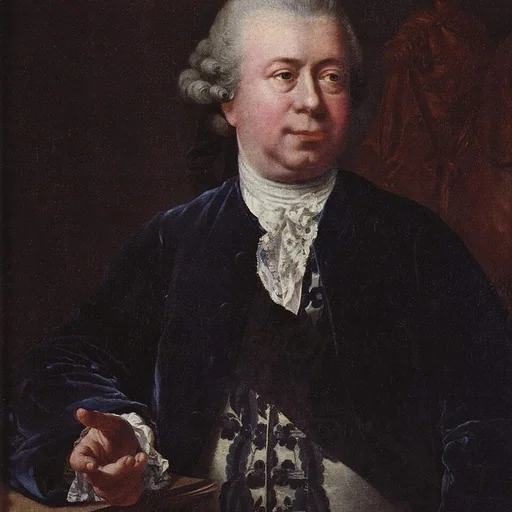
Jacques François Joseph Saly, also known as Jacques Saly (20 June 1717 – 4 May 1776), French-born sculptor who worked in France, Italy and Malta.