Artwork
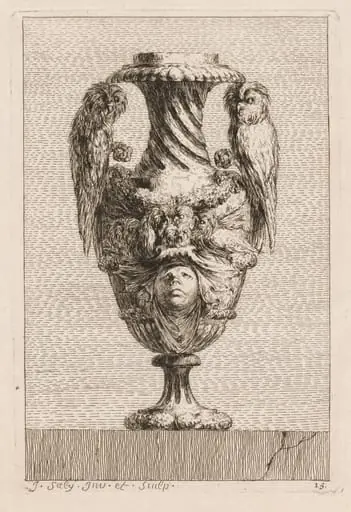
Suite of Vases: Plate 30
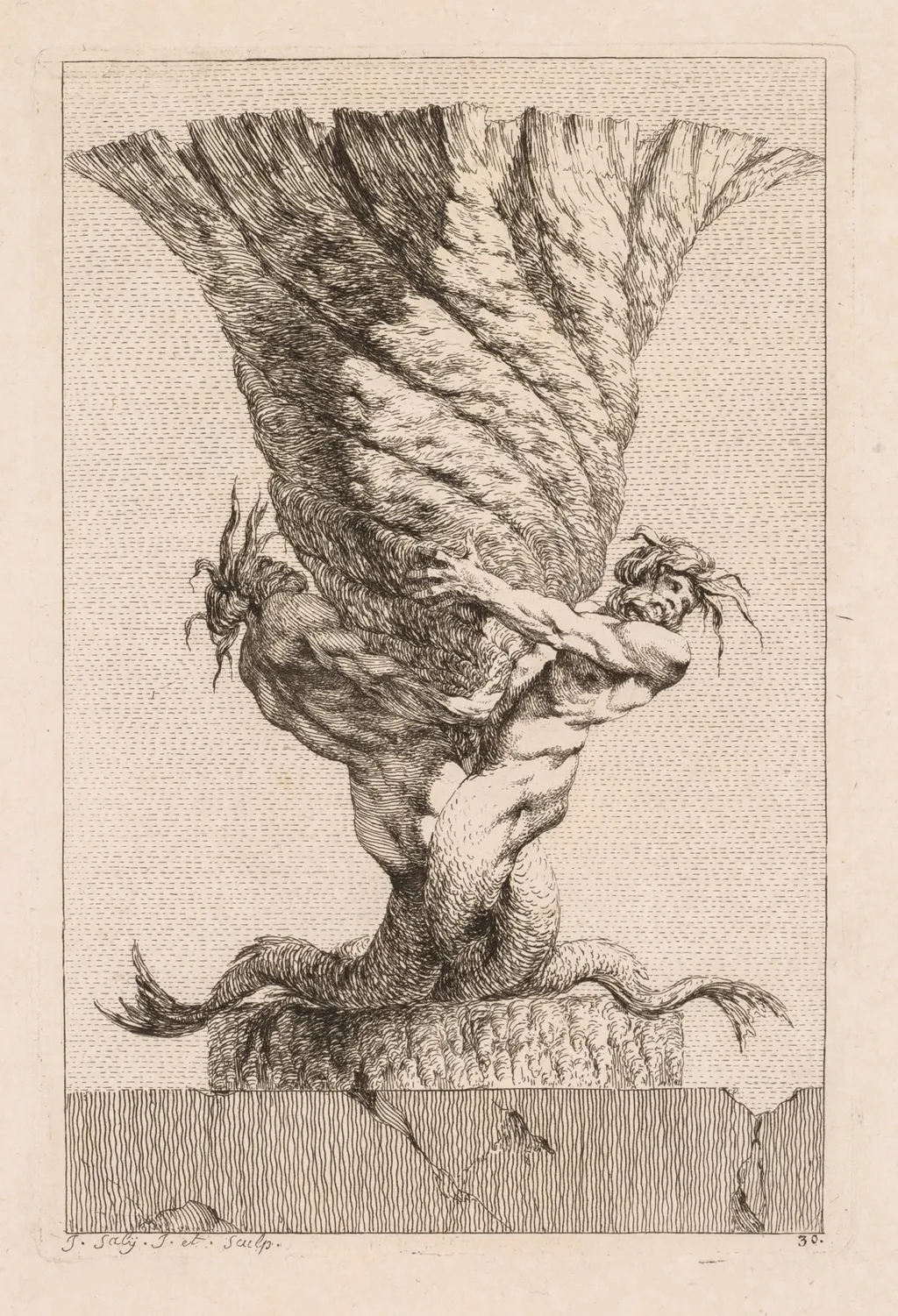
Suite of Vases: Plate 30 is a print by the Baroque artist Jacques François Saly. It dates from 1746 and is held in the collection of the Cleveland Museum of Art.
About this work
Overview
The prints were not intended as finished objects but as templates for decorative arts, offering inventive vase forms to artisans and designers.
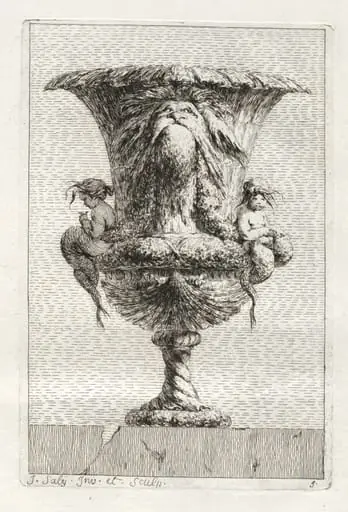
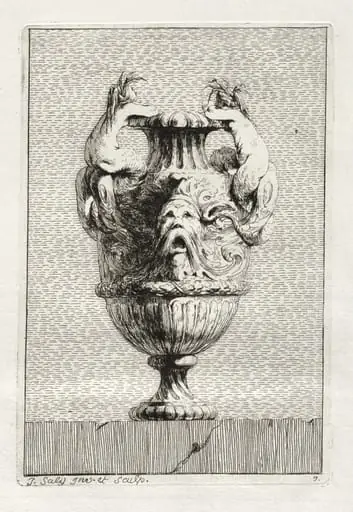
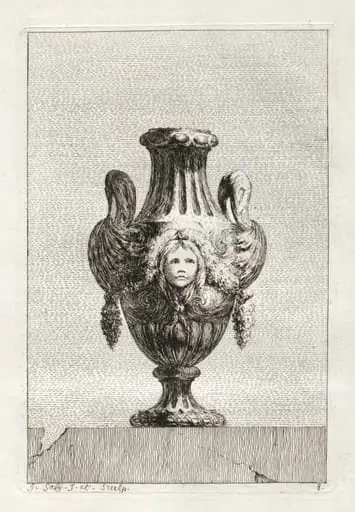
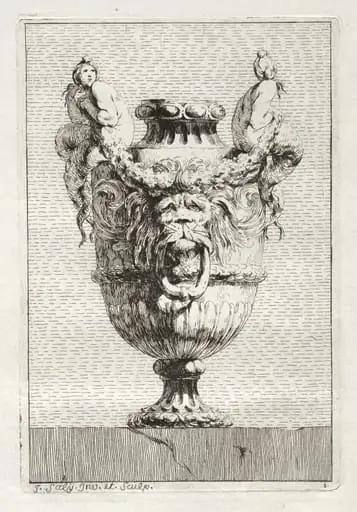
This etching is the thirtieth plate from a series of thirty designs by Jacques François Saly, published in the mid-18th century. The prints were not intended as finished objects but as templates for decorative arts, offering inventive vase forms to artisans and designers. Saly, trained as a sculptor, used etching to translate three-dimensional thinking into two-dimensional plans, blending classical structure with imaginative embellishment.
Subject & Meaning
The vase depicted combines a restrained classical silhouette with fantastical creatures—lions bearing multiple tails, avian figures with piscine fins, and other hybrid forms. These inventions reflect a period fascination with the grotesque and the marvelous, moving beyond strict archaeological accuracy. The imagery suggests a playful reimagining of antiquity, where myth and invention replace historical fidelity as sources of decorative inspiration.
Technique & Style
Saly employed fine, incised lines typical of etching to render intricate surface details with remarkable precision. His sculptural background informed the treatment of forms, giving the creatures a tactile, volumetric quality despite the flat medium. The contrast between the smooth, unadorned body of the vase and the densely carved ornamentation creates a dynamic visual rhythm, emphasizing the interplay of mass and detail.
History & Provenance
Saly created this series during his tenure as a student at the French Academy in Rome (1740–1746), where exposure to classical antiquities fueled his interest in revivalist design. The publication of the suite coincided with a broader European trend of compiling decorative motifs for studio use. Though the prints circulated widely among artists and craftsmen, no original vases based on these designs are known to survive.
Context
In mid-18th-century Europe, there was a surge in interest in antiquity as a source for decorative arts, particularly in France and Italy. While many designers sought archaeological accuracy, Saly’s suite represents a more liberal interpretation, aligning with Rococo sensibilities that favored whimsy and invention. The French Academy in Rome encouraged such exploratory work, viewing it as vital to training artists in creative adaptation rather than mere replication.
Legacy
Saly’s etchings contributed to a broader archive of design patterns used by craftsmen across Europe. Though not widely studied today, the series exemplifies how academic training in sculpture translated into print culture, influencing decorative arts beyond the confines of fine art. The work remains a testament to the fluid boundary between historical reference and creative liberty in 18th-century design practice.
Artist & collection

Artist
Jacques François Joseph Saly, also known as Jacques Saly (20 June 1717 – 4 May 1776), French-born sculptor who worked in France, Italy and Malta.

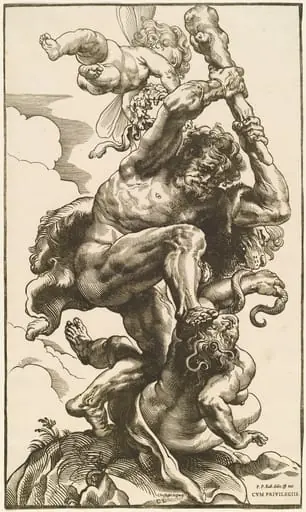 Hercules Fighting the Fury and the Discord
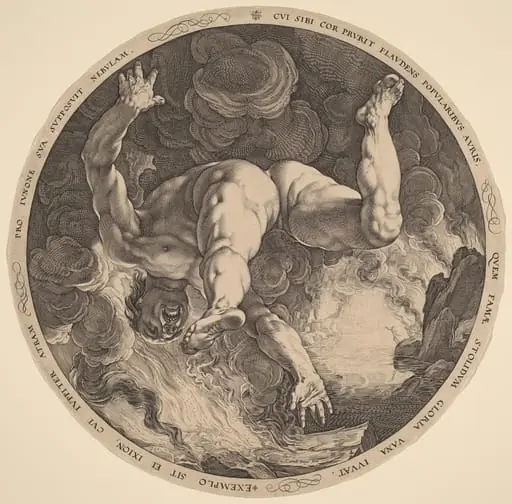 Ixion
Ixion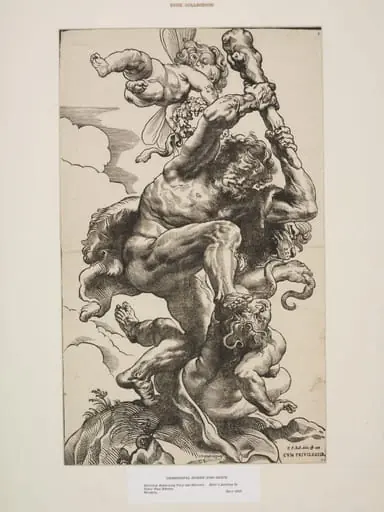 Hercules Exterminating Fury and Dischord
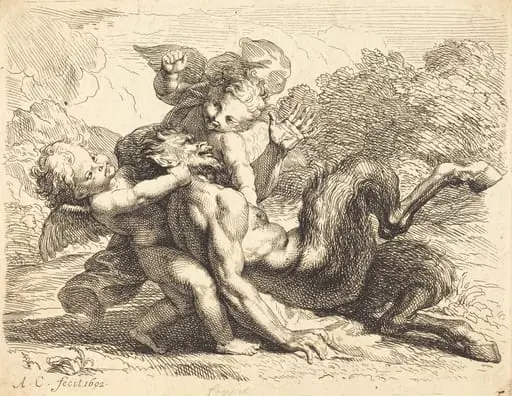 Pan Overcome by Putti
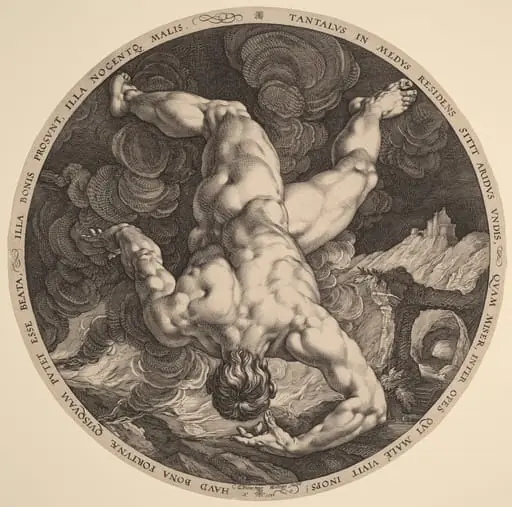 Tantalus
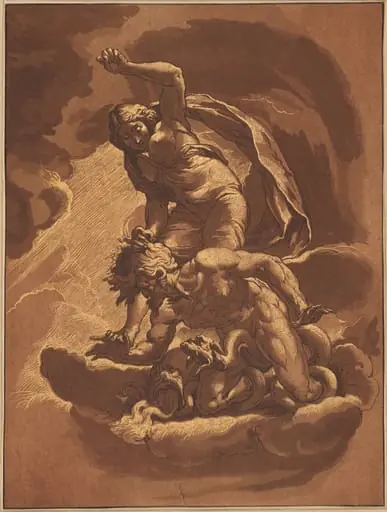 The Triumph of Truth Over Envy
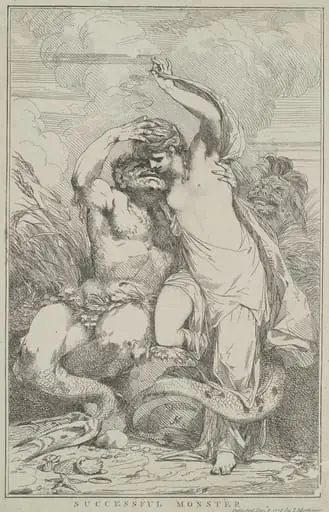 Successful Monster
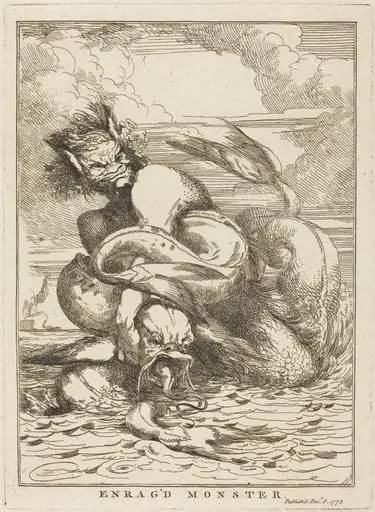 Enrag'd Monster
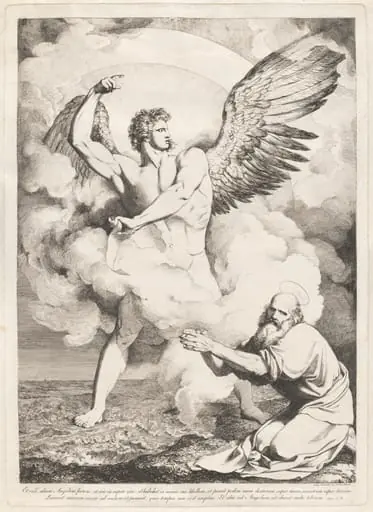 Et vidi alium angelum fortem... (The Angel of the Apocalypse Appearing to Saint John)
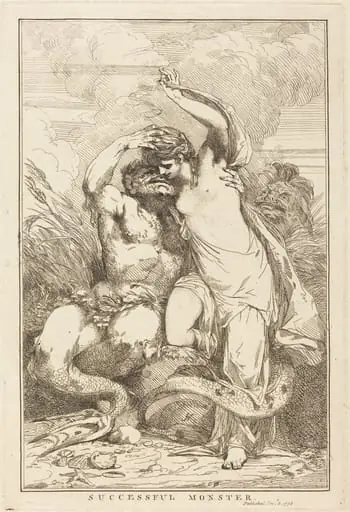 Successful Monster
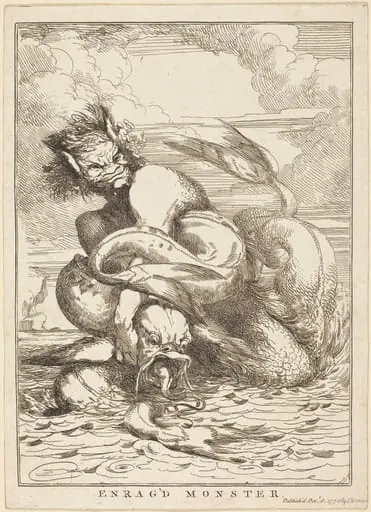 Enrag'd Monster
 Jason and the Dragon