Artwork
Untitled
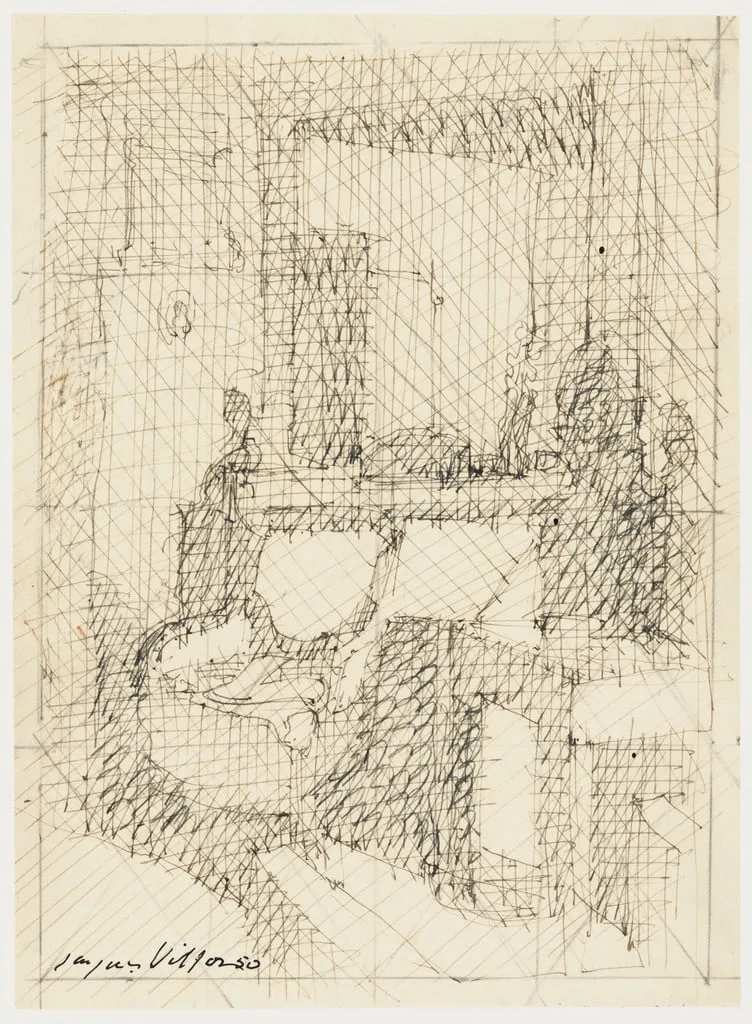
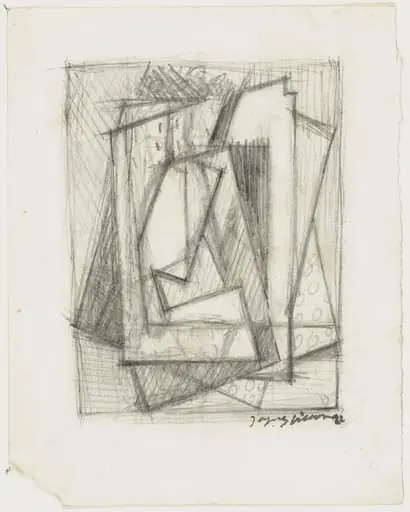
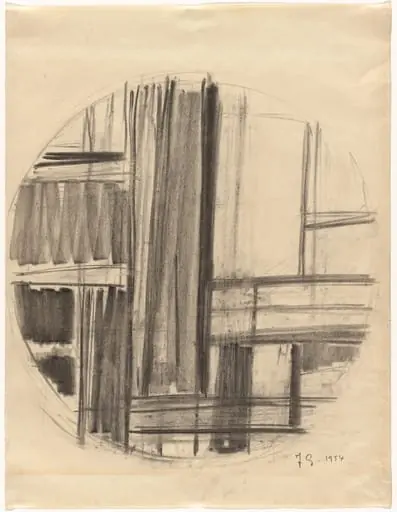
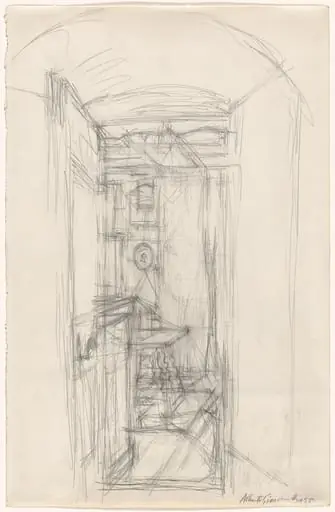
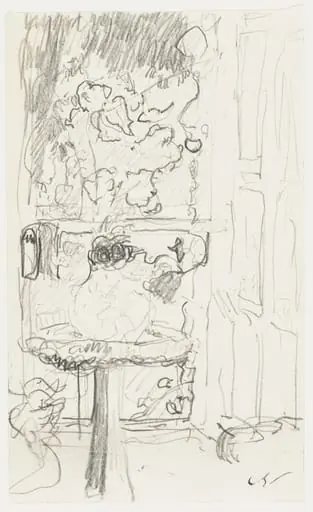
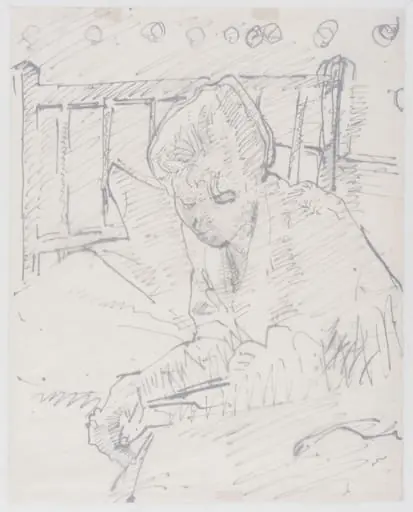
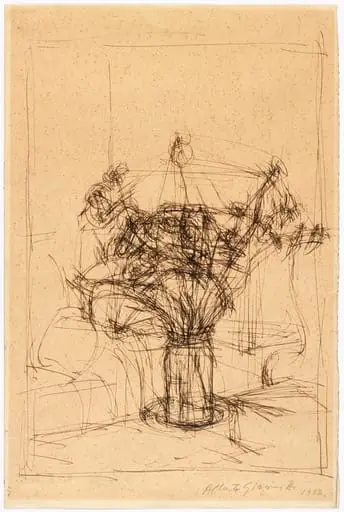
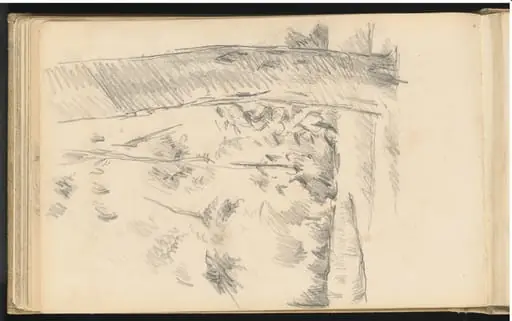
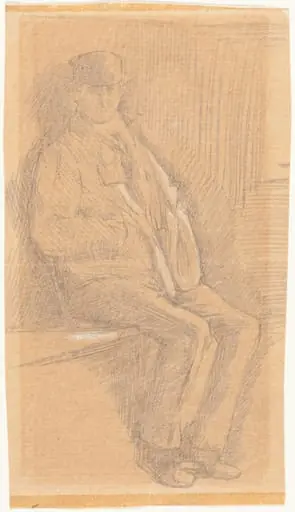
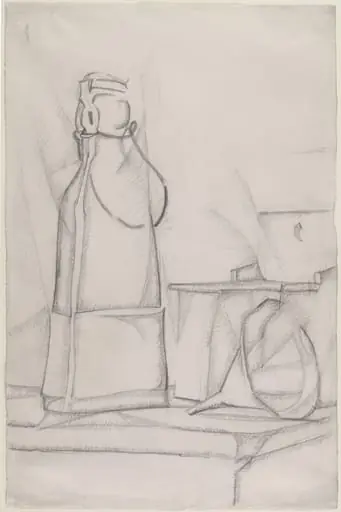
Untitled is an ink drawing by Jacques Villon. It dates from 1950 and is held in the collection of the Museum of Modern Art.
About this work
Overview
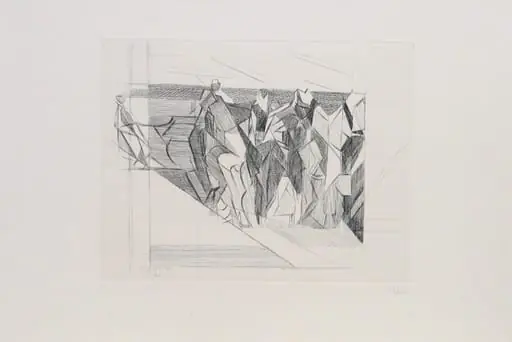
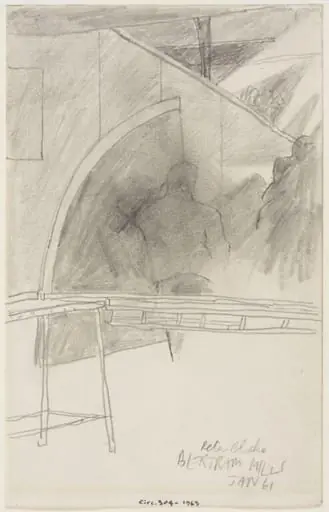
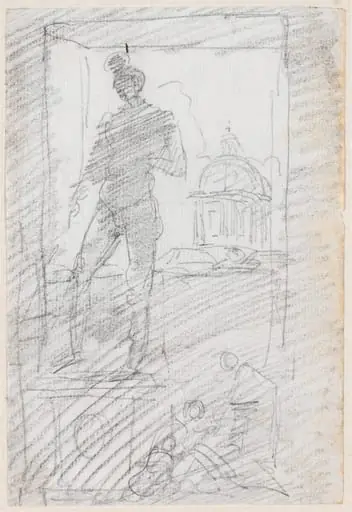
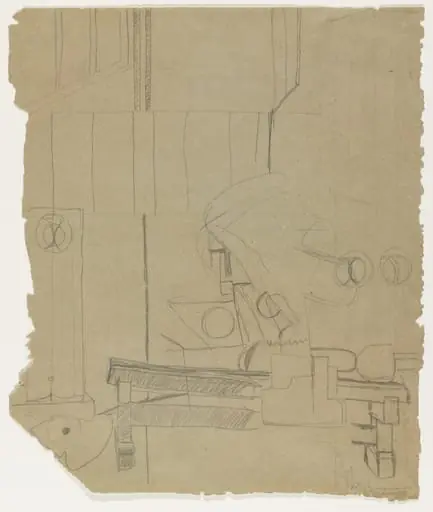
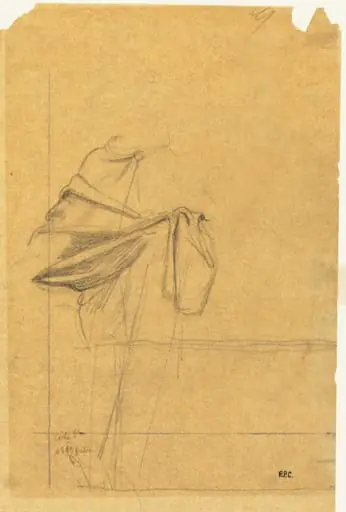
Created in 1950, this ink drawing by Jacques Villon is part of The Museum of Modern Art’s collection. Executed on paper, it presents an interior space rendered with dense, layered strokes. The composition lacks clear boundaries, suggesting a space in flux rather than a defined room. The work reflects Villon’s continued engagement with abstraction and the expressive potential of line.
Subject & Meaning
The drawing depicts a domestic interior—bed, chair, and table—suggested through fragmented contours rather than defined forms. The absence of clear outlines and the blurring of objects imply a psychological or emotional state rather than a literal scene. The space feels inhabited not by people, but by the residue of movement and memory, as if the room retains the energy of past activity.
Technique & Style
Villon employed rapid, overlapping ink strokes to build form and texture. Cross-hatching and dense linework create depth and shadow, while areas of lighter wash suggest ambient light filtering through the clutter. The contrast between thick, gestural lines and delicate, fine marks generates visual rhythm. The technique avoids precision, favoring spontaneity and accumulation to convey atmosphere.
History & Provenance
Though less publicized than his Cubist works from the 1910s, this late piece reflects his enduring interest in drawing as a direct, unmediated medium.
The drawing entered The Museum of Modern Art’s collection in the mid-20th century, following Villon’s established reputation as a key figure in early modernist movements. Though less publicized than his Cubist works from the 1910s, this late piece reflects his enduring interest in drawing as a direct, unmediated medium. Its acquisition aligns with the museum’s broader interest in postwar European abstraction.
Context
Made during Villon’s later years, this work emerges after decades of involvement with avant-garde circles, including Cubism and the Section d’Or. By 1950, many of his contemporaries had moved toward pure abstraction, yet Villon retained a connection to recognizable forms. This drawing bridges his earlier structural concerns with a more intuitive, expressive approach characteristic of mid-century European drawing practices.
Legacy
The drawing exemplifies Villon’s lifelong commitment to drawing as a primary mode of inquiry. Its energetic mark-making influenced later generations interested in the emotional weight of line and the autonomy of the sketch. Though not widely reproduced, it remains a quiet testament to his belief in the expressive power of the handmade mark over polished finish.
Artist & collection

Artist
Jacques Villon, also known as Gaston Duchamp, was a French Cubist and abstract painter and printmaker.