Artwork
Nieder-oesterreich, Benedictinerstift Melk
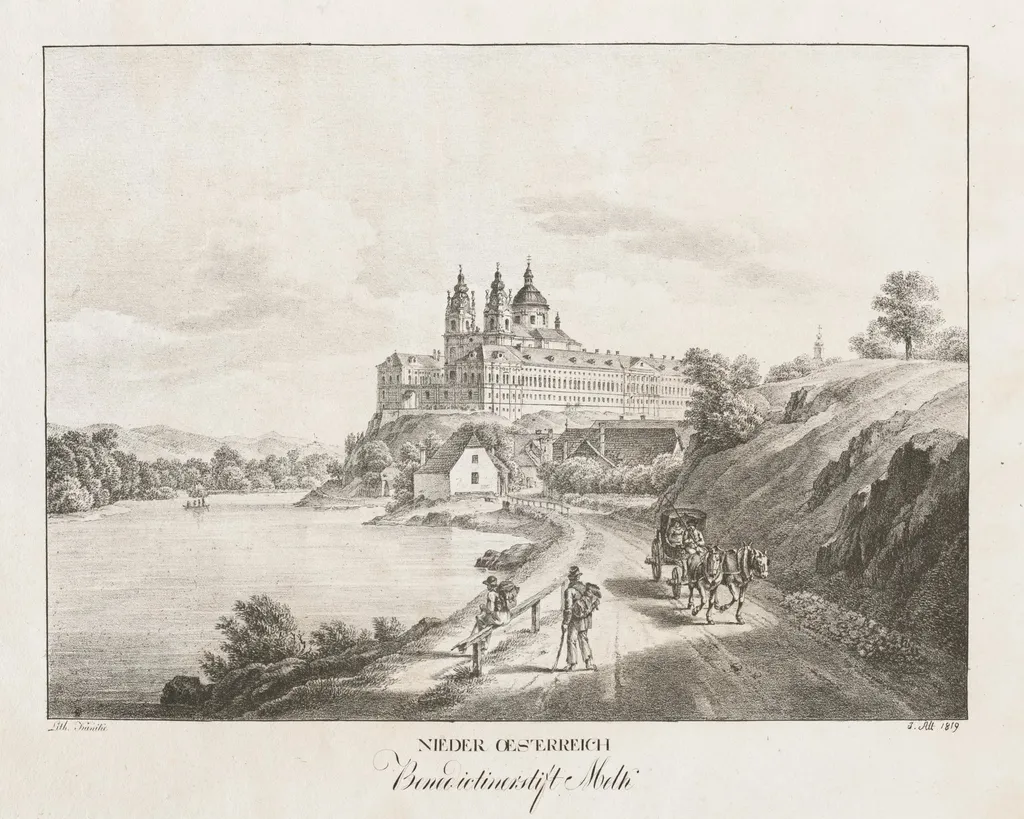
Nieder-oesterreich, Benedictinerstift Melk is a print by the Romanticist artist Jakob Alt. It dates from 1819 and is held in the collection of the Cleveland Museum of Art.
About this work
In the foreground, a river winds past small houses and a few people—some walking, one riding in a horse-drawn carriage.
This print shows a grand building perched on a hill, with twin towers and lots of windows. In the foreground, a river winds past small houses and a few people—some walking, one riding in a horse-drawn carriage. Trees line the banks, and the whole scene is drawn in black and white with fine details.
The text at the bottom names the place: *Benedictinerstift Melk*, a monastery in Austria. The artist, Jakob Alt, made this in 1819, focusing on how humans and nature fit together.
Next, look up Romanticism to see how this style valued big landscapes and emotional scenes.
Overview
Created in 1819 by Jakob Alt, this black-and-white print depicts the Benedictine Abbey of Melk in Lower Austria. Rendered with precise linework, the scene captures the monastery perched atop a rocky bluff overlooking the Danube River. Small human figures and a horse-drawn carriage in the foreground ground the monumental architecture in everyday life. The work is part of the collection at The Cleveland Museum of Art and reflects Alt’s interest in topographical accuracy combined with atmospheric detail.
Subject & Meaning
The print centers on Melk Abbey, a centuries-old religious institution that dominated the Austrian landscape both spiritually and physically. Alt frames the structure not as an isolated monument but as part of a living environment—surrounded by dwellings, pathways, and river traffic. This integration suggests a quiet harmony between sacred authority and rural existence, emphasizing continuity rather than grandeur alone.
Technique & Style
Alt employed fine, controlled etching lines to render textures of stone, foliage, and water with clarity. The composition balances verticality—the abbey’s towers—with the horizontal flow of the river and foreground elements. Shading is subtle, relying on line density rather than tone, creating depth without dramatic contrast. The absence of color focuses attention on form, structure, and the interplay of natural and built environments.
History & Provenance
Alt produced this print during a period of increased interest in documenting Austrian landmarks, following the Napoleonic Wars. It was likely made as part of a series of regional views intended for scholarly or tourist audiences. The work entered The Cleveland Museum of Art’s collection in the 20th century, where it remains a key example of early 19th-century Austrian topographical printmaking.
Context
Emerging in the early Romantic era, Alt’s work aligns with a broader European trend of observing nature and architecture with renewed attention to detail and mood. Unlike overtly dramatic Romantic landscapes, his approach is restrained, favoring observation over emotion. This reflects a regional Austrian tradition of cartographic precision, where landscape served both documentary and cultural memory functions.
Legacy
Alt’s print contributes to a visual record of Austrian monastic life during a time of political and social transition. Its quiet realism influenced later topographical artists and remains a reference for historians studying the physical and cultural landscape of the Danube region. The work endures not for spectacle, but for its faithful, measured depiction of place and presence.
Artist & collection


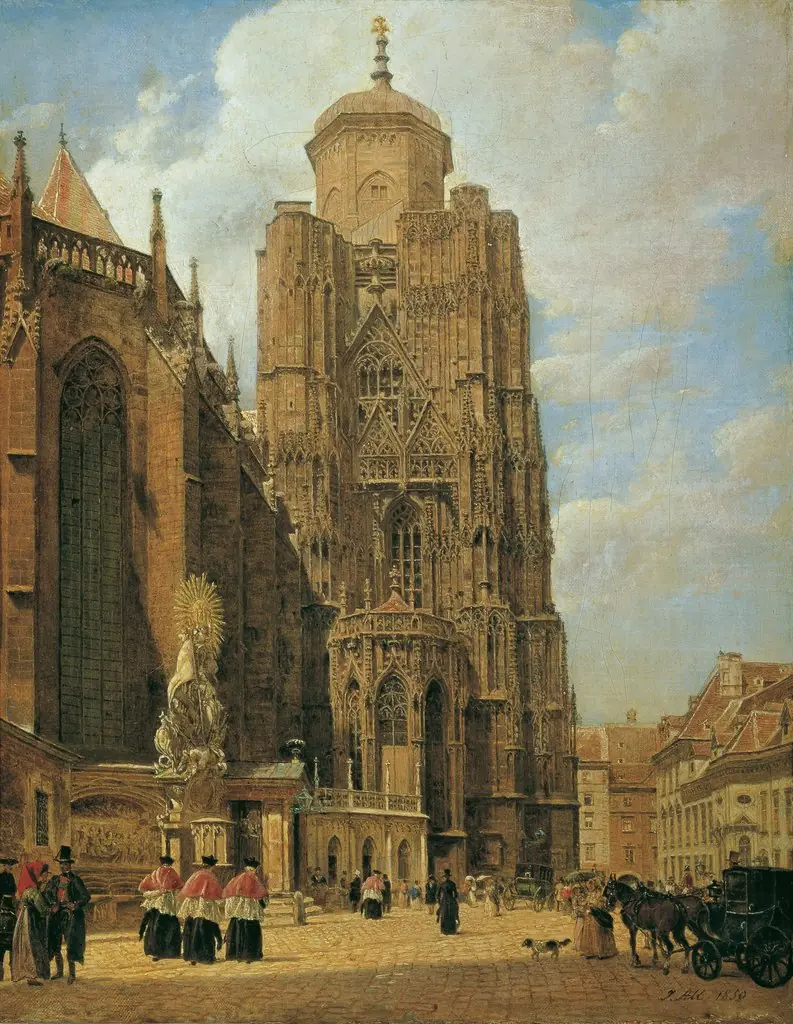 St. Stephen's Cathedral in Vienna
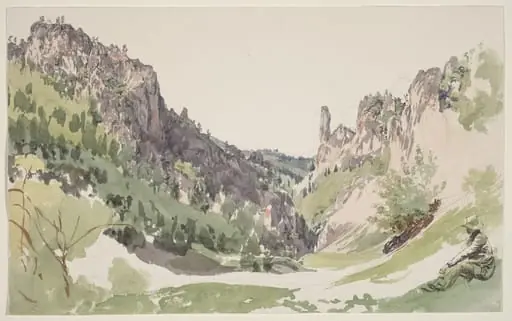 A Seated Man Contemplating a Sunlit Mountain Valley
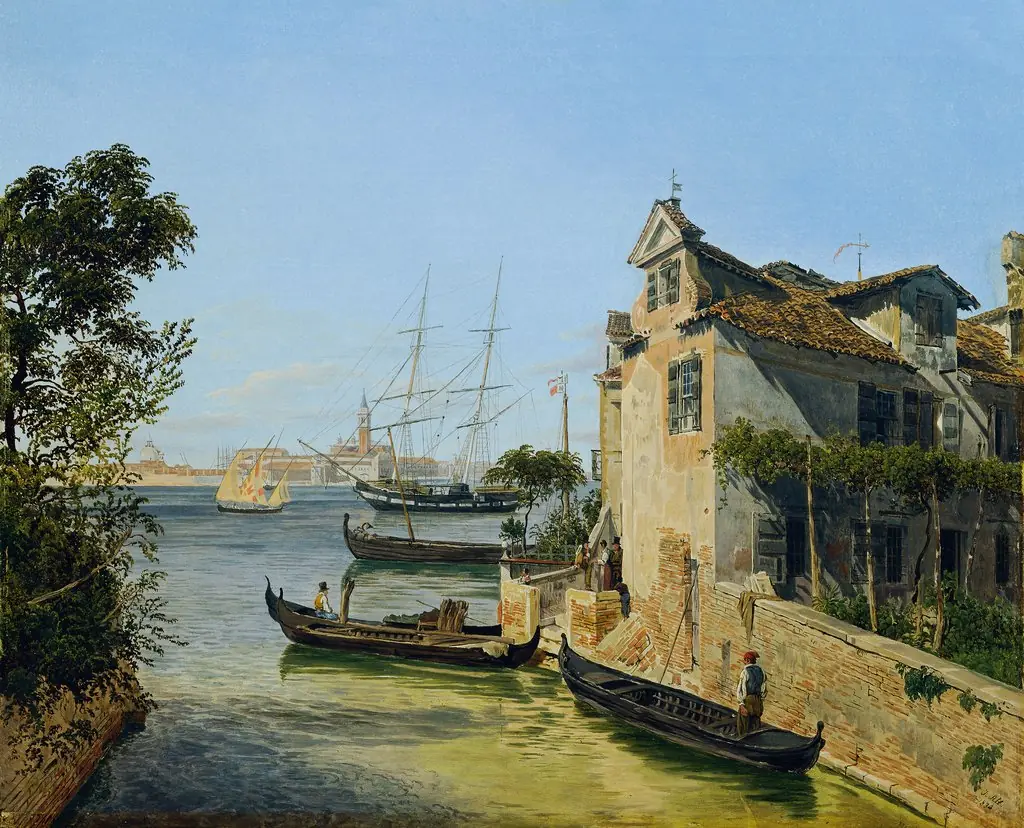 View of San Giorgio Maggiore in Venice
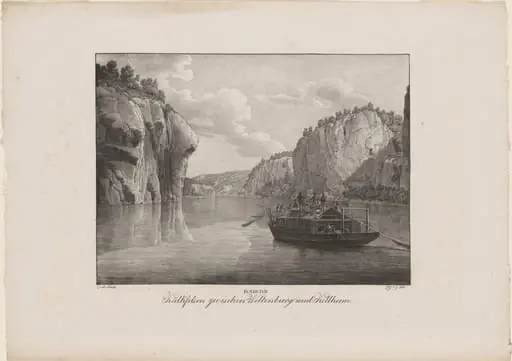 Baiern, Kalkfelsen zwischen Weltenburg und Kellheim (Bavaria, Chalk Cliffs between Weltenburg and Kellheim)
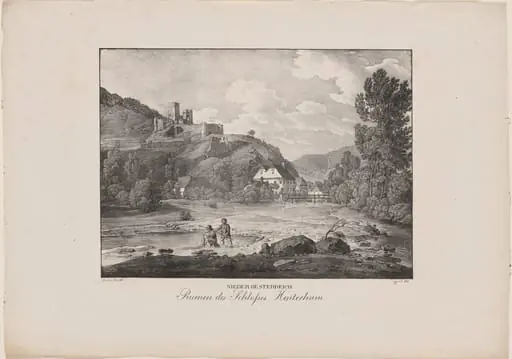 Nieder-Oesterreich, Ruinen des Schlosses Hinterhaus (Lower Austria, Ruins of Hinterhaus Castle)
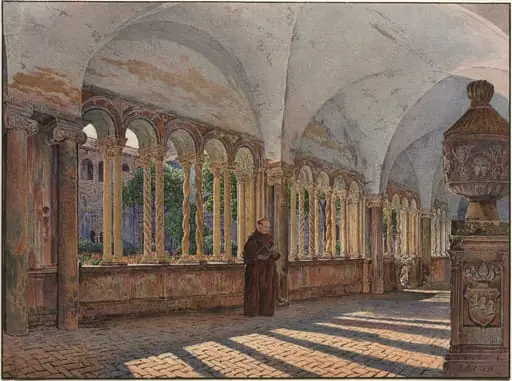 View of the Cloister of San Giovanni in Laterano, Rome
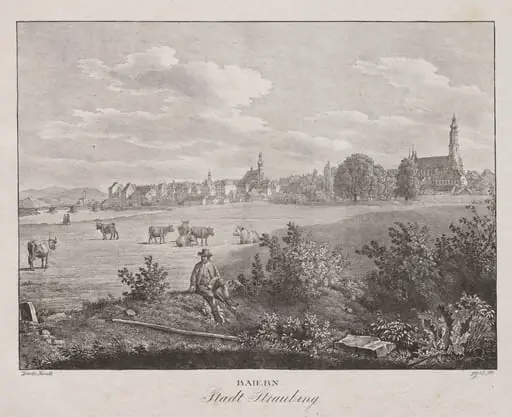 Baiern, Stadt Straubing
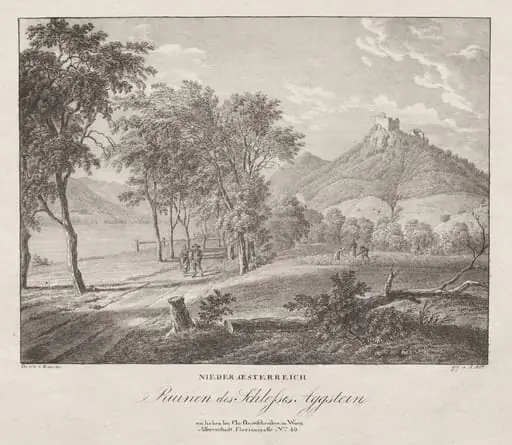 Nieder-oesterreich, Ruinen des Schlosses Aggenstein
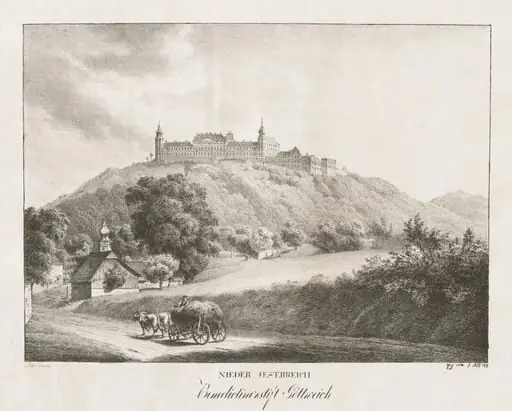 Nieder-oesterreich, Benedictinerstift Gottereich
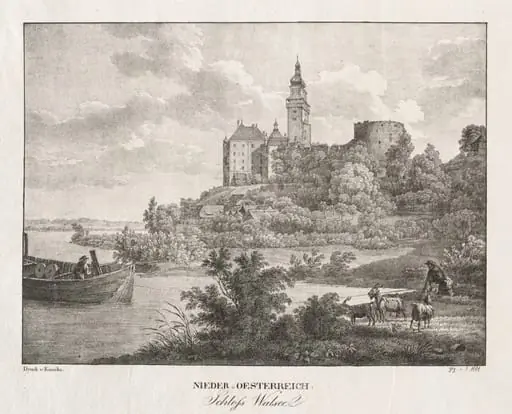 Nieder-oesterreich, Schloss Walseel
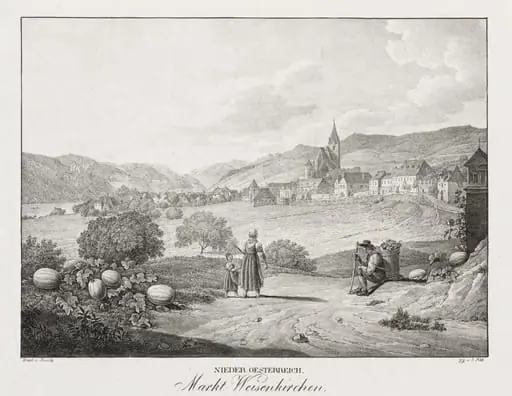 Nieder-oesterreich, Markt Weisenkirchen
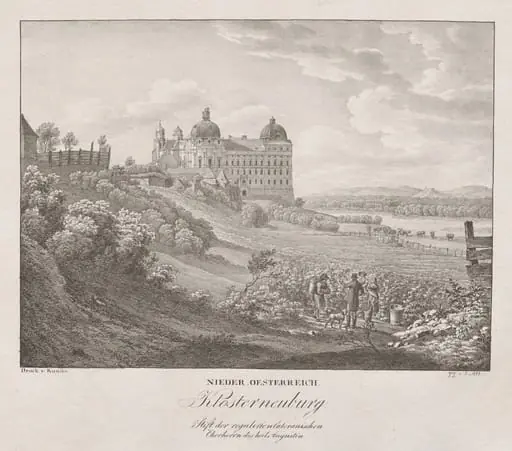 Nieder-oesterreich, Klosterneuberg
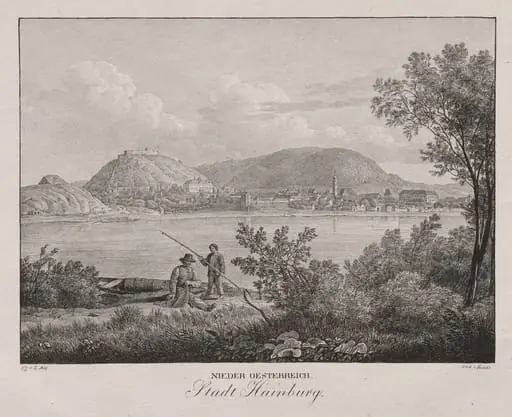 Nieder-oesterreich, Stadt Hainburg
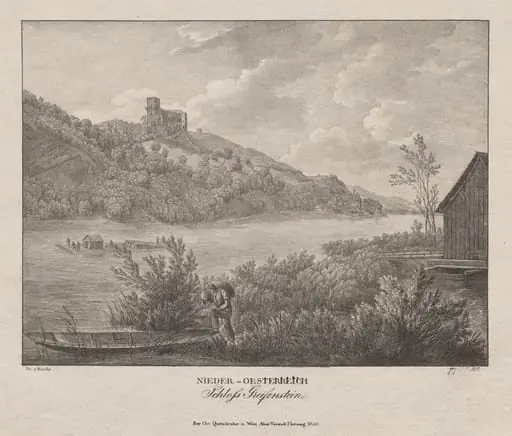 Nieder-oesterreich, Schloss Greifenstein
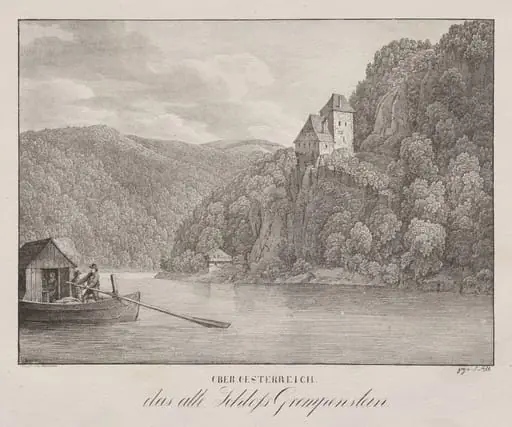 Nieder-oesterreich, Das Alte Schloss Grempenstein
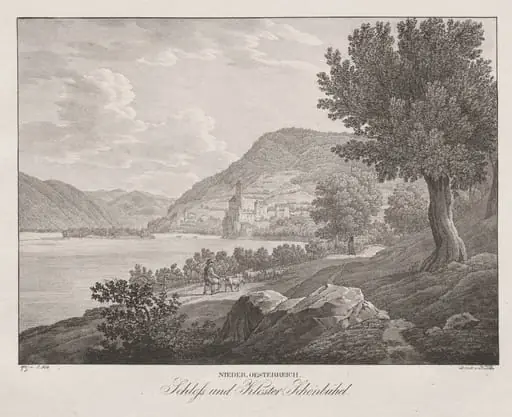 Nieder-oesterreich, Schloss und Kloster Schönbühel
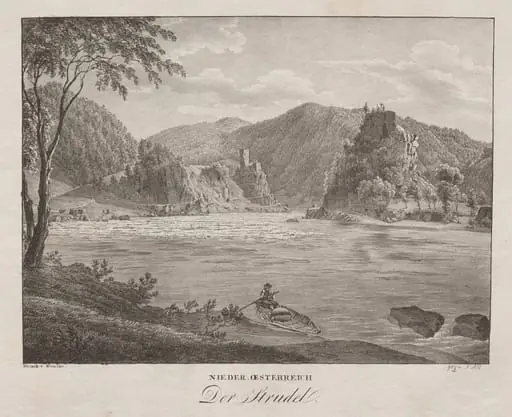 Nieder-oesterreich, Der Strudel
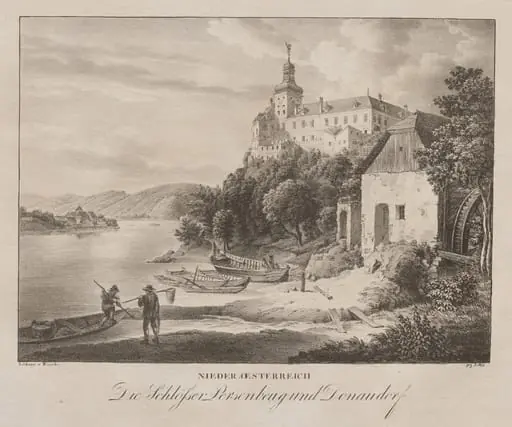 Nieder-oesterreich, Die Schlosser Persenbeug
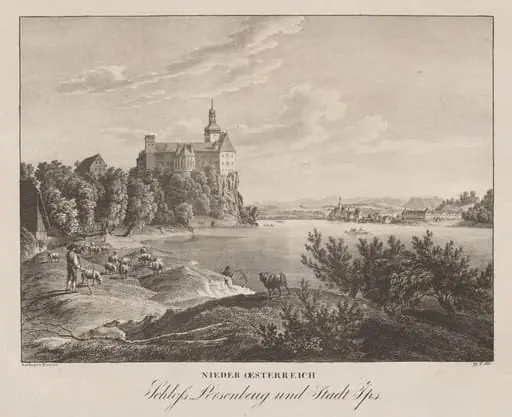 Nieder-oesterreich, Schloss Persenbeug und Stadt Ips