Artwork
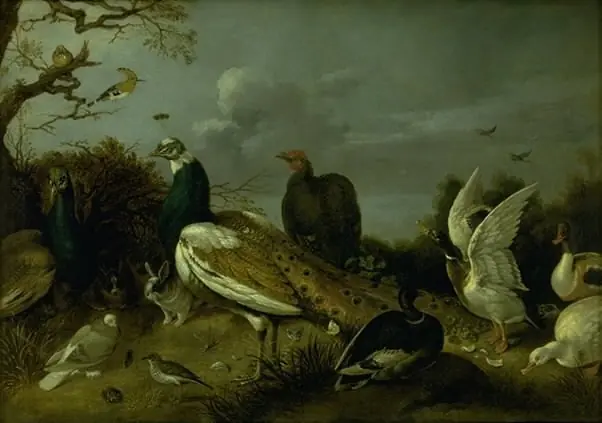
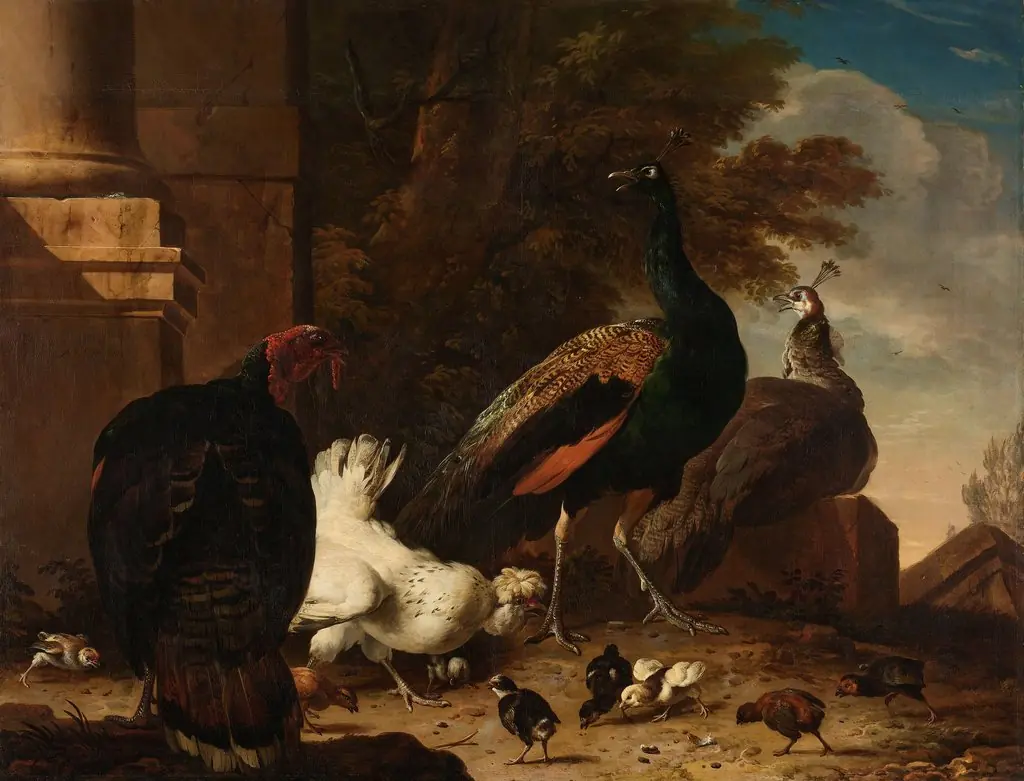
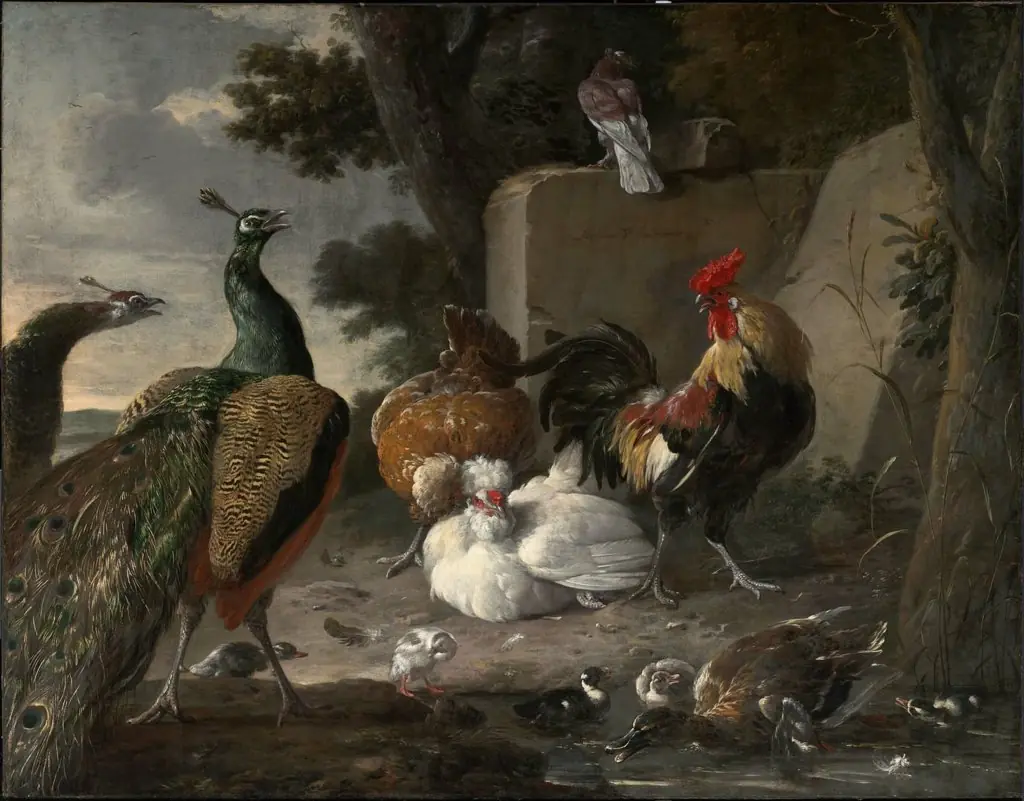
Peacock with Geese and Hen
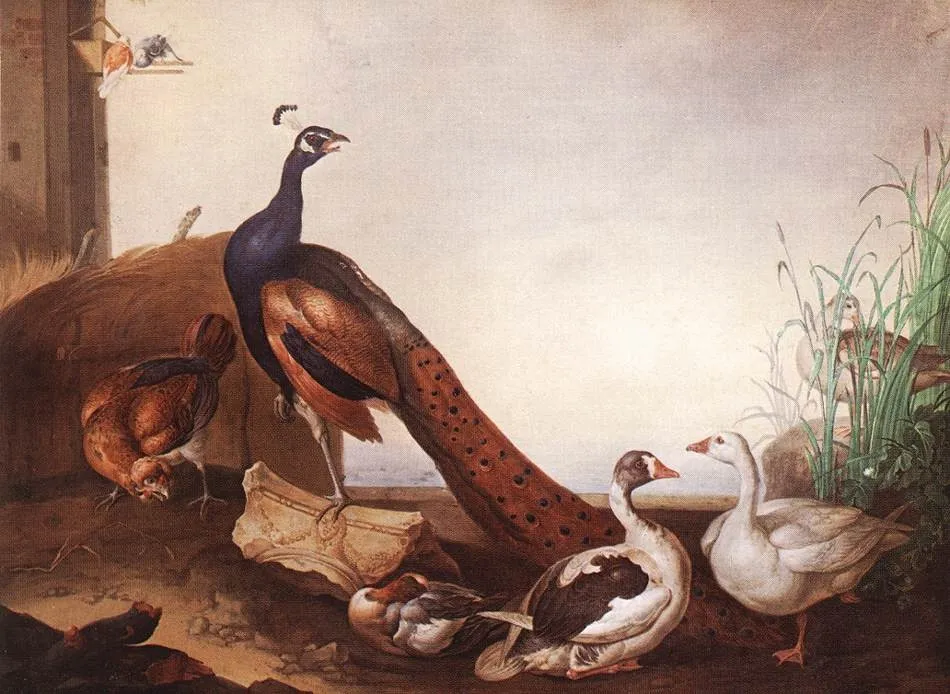
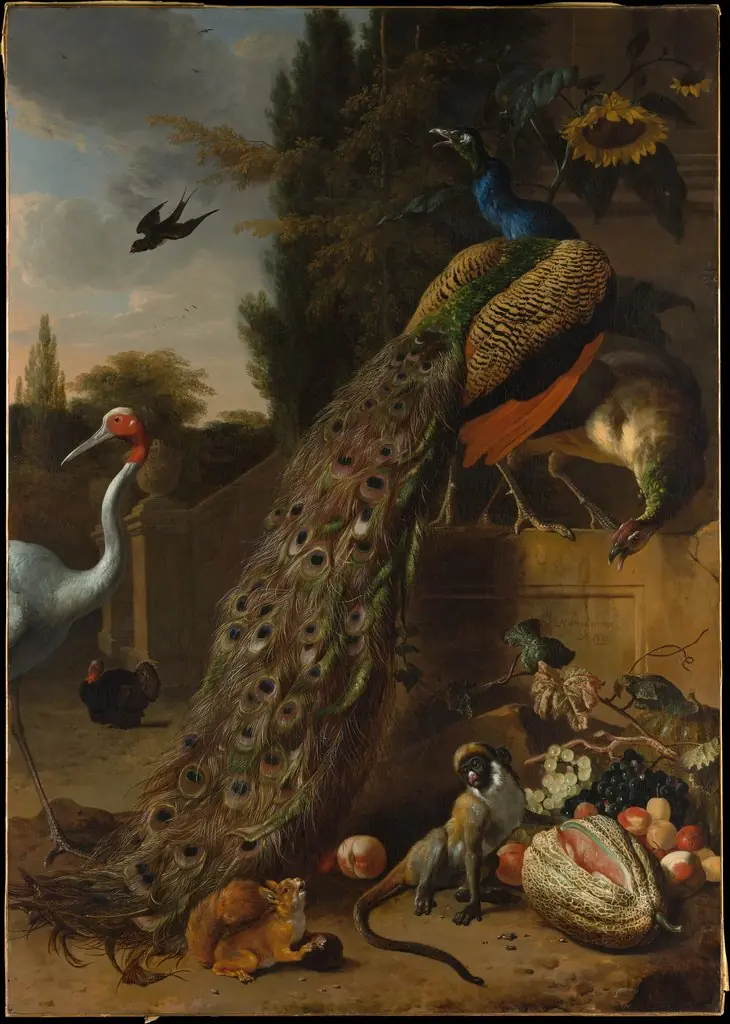
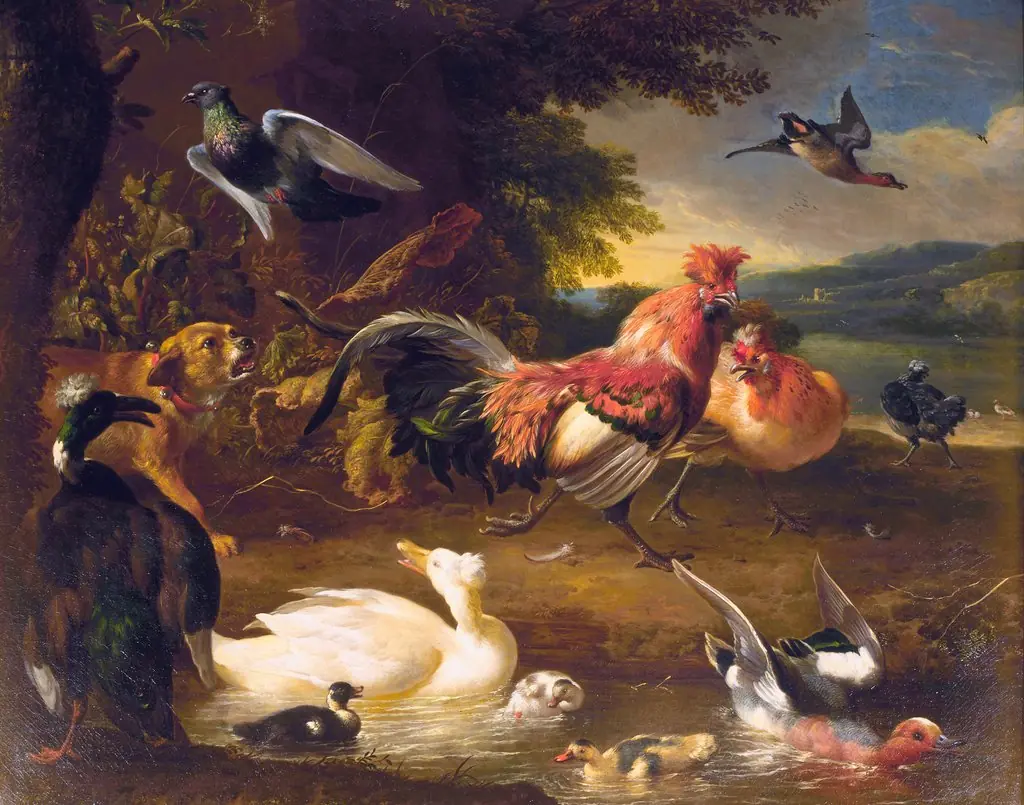
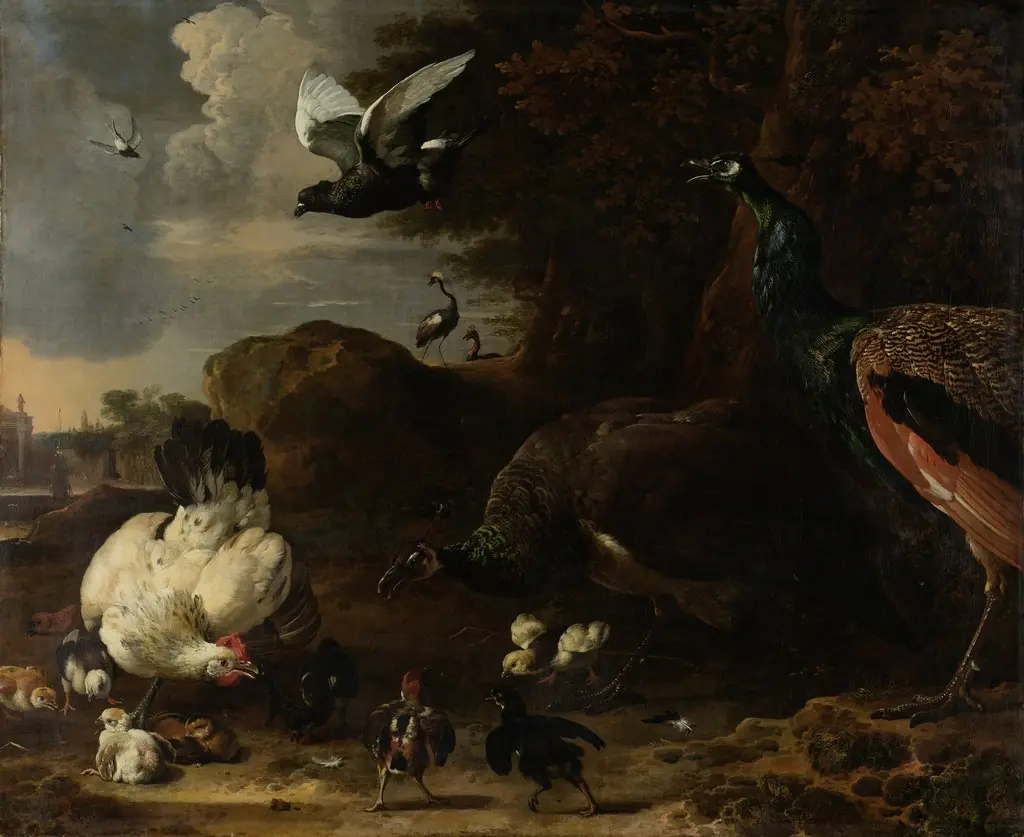
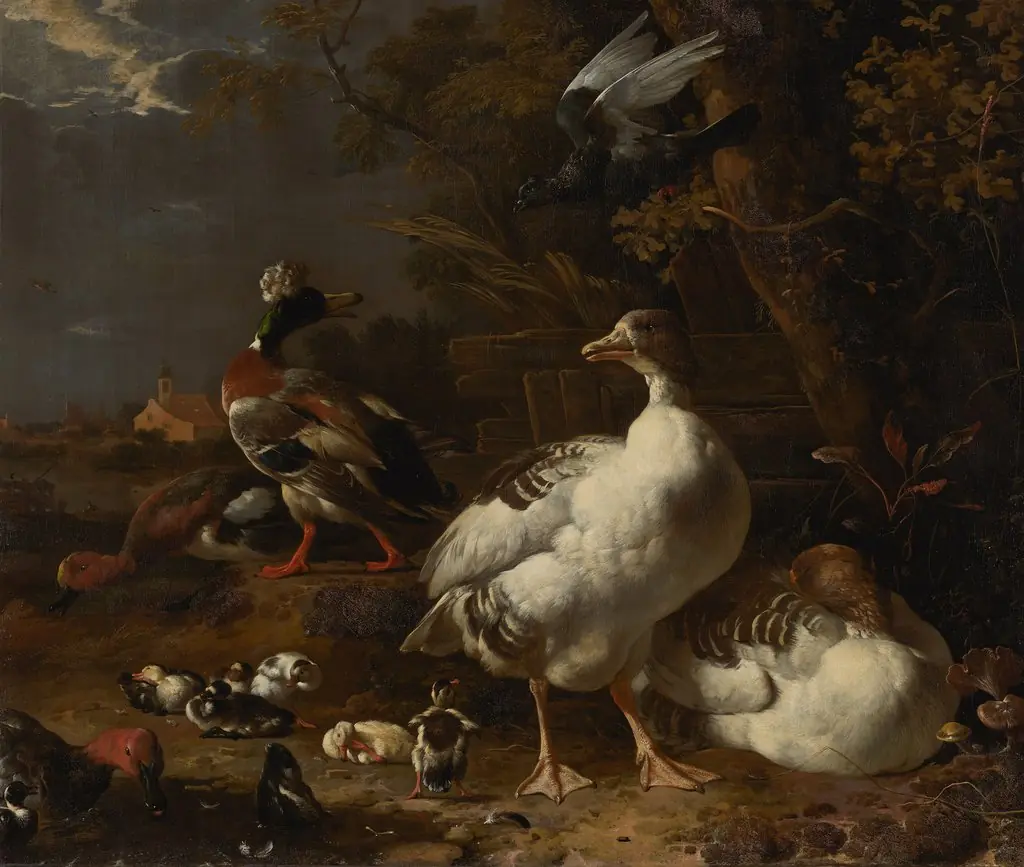
Peacock with Geese and Hen is an oil painting by Jakob Bogdani. It dates from 1701 and is held in the collection of the Museum of Fine Arts, Budapest.
About this work
Overview
Painted circa 1701 by Jakob Bogdani, a Hungarian artist active in Britain, this oil painting presents a quiet assembly of birds in a domesticated setting.
Painted circa 1701 by Jakob Bogdani, a Hungarian artist active in Britain, this oil painting presents a quiet assembly of birds in a domesticated setting. Bogdani, known for his focus on avian subjects, arranged the peacock, geese, and hen with deliberate stillness, emphasizing their natural forms without narrative drama. The work resides today in the Museum of Fine Arts, Budapest, as part of a broader collection of his ornithological studies.
Subject & Meaning
The composition centers on a male peacock, its iridescent tail fanned slightly, flanked by two geese and a hen. No symbolic or mythological reference is evident; instead, the painting reflects an interest in the visual variety of domestic and exotic birds coexisting in a cultivated space. The birds are rendered as observed specimens, suggesting an early naturalist impulse rather than allegorical intent.
Technique & Style
Bogdani employed oil paint to achieve fine gradations of color and texture, particularly in the peacock’s feathers, where each barb and ocellus is carefully delineated. The geese and hen show subtle variations in plumage tone, rendered with soft brushwork that avoids harsh outlines. The muted, indistinct background isolates the birds, directing attention to their physical presence and the tactile quality of their feathers.
History & Provenance
The painting entered the collection of the Museum of Fine Arts, Budapest, in the early 20th century, likely through acquisitions of Central European art from the 17th and 18th centuries. Bogdani’s works were collected in Hungary and Austria during his lifetime, and this piece aligns with his known output from his years in England, where he gained recognition for his bird studies.
Context
In early 18th-century Europe, interest in exotic animals grew alongside colonial expansion and scientific curiosity. Bogdani’s paintings responded to this trend, offering detailed depictions of birds that were rare in domestic settings. His work stood apart from purely decorative still lifes by emphasizing anatomical accuracy and the quiet dignity of his subjects.
Legacy
Bogdani’s paintings, including this one, contributed to a genre of ornithological art that bridged natural history and visual culture. Though not widely known today, his precise renderings influenced later artists interested in depicting birds with scientific fidelity. The painting remains a quiet testament to the aesthetic value placed on observed nature in the early Enlightenment.
Artist & collection
Artist
Jakob Bogdani (6 May 1658 - 11 November 1724), whose names are sometimes spelt Jacob and Bogdány, was a Hungarian and British artist well known for his still life and exotic bird paintings.

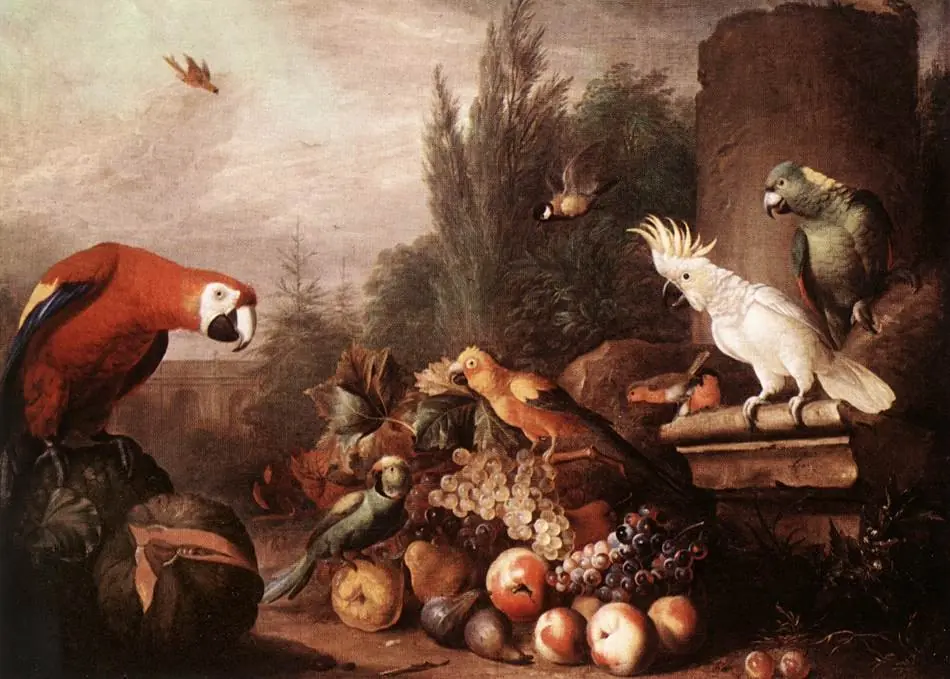 Still-life with Fruits, Parrots and White Cockatoo
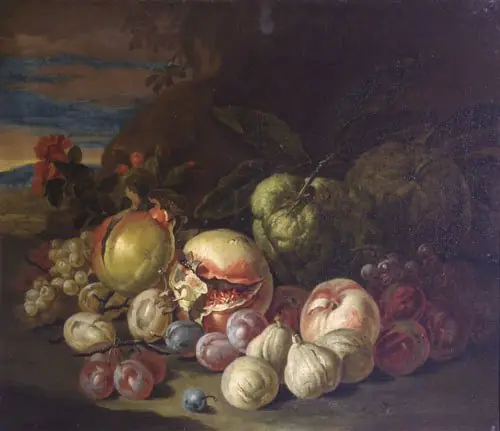 Still life of fruits with pomegranates and figs
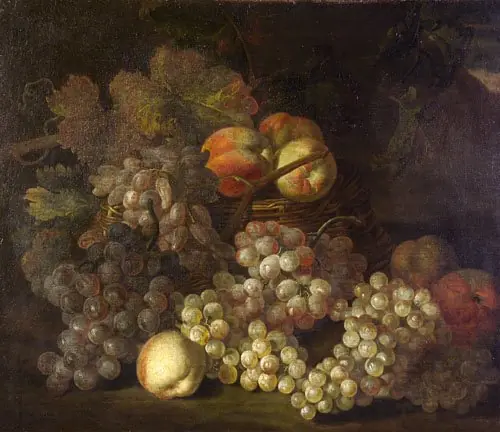 Fruit in a Wicker Basket: Grapes and Peaches
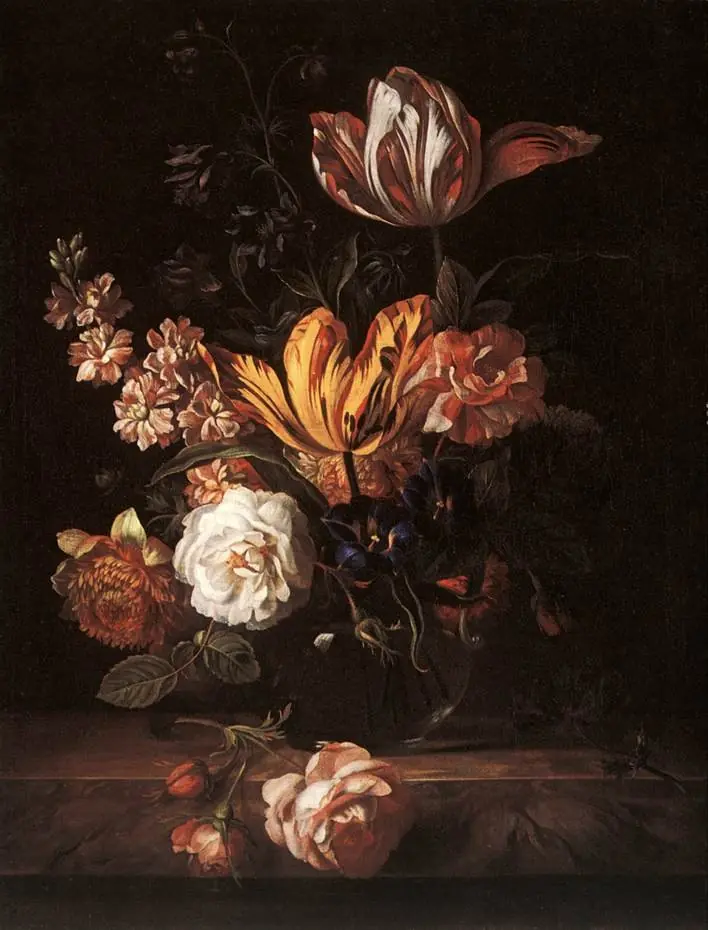 Flowers in a glass vase
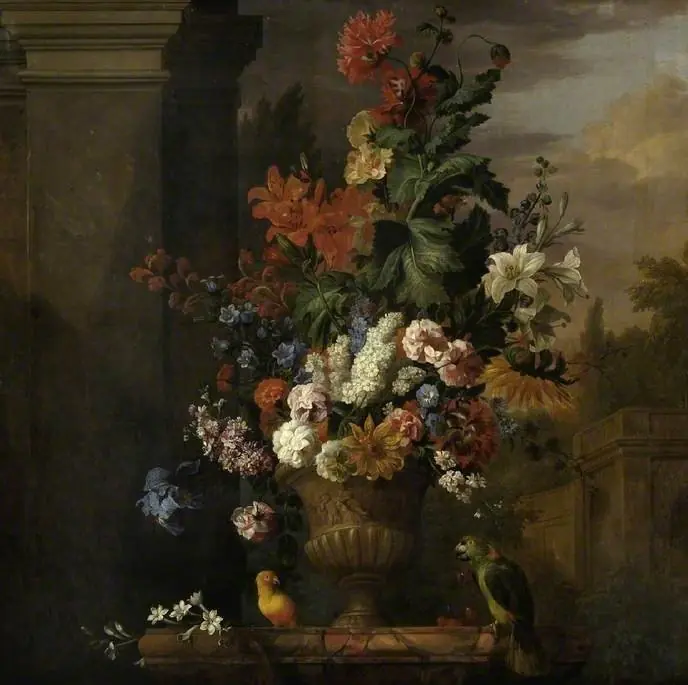 A stone vase of flowers
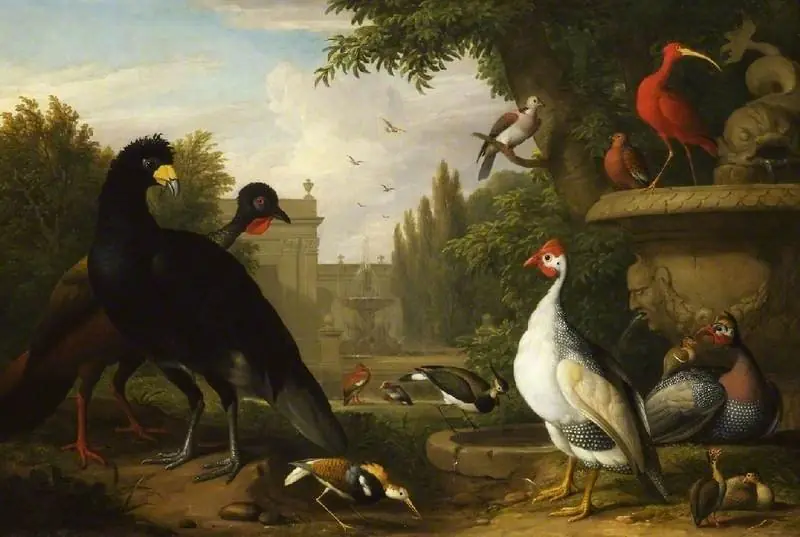 Exotic fowl in an ornamental garden beside a stone vase, a fountain beyond
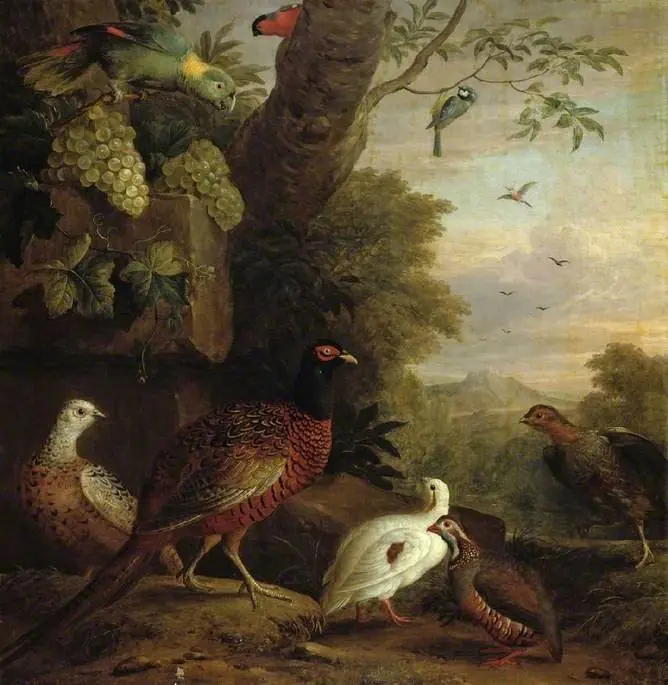 Birds in a landscape
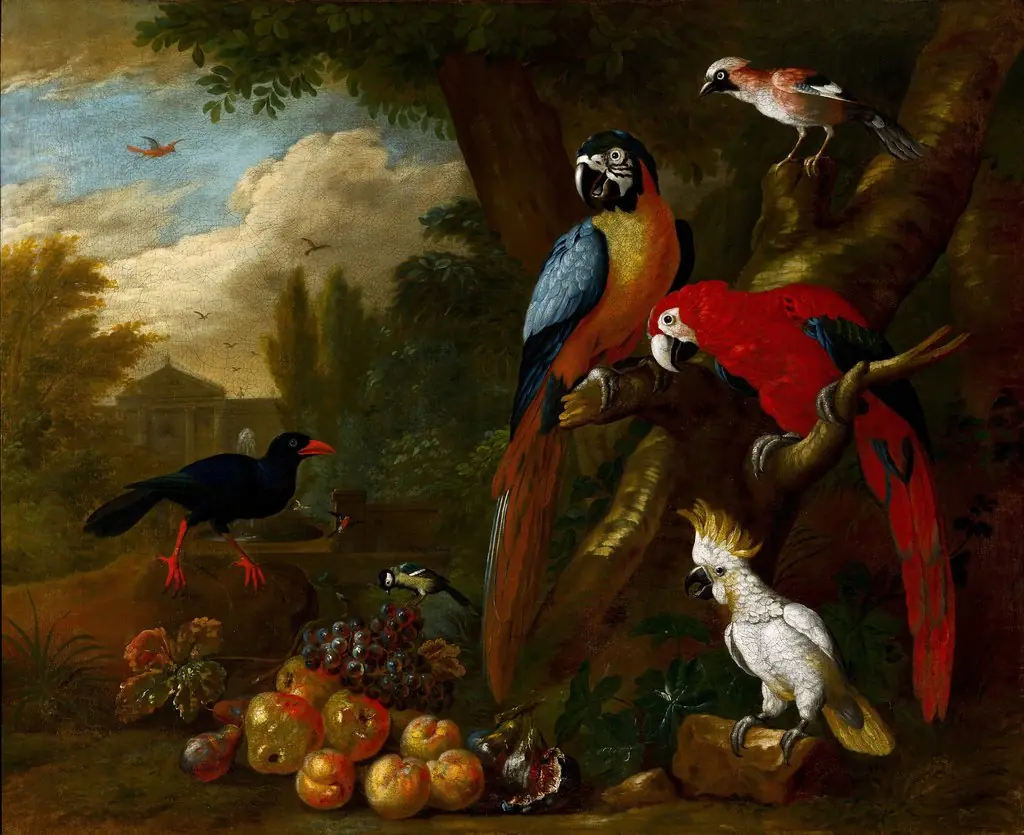 Two Macaws, a Cockatoo and a Jay, with Fruit