Artwork
Night Fête at Olevano
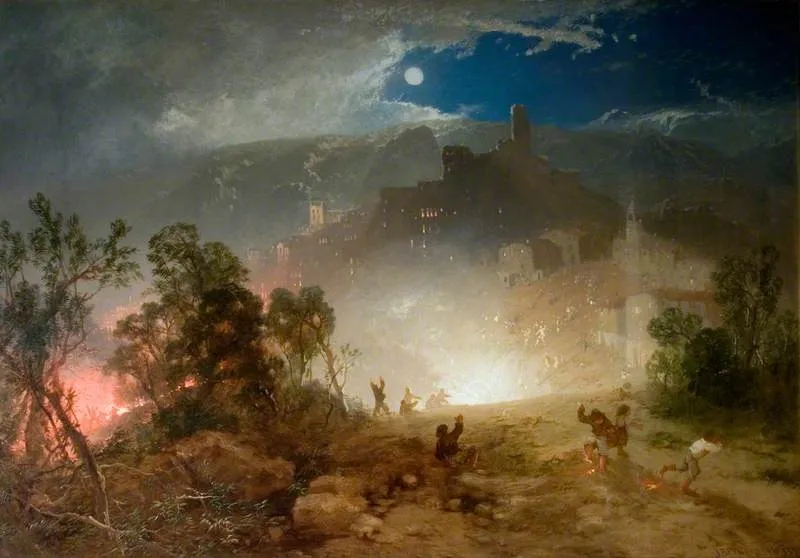
Night Fête at Olevano is an oil painting by the British Romanticist artist James Baker Pyne. It dates from 1853 and is held in the collection of the Victoria and Albert Museum.
About this work
Overview
Turner, moving beyond traditional topographical painting toward emotional and luminous interpretation.
Painted in 1853, *Night Fête at Olevano* is an oil landscape by English artist James Baker Pyne, capturing a nocturnal celebration in the Italian hills near Olevano. The work reflects Pyne’s later engagement with the atmospheric style of J.M.W. Turner, moving beyond traditional topographical painting toward emotional and luminous interpretation. It is part of the Victoria and Albert Museum’s collection, representing a shift in 19th-century British landscape sensibility toward mood and light over precise detail.
Subject & Meaning
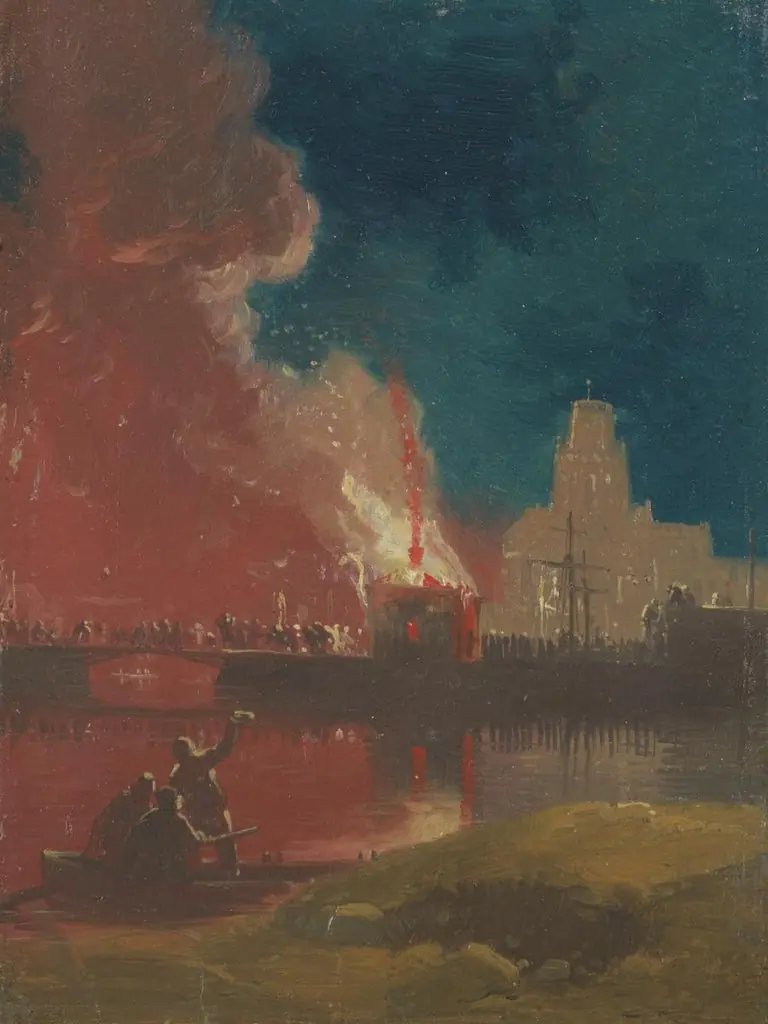
The scene portrays a communal night celebration in a hillside village, with figures gathered around a fire, dancing and moving in loose, animated forms. The setting suggests a local festival or ritual, grounded in rural Italian life but filtered through a Romantic lens. The emphasis on communal joy under darkness, illuminated by torches and flame, evokes themes of human connection against the vastness of nature, a recurring concern in Romantic-era art.
Technique & Style
Pyne employs loose, expressive brushwork to convey movement and energy, particularly in the figures and flickering light sources. Chiaroscuro is used to heighten drama, with warm golden hues from the fire contrasting against deep, cool shadows of the night. The sky and distant architecture are rendered with soft, blended tones, creating atmospheric depth. This approach aligns with Turner’s influence, prioritizing emotional resonance over topographical accuracy.
History & Provenance
Created in 1853, the painting emerged during a period when Pyne was increasingly drawn to Turner’s luminous landscapes after early work in more conventional styles. It entered the Victoria and Albert Museum’s collection in the 19th century, likely through acquisition or donation, and has remained in public ownership since. Its preservation reflects institutional interest in British artists who engaged with continental Romantic traditions.
Context
In mid-19th century Britain, landscape painting was evolving from topographical records to expressive visions. Pyne’s work reflects this shift, influenced by Turner’s treatment of light and atmosphere, as well as the broader Romantic fascination with foreign landscapes and folk rituals. Italian subjects were popular among British artists seeking sublime or picturesque settings, and Pyne’s nocturnal focus adds a layer of emotional intensity uncommon in more daylight-oriented works.
Legacy
While not widely known today, *Night Fête at Olevano* stands as a quiet example of how British Romanticism absorbed continental influences. It illustrates Pyne’s personal evolution as an artist and contributes to the broader narrative of 19th-century British painters reimagining landscape through mood, light, and movement. The painting remains a reference point for understanding the quieter, less celebrated currents within Romantic art beyond the most famous names.
Artist & collection
Artist
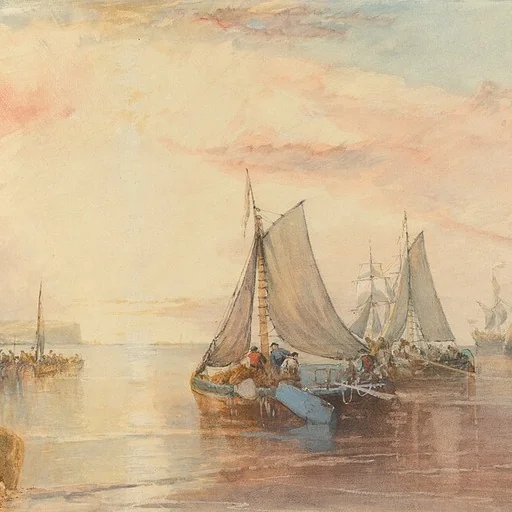
James Baker Pyne (5 December 1800 – 29 July 1870) was an English landscape painter who became a successful follower of Turner, after having been in his earlier years a member of the Bristol School of artists and a follower of Francis Danby.

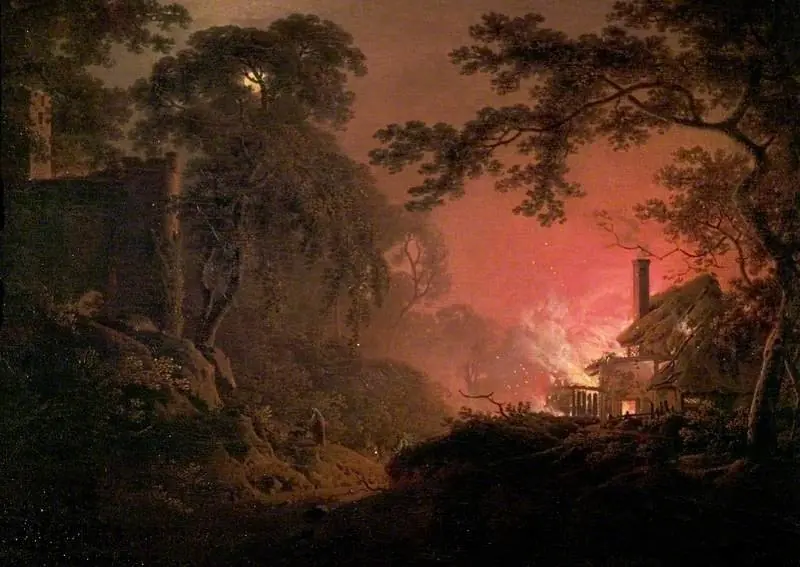 Cottage on Fire
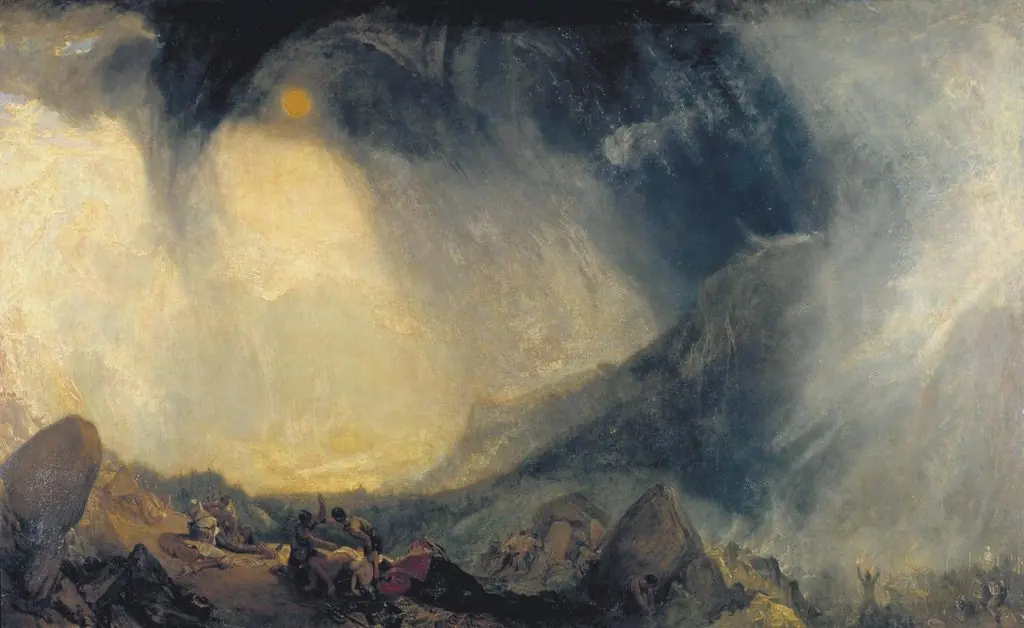 Snow Storm: Hannibal and his Army Crossing the Alps
 The Battle of Isted 25 July 1850. Study
 The Battle of Isted 25 July 1850. Study
 Robert the Bruce's Castle of Turnberry
 Joshua Commanding the Sun to Stand Still upon Gibeon
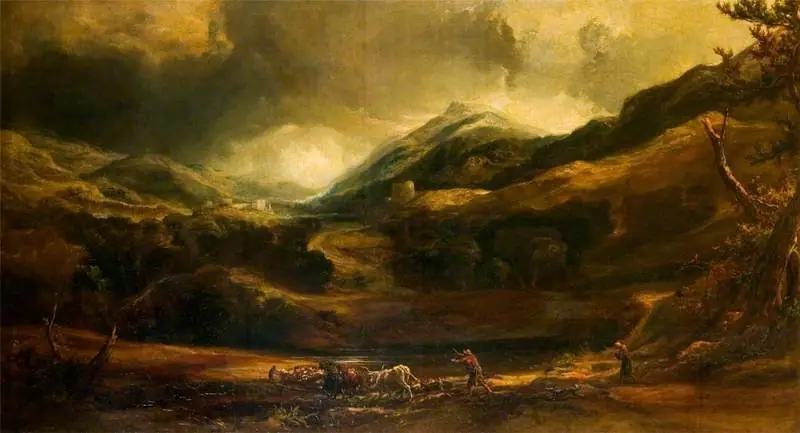 Landscape
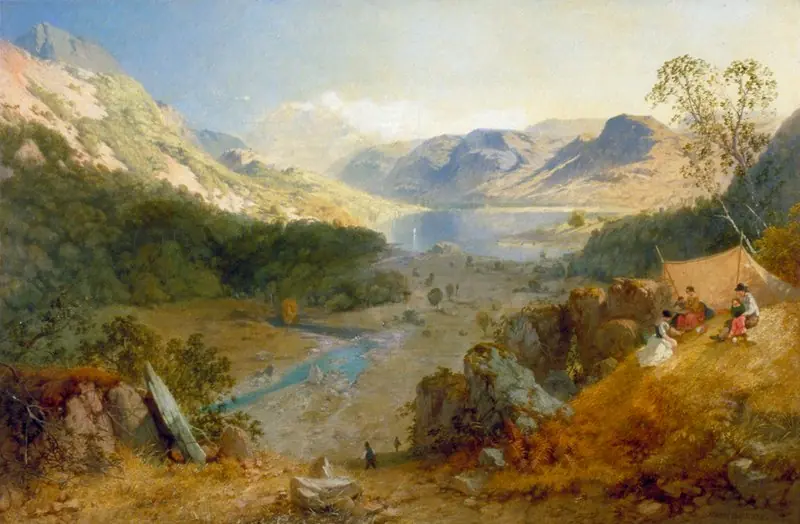
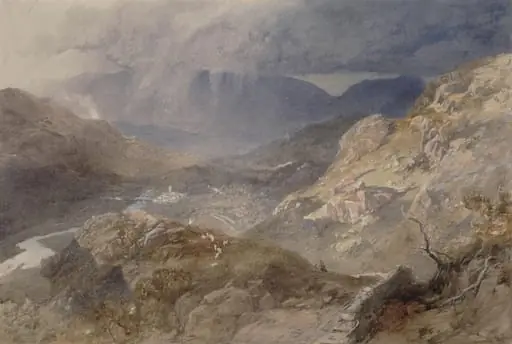 View in Cumberland
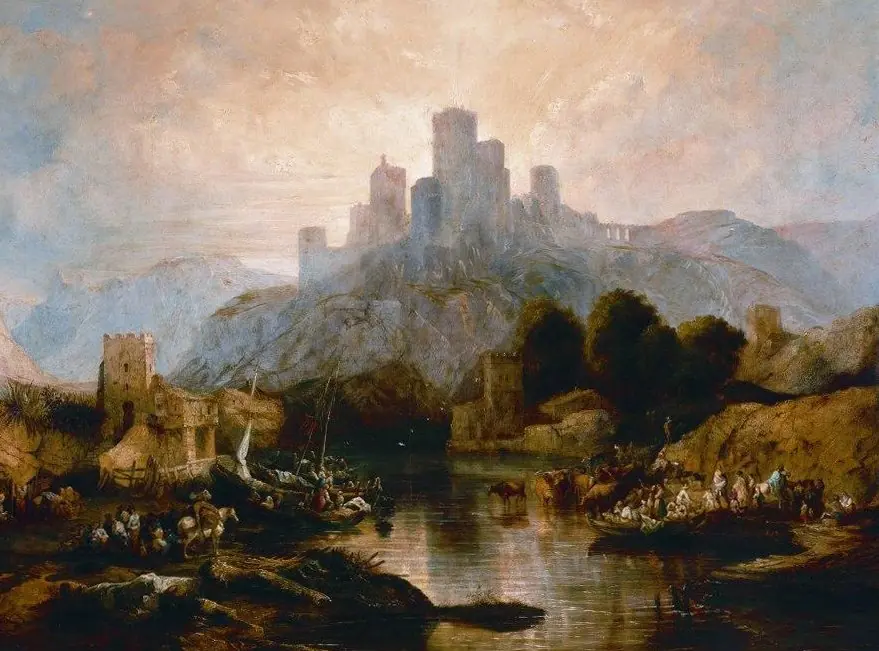 Castillo de Alcalá de Guadaira
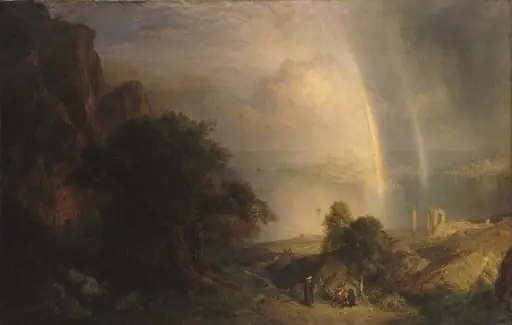 The Aegean Sea
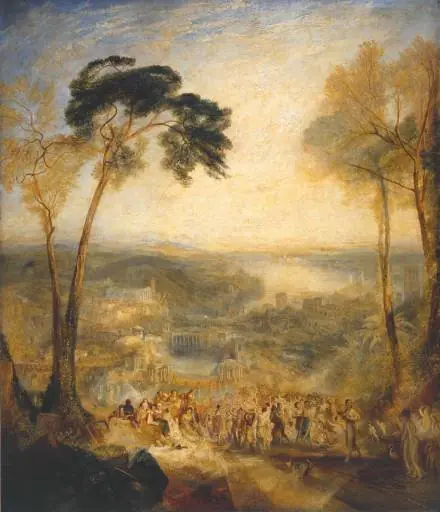 Phryne Going to the Public Baths as Venus: Demosthenes Taunted by Aeschines
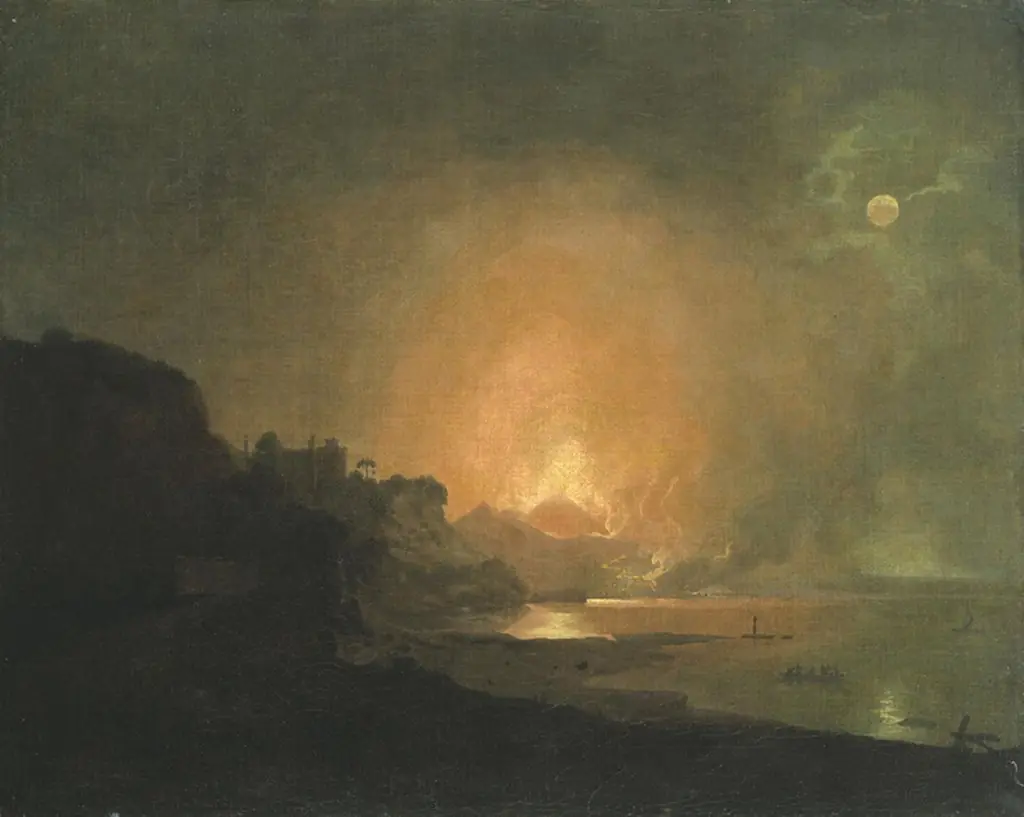 Vesuvius in Eruption