Artwork
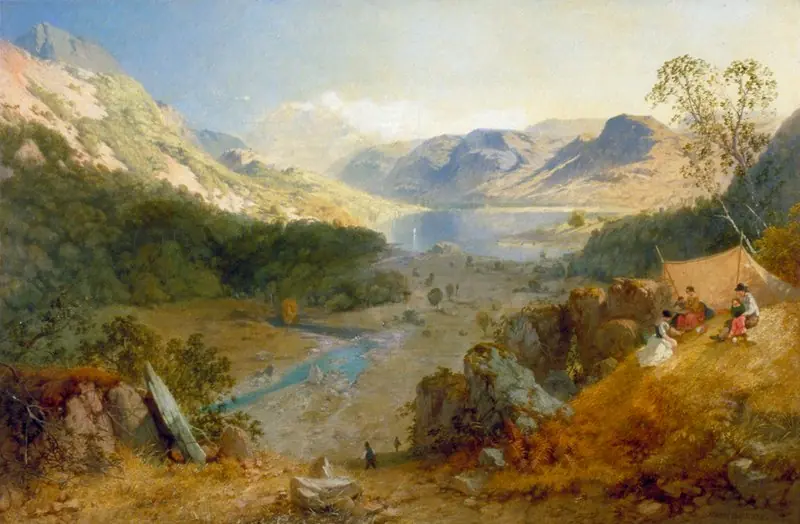
Landscape With Figures
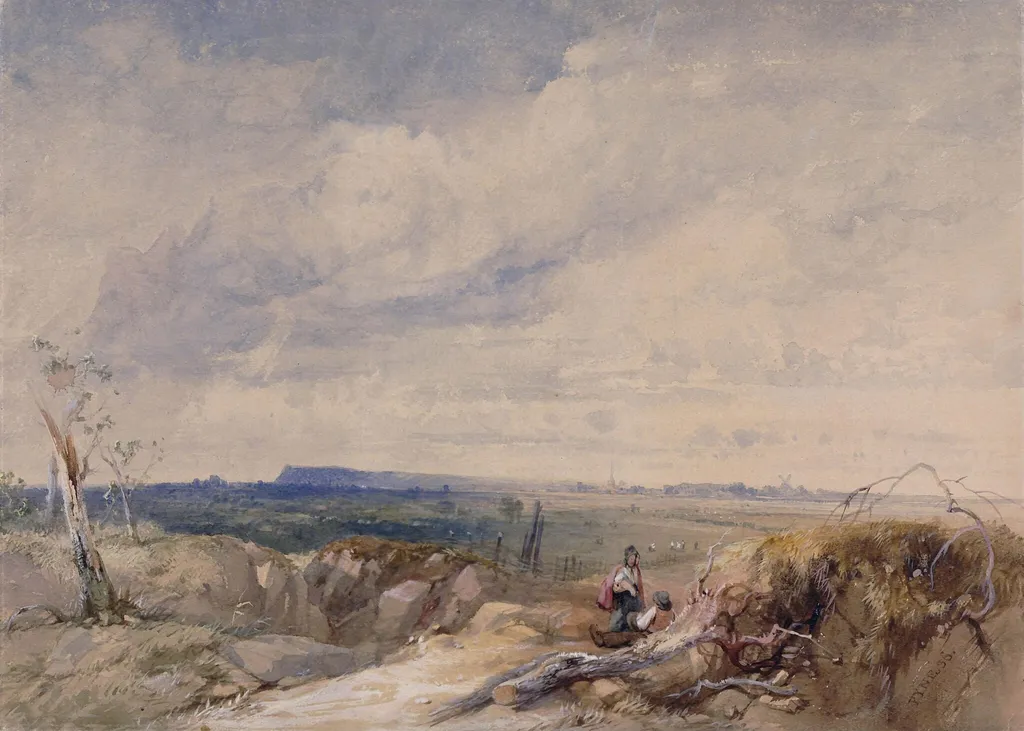
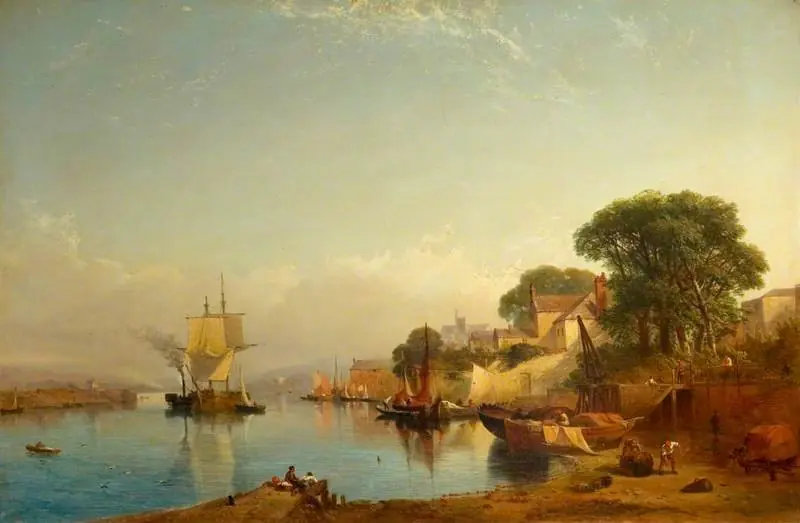
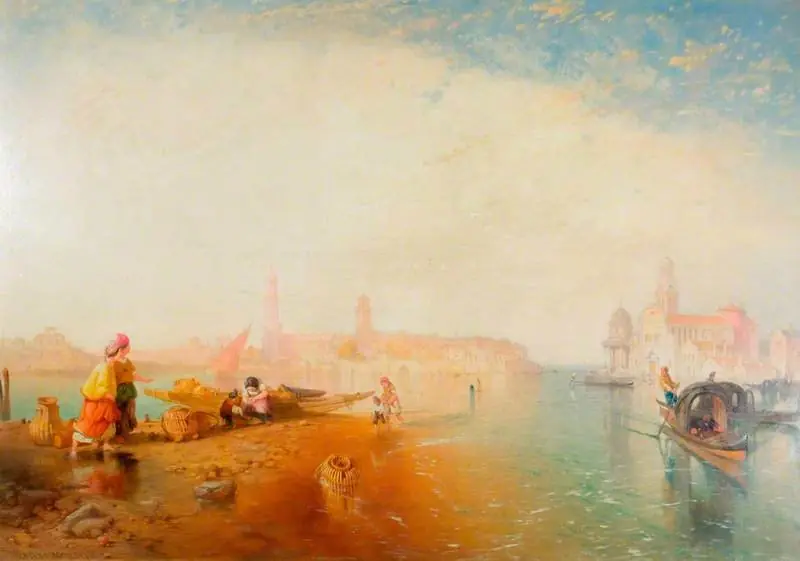
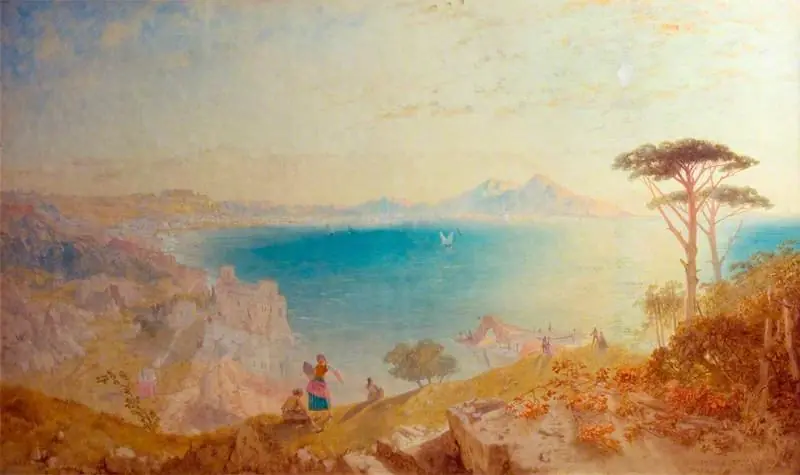
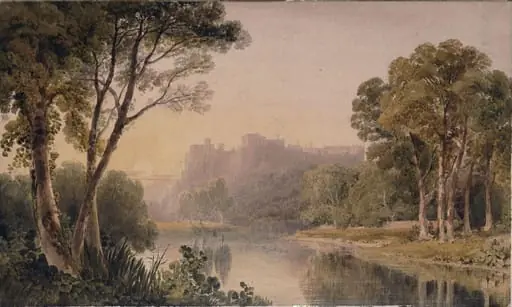
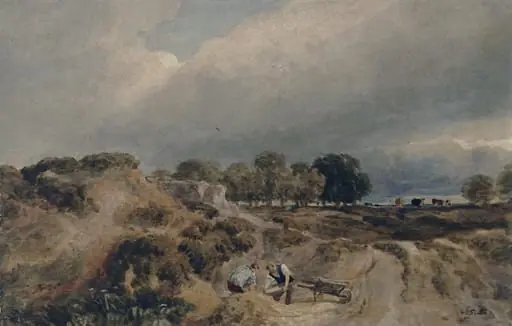
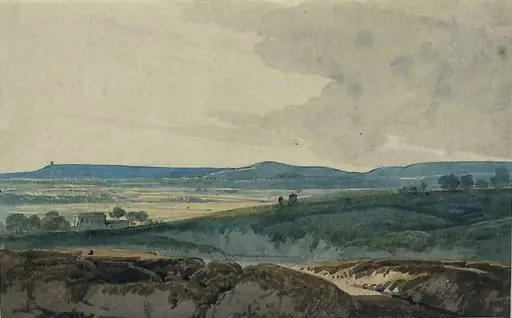
Landscape With Figures is a watercolor work on paper by the British Romanticist artist James Baker Pyne. It dates from 1836 and is held in the collection of the Victoria and Albert Museum.
About this work
Overview
Executed in the medium characteristic of British Romantic watercolourists, the work reflects Pyne’s engagement with landscape traditions of his time.
James Baker Pyne painted this watercolour landscape in 1836, capturing a quiet rural scene with subtle human presence. Executed in the medium characteristic of British Romantic watercolourists, the work reflects Pyne’s engagement with landscape traditions of his time. It is part of the Victoria and Albert Museum’s collection, where it represents the quiet, introspective side of 19th-century British art.
Subject & Meaning
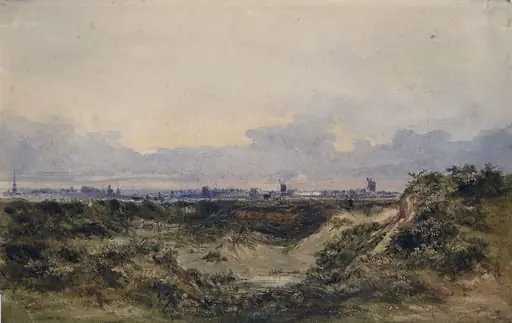
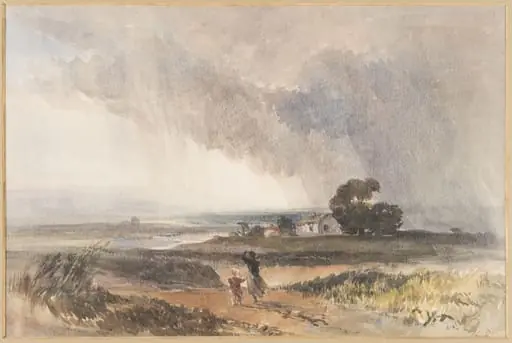
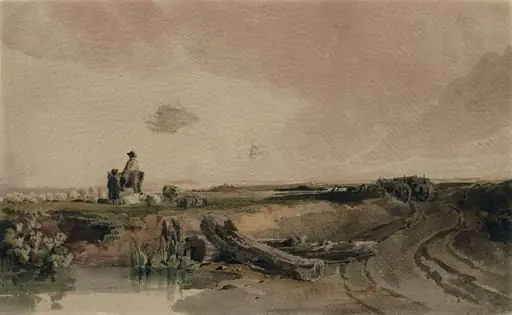
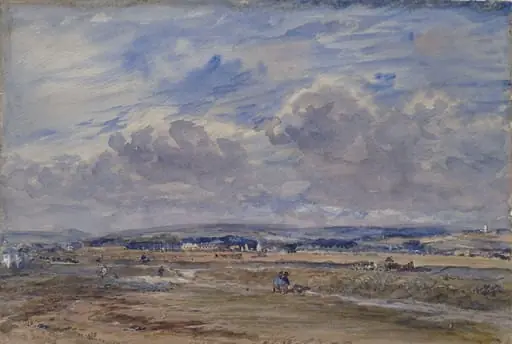
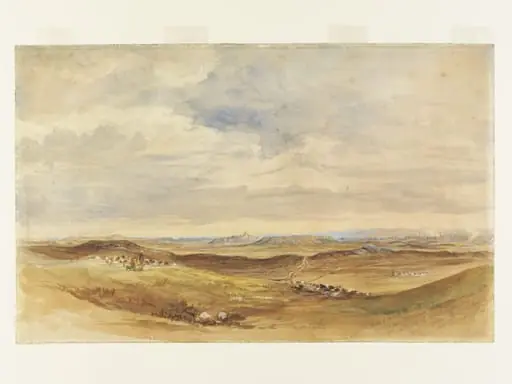
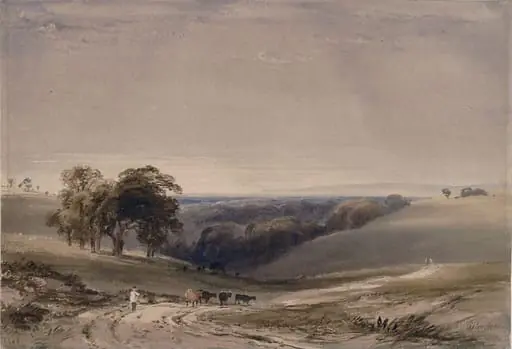
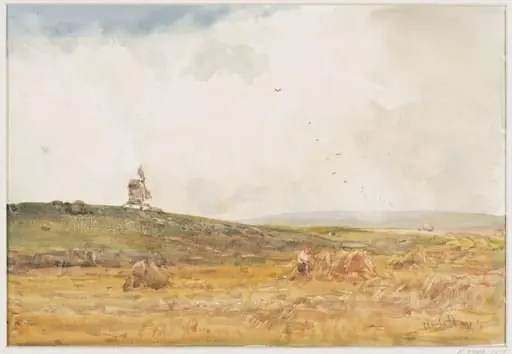
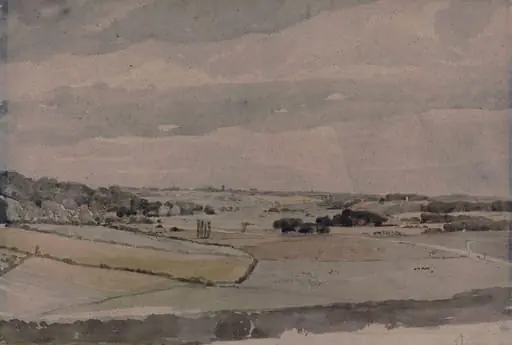
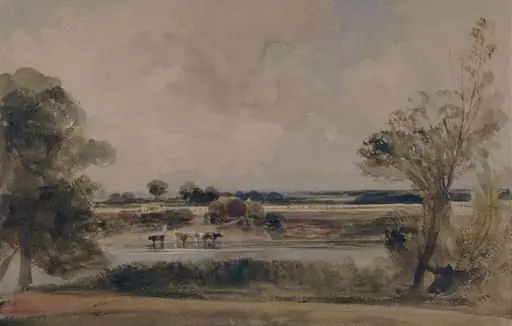
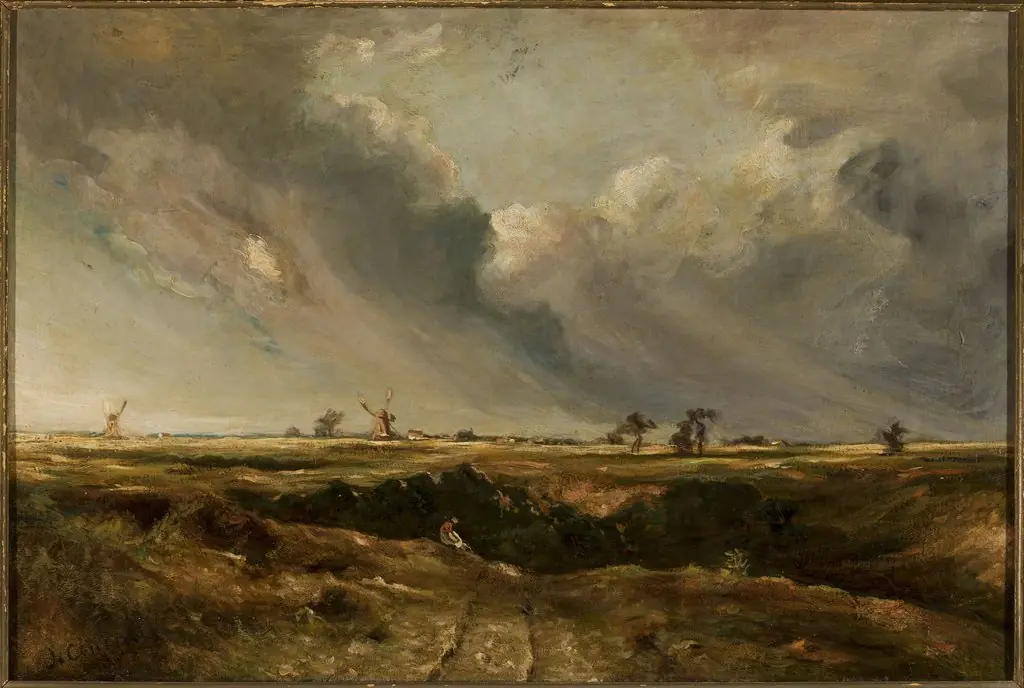
The scene presents a tranquil countryside with rolling hills and scattered trees, framed by a rocky outcrop in the foreground. Two figures sit quietly, gazing toward the distance, their presence neither narrative nor dramatic but contemplative. The composition invites stillness, emphasizing harmony between humanity and nature rather than action or emotion, aligning with Romantic ideals of reflective solitude.
Technique & Style
Pyne employed delicate watercolour washes to build soft, layered tones, avoiding sharp definition in favor of atmospheric transitions. The muted palette and gentle brushwork create a hazy, luminous effect, typical of the Bristol School’s approach. His technique shows the influence of Turner’s light-sensitive methods, yet remains restrained, prioritizing mood over spectacle.
History & Provenance
Created in 1836, the work emerged during Pyne’s mature period, after his early association with the Bristol School and his exposure to Turner’s innovations. It entered the Victoria and Albert Museum’s collection as part of its broader effort to document British watercolour traditions. No significant alterations or documented ownership changes are recorded prior to its museum acquisition.
Context
In the 1830s, British watercolour painting was gaining institutional recognition, with societies and exhibitions elevating the medium beyond sketching. Pyne’s work reflects this shift, blending topographical accuracy with emotional resonance. His style stood apart from grander Romantic narratives, favoring intimate, uneventful moments that resonated with contemporary tastes for quiet naturalism.
Legacy
Though not widely known outside specialist circles, Pyne’s watercolours contribute to the understanding of regional British Romanticism. This piece exemplifies how lesser-known artists adapted Turner’s innovations into personal, subdued visions. Its preservation in the V&A underscores its role as a representative example of mid-19th-century watercolour practice, valued for its restraint and sensitivity.
Artist & collection
Artist
James Baker Pyne (5 December 1800 – 29 July 1870) was an English landscape painter who became a successful follower of Turner, after having been in his earlier years a member of the Bristol School of artists and a follower of Francis Danby.