Artwork
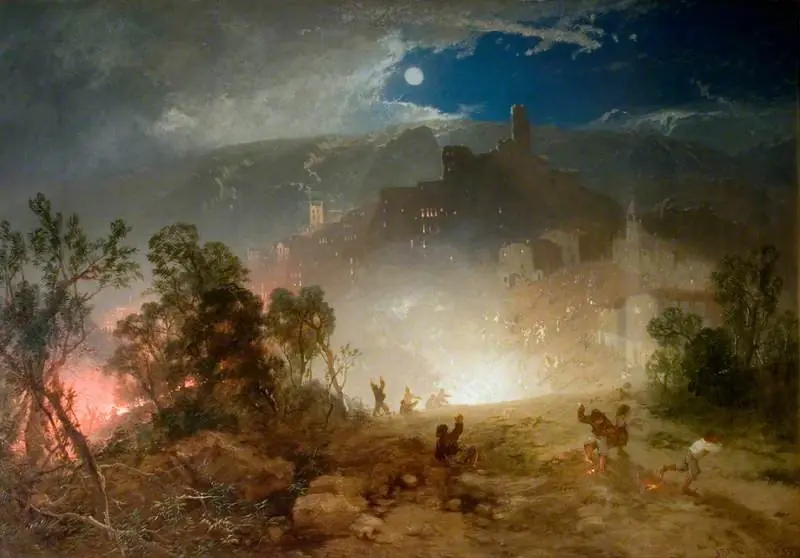
The Burning of the Toll-Houses on Prince Street Bridge with St Mary Redcliffe, Bristol
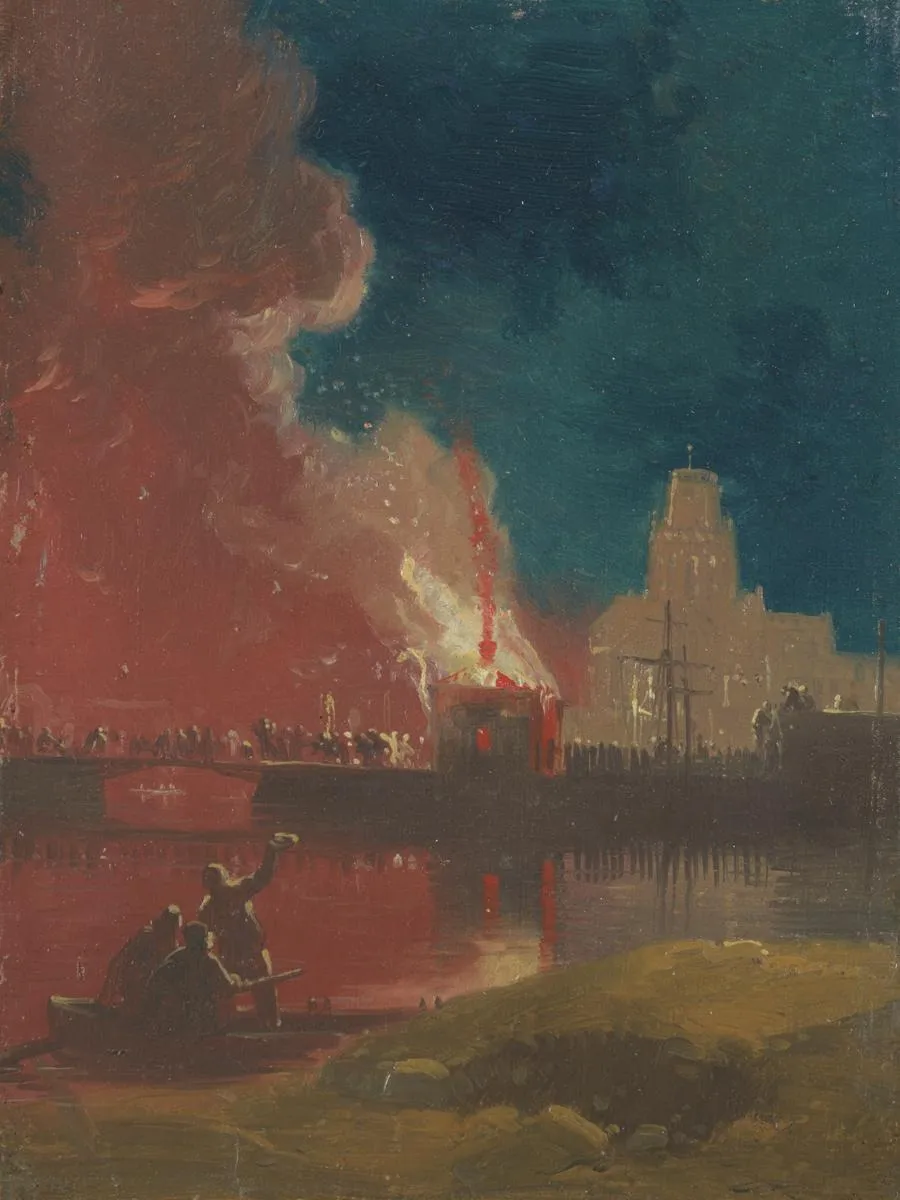
The Burning of the Toll-Houses on Prince Street Bridge with St Mary Redcliffe, Bristol is an unspecified painting by the British Romanticist artist James Baker Pyne. It dates from 1831 and is held in the collection of the Tate Britain.
About this work
Overview
James Baker Pyne’s oil painting records the night of 30 October 1831 when rioters set fire to the toll‑houses on Bristol’s Prince Street Bridge, with the spire of St Mary Redcliffe looming behind. The composition centers on a blazing bridge, a throng of figures scrambling amid smoke, and the illuminated church silhouetted against a dark sky, conveying the turmoil of the event.
Subject & Meaning
The work portrays the violent episode of the Bristol riots, emphasizing the clash between civic order and popular unrest. By juxtaposing the destructive fire with the enduring presence of the medieval church, Pyne suggests a tension between transient chaos and lasting communal identity, inviting reflection on the fragility of public infrastructure during social upheaval.
Technique & Style
Pyne employs a strong chiaroscuro, allowing the orange flames to dominate the composition while the surrounding darkness recedes, heightening drama. His brushwork blends atmospheric softness with detailed crowd figures, a synthesis of the Bristol School’s lyrical landscape tradition and the more luminous, expressive approach he adopted after studying J. M. W. Turner’s nocturnal scenes.
History & Provenance
Created shortly after the 1831 riots, the painting entered the public domain through acquisition by the Tate Britain, where it remains in the museum’s collection. Its provenance traces back to private ownership before being donated to the institution in the early twentieth century, reflecting its recognized value as a historical record of the period.
Context
The image belongs to the broader Romantic movement in early nineteenth‑century Britain, which often dramatized contemporary events within grand natural settings. Pyne’s depiction aligns with other Romantic artists who used landscape to comment on social disturbances, echoing the era’s fascination with the sublime power of fire and the emotional impact of collective crisis.
Artist & collection
Artist
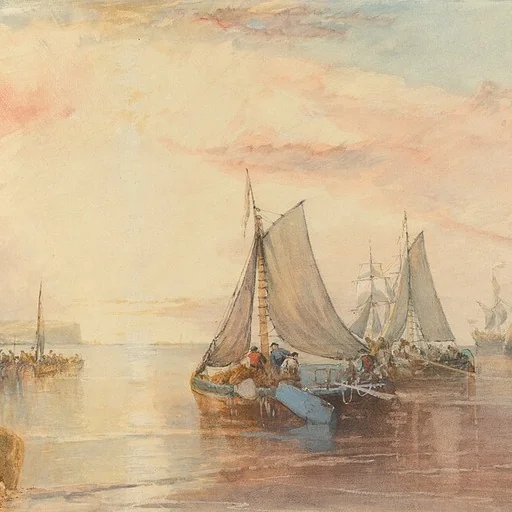
James Baker Pyne (5 December 1800 – 29 July 1870) was an English landscape painter who became a successful follower of Turner, after having been in his earlier years a member of the Bristol School of artists and a follower of Francis Danby.

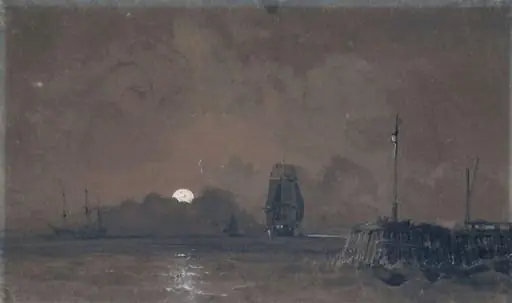 Sunderland harbour: moonlight
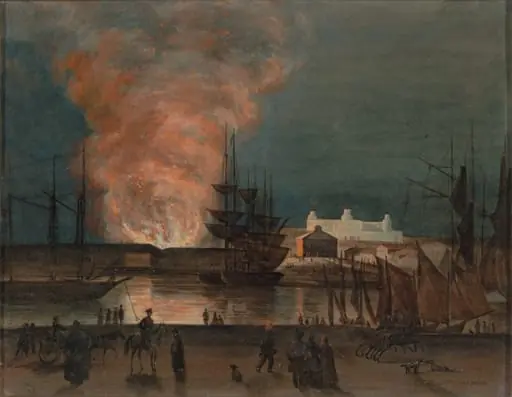 Tulipalo Kaivopuiston suunnalla
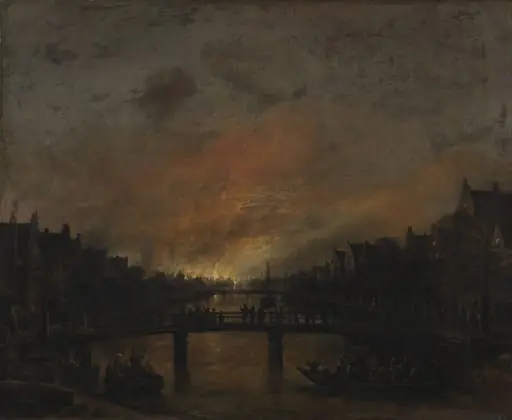 Fire at Amsterdam by Night
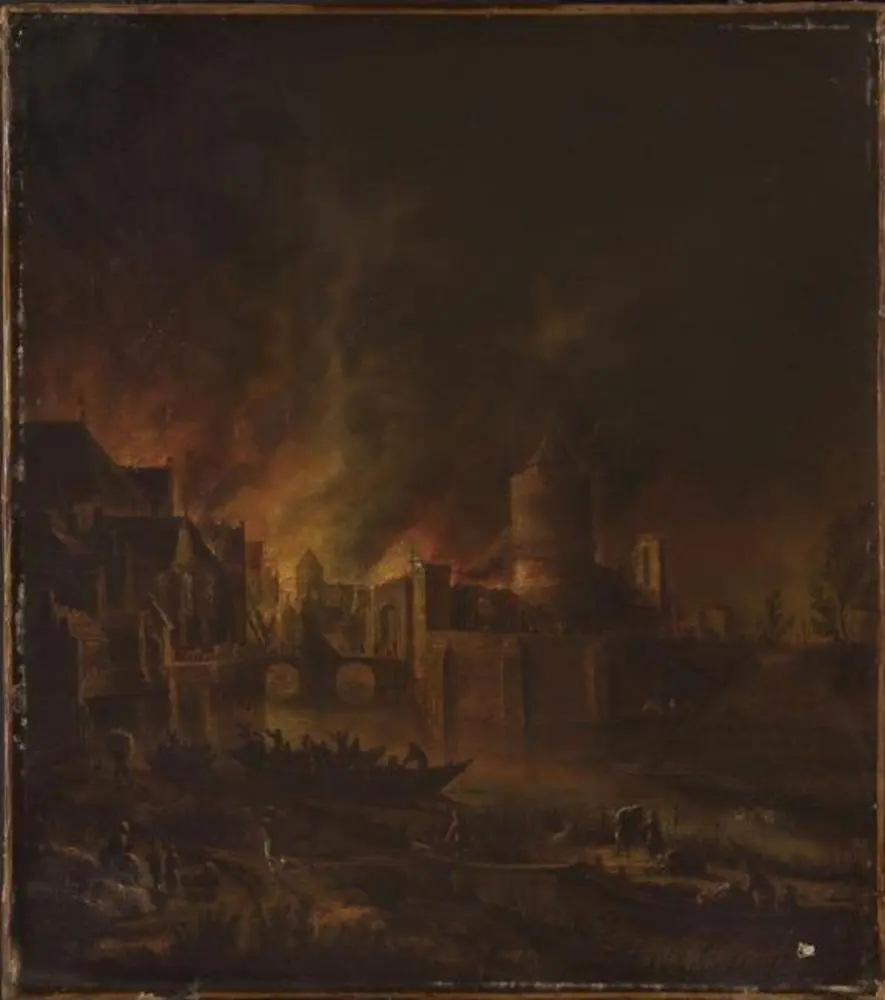 Fire at Night
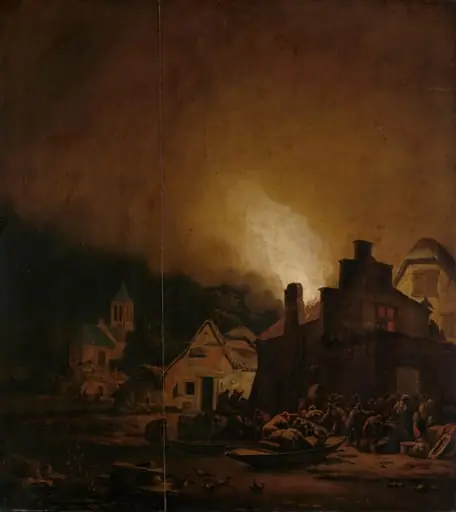 Fire by night in a Village
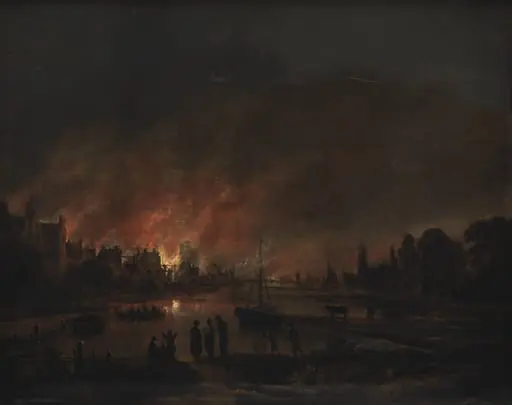 Fire at a Village by Night
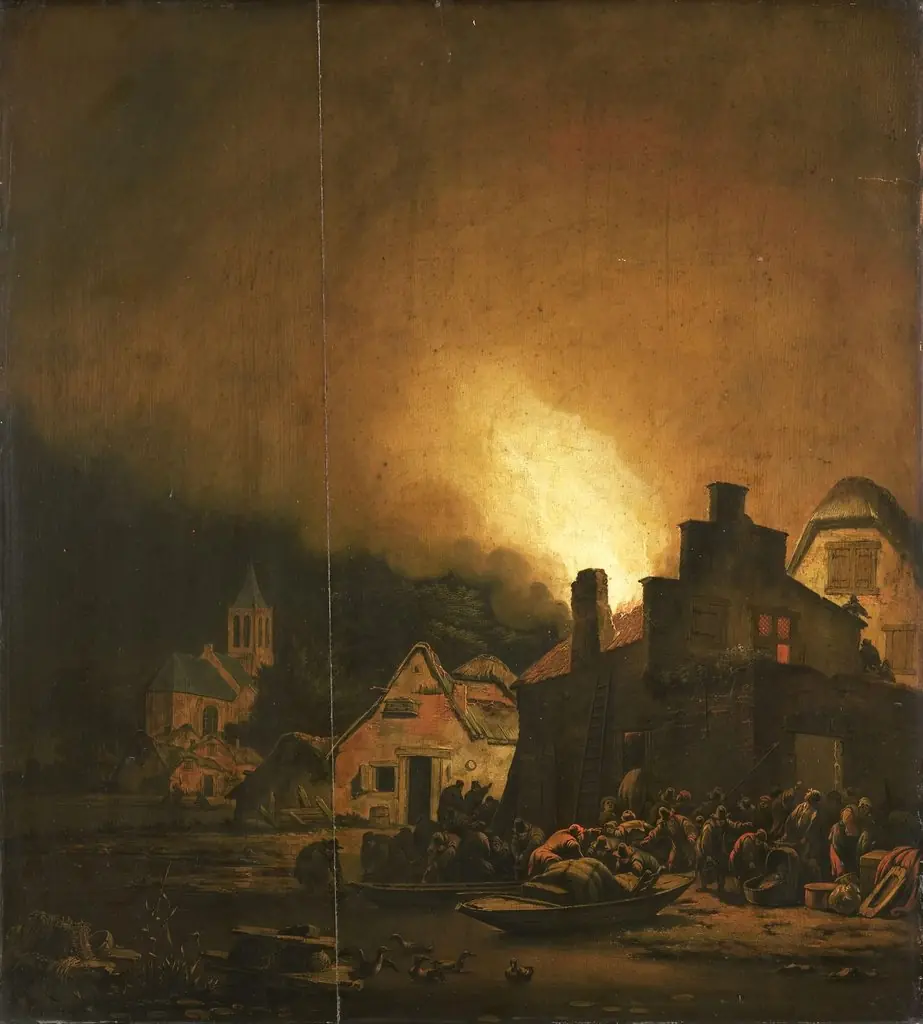 Nighttime fire in a village
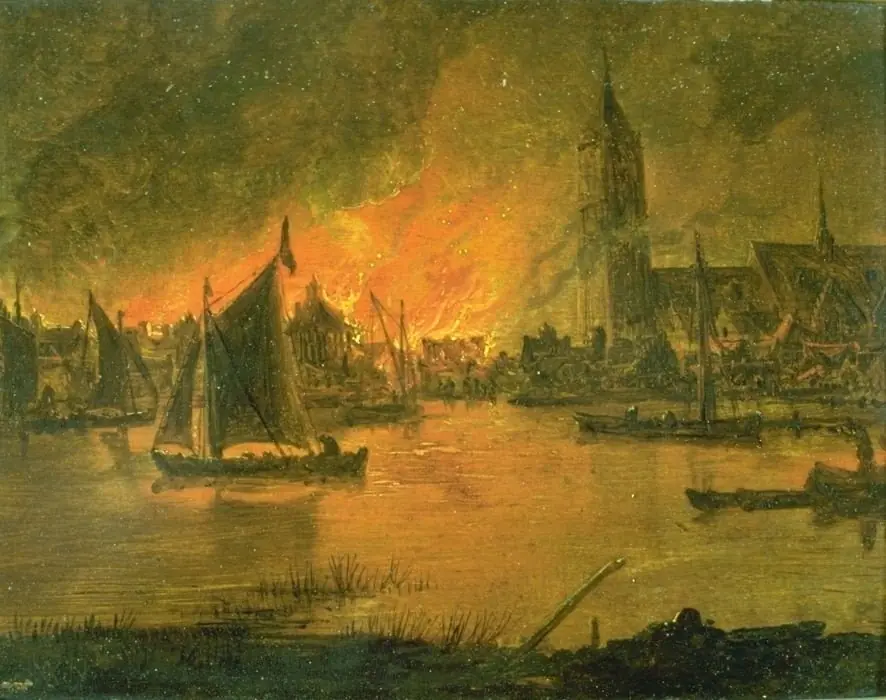 Fire in the Old City Hall of Amsterdam
 Schepen in de haven van Dordrecht
 Frederik VII's ligfærd d. 2. december 1863
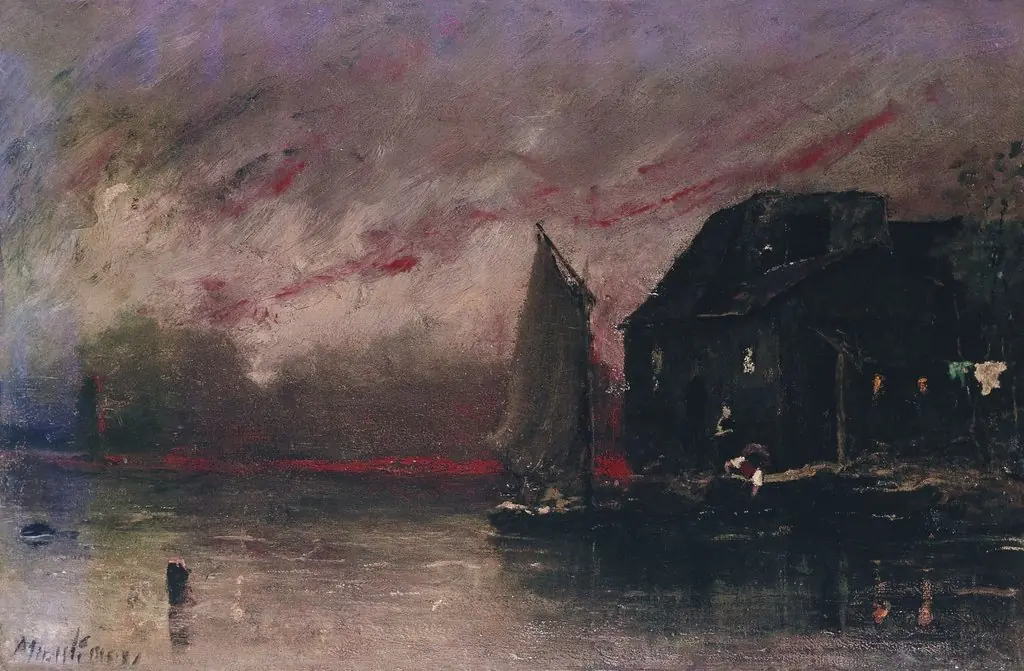 Evening Atmosphere
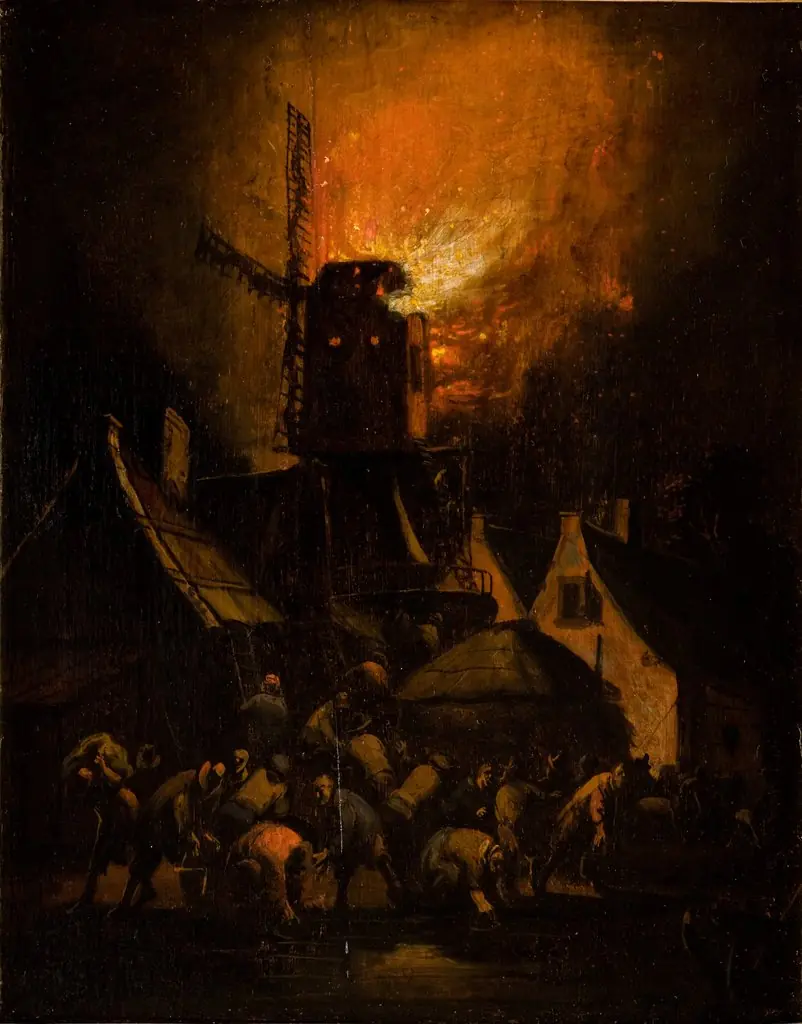 Windmill Fire