Artwork
Venice
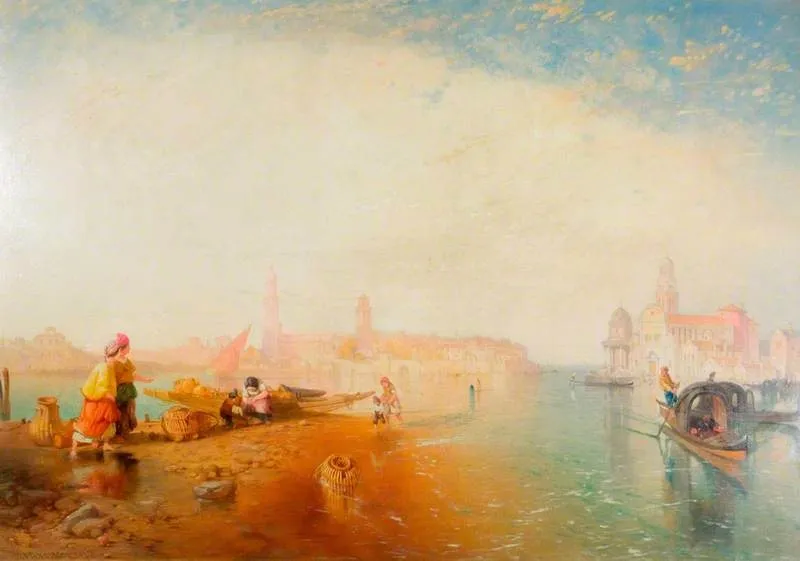
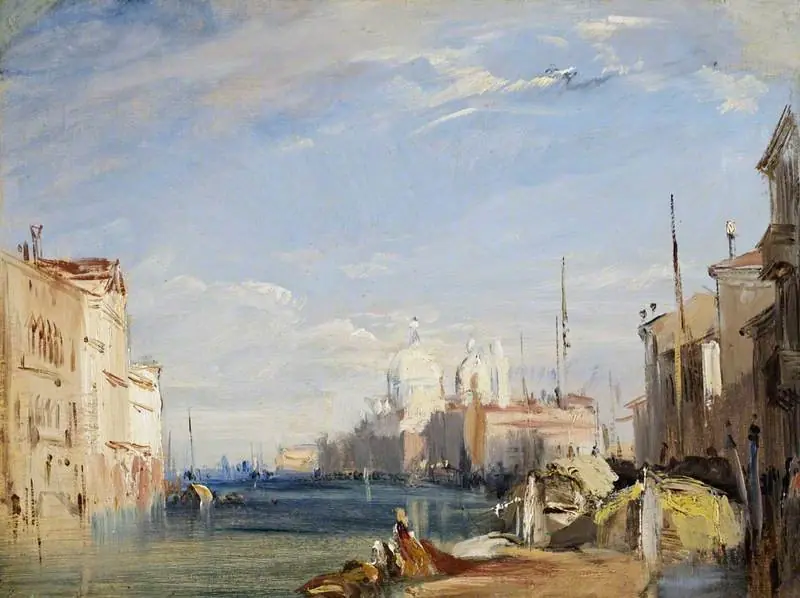
Venice is an oil painting by the British Romanticist artist James Baker Pyne. It dates from 1860 and is held in the collection of the Victoria and Albert Museum.
About this work
Overview
A British landscape artist associated with the Romantic tradition, Pyne developed a style shaped by early influences from the Bristol School and later by J.
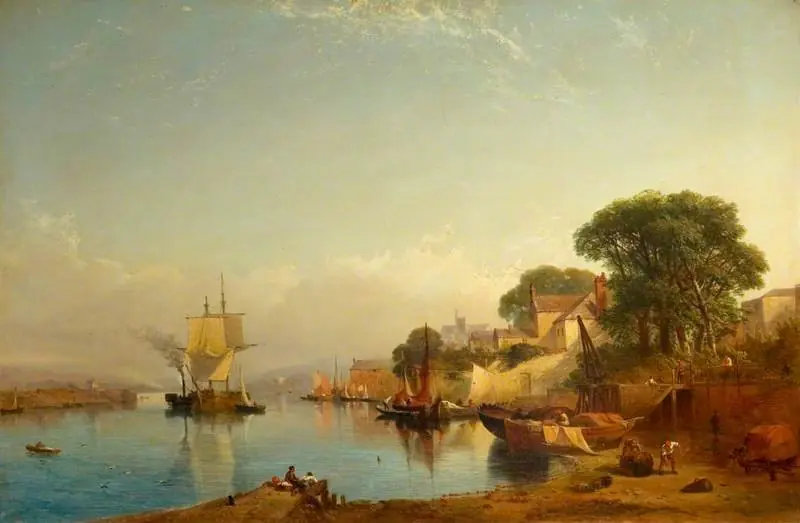
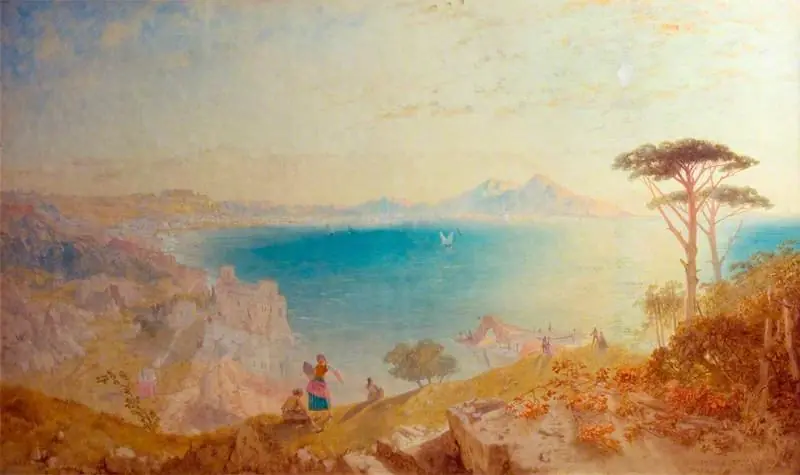
James Baker Pyne painted *Venice* in 1860 using oil on canvas, capturing the Italian city in a quiet, luminous moment. A British landscape artist associated with the Romantic tradition, Pyne developed a style shaped by early influences from the Bristol School and later by J. M. W. Turner’s handling of light and atmosphere. The work is part of the Victoria and Albert Museum’s collection, reflecting its significance within 19th-century British landscape painting.
Subject & Meaning
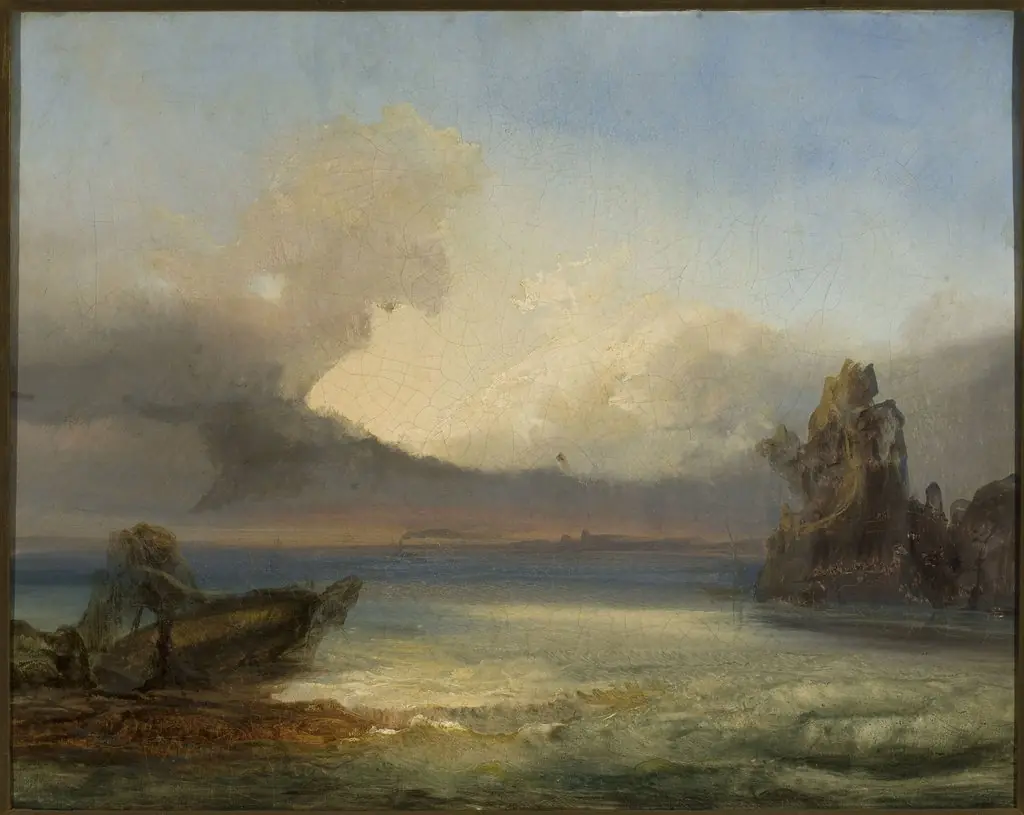
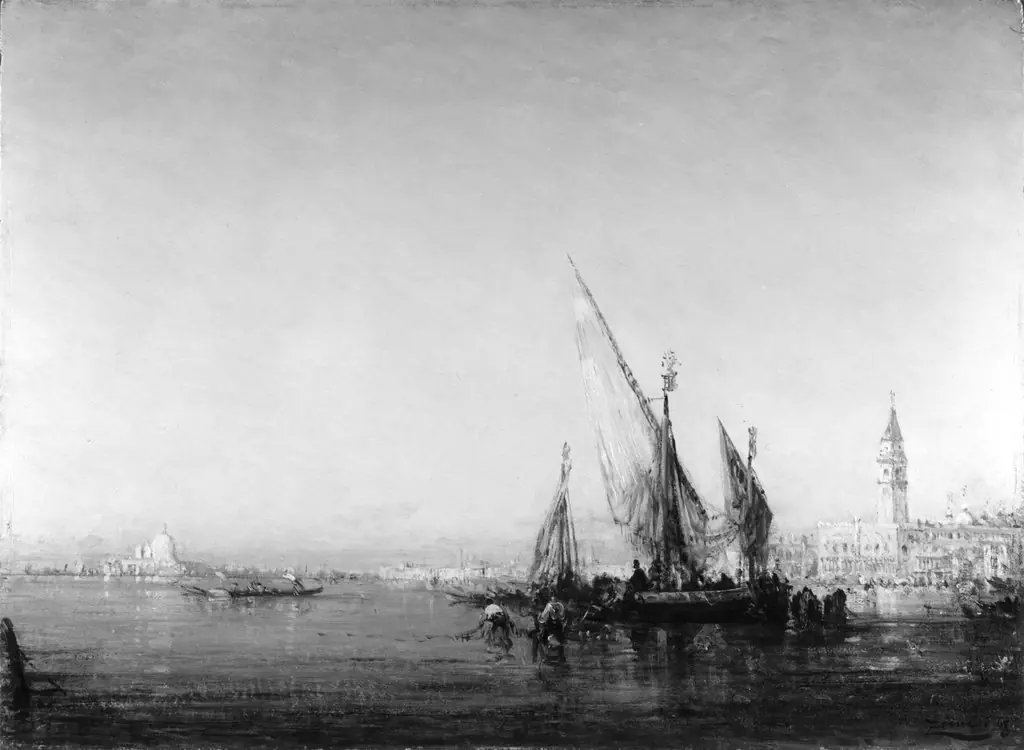
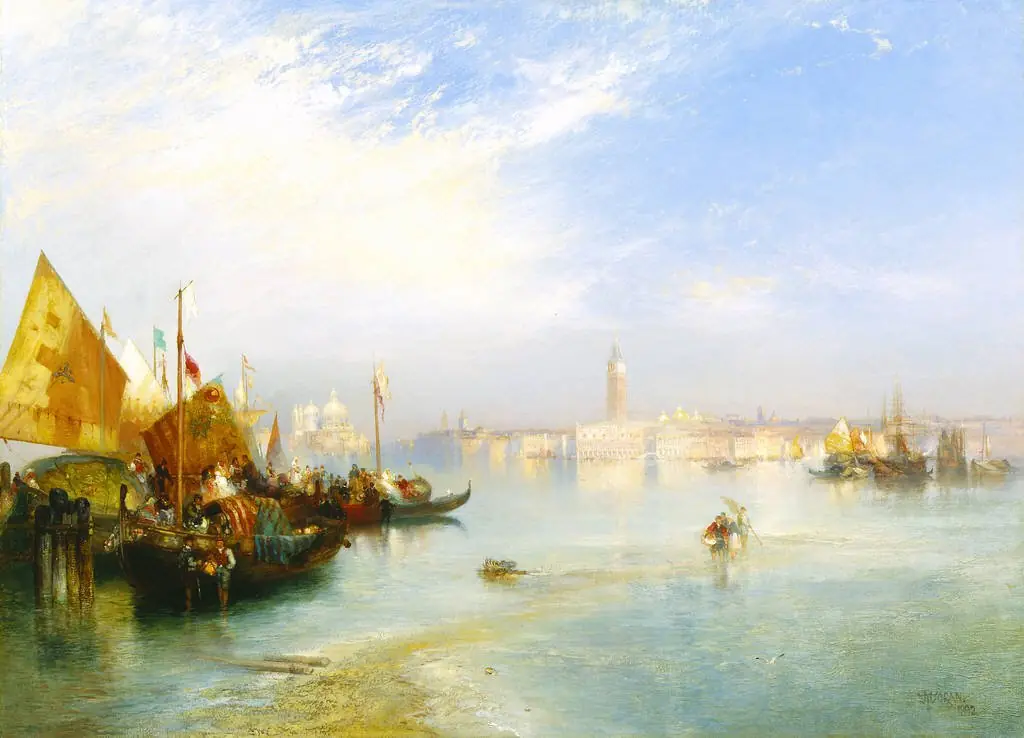
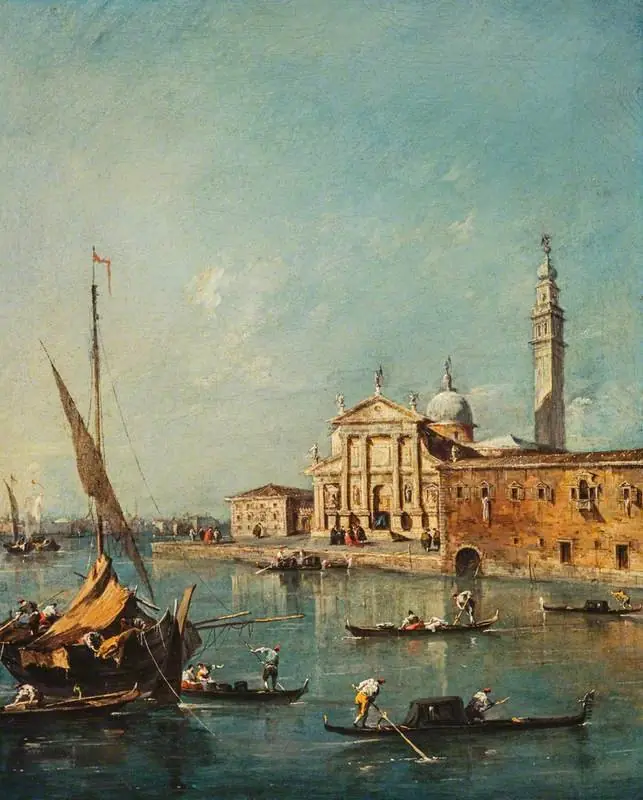
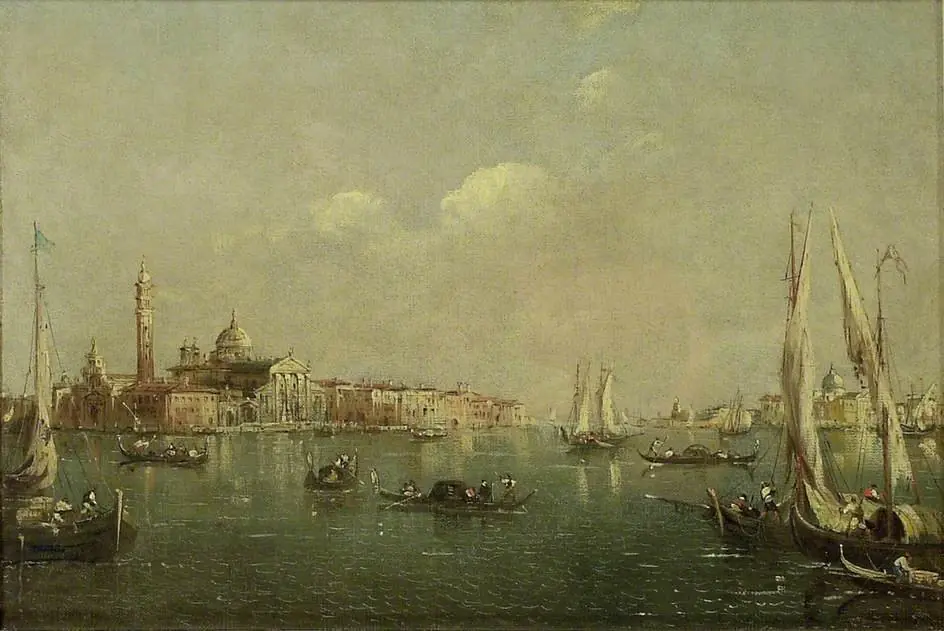
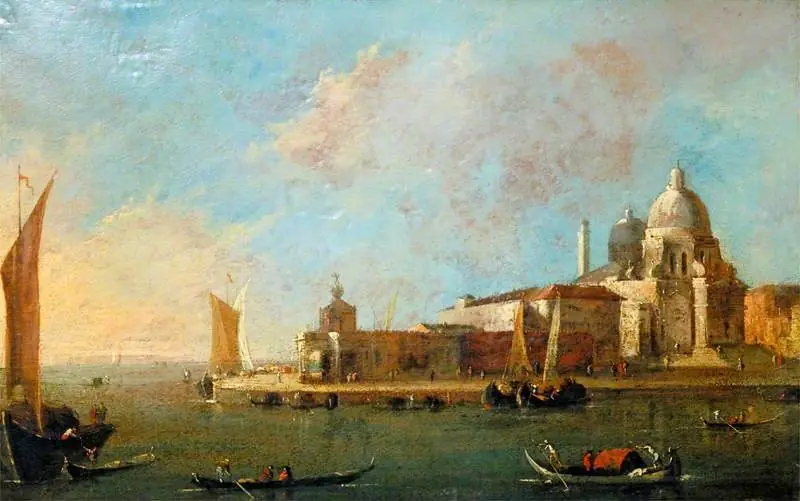
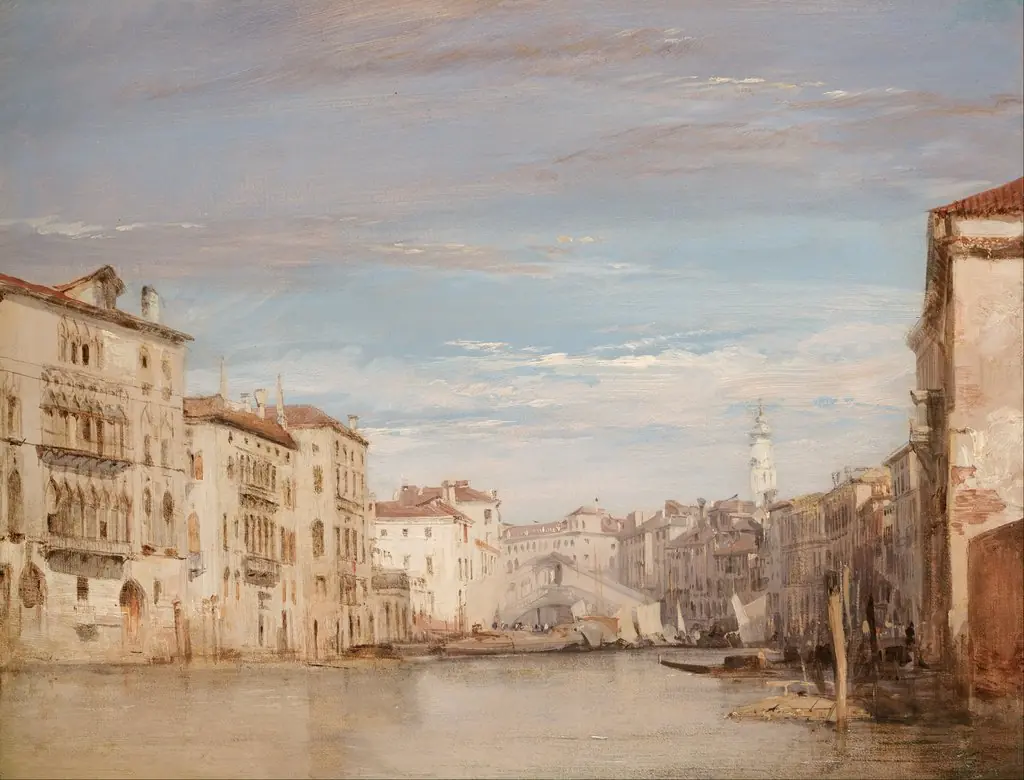
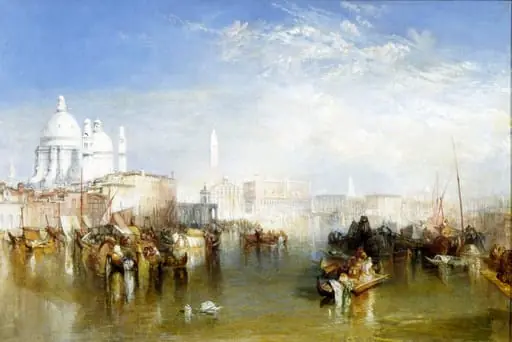
The painting presents Venice as a tranquil, almost still retreat, with modest boats drifting on calm water and the city’s architecture rising softly in the distance. No human figures dominate the scene; instead, the focus lies in the quiet interplay between built and natural elements. The inclusion of baskets along the water’s edge suggests daily life, but without narrative urgency, reinforcing a mood of contemplative serenity.
Technique & Style
Pyne employed delicate brushwork and muted, atmospheric tones to evoke a hazy, diffused light characteristic of Turner’s influence. The sky and water blend seamlessly, with soft transitions between hues of blue and pale ochre. Architectural forms are rendered with precision but softened by atmospheric perspective, avoiding sharp detail in favor of a gentle, immersive tonality that enhances the painting’s quiet mood.
History & Provenance
Created in 1860, *Venice* entered the collection of the Victoria and Albert Museum at an early stage, likely acquired during the museum’s expansion of British art holdings in the late 19th century. Its preservation within a major national institution underscores its recognition as a representative example of Pyne’s mature work and the broader British Romantic landscape tradition.
Context
In the mid-19th century, British artists increasingly traveled to continental Europe, drawn by its light and architecture. Pyne, like many of his contemporaries, responded to Venice’s picturesque qualities not as a tourist spectacle but as a subject for meditative observation. His approach aligned with a growing interest in mood and atmosphere over topographical accuracy, distinguishing his work from more documentary styles of the period.
Legacy
Pyne’s *Venice* remains a quiet testament to a generation of British painters who adapted Turner’s innovations into personal, restrained visions. While not widely known today, the painting exemplifies how Romantic ideals of tranquility and natural harmony were sustained in landscape art beyond the most celebrated figures of the era, offering a nuanced counterpoint to grander historical narratives.
Artist & collection
Artist
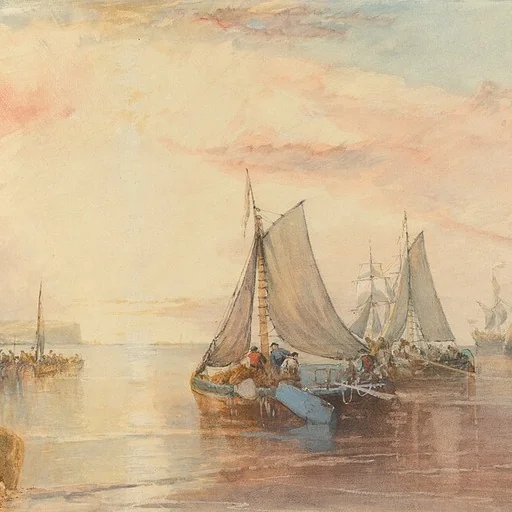
James Baker Pyne (5 December 1800 – 29 July 1870) was an English landscape painter who became a successful follower of Turner, after having been in his earlier years a member of the Bristol School of artists and a follower of Francis Danby.